Essential Guide to Car Suspension Lubrication Tips and Techniques
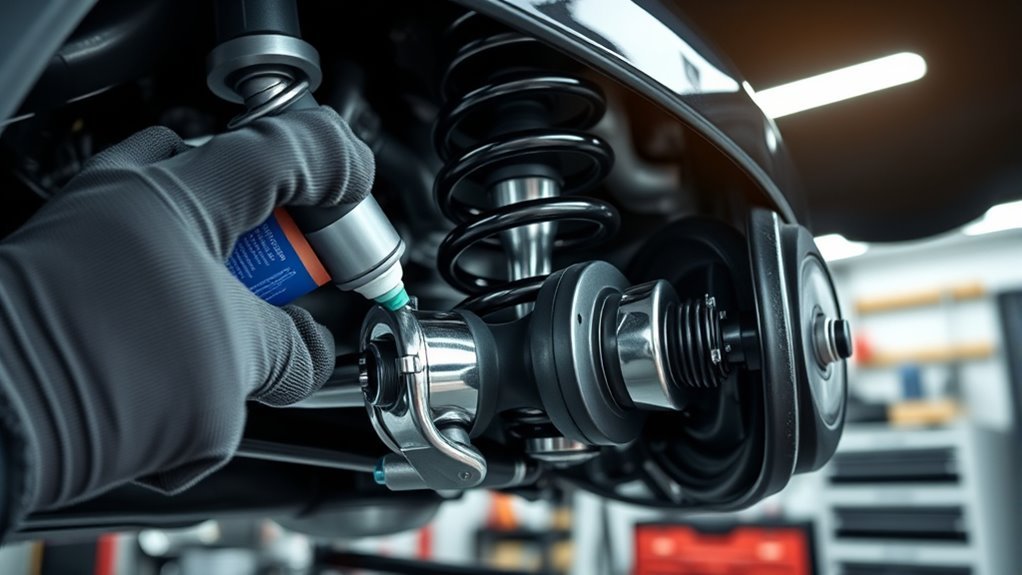
To keep your car’s suspension system functioning at its best, it’s essential to focus on proper suspension lubrication.
Key parts like control arms, ball joints, and bushings require regular attention using the right automotive greases.
For metal components, lithium-based greases work wonders, while silicone-based lubricants are perfect for rubber parts.
Make it a habit to clean these components before applying lubricant every 10,000 to 12,000 miles. This will significantly reduce friction, prevent annoying noise, and extend the lifespan of your suspension.
Be alert for signs of wear, such as squeaks or a rough ride—these can indicate that it’s time for maintenance.
With just a few simple steps, you can greatly enhance your car’s handling and protect your suspension system for years to come.
Trust me, your vehicle will thank you!
Key Takeaways
– Regularly lubricate control arms, ball joints, and bushings to reduce friction and extend suspension component lifespan.
It’s a simple way to keep everything running smoothly.
– Use lithium-based grease for metal parts and silicone-based grease for rubber components to prevent wear and deterioration.
Choosing the right type of grease makes all the difference.
– Clean suspension components of dust and debris before applying lubricant for optimal effectiveness.
A clean surface helps the lubricant do its job better.
– Apply lubricant every 10,000 to 12,000 miles or at least once a year, following vehicle manufacturer recommendations.
Staying on schedule can save you money in the long run.
– Inspect suspension parts for noise, uneven tire wear, or leaks to identify insufficient lubrication early and avoid costly repairs.
Catching issues early can really help you avoid bigger headaches later on.
Importance of Lubricating Suspension Components
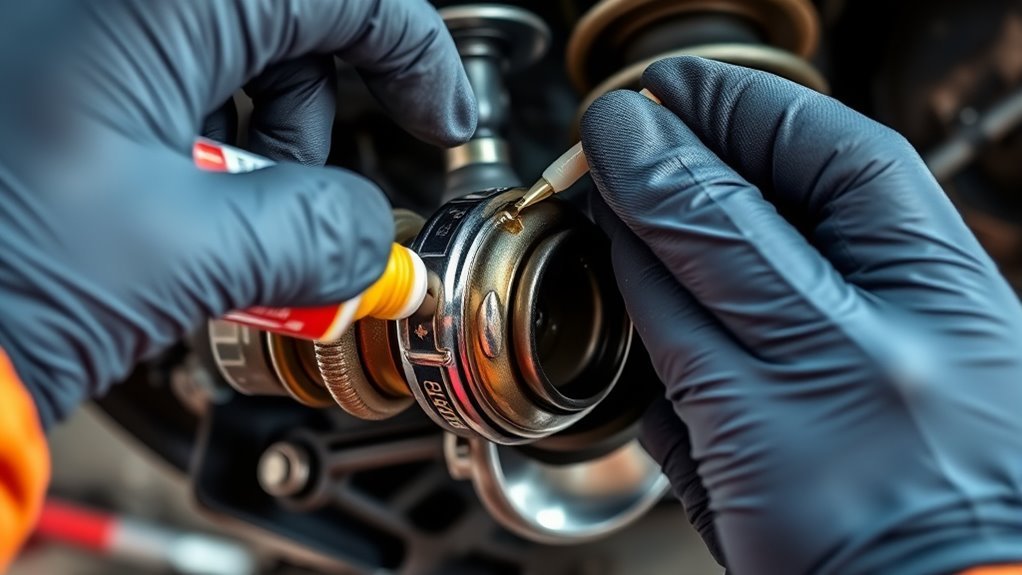
Although it’s easy to overlook, lubricating your suspension components plays an essential role in keeping your vehicle running smoothly.
By regularly lubricating suspension components like control arms and bushings, you reduce friction that causes wear and tear.
This simple maintenance step helps extend the lifespan of these critical parts and guarantees their proper function.
Without adequate lubrication, your suspension joints face increased resistance.
This can lead to noisy operation, poor handling, and reduced vehicle performance.
Using the right lubricant, such as silicone-based grease for rubber parts, prevents damage and maximizes effectiveness.
To maintain safety and comfort, you should perform routine checks and lubrication at least once a year or every 12,000 miles.
Staying on top of this maintenance keeps your suspension working efficiently and your ride smooth.
Identifying Suspension Parts That Require Lubrication
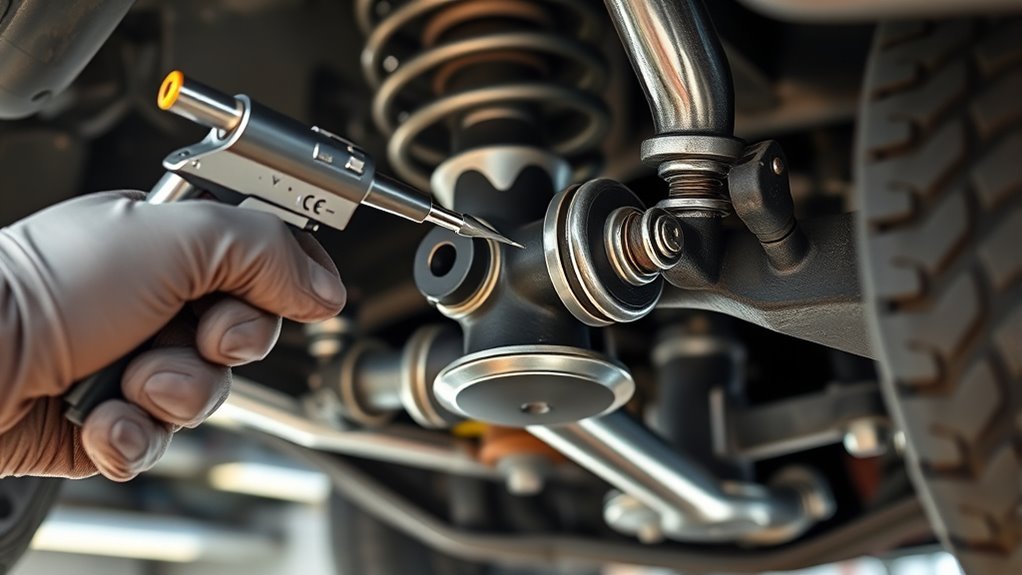
When you inspect your vehicle’s suspension, focus on key parts like control arms, ball joints, and bushings.
These components need regular lubrication to reduce friction and wear.
Check bushings and joints for wear patterns that signal the need for maintenance.
Proper lubrication guarantees smooth operation and prevents noise and handling issues.
| Suspension Part | Signs of Wear | Lubrication Need |
|---|---|---|
| Control Arms | Cracks, stiffness | High |
| Ball Joints | Noise, looseness | High |
| Bushings | Cracks, deformation | Moderate |
| Suspension Joints | Excess play, noise | High |
Regularly lubricate these accessible points to maintain your suspension system’s performance and safety.
Choosing the Right Lubricants for Your Suspension System
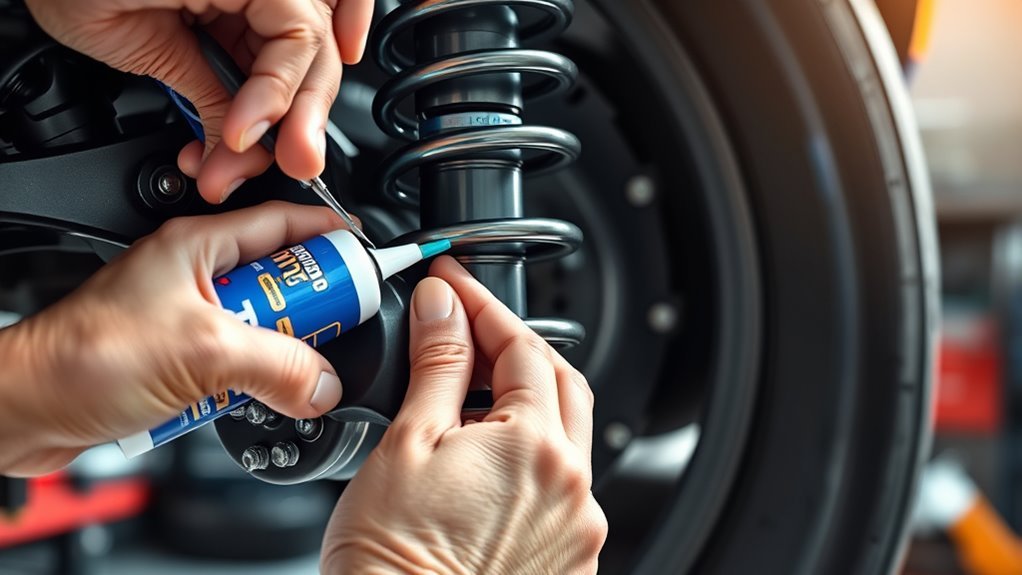
Choosing the right lubricant for your suspension system means picking automotive-specific options like lithium-based grease that protect against wear and corrosion.
You also need to apply it correctly to parts like ball joints and control arm bushings, following recommended intervals.
Sticking to these guidelines helps keep your suspension running smoothly and extends its lifespan.
Types of Lubricants
Selecting the right lubricant for your suspension system is essential for maintaining its performance and durability.
For automotive use, choose lubricants that can handle high pressures and temperatures typical of suspension parts. Grease works well on bushings and control arms.
On the other hand, silicone-based lubricants are best for rubber components, helping prevent deterioration and preserving flexibility.
You’ll want lubricants that resist water and contaminants to protect against rust and corrosion.
Look for products with excellent adhesion to stay in place and reduce friction over time.
Always follow the manufacturer’s recommendations on lubricant types and application intervals to guarantee peak performance and extend your suspension system’s lifespan.
Choosing accordingly keeps your suspension running smoothly and reliably.
Application Techniques
Applying the right lubricant properly makes a big difference in how well your suspension system performs and lasts.
Choose high-quality, lithium-based greases for metal components to handle heavy loads and temperature changes.
For rubber bushings, use a silicone-based lubricant to prevent deterioration.
Always consult your vehicle’s owner manual for recommended lubricants and application intervals.
Use a grease gun to apply lubricants precisely on control arm bushings and ball joints.
This ensures even coverage without excess buildup that attracts dirt.
Make it a habit to inspect and reapply lubricants during routine service checks or every 6,000 miles.
Consistent, proper application techniques help maintain smooth operation and extend the life of your suspension system components.
Frequency of Lubrication
You should lubricate your suspension components at least once a year or every 12,000 miles to keep them running smoothly and prevent premature wear.
Regular lubrication is key to effective suspension system maintenance, ensuring peak performance and extending the longevity of your vehicle’s parts.
Focus on control arms, sway bar links, and ball joints. Apply high-quality lithium-based grease that protects against wear and moisture.
Proper lubrication minimizes friction, reduces noise, and maintains smooth operation.
Use a grease gun with a flexible nozzle to reach all suspension components thoroughly, especially in tight or hard-to-access spots.
Staying consistent with this schedule helps you avoid costly repairs and keeps your suspension system performing at its best over time.
Step-by-Step Guide to Lubricating Suspension Joints and Bushings
Start by locating all the suspension joints and bushings that need lubrication.
Make sure you pick the right lubricant, like a lithium- or silicone-based grease, to protect these parts effectively.
Once you’ve got the spots and the grease, you’re ready to keep your suspension running smoothly.
Identifying Lubrication Points
Before lubricating suspension joints and bushings, consult your vehicle’s service manual to pinpoint the exact lubrication points, as these vary by make and model.
Identifying these spots is essential to maintain your suspension’s health and guarantee proper lubrication.
Focus on joints and bushings within the suspension system, as these areas experience constant movement and friction.
Use high-quality grease when applying lubrication, but first, clean each point thoroughly to remove dirt and debris that can hinder performance.
Apply grease until it oozes out, confirming the components are fully packed.
To maintain peak performance, regularly check these points and re-lubricate approximately every 6,000 miles or during routine maintenance.
This proactive approach helps avoid premature wear and keeps your suspension system functioning smoothly.
Choosing Proper Lubricants
Although selecting the right lubricant might seem straightforward, choosing a high-quality, multi-purpose product designed specifically for automotive suspension systems guarantees your joints and bushings last longer and perform better.
Before applying lubricant, clean suspension components thoroughly to remove dirt and old grease. This helps prevent wear and tear.
Use a grease gun or proper applicator to fill suspension joints and bushings without overfilling. Overfilling can cause contamination, which is something we definitely want to avoid!
Always follow the manufacturer’s recommendations for lubricant type and application frequency. Requirements can vary by vehicle and suspension design, so it’s important to check!
Incorporate lubrication into regular maintenance checks to catch early signs of wear and ascertain proper protection.
Signs of Insufficient Lubrication in Suspension Systems
Insufficient lubrication in your suspension system can cause noticeable issues like squeaking or grinding noises as parts rub against each other.
You may also experience a rough ride because worn suspension components, including shock absorbers, aren’t functioning smoothly.
Uneven tire wear often signals poor lubrication, affecting alignment and tire contact.
Additionally, keep an eye out for leaking fluid around joints, which compromises suspension performance.
| Sign | What It Indicates |
|---|---|
| Squeaking/Grinding | Increased friction in suspension system |
| Uneven Tire Wear | Misaligned or dry suspension components |
| Leaking Fluid | Lubrication loss around control arms |
| Rough Ride Quality | Ineffective shock absorbers or struts |
Maintenance Tips to Prolong Suspension Life Through Proper Lubrication
Noticing signs like squeaking or uneven tire wear means your suspension system could benefit from regular lubrication.
To maintain its performance, clean dust and debris from components before applying the right lubricant—silicone-based grease works best for rubber bushings.
Lubricate pivot points, control arms, and joints every 10,000 miles to reduce friction and wear. This helps prevent necessary repairs.
Proper lubrication maintains flexibility, prevents cracking, and extends the lifespan of your suspension.
Doing this also improves vehicle handling and ride quality by ensuring alignment and smooth operation.
By staying consistent with these maintenance tips, you’ll keep your suspension system functioning effectively and avoid premature failure.
Ultimately, this will save you time and money while enhancing safety on the road.
Frequently Asked Questions
How Can I Lubricate My Suspension?
You can lubricate your suspension by cleaning the parts first.
Then, apply high-quality automotive grease to control arms, bushings, and joints.
Do this every 30,000 miles or during routine maintenance to keep everything running smoothly.
What Is the $3000 Rule for Car Repairs?
The $3000 rule means if a repair costs more than $3000, you might be better off replacing your car.
You should consider your car’s value, age, and repair history before deciding to fix or replace it.
It’s important to weigh the potential costs against what your car is worth.
Sometimes, investing in a new vehicle can save you money in the long run.
What Are the Most Common Suspension Problems?
You’ll face faulty shocks, squeaky struts, and stubborn steering struggles.
Worn bushings, uneven tire wear, and leaking liquids lead to rough rides and risky handling.
Catch these common suspension concerns before they cause costly chaos.
Can I Spray WD-40 on My Suspension?
You shouldn’t spray WD-40 on your suspension regularly.
It may temporarily protect metal parts but can damage rubber bushings.
Instead, use automotive lubricants designed for suspension to keep everything working smoothly and lasting longer.
Conclusion
By keeping your suspension well-lubricated, you’re giving your car’s joints and bushings the smooth dance they need to glide over every road bump.
Neglecting this essential care can leave your ride creaking and groaning like an old ship in a storm.
Follow these tips consistently, and you’ll extend your suspension’s life. This ensures every drive feels like a breeze rather than a battle.
Remember, a little grease goes a long way in keeping your journey smooth.
In conclusion, maintaining your car’s suspension with proper lubrication is key to a comfortable ride.
Regular checks and timely application of grease can prevent wear and tear, keeping those joints and bushings healthy.
Don’t overlook this crucial aspect of car care—your vehicle will thank you with a smoother, quieter journey!