Signs It’s Time to Replace Your Car Radiator?
You know it’s time to replace your car radiator if your engine overheats or the temperature gauge stays in the hot zone.
These issues can lead to serious problems down the line, so it’s important to stay vigilant.
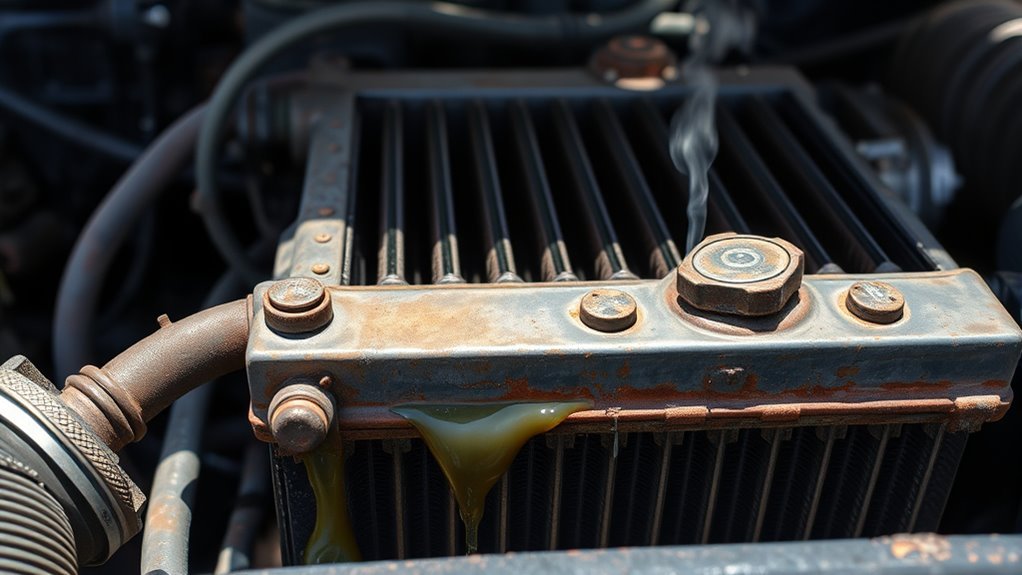
Look for visible coolant leaks or low coolant levels; these are clear indicators that something isn’t right.
Additionally, check for rust or corrosion on the radiator’s surface, as these can compromise its effectiveness.
Sludge buildup or discolored coolant inside the radiator is also a bad sign.
Driving with a damaged radiator risks serious engine damage, so acting fast is key.
Keep an eye out—there’s more to understanding these warning signs.
Key Takeaways
- Persistent engine overheating or a temperature gauge stuck in the hot zone indicates radiator failure needing replacement.
- Visible coolant leaks or consistently low coolant levels suggest radiator damage requiring immediate attention.
- Rust, corrosion, or visible cracks on the radiator surface are clear signs it’s time to replace it.
- Sludge buildup or discolored, rusty coolant signals internal radiator corrosion and impaired function.
- Frequent need to top off coolant and pressure test failures confirm radiator integrity loss and replacement necessity.
Overheating Engine and Temperature Gauge Alerts
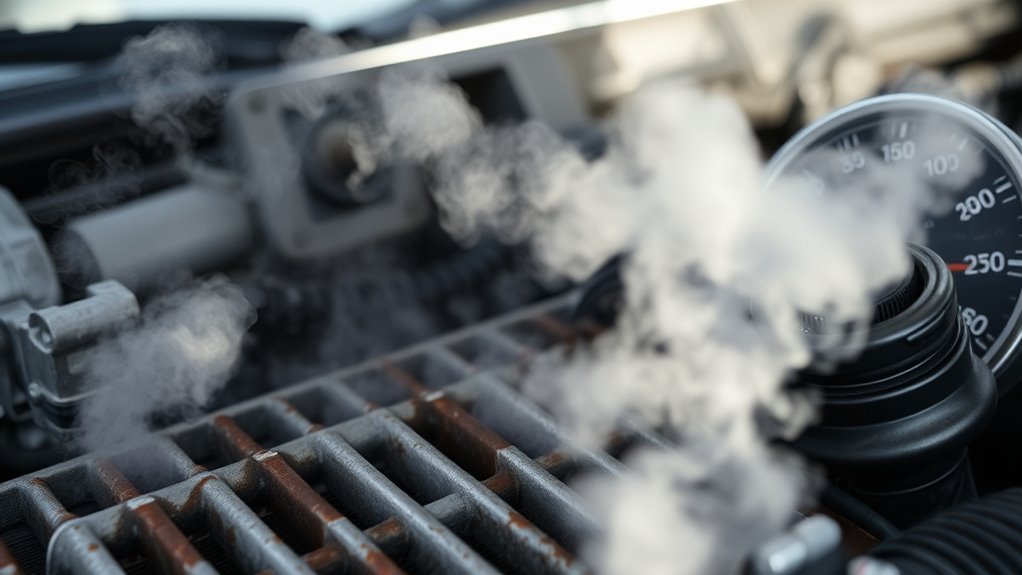
If you notice your engine overheating or your temperature gauge climbing steadily toward the hot zone, it’s a strong sign your radiator may be failing.
Your temperature gauge acts as an early warning system, and consistently high readings often point to radiator issues restricting proper coolant flow.
An overheating engine risks severe damage like piston melting or engine seizure if left unchecked.
You might also see steam from under the hood—this critical warning means you should stop driving immediately to protect your engine health.
Regularly monitoring the temperature gauge helps you catch radiator problems before they escalate.
While coolant leaks are another symptom, focusing on the overheating engine and temperature gauge alerts will guide you in identifying radiator failure early and avoiding costly repairs.
Visible Coolant Leaks and Low Coolant Levels
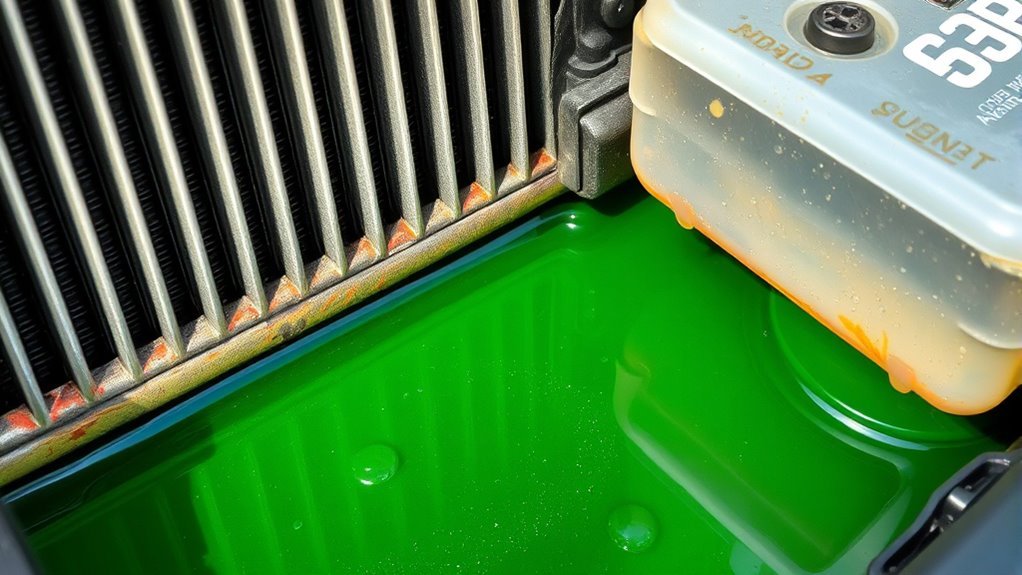
If you spot brightly colored fluid pooling under your car, you’re likely dealing with a coolant leak.
Low coolant levels can quickly lead to engine overheating, so you need to check your reservoir regularly and watch for sudden drops.
When you notice leaks or frequent top-offs, it’s time to inspect your radiator and take action before damage occurs.
Identifying Coolant Leak Sources
How can you tell if your car’s radiator is leaking?
Look for visible coolant leaks—bright green, yellow, or pink liquid pooling under your car’s front.
Low coolant levels in the reservoir are another sign, even if you don’t see leaks outside.
If you find yourself topping off coolant frequently, that’s a clear signal of a radiator problem.
To pinpoint the source of a coolant leak, a pressure test is invaluable.
It helps determine if the issue stems from the radiator, hoses, or other parts of the cooling system.
Keep an eye on your coolant levels and address any drops promptly to avoid bigger problems.
Identifying leaks early can save you from costly repairs and keep your engine running smoothly.
Consequences of Low Coolant
Three key consequences arise when you let low coolant levels or visible leaks go unchecked: engine overheating, rust formation, and cooling system inefficiency.
The radiator is an essential part of the coolant system, and a leak in the radiator often causes low coolant levels.
When your engine overheats due to insufficient coolant, it risks severe damage that could lead to costly repairs.
Additionally, ignoring visible coolant leaks—often bright yellow, green, or pink fluid—can lead to rust forming inside the radiator.
This rust clogs the system, reducing its efficiency and further impairing cooling.
Ultimately, these issues compromise the entire coolant system, increasing the likelihood of engine failure.
Keeping an eye on coolant levels helps you avoid these serious consequences and maintain your vehicle’s health.
Immediate Actions to Take
Noticing coolant leaks or low levels means you need to act quickly to protect your engine.
If you spot visible coolant leaks under your car, especially brightly colored fluid, it signals a radiator issue requiring immediate attention.
Low coolant levels often point to a small leak that, if ignored, can cause overheating and serious engine damage.
Check your coolant regularly, but don’t just top it off without finding the source of the problem.
If you see coolant pooling or steam coming from under the hood, stop driving immediately to avoid further harm.
Addressing these signs promptly prevents critical overheating, engine seizure, and costly repairs.
Don’t delay—visible coolant leaks and low coolant levels demand swift action to keep your car running safely.
Signs of Rust and Corrosion on the Radiator
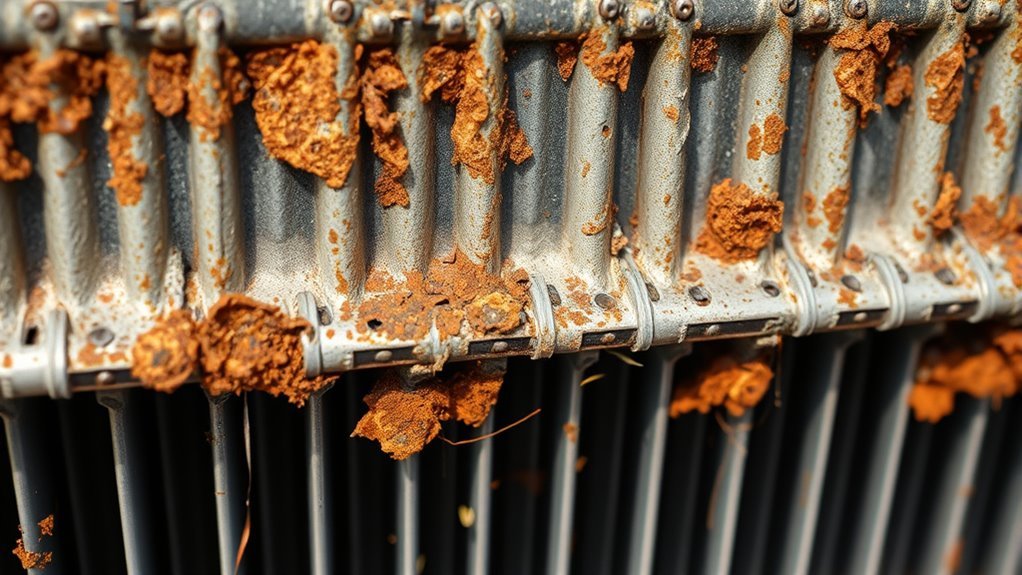
If you spot visible rust patches on your radiator, it’s a clear warning sign.
Corrosion can cause tiny leaks that reduce your cooling system’s efficiency.
Catching these issues early helps you avoid engine overheating and costly repairs.
Visible Rust Patches
Rust patches on your car radiator signal that moisture has been lingering too long. This can cause leaks and reduce cooling performance.
When you spot visible rust patches on the radiator in your car, it means the metal is deteriorating. Often, this creates tiny holes where coolant can escape.
And guess what? This can lead to overheating issues that can damage your engine. Even small rust spots can grow quickly, weakening your cooling system’s effectiveness.
To avoid costly repairs, regularly inspect your radiator for any signs of rust, especially if your vehicle faces harsh weather.
Flushing your cooling system routinely helps prevent rust buildup and extends your radiator’s lifespan.
Ignoring these visible rust patches puts your car’s performance and safety at serious risk.
Corrosion-Induced Leaks
One common sign that your car radiator needs attention is corrosion-induced leaks, which often stem from prolonged exposure to moisture.
Rust forms on the radiator surface, signaling corrosion that weakens the metal.
These tiny cracks caused by corrosion can lead to coolant leaks, risking engine overheating.
Catching these signs early can save you from costly repairs.
| Sign | What It Means |
|---|---|
| Rust Spots | Surface corrosion present |
| Coolant Puddles | Active leaks from radiator |
| Cracks in Metal | Structural damage from corrosion |
| Overheating Engine | Coolant loss affecting engine |
Keep an eye out for these indicators to prevent serious engine damage caused by rust and corrosion leaks.
Impact on Cooling Efficiency
When corrosion starts to build up on your radiator, it directly hampers its ability to cool your engine effectively.
Rust and corrosion cause blockages and pinhole leaks that restrict coolant flow, leading to overheating.
You might notice brownish discoloration or visible rust spots—clear signs the radiator’s performance is compromised.
As coolant escapes through tiny leaks, your engine temperature can spike, risking serious damage.
Ignoring these warning signs means you’ll face costly repairs or even a complete radiator replacement.
Regularly inspecting your radiator for rust and corrosion helps you catch problems early and maintain peak cooling efficiency.
If you spot significant rust buildup, don’t wait—consider replacement to keep your engine running smoothly and avoid overheating issues.
Presence of Sludge and Discolored Coolant
If you notice sludge or discolored coolant in your radiator, it’s a clear sign that contaminants and corrosion are compromising your cooling system.
The presence of sludge indicates a buildup of debris that hinders radiator function, reducing cooling efficiency and increasing the risk of overheating.
Sludge buildup clogs your radiator, lowering cooling efficiency and raising the chance of engine overheating.
Discolored coolant, especially when it turns brown or rusty, points to internal corrosion, which can lead to radiator failure if left unchecked.
This sludge and discoloration block radiator tubes, preventing proper coolant flow and causing your engine to overheat.
Regularly checking your coolant’s color and consistency helps you catch these problems early.
If you ignore these signs, you risk severe engine damage.
When you see sludge or discolored coolant, it’s time to contemplate replacing your radiator to protect your vehicle’s performance.
Diagnosing Radiator Damage and Pressure Testing
Although radiator damage isn’t always visible, you can often spot signs like coolant leaks or steam rising from under the hood.
Diagnosing radiator damage starts with checking coolant levels and the temperature gauge for unusual readings.
Pressure testing the cooling system helps pinpoint hidden leaks by detecting pressure drops.
| Symptom | What to Check |
|---|---|
| Coolant leaks | Look for bright yellow, green, or pink fluid under the vehicle. |
| Temperature gauge | Monitor for high or fluctuating temperatures. |
| Coolant levels | Notice frequent topping off or low levels. |
Use pressure testing to confirm leaks and inspect coolant color for contamination.
These steps guarantee you catch radiator issues early before serious damage occurs.
Risks of Driving With a Damaged Radiator
Spotting signs of radiator damage and confirming leaks through pressure testing can really help you understand the condition of your cooling system.
Driving with a damaged radiator puts you at serious risk of engine overheating, which can lead to severe damage like engine seizure or even piston melting.
A damaged radiator risks engine overheating, causing severe damage such as engine seizure or piston melting.
Coolant leaks reduce your cooling system’s efficiency, allowing unsafe engine temperatures that may trigger warning lights on your dashboard.
Ignoring these signs and continuing to drive can escalate repair costs, sometimes requiring a full engine replacement.
While small leaks might let you drive temporarily to a service center, persistent overheating demands immediate attention.
Don’t risk compromising your vehicle’s safety and longevity—address radiator issues promptly to avoid costly and dangerous consequences.
Frequently Asked Questions
How Will I Know if I Need a New Radiator?
You’ll know you need a new radiator if your car overheats often.
You might also spot coolant leaks or rust.
If your coolant level drops without any visible leaks, that’s another sign.
Plus, if your temperature gauge stays high, it’s definitely time to take action.
Don’t ignore these signs!
Can Autozone Replace My Radiator?
You can’t get AutoZone to replace your radiator, but coincidentally, they sell the parts and tools you’ll need.
Plus, their staff can help pick the right one, and they offer DIY guides to assist you.
What Is the Average Cost to Replace a Radiator?
You can expect to pay between $300 and $1,000 to replace your radiator, depending on your car and whether you choose OEM or aftermarket parts.
Labor usually costs $100 to $300, so shop around for quotes.
Can You Still Drive a Car With a Bad Radiator?
You can drive a car with a bad radiator for short distances, but 65% of engine failures stem from overheating.
Don’t risk it—stop immediately if your temperature gauge hits red, and get it towed for repairs.
Conclusion
If you ignore radiator issues, you could be risking a costly engine repair—over 60% of engine failures start with cooling system problems.
Don’t wait until your temperature gauge spikes or you spot leaks. Keep an eye out for rust, sludge, or low coolant levels.
If you suspect damage, get your radiator tested. Staying proactive helps you avoid breakdowns and keeps your car running smoothly.
Replace your radiator at the first sign of trouble—it’s worth it.
In conclusion, being vigilant about your radiator can save you from significant engine repairs down the line. Regularly check for signs of wear, like rust or leaks, and don’t hesitate to seek help if you notice anything unusual.
By addressing radiator issues early, you ensure your cooling system functions well, preventing more extensive damage and costly repairs. Remember, a healthy radiator is key to a smoothly running vehicle!