10 Best Joinery Tools: Expert Picks and Buying Guide
Joinery work needs tools that are accurate, sturdy, and easy to handle. A poor choice can slow the job and affect the finish. That is why many people search for the best joinery tools before they buy.
That is why many people search for the best joinery tools before they buy. This review looks at a joinery tools product set for woodworkers, carpenters, and DIY users. It also suits anyone who wants cleaner cuts and better control in the workshop.
These tools aim to support steady work and consistent results. They may also help reduce strain during long jobs and make setup simpler.
You will also get a clear view of its build, use, and value.
Best Joinery Tools for Precise Woodworking Results
| Image | Product | Price |
|---|---|---|
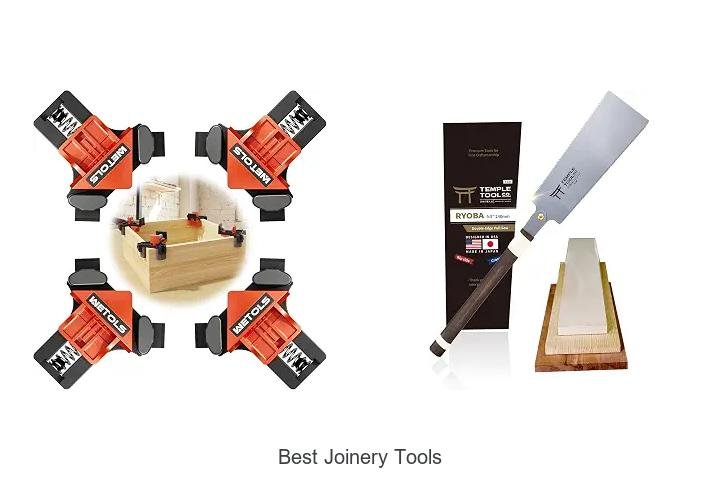
Pick 1  | WETOLS 90 Degree Corner Clamp Set | Check Price On Amazon |
Pick 2  | Temple Tool Co. Japanese Ryoba Hand Saw | Check Price On Amazon |
Pick 3  | Self Centering Dowel Jig with Elongated Jaws | Check Price On Amazon |
1. WETOLS 90 Degree Corner Clamp Set
Corner joints get easier when boards stay put at the right angle. WETOLS offers a four-piece clamp set that helps hold pieces square during assembly. These orange corner clamps fit wood from 3/16 inch to 3/4 inch thick.
They work for 90-degree corners and T-joints, which helps during pocket-hole work, cabinet building, and box assembly. The polyamide body keeps the clamps lightweight, while the spring tension helps hold boards during screwing or gluing. Single-handed use also makes them convenient for quick setups.
The set is practical for aligning frames, nailing, welding, screwing, and general woodworking tasks. Each clamp comes in a gift-ready box, which makes storage and gifting easier. The compact size and one-hand operation help when working alone on small projects.
Build quality focuses on durability through polyamide construction and flexible spring pressure. The design suits DIY users who need simple alignment support without bulky tools.
For pocket-hole projects, these clamps offer steady corner holding at a useful size.
Pros
- Holds 90-degree corners and T-joints
- Works with one-hand operation
- Includes four clamps in one set
Cons
- Fits only thinner boards
- Polyamide is lighter than metal
- Not designed for heavy-duty clamping
Who Should Buy It?
Woodworkers who build cabinets, boxes, or frames will find these helpful. They suit pocket-hole assembly, small shop tasks, and DIY projects needing quick 90-degree alignment. The four-clamp set also works well for solo work, where one hand must hold parts while the other fastens them.
Beginners and hobbyists should also appreciate the simple design and light weight.
Key Specifications
| Specification | Details |
|---|---|
| Brand | WETOLS |
| Material | Polyamide |
| Key Use | Pocket holes |
| Included Components | 4PCS Corner Clamps |
| Item Weight | 13.44 ounces |
| Item Dimensions | 3.3 x 2.8 x 1.5 inches |
| Special Features | Fits 3/16″-3/4″ Wood, Strong Spring, Easy One-Hand Operation, Durable Polyamide, 90° Corner Clamps |
| Compatibility | Boards from 3/16″ to 3/4″ thick; 90° corners and T-joints |
The WETOLS set uses polyamide, which keeps each clamp light and easy to move. Its four-piece layout gives you multiple holding points for small assemblies. The clamps fit boards from 3/16 inch to 3/4 inch thick, so they handle many common woodworking sizes. Their 3.3 by 2.8 by 1.5 inch footprint keeps them compact on a crowded bench. That size helps during pocket-hole work, frame building, and cabinet alignment.
Strong spring tension helps keep boards steady while you screw or glue them. One-hand operation makes setup simpler when you work alone or in tight spaces. The clamps support both 90-degree corners and T-joints, which broadens their use in everyday joinery tasks. Their light 13.44-ounce total weight also makes the set easy to carry and store. Woodworkers who need quick alignment help will benefit most from that balance of size and control.
2. Temple Tool Co. Japanese Ryoba Hand Saw
A compact Japanese pull saw can make joinery feel far more controlled. Temple Tool Co.’s Ryoba adds rip and crosscut teeth on one blade. The double-edge design suits stock prep, dovetails, tenons, and cutting boards to size.
Its pull-stroke cutting allows a thin kerf and lighter sawing effort.
The handle uses dark brown wingnut wood with brass components. That gives it a refined look and a comfortable hand feel. High-carbon Japanese steel supports clean cuts in softwood and hardwood.
The blade is made in Japan by skilled artisans with long sawmaking history. It weighs 0.32 kg and includes a case for storage.
The saw feels well suited to users who want accuracy without bulky equipment.
For joinery work, the narrow kerf helps reduce waste and supports cleaner starts. Rip teeth handle grain-aligned cuts, while crosscut teeth suit cuts across grain.
That makes it practical for sizing boards and shaping medium or large joinery. The lightweight build also helps reduce fatigue during repeated cuts. It offers strong value for anyone wanting a traditional pull saw with careful construction and broad workshop usefulness.
Pros
- Dual rip and crosscut teeth add versatility.
- Lightweight pull-saw design helps control cutting.
- Made in Japan with high-carbon steel.
Cons
- Single blade length may not suit all tasks.
- No power assistance for faster rough cutting.
- Pull-saw style can feel different for beginners.
Who Should Buy It?
Woodworkers who want a versatile hand saw should consider it. It suits people cutting dovetails, tenons, and boards to size. The lightweight pull action helps users seeking cleaner, controlled cuts.
It also fits buyers wanting Japanese build quality in a hand tool. Those working on joinery at home or in a small shop will likely appreciate its balance of precision and simplicity.
Key Specifications
| Specification | Details |
|---|---|
| Brand | Temple Tool |
| Material | High Carbon Steel |
| Power Source | Hand Power |
| Key Use | Dovetails, tenons, joinery, cutting boards to length and width |
| Included Components | Case |
| Item Weight | 0.32 kg |
| Item Dimensions | 3″L x 3″W x 10″H |
| Special Features | Lightweight |
| Compatibility | Softwoods and hardwoods |
The listed high-carbon steel blade points to a cutting tool built for precision work. The hand-powered design means no cords, batteries, or setup delays. Its compact 3 by 3 by 10 inch size makes storage simple. The included case helps protect the blade between uses. In daily shop work, these specifications suit careful layout cuts, small projects, and controlled trimming. The lightweight form also helps keep the saw easy to handle during repeated passes.
The 0.32 kg weight supports less tiring use during longer sessions. A pull-saw action usually feels lighter than a push saw, especially on fine cuts. The blade shape and Japanese steel support clean results in softwood and hardwood. That combination benefits users who want accurate joinery without a heavy tool. The size and case also help with portability, so it works well in small shops, jobsite kits, or home woodworking benches.
3. Self Centering Dowel Jig with Elongated Jaws
Clean dowel alignment starts with a jig that grips securely and stays centered. Eleon’s self-centering model adds elongated jaws, extra-wide clamping, and clear ruler markings for careful woodworking.
The aluminum alloy body gives it a solid feel, while the guide and six drill bushings support precise hole placement. Its 6.7-inch clamping opening handles wider workpieces than many compact jigs. That makes it useful for furniture repair, cabinet work, and detailed doweling tasks.
The included dowels help users begin projects right away. Setup looks straightforward, and the marked scale speeds repeat measurements between dowels. Build quality appears suited to regular workshop use, with a modern aluminum design and a strong clamp layout.
It suits woodworkers who want more control, cleaner alignment, and dependable results from a high-end doweling tool.
Pros
- Extra-wide clamp fits larger wood pieces.
- Elongated jaws improve grip and contact.
- Includes dowels and six drill bushings.
Cons
- Heavier than simpler doweling jigs.
- No power source listed, so it’s manual.
- May feel specialized for basic home tasks.
Who Should Buy It?
Woodworkers who need accurate dowel placement on larger pieces should consider it. It suits cabinet makers, furniture builders, and serious hobbyists who value centered drilling and repeatable spacing. The extra-wide clamp and ruler markings help users who want steady setup and cleaner joinery.
It also fits workshops that prefer aluminum tools with included accessories ready for immediate use.
Key Specifications
| Specification | Details |
|---|---|
| Brand | Eleon |
| Material | Aluminum |
| Power Source | Manual |
| Key Use | High-end doweling |
| Included Components | 1 x Instruction, 1 x Self-Centering Dowel Jig, 30 x Various Dowel Sizes, 6 x Drill Bushings |
| Item Weight | 1.63 kg |
| Item Dimensions | Extra-wide clamp opening up to 6.7 inches |
| Special Features | Self-centering design, elongated jaws, ruler markings, extra-wide clamp |
| Compatibility | Woodworking pieces with varying sizes |
Eleon makes this jig from aluminum, which keeps the body firm during setup. The manual design means users control every step by hand. Its self-centering layout helps place drill holes evenly on joined pieces. The extra-wide clamp opening reaches up to 6.7 inches, so larger boards fit more easily. Ruler markings also help measure dowel spacing quickly. Included drill bushings and dowels add useful starter parts for immediate workshop use.
The 1.63-kilogram weight suggests a solid tool that stays planted while clamping. Elongated jaws give more wood contact, which supports steadier grip and alignment. That wider contact helps when working on pieces of different sizes. Six drill bushings expand drilling options for varied tasks. The included instruction sheet may help with setup, especially for users new to doweling. These details suit builders who want precision, repeatable spacing, and a dependable manual jig.
4. Dowel Jig Kit

Clean alignment starts with a jig that keeps holes where they belong. The Dowel Jig Kit focuses on accurate dowel placement for strong wood joints. It includes a center line pointer, so marking workpieces feels straightforward.
Three accurate straight dowel holes can be drilled at one time. The kit ships with nine hardened steel bushings for 1/4, 3/8, and 1/2 inch dowels. That range supports many common woodworking tasks.
Setup is aided by smart positive edge stops in 1/8 inch increments. Clear laser scales add 1/16 inch adjustment marks for finer positioning. A repeat position stop system helps place dowels in the same spot again.
An extension rod and position pins allow spacing flexibility for different layouts. The metal construction and included clamp support steady hand-drill use.
At 4.13 pounds, it feels substantial without sounding overly bulky. It suits woodworkers who want repeatable dowel joints and careful control.
Pros
- Drills three dowel holes at once
- Includes multiple bushings and drill bits
- Positive stops help repeat placements
Cons
- Designed for doweling, not other joint styles
- Hand-powered use may feel slower
- Weight may feel heavy for some users
Who Should Buy It?
Woodworkers who want accurate dowel joints will appreciate this kit. It suits users making repeatable layouts on different material thicknesses. The included stops, scales, and extension rod help with careful positioning.
Hobbyists and shop users who prefer hand-drill control should find it practical. It fits projects where straight holes and consistent spacing matter most.
Key Specifications
| Specification | Details |
|---|---|
| Brand | GOINGMAKE |
| Material | Metal |
| Power Source | hand_powered |
| Key Use | Dowel layout and drilling accurate straight dowel holes |
| Included Components | 1 Set x Dowel Jig Kit, 1 x Using Manual |
| Item Weight | 4.13 pounds |
| Item Dimensions | 9.76 x 6.02 x 4.37 inches |
| Special Features | Quick positive stop, clamp, center line pointer, laser scales, repeat position stop system, extension rod, hardened steel drill bushings |
| Compatibility | 1/4, 3/8, 1/2 inch dowels |
The metal body and 4.13-pound weight suggest a steady feel on the bench. That added mass can help hold position during hand-drill work. The package size is 9.76 by 6.02 by 4.37 inches, so storage should stay manageable. Hand-powered operation means users control drilling speed directly. The included manual helps explain setup steps. People who value careful alignment and repeatable spacing will benefit most from these practical dimensions and hardware choices.
The compatibility list covers 1/4, 3/8, and 1/2 inch dowels. That makes the kit useful for many common joint sizes. Nine hardened steel drill bushings support repeated use across multiple setups. The quick positive stop, clamp, and laser scales help with placement accuracy. The extension rod adds spacing flexibility for different hole positions. Woodworkers who need repeatable dowel layout across several projects should find these specifications especially helpful.
5. POWERTEC Chisel Plane 72162

Clean joinery work starts with a tool that removes tiny mistakes fast. POWERTEC’s compact chisel plane targets plugs, glue, and tight edge cleanup with control. Built for detailed woodworking, it pairs a flat SKD11 steel blade with a machined aluminum body and maple handle.
The blade hardness ranges from 58 to 62 HRC, which supports lasting sharpness and wear resistance. A single screw and alignment pin keep setup simple, while the included wrench helps with adjustments. Its compact size makes it easier to handle than larger chisel planes.
That matters when working on small trimming tasks, paring joinery surfaces, or cleaning dried glue. The replaceable blade design adds flexibility for future use.
It suits hobbyists and professionals who want precise cleanup without a bulky tool. For joinery cleanup, it offers focused control and practical construction in a lightweight package.
Pros
- Compact size improves control in tight spaces
- Hard SKD11 blade resists wear well
- Simple blade setup saves time
Cons
- Single blade setup limits immediate versatility
- Best for small tasks, not wide leveling
- Manual use demands careful control
Who Should Buy It?
Woodworkers handling plug trimming, glue removal, or joinery paring should consider it. The compact body suits detailed cleanup work on flat surfaces and in tight spaces. Hobbyists will appreciate the simpler handling, while professionals may like the replaceable blade system.
It fits anyone wanting precise finishing work without using a larger, harder-to-control chisel plane.
Key Specifications
| Specification | Details |
|---|---|
| Brand | POWERTEC |
| Material | High Carbon SKD11 Tool Steel, Maple Wood, Aluminum, Resin |
| Key Use | Joinery cleanup, plug trimming, glue removal, fine edge work |
| Included Components | (1) Chisel Plane with Flat Blade |
| Item Weight | 5.92 ounces |
| Special Features | Replaceable blade, compact design, single-screw setup, alignment pin |
| Compatibility | POWERTEC 72164 flat blade, POWERTEC 72165 spear point blade |
The listed materials explain why the tool feels solid in hand. The body uses machined aluminum, while the handle combines maple wood and resin. The blade uses high-carbon SKD11 tool steel with a flat edge. That steel has 58 to 62 HRC hardness, which supports long wear resistance and sharpness retention. In daily use, those specs suit trimming plugs, paring joinery, and removing dried glue from small areas.
The weight of 5.92 ounces keeps the plane light and easy to guide. Its compact design helps users work in tight spaces and along flat surfaces. A single screw and alignment pin simplify blade setup, which helps during quick adjustments. Replaceable blade compatibility also adds long-term flexibility. Woodworkers who need detail control, rather than large-area leveling, will get the most from these specifications.
6. Kreg Pocket Hole Jig K4

Pocket-hole joinery gets straightforward with a jig built for quick, repeatable results. Kreg’s K4 gives woodworkers a familiar setup that supports strong joints across common project sizes.
The Pocket-Hole Jig K4 uses a three-hole drill guide for controlled pocket-hole placement. It works with material from 1/2 inch to 1 1/2 inches thick, giving solid range for furniture, repairs, and shop projects.
The removable drill guide supports benchtop use and portable setups, while the large clamping recess helps hold the jig securely during drilling. Its metal and plastic build feels practical for everyday woodworking, and the 1.3-pound weight keeps it easy to move around a workspace.
For users who want a time-tested pocket-hole system, the K4 offers a simple path from drilling to driving. It suits DIYers and professionals who want speed, accuracy, and convenience without extra complexity.
Pros
- Simple pocket-hole workflow from drilling to assembly
- Three-hole guide supports repeatable pocket placement
- Works on a wide material thickness range
Cons
- Requires a compatible drill for use
- Not suited for non-pocket-hole joinery methods
- Manual setup may take practice for beginners
Who Should Buy It?
Woodworkers who need a reliable pocket-hole jig for common joinery projects should consider it. It suits DIY builders, furniture makers, and shop users who want quick setup and repeatable hole placement. The adjustable guide and portable design make it useful for both bench work and moving between projects.
Buyers needing general joinery cuts in material from 1/2 inch to 1 1/2 inches will find the range practical.
Key Specifications
| Specification | Details |
|---|---|
| Brand | Kreg |
| Material | Metal, Plastic |
| Power Source | Corded Electric |
| Key Use | General joinery cuts |
| Included Components | Kreg Jig K4 Pocket Hole System |
| Item Weight | 1.3 pounds |
| Item Dimensions | 12″L x 4″W x 9.5″H |
| Special Features | Adjustable, versatile jig; removable drill guide; large clamping recess; three-hole drill guide |
| Compatibility | Compatible with drills; material from 1/2″ to 1 1/2″ thick |
The Kreg K4 combines metal and plastic construction with a compact 12 by 4 by 9.5 inch size. At 1.3 pounds, it stays light enough for moving between work areas. The corded electric power source reflects its drill-based workflow, since the jig works with compatible drills rather than standing alone. Its three-hole drill guide and material range from 1/2 inch to 1 1/2 inches make it suitable for many common woodworking tasks.
In daily use, the removable drill guide and large clamping recess affect setup speed and stability. The jig supports benchtop work and portable use, which helps both home builders and shop users. Its adjustable design works best for people who want repeatable pocket holes in standard wood thicknesses. The included Kreg Jig K4 Pocket Hole System gives a focused setup for joinery, while the compact build makes storage and carrying easier.
7. Dovetail Marker Tool

Clean dovetail layout starts with accurate marking, and this tool focuses on that job. The extra-large aluminum body gives a secure grip against timber, while the angled guides help speed setup.
Four slope options cover 1:5, 1:6, 1:8, and 1:10 proportions for softwood and hardwood. Double-sided imperial markings add flexibility when laying out cuts on different boards. The ergonomic shape helps keep the marker steady, which supports cleaner lines and more consistent results.
Built from a solid billet of aluminum, the marker feels light and durable in hand. The black and red anodized finish adds a polished look without changing its simple purpose.
At 3.52 ounces, it stays easy to move around the workbench or job site. The long legs improve registration against wood, which can help reduce marking errors during repeated layout work.
It suits woodworkers who want faster setup, accurate dovetail lines, and a hand tool that stays easy to control.
Pros
- Four slope options cover common dovetail layouts
- Large body helps steady placement on wood
- Light aluminum build stays easy to handle
Cons
- No power-assisted features for faster automatic marking
- Only supports dovetail layout, not cutting
- May feel large for very small projects
Who Should Buy It?
Buyers who need fast, accurate dovetail marking will appreciate it most. It suits woodworkers handling softwood or hardwood, since the guide includes four slope ratios. The large aluminum body helps with steady registration, while the double-sided measurements support careful layout work.
It is a practical choice for professionals and DIY users who want a simple hand tool for repeatable dovetail lines.
Key Specifications
| Specification | Details |
|---|---|
| Brand | Dovetail Marker |
| Material | Aluminum |
| Power Source | Hand-powered |
| Included Components | 1 dovetail marker tool |
| Item Weight | 3.52 ounces |
| Item Dimensions | 5.43 x 3.94 x 1.18 inches |
| Special Features | 1:5, 1:6, 1:8, and 1:10 slopes; double-sided imperial markings; extra-large ergonomic body |
| Compatibility | Softwood and hardwood |
The aluminum body keeps the marker light while still feeling solid in hand. At 3.52 ounces, it should move easily between boards and benches. Its 5.43 by 3.94 by 1.18 inch size gives it a larger footprint for layout work. The extra-large shape helps the tool sit squarely against wood. That can make marking more predictable when working on dovetail joints in both softwood and hardwood.
Four slope choices give woodworkers flexibility across different joint styles. The 1:5, 1:6, 1:8, and 1:10 guides support varied dovetail proportions. Double-sided imperial markings help with measuring from either side of the tool. The hand-powered design keeps setup simple, with no moving parts or power requirements. That combination suits users who want repeatable marking, easier registration, and a durable layout tool for regular shop use.
8. Thin Rip Jig Table Saw Guide

Narrow strips become much easier to repeat with consistent sizing. The guide adds control, safety, and a simple setup for fine cutting work.
Goingmake built this thin rip jig for repetitive narrow strip cutting on table saws. It slides into a T-track miter slot and locks near the blade. The guide reaches up to 8 inches from the miter slot center to the blade.
That range helps users set repeatable cuts with clear mm and inch laser scales. A zero clearance layout helps with quick setup and accurate alignment. The one way roller bearing keeps work moving forward and helps reduce kickback risk.
The metal body and aluminum alloy handle support long-term use. It also fits band saws and router tables with compatible slots. This tool suits woodworkers who need consistent thin strips for projects.
Pros
- Helps cut repeated thin strips consistently
- One way roller bearing supports safer feed
- Fits several compatible T-slot setups
Cons
- Only works with compatible slot sizes
- Best for narrow-strip tasks, not general cutting
- Requires careful setup for exact results
Who Should Buy It?
Woodworkers who regularly cut narrow strips should consider this guide. It suits users who want repeated sizing on table saws, band saws, or router tables with compatible slots. The zero adjustment design and laser scales help simplify setup.
Hobbyists and small-shop users making trim, strips, or similar parts will get the most use from it.
Key Specifications
| Specification | Details |
|---|---|
| Brand | goingmake |
| Material | Metal |
| Power Source | hand_powered |
| Key Use | Thin strip cutting |
| Included Components | 1Pcs x Thin Rip Jig |
| Item Weight | 490 g |
| Special Features | One Way Roller Bearing, Zero Adjustment Design, Multi-Tool Compatibility |
| Compatibility | 3/8″ x 3/4″ T slot, U shape slot, 1/4″ x 3/8″ T slot; table saw, band saw, router table |
The goingmake jig is hand powered and made from metal. That combination suits manual shop setups where durability matters. The included single jig keeps the package simple. Its 490 g weight feels substantial without adding bulk at the saw. The tool is built for thin strip cutting, so its main role is repetitive narrow work. Compatible slot sizes include 3/8 inch by 3/4 inch T slots, U shape slots, and 1/4 inch by 3/8 inch T slots.
Special features matter most during repeated setup and feeding. The one way roller bearing supports forward movement during narrow cuts. The zero adjustment design helps users place the guide more quickly. Multi-tool compatibility gives it value across table saws, band saws, and router tables. These traits help users who need repeated strip thickness without constant measuring. Metal construction also suits regular shop use, especially when cutting wood or metal surfaces with compatible equipment.
9. Clarke Brothers Wheel Marking Gauge

Accurate layout starts with a gauge that stays steady on the workpiece. Clarke Brothers Wheel Marking Gauge aims to give that control with a wheel cutter and clear scale markings.
The solid metal bar, brass, steel, and aluminum alloy build should feel sturdy in daily shop use. Laser engraved graduations appear in both inch and millimeter formats, up to 6 inches or 150 millimeters.
Two replacement steel cutters add useful backup for repeated marking tasks.
The roll stop fence with a flat spot helps keep lines parallel to flat wood surfaces. That makes it well suited for precision dowel drilling, where consistent layout matters.
One-handed operation should help users mark faster without juggling extra tools. The non-marring brass face protects the tool when stored.
At 8 inches long and 0.17 kilograms, it stays compact and light. Woodworkers who want repeatable marking and durable materials should find strong value here.
Pros
- Clear metric and imperial graduations
- Includes two replacement steel cutters
- Solid metal construction feels durable
Cons
- Not designed for wet conditions
- Requires manual setup for each mark
- Limited to marking and layout tasks
Who Should Buy It?
Woodworkers who need precise layout for dowel drilling should consider it. It suits carpenters and home users who want clear, repeatable marking on flat surfaces. The one-handed design also helps people who prefer quick setup and compact tools.
Users wanting a durable scribe with both metric and imperial scales will appreciate it most.
Key Specifications
| Specification | Details |
|---|---|
| Brand | Clarke Brothers |
| Material | Brass |
| Key Use | Precision dowel drilling |
| Included Components | 2 Replacement Blade Cutters |
| Item Weight | 0.17 kg |
| Item Dimensions | 2 x 2 x 8 inches |
| Special Features | Laser engraved graduation marks; roll stop fence with flat spot; one-handed operation; non-marring brass face |
| Compatibility | Flat wood surfaces |
The Clarke Brothers gauge uses a solid brass body with steel and aluminum alloy parts. That combination gives it a compact, hand-friendly feel during layout work. The 8-inch length and 0.17-kilogram weight make it easy to store and carry. Laser engraved inch and millimeter marks help users read measurements without guessing. The included cutters give extra working life for routine woodworking tasks.
Its roll stop fence with a flat spot helps the tool track along flat wood surfaces. That matters when marking parallel lines for dowel drilling and similar joinery prep. The non-marring brass face also helps protect the tool during storage. One-handed operation suits users who want quick marking without extra handling. Home woodworkers and carpenters will benefit from the clear scale, durable build, and compact size.
10. Kreg Dowel Jig Kit

Accurate doweling starts with careful alignment, and this jig is built for repeatable results. It suits cabinet work, furniture repairs, and shop projects that need clean hole placement. The Kreg Dowel Jig Kit uses removable drill guides and built-in centering for precise joint setup.
Hardened steel guides help keep drilling straight and consistent across repeated holes.
Its portable form makes it practical for home shops and commercial carpentry use. The jig works with trigger clamps, which helps keep it steady during setup and drilling. At 1.43 pounds, it stays light enough to move between tasks without hassle.
The compact size also fits benchtop work well, while still supporting larger workshop jobs. Build quality appears focused on durability, with metal guides designed for repeated use.
For woodworkers who want multi-hole doweling control, it offers useful precision without extra complexity.
Pros
- Removable drill guides support accurate hole placement.
- Hardened steel guides help keep holes consistent.
- Works well for cabinets, furniture, and repairs.
Cons
- No included power source, since it is manual.
- Best results depend on careful clamp setup.
- Limited to doweling tasks, not broader joinery.
Who Should Buy It?
Buyers who need repeatable dowel placement will appreciate this jig most. It suits cabinet makers, furniture builders, and repair work where alignment matters. Home workshops also benefit from its portable design and simple setup.
Professionals who want a compact manual guide for straight, consistent dowel holes should find it useful.
Key Specifications
| Specification | Details |
|---|---|
| Brand | Kreg |
| Material | Hardened steel drill guides |
| Power Source | Manual |
| Key Use | Multi-hole doweling |
| Item Weight | 1.43 pounds |
| Item Dimensions | 2.13 x 10.88 x 7.5 inches |
| Special Features | Removable drill guides, built-in centering, alignment pin, portable design |
| Compatibility | Works with trigger clamps |
The Kreg jig uses hardened steel drill guides and built-in centering. Those parts matter because they guide the bit during each hole. Removable drill guides add flexibility when different setups are needed. Its 1.43-pound weight keeps the tool easy to move around a shop. The 2.13 x 10.88 x 7.5-inch size also fits bench work without taking much space.
These specifications point to a manual tool made for careful layout work. Hardened steel should help the guides hold up through repeated drilling. Built-in centering and the alignment pin support straighter, more repeatable holes. Compatibility with trigger clamps helps secure the jig during use. That setup suits woodworkers who want steady control on cabinets, furniture, and repairs without bulky equipment.
Best Joinery Tools: The Ultimate Buying Guide for Precision, Strength, and Craftsmanship
Tool type and intended joinery tasks
Tool compatibility shapes both accuracy and future flexibility. A joinery setup that supports a wide range of tasks makes it easier to handle dovetailing, mortise-and-tenon work, box joints, and dadoes without constantly replacing equipment or improvising with unsuitable accessories. Hand tools offer control and a traditional feel for fine, detailed work, while power tools speed up repetitive cuts and larger jobs; jigs sit between the two by improving repeatability and reducing setup time. It also helps to match the tool to your skill level and project scope, since a beginner may benefit from simpler equipment that is easier to master, whereas an experienced woodworker or someone tackling bigger builds may need a more adaptable system with room for attachments, guides, and upgrades.
It also helps to match the tool to your skill level and project scope, since a beginner may benefit from simpler equipment that is easier to master, whereas an experienced woodworker or someone tackling bigger builds may need a more adaptable system with room for attachments, guides, and upgrades. A well-planned setup reduces frustration, improves consistency, and supports better results as projects become more complex.
Accuracy and precision features
Accuracy and precision features matter because even small setup errors can turn into visible gaps, loose joints, or wasted material. Measurement guides and adjustable stops help keep cuts and joinery dimensions consistent, especially on repetitive work where speed must not reduce accuracy. Blade, bit, or fence alignment is equally important, since a tool that cannot stay true will produce uneven edges and poor-fitting parts no matter how skilled the operator is. Repeatability for consistent cuts and joints becomes even more valuable in larger projects, where each piece must match the last to maintain a clean final result.
Repeatability for consistent cuts and joints becomes even more valuable in larger projects, where each piece must match the last to maintain a clean final result.
Build quality and durability
High-grade metal frames, precision-cut fences, and durable internal components usually deliver cleaner results and fewer adjustments over time. Material quality matters because it affects how well the tool holds alignment, resists vibration, and stays accurate through repeated use. A rigid build also helps maintain stability during demanding jobs, which reduces errors and improves overall consistency.
Long-term reliability depends on how well key parts resist wear from constant clamping, sliding, and cutting, so robust construction can save both time and maintenance costs. In a workshop that sees regular use, dependable build quality is not just a bonus—it is essential for keeping performance steady and results professional.
Ease of use and setup
Many shop delays begin with tools that take too long to assemble, calibrate, or reset between jobs, so a joinery tool should be judged on how smoothly it fits into your workflow from the start. Assembly and calibration requirements matter because a model with confusing alignment steps or frequent fine-tuning can waste valuable time and affect accuracy on every cut. Clear controls and intuitive adjustments also make a big difference, since easy-to-read settings and straightforward knobs reduce errors and help you work with confidence.
Just as important is the time needed for setup between tasks; a tool that switches quickly from one operation to another keeps production moving and avoids unnecessary downtime, especially in busy workshops where efficiency and precision both count.
Compatibility and versatility
Many joinery tools deliver their full value only if they fit smoothly into the workshop setup already in place. A model that works with your existing saws, routers, or workbench saves time, reduces setup issues, and helps maintain consistent results from one project to the next. It is also important to check the range of joint sizes and stock thicknesses supported, since a tool that handles only a narrow span of materials can limit the kinds of furniture, frames, or cabinetry you can build.
Equally useful is the ability to add accessories or replace worn parts, because that flexibility extends the tool’s service life and makes it easier to adapt as project demands change.
Safety, maintenance, and value
Reliable joinery equipment should support both efficient workflow and long-term flexibility. Built-in safety features and secure workholding matter because they help keep cuts accurate, reduce vibration, and lower the risk of slips during repetitive tasks. Easy access to cleaning points, lubrication areas, and blade or bit replacement parts also saves time, keeps the machine running smoothly, and helps preserve cutting quality over the years.
A solid warranty can offset that risk by covering defects, reducing repair costs, and giving extra confidence in the investment. Taken together, these details make it easier to judge whether a tool will remain dependable in daily use rather than only performing well on day one.
- Safety: Secure clamps, guards, and stable workholding improve control and accuracy.
- Maintenance: Simple access for cleaning, lubrication, and part replacement keeps downtime low.
- Value: Balanced performance, price, and warranty support make the investment more worthwhile.
How Joinery Tools Make Clean Joints
Joinery tools help cut matching shapes in two pieces of wood so they fit together neatly. The goal is a joint that is strong, square, and tidy.
Most tools follow a simple flow. First, you mark the cut line on the wood. Then you set the tool to the right depth, width, or angle. After that, you guide the tool along the mark and remove a small amount of wood at a time.
Different tools do this in different ways. A chisel removes wood by hand. A router with a bit cuts grooves, recesses, or slots. A biscuit joiner makes matching slots for biscuits. A dowel jig helps drill straight holes so dowels line up. A pocket-hole jig makes angled holes for screws.
The best results usually come from careful setup. Clamp the wood so it does not move. Check your measurements before you cut. Make a test cut on scrap wood first, especially with a new tool or a new bit. That helps you spot errors before they reach the project.
During use, let the tool do the work. Forcing it can cause rough edges or an off-center cut. Move at a steady pace and stop if the cut starts to wander. Small corrections are easier than fixing a bad joint later.
After cutting, dry-fit the pieces before adding glue or screws. The parts should meet without gaps and sit flush where needed. If the fit is too tight, trim a little more. If it is too loose, check the setup and try again on scrap.
Once you know this basic flow, many joinery tools feel easier to use: mark, set, cut, test, and adjust.
FAQ’s
What Are The Best Joinery Tools For Beginners?
The best joinery tools for beginners are a tape measure, try square, chisels, hand saw, drill, and wood glue. These basic tools help you make accurate cuts, strong joints, and simple woodworking projects safely.
Which Joinery Tools Are Essential For Professional Woodworking?
Essential joinery tools for professional woodworking include a saw, chisel set, hand plane, marking gauge, square, and clamps. These tools help measure accurately, cut clean joints, and assemble pieces securely.
How Do Different Joinery Tools Compare In Precision And Ease Of Use?
Different joinery tools vary in precision and ease of use: hand tools like chisels and saws offer high control and fine accuracy but require more skill and time, while power tools and jigs are faster and easier for repeatable cuts. Overall, the best choice depends on whether you prioritize craftsmanship and precision or speed and convenience.
What Are The Best Hand Tools For Making Strong Wood Joints?
The best hand tools for making strong wood joints are a sharp hand saw, chisels, a marking gauge, a try square, and a hand plane. These tools help you cut accurately, fit pieces tightly, and create clean, durable joints.
Which Power Tools Are Most Useful For Joinery Work?
For joinery work, the most useful power tools are a table saw, miter saw, router, and biscuit joiner or domino joiner. A drill/driver and jigsaw are also very handy for making holes, cuts, and quick adjustments.
Final Verdict
The best joinery tools in this roundup cover a wide range of woodworking needs, from pocket-hole assembly to precision layout work. For most buyers, the WETOLS 90 Degree Corner Clamp Set is the best overall pick, especially if your projects involve square assembly and pocket holes. It offers a practical balance of usefulness and value for everyday shop tasks.
For budget-minded buyers, the Temple Tool Co. Japanese Ryoba Hand Saw stands out as the best value option, especially for corner clamping tasks where keeping costs down matters. Those who want a higher-end doweling setup should choose the Self Centering Dowel Jig with Elongated Jaws, while the Dowel Jig Kit is the best choice for layout marking and dovetail layout work.
Each tool suits a different buyer, so the right pick depends on whether you need clamping, doweling, or marking precision.
Choose the WETOLS clamp set for general joinery, the Temple Tool Co. saw for budget use, the self-centering jig for premium doweling, or the Dowel Jig Kit for layout marking.