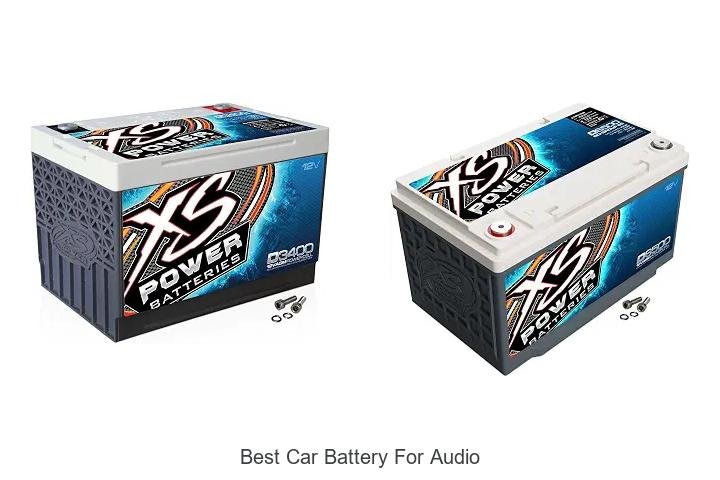
10 Best Car Battery for Audio: Best Options Compared
A weak battery can hold back your sound system. It may cause dim lights, voltage drops, or shutdowns when the bass hits hard.
This review is for people who want better sound without guesswork. It also helps drivers who use their system often and need reliable starts every day.
The right battery can support strong audio output while still handling normal driving needs. In this review, we will look at battery performance, build quality, reserve power, and fit for audio setups. We will also cover which options suit daily use, heavy systems, and tighter budgets.
Best Car Batteries for Powerful Audio Systems
| Image | Product | Price |
|---|---|---|
Pick 1  | XS Power D3400 AGM Battery | Check Price On Amazon |
Pick 2  | XS Power D6500 AGM Battery | Check Price On Amazon |
Pick 3  | Big Jeff Audio BJ-LI-22AH Lithium Battery | Check Price On Amazon |
1. XS Power D3400 AGM Battery
Heavy audio systems need strong power, and the XS Power D3400 is built for that job. It combines high output, AGM construction, and vibration resistance for daily use. This 12-volt lead-acid battery is rated at 3,300 amps, with 1,000 CA and 80 amp hours listed in the product data.
The sealed AGM design keeps the electrolyte suspended in fiberglass, which supports spill-proof use and flexible mounting. Its ultra-low internal resistance helps it deliver power quickly, which suits demanding car audio setups.
Build quality looks focused on durability and steady performance. The battery weighs 48 pounds and measures 11 by 12 by 9 inches, so it has a substantial physical presence.
M6 terminals support secure connections, and the universal fit makes it suitable for passenger cars and boats. It is a solid choice for daily drivers that need extra electrical support. Buyers wanting a high-output battery for audio use will appreciate its sealed construction, strong current delivery, and practical installation flexibility.
Pros
- High output suits demanding audio systems
- Sealed AGM design resists spills and vibration
- Can mount in almost any position
Cons
- Heavier than smaller batteries
- Large size may limit fitment
- M6 terminals may need matching hardware
Who Should Buy It?
Buyers with power-hungry audio setups should consider this battery. It fits passenger cars and boats, and it suits daily use well. The AGM design helps with spill resistance, vibration control, and flexible mounting.
People who want strong electrical support without leaving everyday driving behind will likely appreciate its balanced design. It also suits installations that need secure M6 terminal connections and a universal fit.
Key Specifications
| Specification | Details |
|---|---|
| Voltage | 12 volts |
| Battery Capacity | 80 amp_hours |
| Cranking Amps | 1000 CA |
| Amp Output | 3,300 amps |
| Battery Type | Lead-Acid, AGM |
| Terminal Type | M6 |
| Dimensions | 11″D x 12″W x 9″H |
| Weight | 48 pounds |
| Vehicle Fit | Boat, Passenger Car |
| Mounting Orientation | Mount in almost any position |
The battery uses 12 volts and lists 80 amp hours of capacity. It also shows 1,000 cranking amps and 3,300 amps of output. Those numbers point to strong starting support and high current delivery. The lead-acid AGM design keeps the electrolyte suspended in fiberglass. That sealed structure helps contain the contents and supports vibration resistance. M6 terminals and the 11 by 12 by 9 inch size matter during installation.
In everyday use, those specifications suit vehicles with demanding electrical loads. The 48-pound weight gives a sense of its substantial build. Its universal fit works with passenger cars and boats. Mounting in almost any position adds flexibility for tight spaces or custom layouts. People who need steady power for audio equipment will value the low internal resistance and AGM construction. The setup suits drivers who want a durable battery for regular use.
2. XS Power D6500 AGM Battery
High output power defines the XS Power D6500. It is built for audio systems that demand strong electrical support.
With a 12-volt AGM design, it offers 3,900 amps and 86 amp hours. The battery uses absorbed glass mat construction, so the electrolyte stays suspended in fiberglass.
That design helps it stay spill proof, sealed, valve regulated, and vibration resistant. It also has ultra low internal resistance for stronger delivery under load.
The D6500 suits passenger cars and boats with specific fit requirements. Its M6 terminal bolt connection gives a secure mounting point for wiring. At 53.8 pounds, it has substantial build weight for a high output AGM battery.
It can mount in almost any position, which adds flexibility during installation. Buyers who need high current for demanding audio setups will appreciate its steady output, durable construction, and practical fitment. It offers serious capability for systems that need more than a basic starting battery.
Pros
- High 3,900 amp output for demanding audio loads
- AGM design resists spills and vibration
- Can mount in almost any position
Cons
- Heavier than many standard batteries
- Vehicle-specific fit limits universal use
- M6 terminal bolt may need compatible hardware
Who Should Buy It?
Buyers with power-hungry audio systems should consider this battery. It suits passenger cars and boats needing high output support. The AGM design, low internal resistance, and 86 amp hours help supply demanding electrical loads.
People who want a sealed, vibration resistant battery with flexible mounting options will benefit most. It fits setups where strong current delivery matters more than compact size.
Key Specifications
| Specification | Details |
|---|---|
| Voltage | 12 volts |
| Battery Capacity | 86 amp_hours |
| Cranking Amps | 1070 CA |
| Amp Output | 3,900 amp |
| Battery Type | Lead-Acid, AGM |
| Terminal Type | M6 |
| Weight | 53.8 pounds |
| Vehicle Fit | Vehicle Specific Fit |
| Mounting Orientation | Almost any position |
The D6500 runs on 12 volts and uses AGM lead-acid construction. Its 86 amp hour capacity points to strong energy storage for demanding electrical use. The listed 1070 cranking amps show solid starting power when needed. The 3,900 amp output indicates a battery built for heavy current delivery. For audio setups, that means the battery can support large bursts of power without feeling undersized. It also fits passenger cars and boats with vehicle specific requirements.
Its M6 terminal type helps create a secure connection for system wiring. The 53.8-pound weight reflects the dense construction common in high output AGM batteries. Spill proof, sealed, and valve regulated design helps with safer placement and less maintenance. Vibration resistance matters in vehicles with stronger road movement or louder systems. Mounting in almost any position adds setup flexibility for installers. Those traits benefit drivers who want dependable electrical support and easier packaging choices.
3. Big Jeff Audio BJ-LI-22AH Lithium Battery
Compact size meets serious output in a lithium battery built for demanding audio setups. The Big Jeff Audio BJ-LI-22AH brings 6000 watts of max power and 293 watt hours of energy storage.
Designed around a 22 amp hour rating, it aims to support longer listening sessions without taking much space. Its 12-volt design supports up to 14.7 volts, which suits audio systems that need steady power delivery.
Built-in cell balancing also helps support battery life over time.
The physical size makes it a strong fit for tight installs. At 3.61 by 7.09 by 6.4 inches, it is aimed at compact system layouts where space matters. The lithium LFP chemistry adds a modern battery format for audio use, while the single-battery setup keeps installation simple.
It suits drivers who want compact lithium power for car audio upgrades, especially when they need strong output in a small footprint. The value comes from size, capacity, and power in one package.
Pros
- Compact footprint for limited install space
- High max power for demanding audio systems
- Built-in cell balancing supports battery life
Cons
- No cranking amps listed
- Weight information is not provided
- Terminal type is not specified
Who Should Buy It?
Buyers with tight space and strong audio needs should consider it. It suits compact builds that still need lithium power, steady 12-volt output, and a 22 amp hour rating. People upgrading car audio systems in smaller vehicles may value the small footprint and built-in cell balancing.
It also fits setups that want a single, simple battery solution.
Key Specifications
| Specification | Details |
|---|---|
| Voltage | 12 volts |
| Battery Capacity | 22 Ah |
| Amp Output | 6000W max power |
| Battery Type | Lithium LFP |
| Dimensions | 3.61 x 7.09 x 6.4 inches |
| Vehicle Fit | Car audio systems |
The 12-volt rating matches common car audio electrical setups. A 22 amp hour capacity means the battery can store a useful amount of energy for repeated listening sessions. The 293 watt hour figure gives a clearer sense of total stored power in everyday use. Since it supports up to 14.7 volts, the battery can fit systems that run higher charging levels. Built-in cell balancing helps the internal cells stay aligned during use.
The 6000 watt max power rating points to support for larger audio demands. In real use, that helps when amplifiers need strong current during loud playback. The compact 3.61 by 7.09 by 6.4 inch size benefits installs where space is tight. Its lithium LFP construction suits users who want a smaller, modern battery format. Drivers with limited mounting room and serious audio goals benefit most from that mix of size and output.
4. XS Power PS1200L 12V AGM Battery

Power delivery takes center stage with the XS Power PS1200L. It suits audio setups that need strong midrange output and fast discharge response.
Built as a sealed AGM power cell, it brings a non-spillable design and flexible mounting options. That makes installation easier in tight spaces and inside the passenger compartment.
The lead-tin AGM technology helps resist heat and charging stress during demanding use. Its ultra-thin lead plates increase surface area for strong instantaneous discharge. A tightly packed AGM layout also adds vibration resistance for daily driving.
The direct fit design helps it fit many OEM battery locations. It weighs 35.3 pounds, which keeps handling manageable during installation.
The M6 terminal setup supports practical connections for car audio wiring. With 2600A listed and 1500W to 3000W support, it fits serious systems well. It suits drivers who want cleaner power delivery without extra complication.
Pros
- Strong instantaneous discharge for audio demand
- Sealed design allows flexible mounting
- Vibration resistance suits daily use
Cons
- 35.3-pound weight may limit easy handling
- Single-battery format may not suit larger builds
- M6 terminals may need compatible hardware
Who Should Buy It?
Buyers with demanding midrange audio setups should consider this battery. It fits drivers who want a sealed AGM unit with flexible mounting and direct-fit convenience. The design suits passenger cars, including installations that need vibration resistance and stable power delivery.
It also works well for people planning systems around 1500W to 3000W audio needs.
Key Specifications
| Specification | Details |
|---|---|
| Voltage | 12 volts |
| Cranking Amps | 2600A |
| Amp Output | 1500W / 3000W |
| Battery Type | Lead-Acid, AGM |
| Terminal Type | M6 |
| Weight | 35.3 pounds |
| Vehicle Fit | Passenger Car; Universal Fit |
| Mounting Orientation | Any orientation |
A 12-volt AGM design gives this battery familiar car audio compatibility. The 2600A rating points to strong current delivery for demanding electrical loads. Its listed 1500W to 3000W support suggests it suits serious audio systems. M6 terminals offer a secure connection point for wiring hardware. At 35.3 pounds, it stays manageable during placement and installation. The universal fit and direct-fit design help it work in many OEM battery locations.
The sealed non-spillable design allows mounting in any orientation. That flexibility helps when space is tight or the battery sits inside the cabin. Lead-tin AGM technology is built to resist heat and charging stress. The tightly packed AGM structure also helps resist vibration during road use. Together, those features favor drivers who want steady audio power and practical installation options. It suits passenger cars where placement, durability, and connection flexibility all matter.
5. Reikken PR4800 Energie Power Cell

Power delivery takes center stage with the Reikken PR4800 Energie Power Cell. Its 4800 watt rating makes it aimed at demanding electrical setups. Designed as a box-shaped external power supply, it measures 12 by 15 by 9 inches and weighs 66 pounds.
The unit uses a single ATX connector and a 24 pin system bus connector. That setup suits users who need straightforward compatibility with supported equipment.
The large footprint and heavy build suggest a stable, serious power source. Air cooling helps manage operation during extended use. With 12 volt maximum input support, it fits systems built around that voltage range.
The external design may simplify placement for some installs, while the box form keeps the layout simple. It suits buyers who need high watt output and do not mind a substantial unit. For audio-focused applications, it appeals most to users seeking high power capacity over compact size.
Pros
- High 4800 watt output capacity
- Single ATX connector keeps setup simple
- External box design can be easier to place
Cons
- Heavy 66 pound unit
- Large size needs substantial space
- Limited connector information provided
Who Should Buy It?
Buyers who need a high watt power cell for demanding power delivery should consider it. It suits users with systems built around 12 volt input requirements and ATX connection needs. The large, 66 pound design fits fixed setups better than portable use.
It works best for people who value power capacity over compact size or light weight.
Key Specifications
| Specification | Details |
|---|---|
| Voltage | 12 volts maximum input |
| Battery Capacity | Not provided |
| Cranking Amps | Not provided |
| Amp Output | Not provided |
| Battery Type | Power cell |
| Terminal Type | ATX |
| Dimensions | 12 x 15 x 9 inches |
| Weight | 66 pounds |
| Vehicle Fit | Compatible devices not vehicle-specific |
| Mounting Orientation | Not provided |
The PR4800 runs on a 12 volt maximum input, which matches many low-voltage power setups. Its 4800 watt output points to a unit built for heavy electrical demand rather than small accessories. The 12 by 15 by 9 inch box shape gives it a defined footprint, while the 66 pound weight suggests a stationary role. The ATX connector and 24 pin system bus connector describe a straightforward connection style for compatible equipment.
These specifications matter most when space, power, and connection type all affect setup. The heavy weight can help keep the unit planted in one location, though it is not easy to move. Air cooling supports longer operation without adding complexity. Users who need substantial watt output and already work with ATX-compatible equipment will benefit most. The external design may also suit installations where placing a separate power source is simpler.
6. XS Power PS925L Power Cell Battery

Compact audio systems need strong bursts of power in a small footprint. XS Power PS925L fits that role with a sealed AGM design and 2,000A maximum output.
It is built for passenger cars and supports systems up to 1000W to 2000W RMS. The pure virgin lead construction aims for higher quality and longer service life.
Ultra-thin lead plates increase surface area for strong instantaneous discharge. That helps support demanding bass hits and repeated load changes.
Its compact size helps it fit many OEM battery locations without major hassle. The direct fit design also makes installation easier for common passenger car setups. At 33.29 pounds, it is substantial, yet still manageable for a specialized audio battery.
The non-spillable AGM format allows mounting in any orientation, even inside the cabin. The tightly packed design improves vibration resistance, which suits cars with active audio setups. It feels like a focused upgrade for smaller builds that still need serious current delivery.
Pros
- Compact size suits tight OEM battery spaces
- High 2,000A max output for audio bursts
- Sealed AGM design allows flexible mounting
Cons
- Limited to smaller audio systems
- Heavier than a basic starter battery
- Not ideal for very large builds
Who Should Buy It?
Buy this battery for a compact car audio upgrade that needs strong current delivery. It suits passenger cars with limited battery space and systems up to 1000W or 2000W RMS. Drivers wanting a sealed AGM battery with flexible mounting options will appreciate it.
It also fits builds that need vibration resistance and a direct-fit layout.
Key Specifications
| Specification | Details |
|---|---|
| Voltage | 12V |
| Battery Capacity | 28 Ah |
| Cranking Amps | 550 CA |
| Amp Output | 2,000A max |
| Battery Type | AGM lead-acid |
| Terminal Type | M6 |
| Dimensions | 6.50 x 4.92 x 6.93 inches |
| Weight | 33.29 pounds |
| Vehicle Fit | Passenger car, universal fit |
| Mounting Orientation | Any orientation |
The PS925L uses a 12V AGM lead-acid design with 28 amp hours. It also lists 550 cranking amps and 2,000A max output. In daily use, that means the battery can support short, heavy power demands from audio gear. The M6 terminal type gives a standard connection point for installation. Its 6.50 x 4.92 x 6.93 inch size helps it fit many passenger car battery trays.
These specifications favor compact audio builds that need space-saving power support. The 33.29-pound weight reflects a dense AGM construction with vibration resistance. The sealed design allows mounting in any orientation, including inside the passenger compartment. That helps installers in cars with tight placement options. Drivers with moderate audio systems benefit most, since the battery matches systems up to 1000W and 2000W RMS. It suits compact setups that need reliable current delivery.
7. ENERGIE PR3600 Battery

Power-minded setups need steady electrical support, and this battery targets that need directly. Its 3600 watt rating and 75 AH capacity make it appealing for audio-focused builds.
ENERGIE positions this unit as a 12 volt power cell for automotive use, giving it a simple role in system planning. The 50-pound build suggests a substantial unit, while the 12 x 8 x 11 inch footprint helps with fit checks before installation.
That size and weight point to a battery meant for serious current demands rather than casual use. It suits drivers who want a budget power cell for audio equipment and related vehicle demands.
The specification set is straightforward, which helps buyers match electrical needs without confusion. It also comes with manufacturer warranty coverage from the maker. For value-minded shoppers, the appeal is clear: basic specs, strong output claims, and a familiar automotive format.
Pros
- 3600 watt output suits audio-focused power needs
- 75 AH capacity supports steady electrical demand
- Straightforward 12 volt automotive battery format
Cons
- No cranking amps are listed
- Terminal type is not specified
- Weight may make handling harder
Who Should Buy It?
Buyers needing a budget-minded power cell for audio systems should look here. It fits drivers who want a 12 volt automotive battery with straightforward specifications and a sizeable 75 AH capacity. The size and weight suggest a serious unit for planned installations.
It suits people who can verify fit, mounting space, and terminal needs before buying.
Key Specifications
| Specification | Details |
|---|---|
| Voltage | 12 volts |
| Battery Capacity | 75 AH |
| Amp Output | 3600 watts |
| Battery Type | Automotive vehicle power cell battery |
| Dimensions | 12 x 8 x 11 inches |
| Weight | 50 pounds |
The 12-volt rating matches standard vehicle electrical systems, so fitment planning stays familiar. A 75 AH capacity suggests it can store a useful amount of charge for audio-related demand. The 3600 watt output claim points toward stronger electrical support than a basic starter battery. At 50 pounds, the unit feels substantial and may need careful lifting. Its 12 x 8 x 11 inch size also helps buyers check space before installation.
These numbers matter most in vehicles with power-hungry sound equipment. The capacity can help support longer electrical draws, while the watt output hints at stronger load handling. The compact footprint may suit tighter battery trays, though the weight can make placement less easy. Since the battery type is listed as an automotive vehicle power cell battery, it suits standard vehicle use. Buyers who want simple specs and planned installation will benefit most.
8. XS Power XP750 AGM Supplemental Battery

Auxiliary power gets a compact and focused solution here. The XS Power XP750 is built for systems that need extra support without adding much bulk.
It uses AGM construction, sealed design, and low internal resistance to suit demanding electrical loads. With 22 amp-hours and 750 amps, it targets supplemental use rather than primary starting duty. The battery weighs just 3.9 pounds, which makes placement easier in tighter builds.
Its sealed AGM design helps resist spills and vibration, while the universal fit adds flexibility for many setups. The M6 terminal bolt connection should suit cleaner installs where secure mounting matters. Dimensions of 5 by 10 by 10 inches keep it compact enough for auxiliary placement in passenger cars or boats.
It fits best for users who need extra audio support, stable power delivery, and a battery that can mount in almost any position. Build quality and portability make it a practical choice for custom electrical layouts.
Pros
- Compact size suits tight auxiliary installs
- Lightweight design makes placement easier
- AGM construction resists spills and vibration
Cons
- 22Ah capacity limits longer backup runtime
- Not intended as a primary battery
- Requires setup suited to M6 terminals
Who Should Buy It?
Buyers adding an auxiliary battery for audio systems should consider it. It suits passenger cars and boats needing compact supplemental power. The sealed AGM build helps in vibration-prone locations, and the light weight helps placement.
People with custom installs, space limits, or extra electrical demand will benefit most from its simple, universal-fit design.
Key Specifications
| Specification | Details |
|---|---|
| Voltage | 12 volts |
| Battery Capacity | 22 amp_hours |
| Cranking Amps | 750 amps |
| Amp Output | 750 amps |
| Battery Type | Lead-Acid, AGM |
| Terminal Type | M6 |
| Dimensions | 5″D x 10″W x 10″H |
| Weight | 3.9 pounds |
| Vehicle Fit | Boat, Passenger Car |
| Mounting Orientation | Mount in almost any position |
The 12-volt rating matches common vehicle electrical systems. Its 22 amp-hour capacity describes how much reserve power it can store for auxiliary use. The 750-amp output points to strong short-burst delivery, which matters when audio equipment draws sudden current. AGM lead-acid construction keeps the electrolyte suspended in fiberglass, which helps with spill resistance. The M6 terminal bolt connection supports a secure hookup, and the compact 5 by 10 by 10-inch size helps it fit into limited spaces.
These specifications suit setups that need extra power support without large battery size. The 3.9-pound weight makes handling and placement easier during installation. Mounting in almost any position gives flexibility for custom audio builds and tight compartments. Its sealed, valve-regulated design helps reduce maintenance concerns, while vibration resistance benefits vehicles and boats. Drivers who need an auxiliary battery for stable power delivery, space savings, and flexible mounting will get the most practical use from these specs.
9. XS Power XP600 600 Amp AGM Battery

Small audio systems often need extra support, and the XS Power XP600 fits that role well. Its compact AGM design brings stable 12-volt power into tight spaces without adding much weight.
Built as a 20Ah secondary battery, it delivers up to 600 max amps for auxiliary electronics and car audio setups. The sealed AGM construction helps resist spills and moisture, which suits rougher installation spots.
At 7.13 by 3.03 by 6.57 inches, it installs easily where larger batteries will not fit. The included M5 terminal hardware helps simplify wiring, and the 25-minute reserve capacity supports accessories when the engine is off.
It works best for smaller systems that need steadier power support rather than huge bass-heavy demands. For compact builds, boats, ATVs, or UTVs, it offers practical size, solid build quality, and focused performance.
Pros
- Compact size fits tight installation spaces
- Sealed AGM design resists spills and moisture
- Lightweight build makes handling easier
Cons
- Limited 20Ah capacity for larger systems
- Best suited for secondary power only
- Not ideal for high-demand audio builds
Who Should Buy It?
Buyers with a small secondary audio system will get the most from the XP600. It suits compact car audio setups, auxiliary electronics, and vehicles with limited space. The sealed AGM build also makes sense for boats, ATVs, and UTVs.
People needing a lightweight battery with simple installation hardware will appreciate its size and format.
Key Specifications
| Specification | Details |
|---|---|
| Voltage | 12 volts |
| Battery Capacity | 20 Ah |
| Cranking Amps | 600 Max Amps |
| Amp Output | 600 Watts supplemental power |
| Battery Type | AGM lead acid |
| Terminal Type | M5 terminal hardware |
| Dimensions | 7.13 x 3.03 x 6.57 inches |
| Weight | 11.7 pounds |
| Vehicle Fit | Car audio stereo systems, ATV accessory battery, boat secondary battery, UTV accessory battery |
| Mounting Orientation | No mounting orientation listed |
The XP600 uses 12 volts and 20Ah of capacity for auxiliary power. In daily use, that means it can support smaller audio accessories and other electronics without taking much space. Its 600 max amps give extra headroom when a system needs brief power support. The 25-minute reserve capacity matters when the engine is off. That helps keep accessories powered for short periods. The sealed AGM lead acid design also reduces spill concerns during installation or transport.
Its compact 7.13 x 3.03 x 6.57 inch size helps it fit cramped locations. The 11.7-pound weight makes handling easier during setup or relocation. M5 terminal hardware supports secure connections, which matters for clean wiring in audio builds. It suits car audio stereo systems, plus ATV, boat, and UTV secondary use. People with smaller systems benefit most, since the battery is made for supplemental power rather than major high-draw setups.
10. DS18 INF-18 12V AGM Battery

Small audio builds need compact power, and the DS18 INF-18 fits that role well. Its 18 AH AGM design aims to hold voltage during hard draws.
DS18 built this sealed 12-volt battery for tight spaces and flexible mounting. The non-spill construction supports upside-down or multi-angle placement, which helps in unusual installs. M5 bolt terminals offer secure connections and easy add-on hardware options.
The battery is rated at 750 watts and uses AGM technology for high charging demand from 12v sources. Its compact 7.12 by 3 by 6.57-inch size suits ultra-compact setups, while the sealed lead acid design keeps maintenance simple.
It also works in passenger cars, ATVs, UTVs, motorcycles, and jet skis. Buyers who need space-saving power for audio gear should find it a practical fit.
Pros
- Compact size fits very small installation spaces.
- AGM design handles demanding power draws.
- M5 terminals allow secure, flexible wiring.
Cons
- 18 AH capacity limits larger audio systems.
- No cranking amps figure is listed.
- Not ideal for full-size bass-heavy builds.
Who Should Buy It?
Buyers with ultra-compact audio setups should consider it. It suits small vehicles, powersports builds, and custom installs with limited space. The sealed AGM design helps in tight mounting spots, while the M5 terminals support clean wiring.
It works best for users who need steady voltage and flexible placement more than large reserve capacity.
Key Specifications
| Specification | Details |
|---|---|
| Voltage | 12 volts |
| Battery Capacity | 18 AH |
| Amp Output | 750 Watt |
| Battery Type | AGM, Sealed Lead Acid |
| Terminal Type | Nut & Bolt, M5 terminals |
| Dimensions | 7.12 inch x 3 inch x 6.57 inch |
| Vehicle Fit | ATV, Passenger Car, UTV |
| Mounting Orientation | Non spill design, upside down or multiple configurations |
The 12-volt rating matches common car audio and powersports electrical systems. An 18 AH capacity means the battery stores a modest amount of reserve power. The 750-watt figure suggests it can support compact audio needs and other electrical draws. AGM construction uses absorbed glass mat material, which helps manage charging demands from 12v sources. Its sealed lead acid design also keeps routine upkeep simple for daily use.
Size matters in small builds, and these dimensions help the battery fit tight locations. The nut and bolt M5 terminals support firm connections and additional hardware choices. Non-spill construction allows upside-down mounting or other layouts without leakage worries. That flexibility suits custom audio installs, ATVs, UTVs, and motorcycles. Users who need secure wiring, compact size, and stable voltage in limited spaces will benefit most from these specifications.
Best Car Battery for Audio: The Ultimate Buying Guide for Powerful Sound
Battery type and chemistry
Battery type and chemistry play a major role in how well a car audio system performs and how long the electrical system lasts. AGM batteries usually handle repeated discharge and recharge cycles better than flooded lead-acid models, making them a stronger fit for vehicles with powerful amplifiers, subwoofers, and frequent engine-off listening. Deep-cycle batteries are built to deliver steady power over longer periods, while starting batteries are designed for short bursts of energy and can struggle under sustained audio demand. It is also important to verify that the battery matches the needs of audio-heavy setups, because an undersized unit may cause voltage drops, dimming lights, and inconsistent sound quality.
It is also important to verify that the battery matches the needs of audio-heavy setups, because an undersized unit may cause voltage drops, dimming lights, and inconsistent sound quality. A well-matched battery helps support cleaner power delivery, improves reliability, and gives the entire system the endurance it needs for demanding audio use.
Power requirements for car audio
Power requirements for car audio start with how much current the system can draw and how well the battery can keep voltage steady under stress. A high-wattage setup with powerful amplifiers can drain a weak battery quickly, especially during deep bass peaks, so it is important to match the battery’s reserve capacity to the total load and the length of time the system may play with the engine off. Stable voltage is just as critical, because drops under heavy demand can cause dimming lights, distorted sound, or amplifier shutdowns.
Stable voltage is just as critical, because drops under heavy demand can cause dimming lights, distorted sound, or amplifier shutdowns. Before adding extra audio gear later, it also helps to verify that the battery and charging setup can handle future upgrades without strain, since a system that is fine today may struggle once more amplifiers or accessories are added.
- System wattage and amplifier demand: Higher output systems need stronger current delivery to avoid clipping and performance loss.
- Reserve capacity needs: More reserve power helps support extended listening sessions and reduces the risk of rapid drain.
- Voltage stability under load: Consistent voltage keeps the audio system clean, efficient, and protected from shutdowns.
Battery capacity and performance ratings
A high-powered audio system draws steady current, so a battery with the right electrical support can help prevent dimming lights, weak bass, and hard starts after long listening sessions. Amphour rating shows how much energy the battery can deliver over time, which matters for systems that play music with the engine off. Cold cranking amps indicate how well the battery can supply a strong burst of power to start the vehicle, especially in colder weather or after heavy accessory use.
Cold cranking amps indicate how well the battery can supply a strong burst of power to start the vehicle, especially in colder weather or after heavy accessory use. Reserve capacity reflects how long the battery can keep essential functions running if the alternator is under strain, making it especially useful for audio setups that demand extra power. Together, these three ratings give a clearer picture of whether the battery can support both reliable starts and stable performance for demanding in-car sound systems.
Fitment and installation factors
A car battery that fits the vehicle’s electrical layout and physical space helps audio gear perform reliably without installation problems. A proper group size and exact dimensions prevent rattling, cable strain, and clearance issues around nearby components, while correct terminal placement and polarity make it easier to connect amplifiers, capacitors, and factory wiring without awkward rerouting or risk of damage.
These fitment details may seem small, but they directly affect installation quality, long-term safety, and the stability of your sound setup.
Charging system compatibility
Charging system compatibility matters because a powerful audio setup can draw far more current than the factory electrical system was designed to supply, and that extra demand must be supported reliably to avoid voltage drops, dimming lights, or premature battery wear. A unit with the right alternator output helps keep the battery charged during long play sessions, especially at idle or with high-volume bass peaks, while weaker charging hardware can leave the system struggling to recover between bursts of power.
It is also worth planning for battery isolators or capacitors, because these components can protect the main battery, stabilize power delivery, and support additional electrical loads in more advanced setups.
Ignoring these factors can lead to inconsistent sound quality and unnecessary stress on both the battery and the vehicle’s charging components, so the electrical layout should match the demands of the audio system from the start.
Durability, warranty, and value
Vibration resistance is a critical feature because powerful audio systems can put extra stress on a battery, and constant road vibration may loosen internal components or shorten its service life. A battery built to handle movement and impact is more likely to stay reliable in daily driving, especially if the vehicle is fitted with heavy sound equipment. Warranty length and coverage also matter, since a stronger warranty can reflect better manufacturer confidence and give you more protection if the battery fails early.
Warranty length and coverage also matter, since a stronger warranty can reflect better manufacturer confidence and give you more protection if the battery fails early. Price versus longterm performance should be weighed carefully, because a cheaper option may save money upfront but cost more over time if it wears out faster or struggles under repeated audio demands. In practical terms, a durable battery with solid support and dependable lifespan often delivers better value than a low-cost model that needs frequent replacement.
| Factor | Why it matters |
|---|---|
| Vibration resistance | Helps the battery withstand rough roads and high-output audio use. |
| Warranty length and coverage | Offers added protection and signals product confidence. |
| Price versus longterm performance | Shows whether the battery delivers real value over its full lifespan. |
How Long a Car Audio Battery Lasts
A car battery made for audio work wears out faster than a standard starter battery when it powers big amplifiers and long listening sessions. Its life depends on use, charging habits, heat, and how hard the system is pushed. A battery in a daily driver with a modest sound setup may last several years. A battery that is often drained very low may fail much sooner.
Watch for early signs of trouble. Slow cranking, dim lights at idle, weak bass during long play time, or a battery warning light can all point to aging. Swollen cases, leaking fluid, or a rotten egg smell are also bad signs. Do not wait for a total failure before acting.
A simple rule helps: replace the battery when it can no longer hold a charge well or support the system without voltage drops. Many owners check battery health once or twice a year with a multimeter or battery tester. A healthy 12-volt battery should usually read about 12.6 volts when the car is off. Lower readings after a full charge can mean the battery is getting weak.
Short trips, loud music at idle, and extreme temperatures can shorten battery life. A smart charger, a proper alternator, and good wiring help the battery last longer. Keeping terminals clean also helps prevent power loss.
- Replace it if it struggles to start the car.
- Replace it if voltage drops fast under audio load.
- Replace it if it will not stay charged after a full recharge.
- Replace it if the case is swollen, cracked, or leaking.
For a car audio setup, replacing a weak battery early is better than waiting for sudden failure. That helps protect your sound system and keeps the car reliable.
FAQ’s
What Is The Best Car Battery For High-Power Audio Systems?
For high-power audio systems, the best car battery is usually an AGM battery because it delivers strong, stable power and handles deep cycling better than standard batteries. If the system is very demanding, pairing an AGM battery with a high-output alternator and a second auxiliary battery is often the best setup.
How Do I Choose The Right Car Battery For An Aftermarket Sound System?
Choose a car battery with enough capacity and reserve power to handle the extra electrical load from your aftermarket sound system, and make sure it matches your vehicle’s size and voltage requirements. If the system is powerful, consider an upgraded AGM battery or add a second battery and have the charging system checked too.
Does A Higher Ah Car Battery Improve Audio Performance?
A higher Ah car battery can help if your audio system draws a lot of power, because it can provide longer run time and better support for heavy loads. However, it won’t necessarily make the sound quality better unless your current battery was struggling to supply enough power.
What Battery Upgrades Are Recommended For Cars With Subwoofers And Amplifiers?
For cars with subwoofers and amplifiers, an upgraded deep-cycle or high-performance AGM battery is recommended to provide more stable power and handle the extra electrical load. If the system is very powerful, adding a second battery or a higher-output alternator can also help prevent voltage drops.
How Do Agm Batteries Compare To Lithium Batteries For Car Audio?
AGM batteries are cheaper and work well for car audio, but they are heavier, have less usable capacity, and don’t last as long as lithium batteries. Lithium batteries are lighter, charge faster, deliver more power efficiently, and usually perform better for high-demand audio systems.
Final Verdict
The best car battery for audio depends on how much power your system needs and how much space you have to work with. XS Power D3400 AGM Battery is the best overall choice for drivers who want strong daily-use performance with a serious audio setup. For budget-minded buyers who need an auxiliary battery, the XS Power XP750 AGM Supplemental Battery offers the best value.
The XS Power D6500 AGM Battery is the premium pick for systems that demand the highest output and the most reserve power.
For smaller builds, the DS18 INF-18 12V AGM Battery is the best fit for compact installs where size matters as much as output. Choose the D3400 for a balanced high-output daily driver, the XP750 for add-on support, the D6500 for maximum power, and the DS18 INF-18 when space is tight.
Choose the XS Power D3400 for most high-output audio builds, or step up to the D6500 if your system needs maximum power.