What Happens If You Drive Far on a Flat Tire?
If you drive far on a flat tire, you risk severe damage to the tire, wheel, and your vehicle’s handling.
Your steering and braking become harder, which increases the risk of accidents.
Plus, the tire sidewall can get ruined beyond repair.
Extended driving on a flat tire can also harm your suspension and alignment, which could lead to costly fixes.
Typically, you shouldn’t go more than 1.5 miles at under 20 mph on a flat.
Understanding these effects helps you know what to do next.
Key Takeaways
- Driving far on a flat tire severely damages the tire sidewall, making it irreparable.
- Prolonged driving risks wheel rim damage from contact with the road surface.
Flat tires cause compromised handling and increased stopping distance, which can lead to a higher accident risk.
– Uneven weight distribution stresses suspension and alignment, leading to costly repairs.
If you drive more than 1.5 miles on a flat at speeds above 20 mph, you’ll greatly increase the damage.
The Immediate Risks of Driving on a Flat Tire
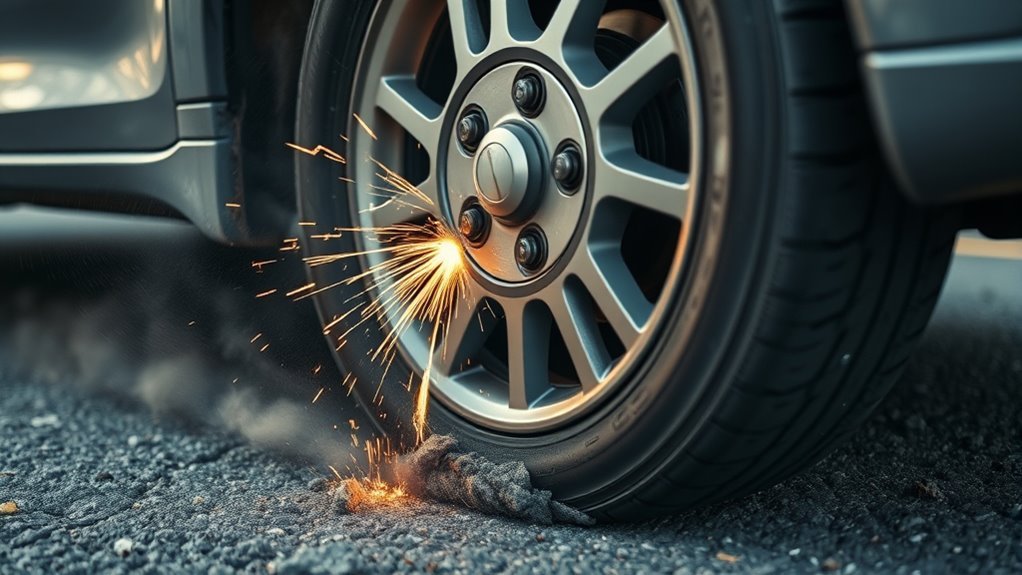
Although you might be tempted to keep driving, operating your vehicle on a flat tire quickly compromises handling and braking.
This increases your stopping distance and the risk of accidents.
Driving on a flat reduces tire pressure, causing poor traction and making steering and stopping more difficult, especially at higher speeds or in bad weather.
The tire can’t properly support your vehicle’s weight, which leads to the wheel rim contacting the road.
This contact risks severe tire damage and potential bending or cracking of the wheel itself.
Continuing to drive on a flat puts extra stress on your suspension, risking misalignment and damage to shocks and struts.
It’s essential to find a safe location promptly to avoid worsening tire damage and reduce the risk of an accident.
How Far Can You Safely Drive on a Flat Tire?

How far can you safely drive on a flat tire before causing serious damage?
Generally, you shouldn’t drive more than 1.5 miles on a flat tire, and keep your speed under 20 mph to minimize the risk of damaging your tire and wheel.
Drive no more than 1.5 miles at under 20 mph on a flat to avoid tire and wheel damage.
Driving further than this can quickly worsen the situation, compromising your safety on the road.
If your vehicle has run-flat tires, you can drive up to 50 miles at reduced speeds.
But for standard tires, limit yourself to just a mile or two at most.
When you notice a flat tire, pull over immediately to a safe spot.
Remember, proper tire maintenance helps prevent flats.
But if you do get one, call roadside assistance to avoid risking further damage or unsafe conditions.
Damage to Tire and Wheel From Extended Driving
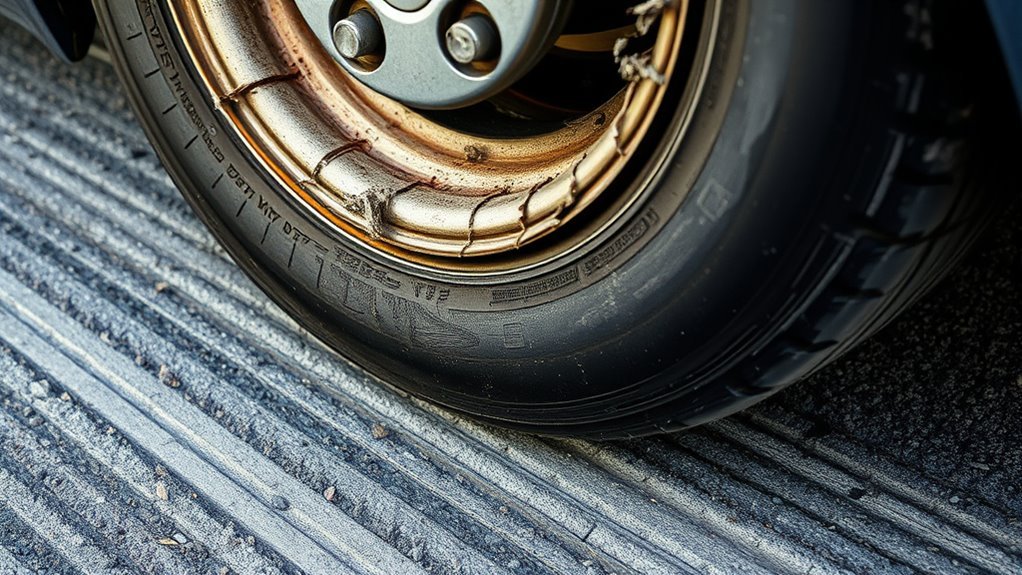
If you keep driving on a flat tire, you risk severe structural damage to the tire itself, especially the sidewall.
The wheel rim can also get bent or cracked from direct contact with the road.
Both issues can lead to costly repairs or replacements you’ll want to avoid.
Tire Structural Damage
Driving on a flat tire for an extended period can cause severe structural damage to both the tire and the wheel.
When tire pressure drops, the sidewalls flex excessively, leading to tire structural damage and overheating.
Prolonged driving on a flat tire risks the tire disintegrating entirely, creating debris hazards.
The wheel rim may contact the road, causing damaging bends or cracks.
These issues escalate to expensive repairs beyond a simple tire patch.
| Issue | Cause | Consequence |
|---|---|---|
| Tire sidewall damage | Low tire pressure | Irreparable flexing |
| Tire disintegration | Prolonged driving flat | Road debris hazard |
| Wheel rim damage | Rim-road contact | Costly replacements |
| Vehicle component stress | Uneven weight distribution | Brake/suspension damage |
Wheel Rim Deformation
A flat tire quickly turns into a bigger problem when the wheel rim starts scraping the road.
As you keep driving, the wheel rim deformation worsens due to the weight of the vehicle pressing down without proper tire cushioning.
This direct contact causes bending, cracking, or other damage to the rim, especially if you drive faster than 20 mph.
The risk of severe wheel rim damage increases the longer you drive, often leading to costly repairs or even full rim replacement.
Additionally, the damaged tire’s sidewall usually becomes irreparable, forcing a tire replacement.
Ignoring a flat tire not only harms the rim but also stresses other parts like brake lines and suspension.
This compounds the problem and expenses, making it crucial to address a flat tire promptly.
Impact on Vehicle Handling and Safety
When you continue driving on a flat tire, your vehicle’s traction takes a serious hit. This makes it much harder to control, especially at higher speeds.
The lack of tire pressure causes uneven weight distribution, which can pull your car to one side. This compromises safe handling.
Driving far on a flat tire also increases stopping distances and makes steering unpredictable. This raises the dangers of driving considerably.
| Aspect | Effect | Safety Implication |
|---|---|---|
| Traction | Severely reduced | Loss of control risk |
| Tire Pressure | Deflated, deformed tire | Difficult steering |
| Weight Distribution | Uneven load | Vehicle pulls to one side |
| Braking Efficiency | Impaired | Longer stopping distance |
Ignoring these impacts jeopardizes both your safety and that of others on the road.
Effects on Suspension and Alignment
When you drive on a flat tire, you put extra stress on your suspension.
This can lead to misalignment and uneven tire wear.
This damage not only affects your vehicle’s handling but can also rack up costly repairs.
Suspension Stress Increase
Since driving on a flat tire causes uneven weight distribution, you’ll put extra stress on your vehicle’s suspension system.
This suspension stress increases with prolonged driving on the deflated tire, risking damage to shocks and struts.
As these components weaken, your vehicle’s handling suffers, making it less stable and harder to control.
Additionally, the strain can affect your vehicle’s alignment, leading to uneven tire wear and more damage over time.
Repair costs can quickly add up if you ignore these warning signs.
- Uneven weight distribution strains suspension components.
- Prolonged driving causes shocks and struts damage.
- Handling quality declines as suspension weakens.
- Increased risk of costly repairs due to suspension and alignment damage.
Alignment Misalignment Risks
If you keep driving on a flat tire, you’ll risk severe misalignment in your vehicle’s suspension system. This happens because of the uneven weight and extra stress placed on its components.
This alignment misalignment disrupts proper weight distribution, causing uneven tire wear. As a result, you’ll be forced into premature replacements.
Not to mention, your suspension system’s shocks and struts take a beating. This not only worsens ride quality but also ramps up repair costs.
Misalignment also impairs your vehicle’s handling and stability. This increases the chance of accidents, especially when driving at higher speeds or in bad weather.
Ignoring these risks means facing more frequent breakdowns and unsafe driving conditions.
To protect your vehicle and your safety, don’t delay fixing a flat tire and addressing any resulting suspension misalignment.
Costly Repair Consequences
Ignoring a flat tire doesn’t just throw off your vehicle’s alignment—it leads to costly repairs that affect suspension and overall performance.
Driving far on a flat tire puts extra stress on your suspension system, causing damage to shocks and struts.
This wear can result in poor vehicle handling and safety issues.
Additionally, the wheel rim may bend or crack, requiring expensive replacements.
Prolonged misalignment causes uneven tire wear and compromises stability, making your ride rougher and riskier.
- Increased strain on suspension components
- Bent or cracked wheel rim damage
- Uneven tire wear from misalignment
- Compromised vehicle handling and safety
Addressing a flat tire promptly saves you from extensive suspension repairs and costly alignment fixes.
Steps to Take When You Get a Flat Tire
When you get a flat tire, the first thing you should do is slow down and steer your vehicle to a safe spot away from traffic.
Once you’re in a safe location, turn on your hazard lights to alert others and ensure your safety.
Next, take a moment to inspect your tires to assess any damage.
If you have a spare tire and feel confident in changing it, do so carefully.
However, if you are unsure or uncomfortable, it’s perfectly fine to call for roadside assistance.
Also, remember that regular tire checks can help prevent flats and save you from costly repairs.
| Step | Action | Purpose |
|---|---|---|
| 1. Slow down | Reduce speed | Control and safety |
| 2. Pull over | Find safe spot | Avoid traffic hazards |
| 3. Turn on hazard | Activate hazard lights | Alert other drivers |
| 4. Change or call | Use spare tire or call help | Fix flat tire or get support |
Frequently Asked Questions
Is It Safe to Drive 2 Miles on a Flat Tire?
No, it’s not safe to drive 2 miles on a flat tire.
You risk serious damage to your wheel and tire, and your vehicle’s handling suffers.
Pull over immediately to avoid costly repairs and accidents.
How Far Can I Drive With a Flat Tire?
You can drive about 1.5 miles at 20 mph on a flat tire, but it’s risky.
If you have run-flat tires, you might go 50-100 miles slower than 50 mph.
Stop ASAP to avoid damage.
How Long Can You Drive on a Flat Tire Before Damage?
Imagine walking on a broken heel; you’d hurt quickly.
You can only drive about 1.5 miles on a flat tire before serious damage occurs.
Going further risks wrecking your wheel and tire completely.
Don’t push it!
Can You Drive 13 Miles on a Flat Tire?
You can’t safely drive 13 miles on a flat tire without risking severe damage.
It’s best to stop immediately, keep speed under 20 mph if necessary, and get professional help to avoid costly repairs.
Conclusion
Driving far on a flat tire is like trying to ride a bike with a broken chain—it just won’t end well.
One driver learned this the hard way after going five miles on a flat, ending up with a ruined wheel and costly repairs.
To avoid turning a small problem into a big headache, stop immediately.
Replace the tire or call for help. Your safety and wallet will thank you for it.
In conclusion, driving on a flat tire can lead to significant damage, both to your vehicle and your finances.
It’s crucial to act quickly by pulling over and addressing the issue.
Remember, a flat tire isn’t just a minor inconvenience; it can escalate into a major repair bill if ignored.
So, always prioritize safety and take prompt action when you experience tire trouble.