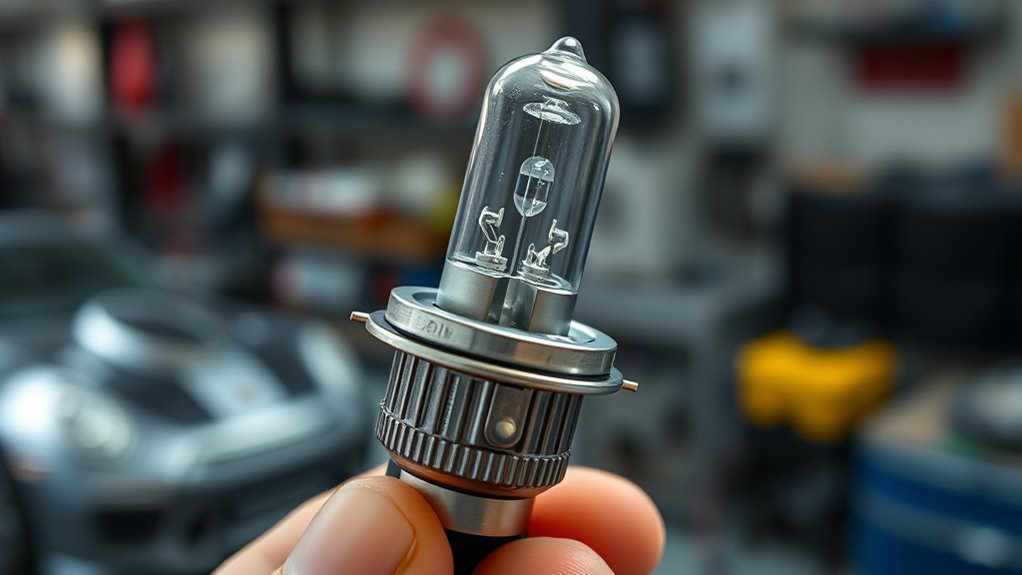
What Is an H4 Headlight Bulb and How Does It Work?
An H4 headlight bulb is a popular choice among drivers because it combines both high and low beams in a single unit. This is achieved through two filaments housed within one halogen bulb.
Switching between beams is a breeze, thanks to its three-pin base that fits securely into the headlight socket.
With this design, you can expect reliable and bright lighting, making it suitable for a variety of cars and motorcycles.
If you’re curious about its features, compatibility, and how it compares to other types of headlight bulbs, there’s a lot more to discover.
Overall, the H4 bulb’s versatility makes it a go-to option for many vehicle owners.
So, let’s dive deeper into what makes this bulb stand out in the automotive lighting world!
Key Takeaways
- An H4 headlight bulb is a dual-filament halogen bulb used for both high and low beams in one unit.
- It contains two filaments: one for low beam with focused light, and another for high beam with brighter, longer-range light.
- The bulb uses a three-pin connector for secure electrical connections in vehicles.
- Switching between high and low beams occurs by activating the corresponding filament inside the bulb.
- H4 bulbs are compatible with many cars and motorcycles, which simplifies lighting systems with a single bulb solution.
Definition and Overview of H4 Bulbs
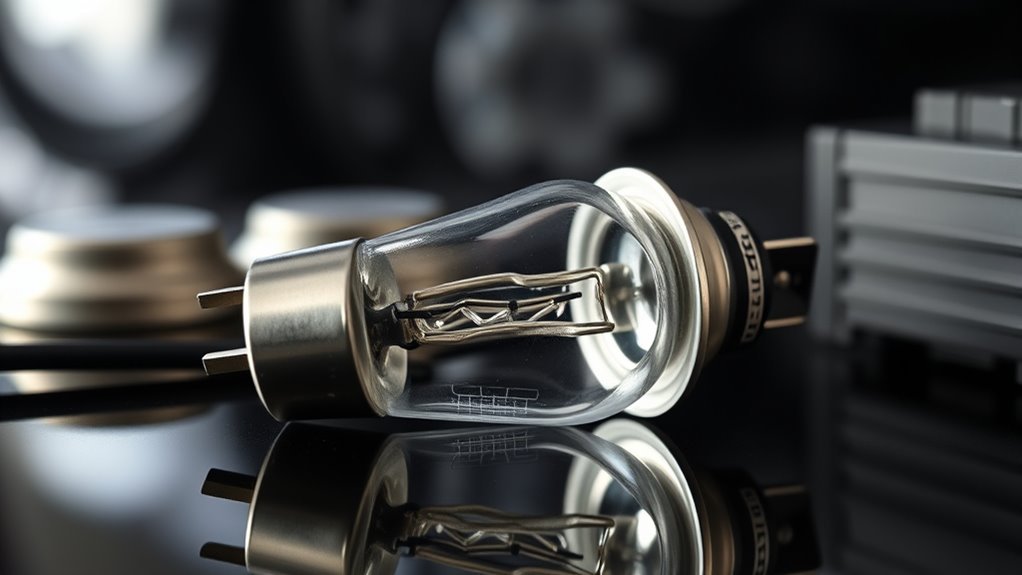
The H4 bulb, also known as 9003 or HB2, is a dual-filament halogen bulb that powers both high and low beams in one unit.
The H4 bulb combines high and low beam functions in a single dual-filament halogen unit.
You’ll find this H4 bulb widely used in automotive headlights because it combines two filaments—one for low beam and one for high beam—into a single, compact design.
This setup offers reliable performance by ensuring seamless switching between beams without needing separate bulbs.
Thanks to its three-pin connector, the H4 bulb maintains secure electrical connections, supporting consistent illumination every time you drive.
Whether you’re upgrading your car, motorcycle, or off-road vehicle, the H4 bulb is a versatile choice.
It delivers efficient lighting, enhancing your visibility and safety on the road.
Dual Filament Design and Functionality
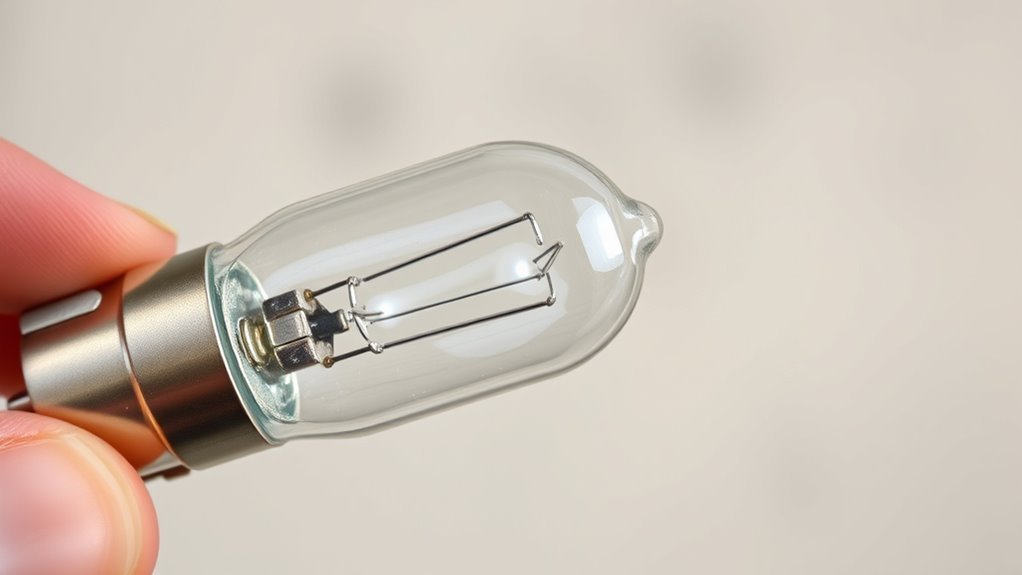
Understanding how an H4 bulb works starts with its dual filament design, which lets you switch between low and high beams effortlessly.
This headlight bulb contains two filaments: one for low beam and one for high beam.
When you activate the low beam, only the low beam filament lights up, producing a focused light output that reduces glare for oncoming drivers.
Switching to high beam turns off the low beam filament and powers the high beam filament, boosting brightness and range.
The reflectors in the automotive headlamp direct light precisely from each filament, ensuring maximum visibility.
This dual filament functionality simplifies your vehicle’s lighting system by combining both beam functions into a single H4 bulb.
This not only reduces the need for multiple bulbs but also improves efficiency.
Key Features of H4 Headlight Bulbs
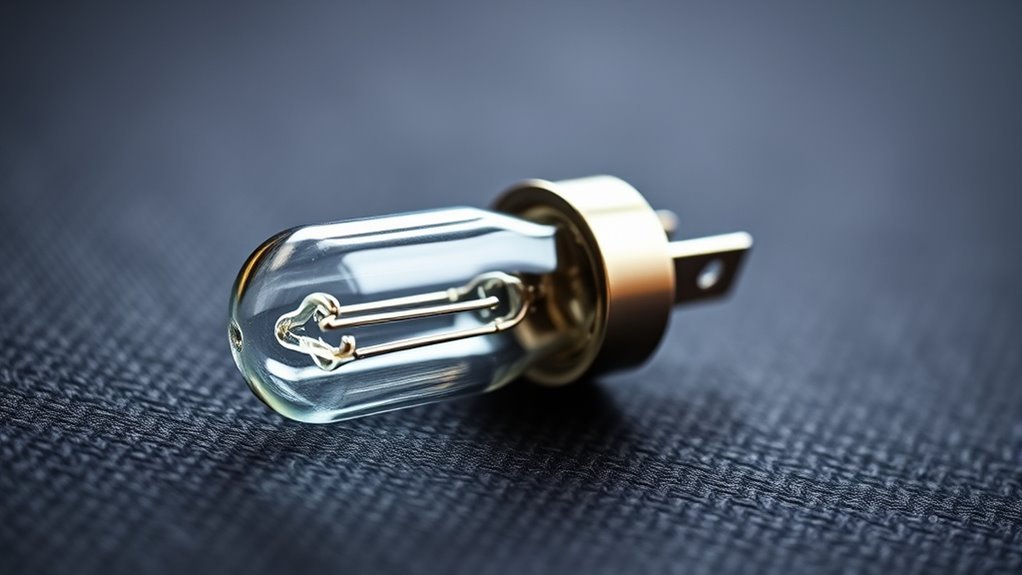
You’ll find that H4 headlight bulbs pack multiple features into one compact design, making them a versatile choice for many vehicles.
The H4 bulb’s dual filaments allow it to provide both high and low beam functions seamlessly, eliminating the need for separate bulbs.
H4 bulbs feature dual filaments for effortless switching between high and low beams in one unit.
Utilizing halogen technology, these bulbs deliver brighter light and longer lifespan compared to traditional options.
Equipped with a three-pin connector, the H4 bulb guarantees secure and reliable electrical connections for consistent performance.
Widely compatible across numerous vehicle models, you’ll find replacements and upgrades hassle-free.
Additionally, LED variants of the H4 bulb offer improved efficiency, longer life, and instant illumination, giving you a modern alternative while preserving the classic dual-beam functionality.
Applications and Vehicle Compatibility
Many vehicles rely on H4 headlight bulbs for their dual-beam functionality, making them a popular choice across cars, motorcycles, and off-road vehicles.
Thanks to their dual-filament design, H4 bulbs provide both high and low beam functions in a single unit, simplifying automotive lighting systems.
If you’re considering replacements, you’ll appreciate that H4 bulbs are interchangeable with types like HB2 and 9003, enhancing vehicle compatibility.
When upgrading to LED H4 bulbs, though, keep in mind your vehicle may need modifications for proper fit and peak performance.
Overall, H4 headlight bulbs remain a versatile, reliable option in the automotive world.
They are widely used for their ease of maintenance and efficient lighting across diverse vehicle models.
Differences Between H4 and Other Bulb Types
When you compare H4 bulbs to H7 types, the key difference lies in the filament design—H4 uses dual filaments for both high and low beams, while H7 has a single filament for just one beam.
This means you can handle both beam functions with one H4 bulb, but H7 requires separate bulbs.
Understanding this helps you choose the right bulb for your vehicle’s lighting needs.
H4 Vs H7
Understanding the key differences between H4 and H7 headlight bulbs helps you choose the right lighting for your vehicle.
H4 bulbs use dual filaments to provide both high beam and low beam functions in one unit.
On the other hand, H7 bulbs have a single filament, which means you need two bulbs per headlamp for these functions.
When the H4’s high beam activates, the low beam briefly turns off.
H7 bulbs, however, maintain both beams illuminated simultaneously.
H4 bulbs have a three-pronged base, contrasting with the two-pronged base of H7, making them incompatible.
In automotive use, H4 bulbs offer versatile lighting with simpler installation.
Meanwhile, H7 bulbs often deliver higher light output but may need reflector adjustments to optimize performance.
These differences matter when deciding which bulb suits your needs.
Dual Vs Single Filament
Although single filament bulbs like H1 and H7 serve specific lighting functions, H4 bulbs stand out by combining dual filaments that handle both low and high beams within a single unit.
This design offers several advantages over single filament setups in headlight systems:
- The H4 bulb’s dual filaments allow one filament for low beam and another for high beam, simplifying your vehicle’s lighting.
- Single filament bulbs like H1 and H7 require separate bulbs for each beam, increasing complexity.
- When the H4 bulb switches to high beam, it turns off the low beam, unlike H7 systems that keep both beams on simultaneously.
- The H4 bulb fits a wider range of vehicles, while H1 and H7 are more application-specific.
Choosing an H4 bulb means you get versatile, streamlined lighting with fewer parts to manage.
Installation and Maintenance Tips
Before installing your H4 headlight bulb, make certain to remove the dust cover and unplug the old bulb carefully.
When you replace halogen bulbs, insert the new H4 bulb securely into the socket, guaranteeing the filaments align with the headlight reflector for proper light projection.
After installation, reconnect the plug to the vehicle’s electrical system and put the dust cover back on to protect the bulb from debris.
Reattach the plug and replace the dust cover to shield your bulb from dust and debris.
Regularly check your H4 bulb for signs of wear or dimming, as halogen bulbs usually last between 500 to 1,000 hours.
Always consult your vehicle’s owner manual before installation to confirm compatibility and power ratings.
Proper installation and maintenance will maximize your bulb’s lifespan and guarantee safe driving conditions.
Frequently Asked Questions
Can I Replace an H4 Bulb With LED?
Yes, you can replace an H4 bulb with LED, but you’ll need to check compatibility.
You might also have to modify your vehicle’s systems and guarantee proper installation.
Also, verify local laws before upgrading to avoid legal issues.
What Vehicles Use H4 Headlights?
You’ll find H4 headlights mainly on motorcycles, off-road vehicles, and many 1990s to early 2000s European cars like BMW, Volkswagen, and Subaru Outback.
Honda Civics often use them too, thanks to their dual-beam design.
Are 9003 and H4 Bulbs the Same?
Yes, 9003 and H4 bulbs are the same.
You can use them interchangeably since they share the same design and specifications.
Both bulbs also have a three-pin connector, ensuring compatibility across many vehicles for both high and low beam functions.
Which Is Brighter, H4 or H11?
H4 bulbs are generally brighter than H11 bulbs because they have dual filaments for both high and low beams, producing up to 1500 lumens.
You’ll get more overall brightness with an H4 bulb compared to H11.
Conclusion
Understanding an H4 headlight bulb is like having a reliable flashlight in your hands—it lights the way with dual filaments for both high and low beams.
Knowing how it works and fits your vehicle helps you keep the road safe and clear.
With proper installation and care, your H4 bulb won’t just shine; it’ll guide you like a trusted companion through every night drive.
So, keep it bright and ready for all your adventures!
In conclusion, an H4 headlight bulb is essential for providing clear visibility on the road. Its dual filaments allow for both high and low beams, ensuring you can adapt to different driving conditions.
When installed correctly, you can trust your H4 bulb to illuminate your path, enhancing safety during night drives. Regular maintenance and timely replacements will keep your headlights shining bright.
Don’t underestimate the importance of a reliable headlight bulb—it’s your guiding light in the dark!