Diagnosing Car Suspension Noise: A Step-by-Step Guide
You can diagnose car suspension noise by first listening for knocking, squeaking, or thumping sounds while driving or over bumps.
These sounds can indicate potential issues with your suspension system.
Then, visually inspect for cracks, leaks, or loose parts on shocks, springs, and control arms.
This inspection is crucial for identifying any immediate problems.
Next, perform a bounce test by pressing down on each corner—if the car bounces more than once, your shocks may be worn.
This is a simple yet effective test to gauge the health of your suspension.
Finally, note any pulling or uneven tire wear.
These signs can help you pinpoint alignment issues or worn components.
Keep checking, and you’ll uncover how to tackle these issues effectively.
Key Takeaways
- Listen for knocking, clunking, squeaking, or thumping noises during driving or over bumps to identify suspension issues.
- Perform a visual inspection for cracks, rust, leaks, and loose or damaged suspension parts.
- Conduct a bounce test by pressing down on each corner; excessive bouncing indicates worn shock absorbers.
- Check tires for uneven wear patterns to detect possible misalignment or suspension problems.
- Seek professional help if noises persist, oil leaks appear, or the vehicle pulls to one side.
Understanding the Role of Your Suspension System
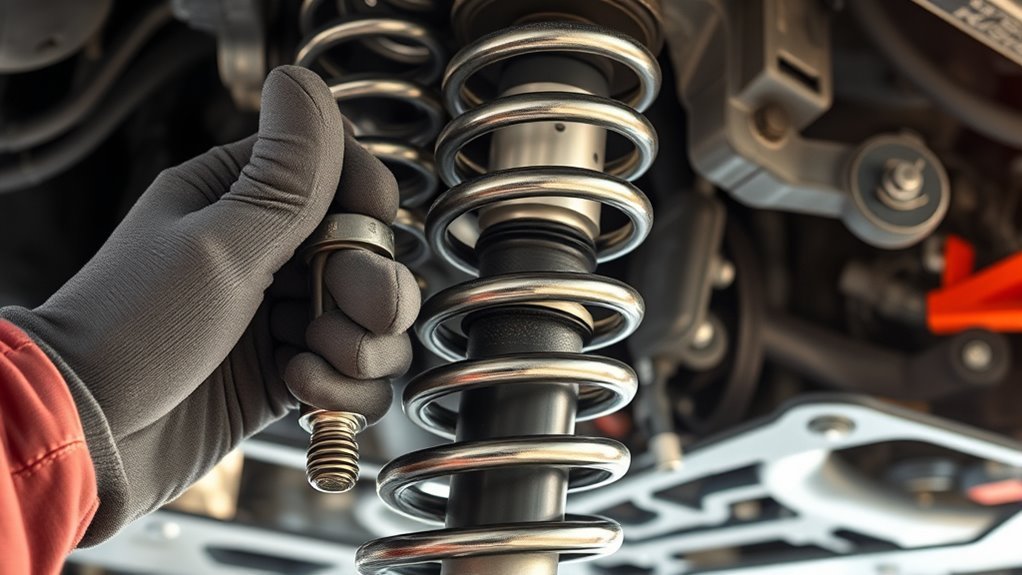
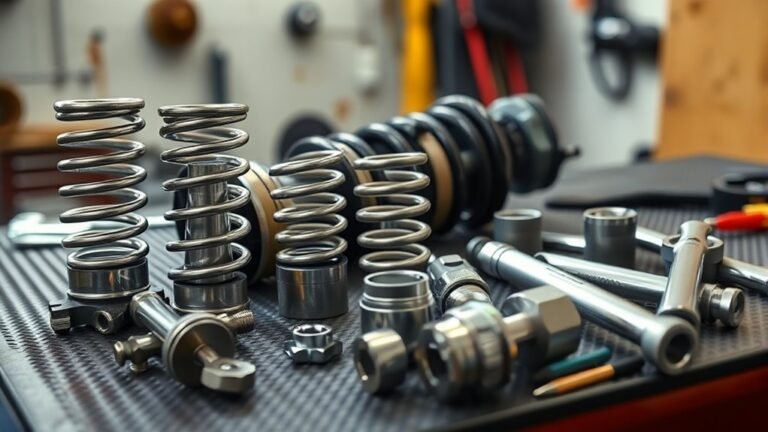
Your car’s suspension system plays an essential role in connecting the vehicle’s body to its wheels.
It guarantees your tires stay firmly in contact with the road. This system includes components like springs and shock absorbers that work together to absorb bumps and maintain stability.
By dampening the up-and-down movement caused by road irregularities, the suspension system keeps your ride smooth and controls your vehicle during turns.
This stability is critical for vehicle safety, as it helps maintain traction and prevents excessive bouncing.
To keep everything functioning properly, you should schedule regular inspections of your suspension components.
Catching issues early, especially with shock absorbers, can prevent costly repairs and guarantee your car stays safe and comfortable on the road.
Common Signs of Suspension Noise Problems
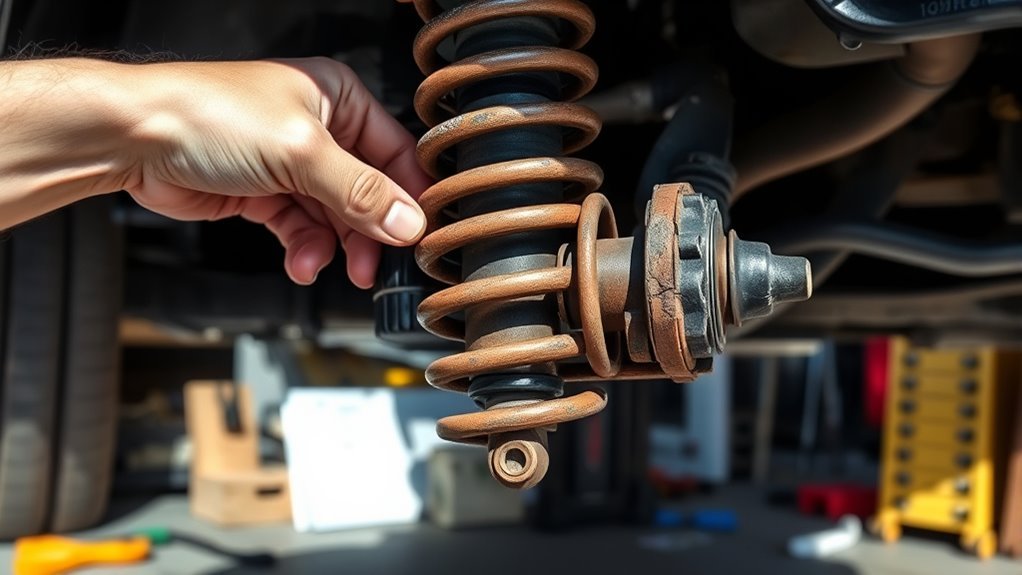
How can you tell if your suspension system is acting up?
Suspension issues often manifest through distinct noises that signal trouble.
Paying attention to these sounds helps you address problems early and maintain safety.
Look out for:
- Knocking or clunking sounds when driving over bumps. This can indicate worn or damaged components.
- Squeaking or squealing noises during turns. This suggests dry or failing bushings and joints.
- Continuous thumping noises at speed. These may point to a broken spring or failing shock absorber.
- Rattling noises on uneven surfaces can signal loose or broken suspension parts needing immediate attention.
Recognizing these common signs lets you diagnose suspension noise problems before they worsen.
This way, you can ensure a smoother, safer ride.
How to Perform a Visual Suspension Inspection
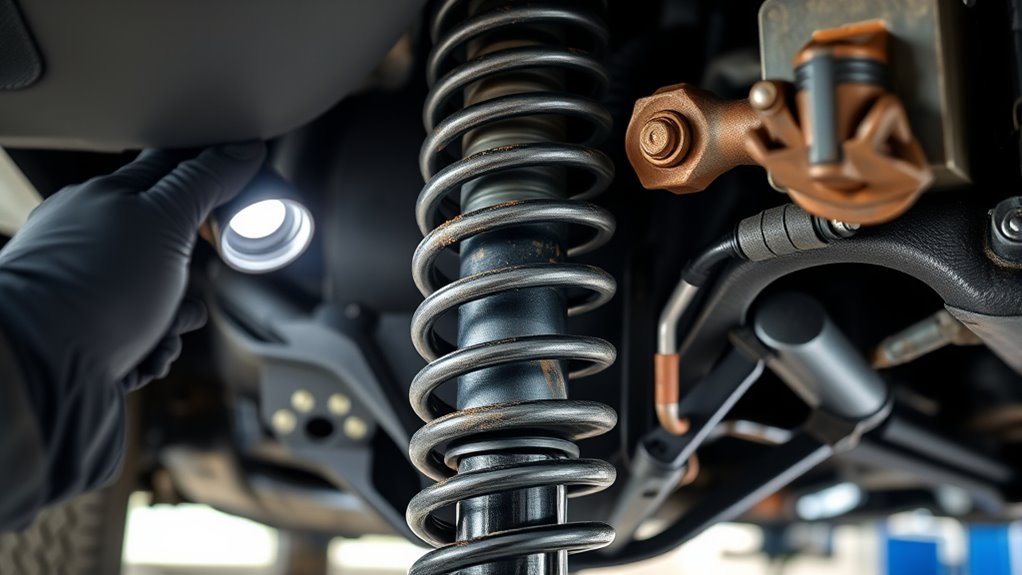
Although suspension noise often hints at underlying issues, a visual inspection can help you pinpoint specific problems quickly.
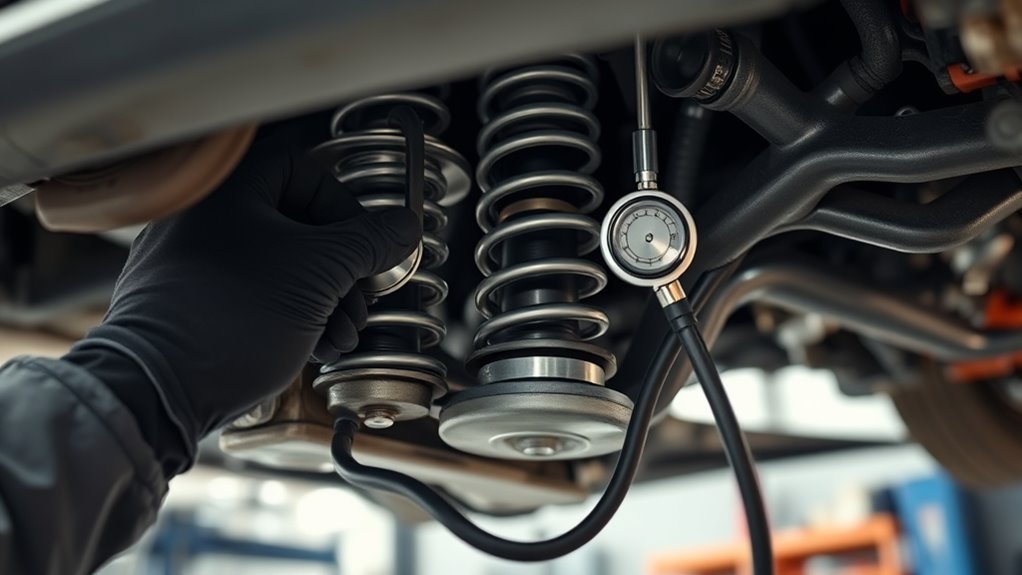
Start by examining suspension components for warning signs like cracks, rust, or oil leaks on shock absorbers and struts, which often indicate failure.
Check shock absorbers and struts for cracks, rust, or oil leaks to spot early suspension failure.
Look for loose or damaged connections on control arms, sway bars, and bushings, ensuring bolts and fasteners are secure.
Check the vehicle’s stance for sagging or uneven height, a sign of weakened springs.
Don’t forget to inspect tires for uneven wear patterns that suggest misalignment or other suspension problems.
While inspecting, listen for unusual clunks or rattles, as these noises often accompany visual warning signs.
This thorough visual inspection helps you catch suspension issues early and avoid costly repairs.
Conducting a Bounce Test for Shock Absorber Evaluation
When you press down firmly on each corner of your vehicle and release it, you can quickly assess the condition of the shock absorbers by observing how the car rebounds.
This simple bounce test reveals how well your suspension system performs. A healthy shock absorber will stop the bouncing after just one rebound.
During the test, keep an ear out for unusual noises like clunks or rattles that might indicate deeper suspension issues.
Remember to conduct the bounce test on a level surface for accurate results. Here’s what to watch for:
- Vehicle returns quickly, within one bounce.
- Excessive bouncing signals worn shock absorbers.
- Unusual noises during rebound suggest suspension problems.
- Test each corner individually for a thorough evaluation.
Diagnosing Noise During a Road Test
Where do you start to pinpoint suspension noise on the road?
Begin with a thorough visual inspection to catch obvious issues before the road test.
Drive at normal speeds between 20–80 km/h, performing light acceleration to reproduce noise conditions.
Pay close attention to the steering wheel and seats for shakes or vibrations, which often indicate suspension or alignment problems.
Conduct high-speed runs to detect vibrations and noises that may relate to suspension components or tire wear.
After the test, analyze your observations carefully.
These insights prepare you for further diagnosis, ideally on a hoist where you can inspect the suspension while maintaining the correct ride height.
This methodical approach helps you accurately identify the source of suspension noise during a road test.
When to Seek Professional Suspension Repair Services
How do you know it’s time to call in a professional for suspension repairs?
Early detection of a damaged suspension is vital to prevent costly damage and guarantee safety.
When you test the vehicle, pay close attention to signs that the car’s suspension may be compromised.
Seek expert help if you notice:
- Knocking or clunking noises over bumps indicating worn components.
- Persistent bouncing or rough ride after a bounce test.
- Vehicle pulling to one side or uneven tire wear signaling alignment issues.
- Visible oil leaks from shock absorbers or sagging stance.
These symptoms mean your suspension system needs professional evaluation and repair.
Don’t delay—addressing these problems early keeps your ride smooth and safe.
Frequently Asked Questions
Can Suspension Noise Affect My Vehicle’s Fuel Efficiency?
Yes, suspension noise can indirectly affect your fuel efficiency.
When your suspension isn’t working right, it can cause uneven tire wear and poor handling.
This makes your engine work harder and burn more fuel.
Are Certain Car Models More Prone to Suspension Noise?
If you own a Jeep Wrangler, you might notice more suspension noise due to its off-road design.
Yes, certain models with stiffer or older suspensions tend to be noisier,
so you should check your specific vehicle’s setup.
How Does Weather Impact Suspension Noise Issues?
You’ll find suspension noise worsens in cold weather because rubber parts stiffen and metal contracts.
Rain and snow can cause corrosion or wash away lubricants, making joints noisier.
Regular checks help keep things quiet.
Can Suspension Noise Cause Uneven Tire Wear?
Yes, suspension noise often signals misalignment, causing uneven tire wear.
Studies show 70% of uneven tire wear stems from suspension issues.
Is It Safe to Drive With Intermittent Suspension Noise?
It’s not entirely safe to drive with intermittent suspension noise because it might indicate a worsening issue.
You should get it inspected soon to avoid further damage or potential safety risks while you’re on the road.
Conclusion
By boldly bouncing, looking, and listening, you can catch creaks and clunks causing car chaos.
Suspension sounds signify serious struggles, so stay sharp and spot signs swiftly.
Whether it’s a subtle squeak or a startling slam, your savvy steps save you stress and steep costs.
Still unsure? Seek skilled specialists who’ll swiftly solve suspension snags.
Stay safe, stay steady, and steer smoothly by spotting suspension sounds before they spiral out of control.
In conclusion, paying attention to sounds from your car’s suspension is crucial for maintaining safety and performance.
Don’t ignore those noises, as they can indicate underlying issues that could lead to costly repairs.
Take action early by checking for signs of trouble or consulting a professional.
Staying proactive in diagnosing suspension problems will help you drive with confidence and peace of mind.