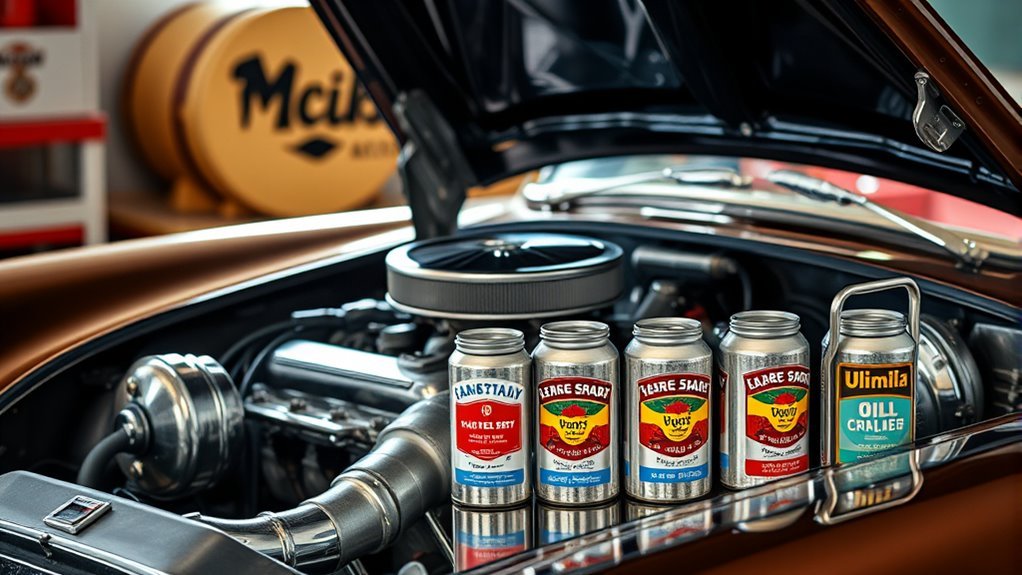
Top 7 Engine Oils for Classic Cars
You want engine oil with high zinc and ZDDP to protect your classic car’s older engine from wear.
It’s crucial to focus on thicker viscosities like 10W-40 or 20W-50 for optimal performance.
Conventional oils with elevated anti-wear additives work well for classic vehicles. However, some synthetic blends can offer superior stability under various driving conditions.
If your classic car is showing its age, high mileage oils with seal conditioners can help reduce leaks and oil consumption.
Regular oil changes every 3,000–5,000 miles are key to maintaining your engine’s health.
Keep exploring to discover which specific brands and formulas fit your classic car best.
Your choice of engine oil can make all the difference in preserving its performance and longevity!
Key Takeaways
– Choose oils with high zinc and ZDDP levels for superior wear protection of flat-tappet camshafts in classic car engines.
This is crucial for maintaining the performance of your vintage vehicle.
– Use thicker viscosity oils like 10W-40 or 20W-50 to match the looser tolerances of older engines and provide better film strength.
Thicker oils help create a protective barrier within the engine.
– Conventional oils are preferred for their higher ZDDP content, but synthetic oils offer better thermal stability and sludge resistance for vintage vehicles.
So, it really depends on your driving habits and preferences.
– Change oil every 3,000 to 5,000 miles or six months, using high mileage oils to reduce leaks and improve engine longevity in classic cars.
Regular oil changes are key to keeping your classic in top shape.
– Select oils formulated with strong detergents and seal conditioners to minimize sludge buildup and prevent oil leaks in aging engine components.
This will help maintain the integrity of your engine over time.
Understanding Oil Requirements for Classic Car Engines
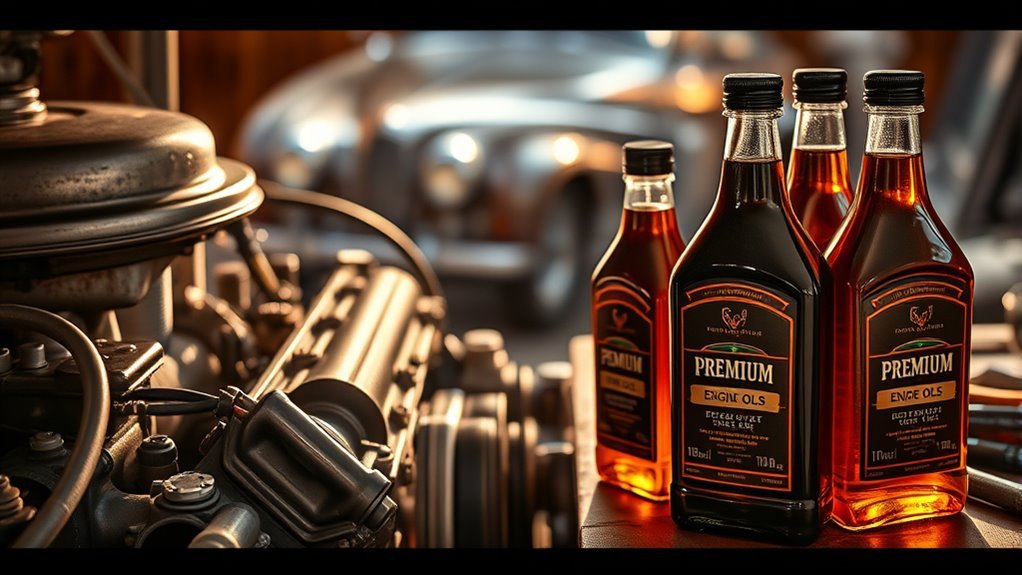
Because classic car engines rely on older designs and materials, you’ll need oils with higher ZDDP levels to protect against wear effectively.
These oils provide essential anti-wear additives that modern formulations often lack.
Choosing the right oil types is vital; thicker oils like 10W-40 or 20W-50 offer better film strength and sealing for looser tolerances common in older engine designs.
High mileage oil can also benefit your classic car by including seal conditioners that minimize leaks and reduce oil consumption.
You’ll want to take into account your climate and driving conditions since hotter weather or heavier loads may require higher viscosity oils.
Finally, sticking to recommended oil change intervals guarantees your engine stays well-lubricated and extends its life, keeping your classic running smoothly.
Benefits of High Zinc and ZDDP Formulations
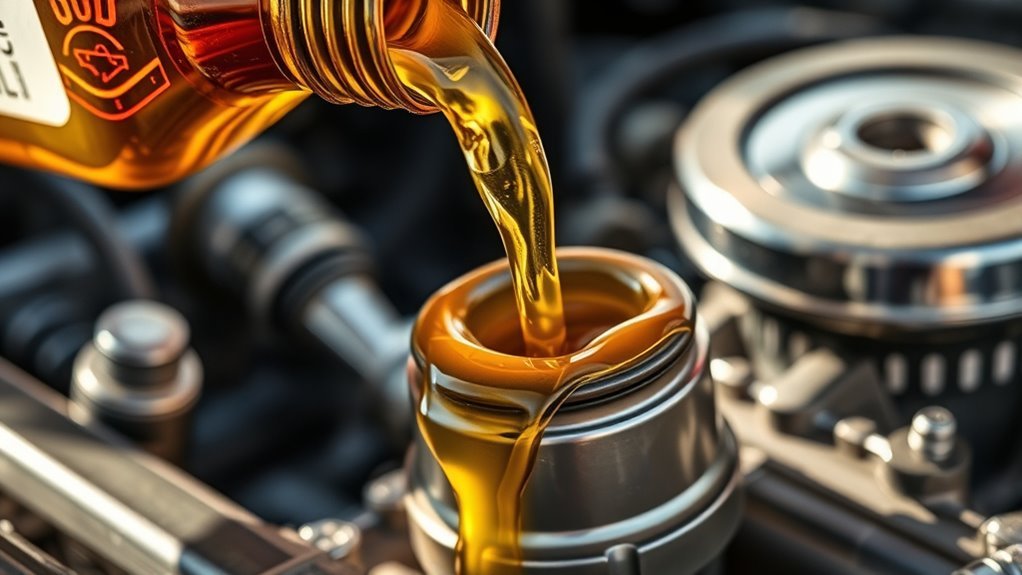
When selecting oils for your classic car, paying attention to zinc and ZDDP levels can make a significant difference in engine protection.
High zinc levels in oils provide enhanced anti-wear protection, especially for older engines with flat-tappet camshafts that need extra lubrication during break-in.
ZDDP plays an essential role in reducing wear on critical components like camshafts and lifters, which are prone to damage in classic cars.
Oils formulated with elevated ZDDP concentrations improve engine longevity and help reduce oil consumption by maintaining effective seals.
Additionally, ZDDP helps resist sludge formation, keeping your engine cleaner and running efficiently over time.
Choosing oils rich in zinc and ZDDP guarantees your classic car’s engine remains well-protected and performs reliably for years to come.
Selecting the Right Viscosity for Older Engines
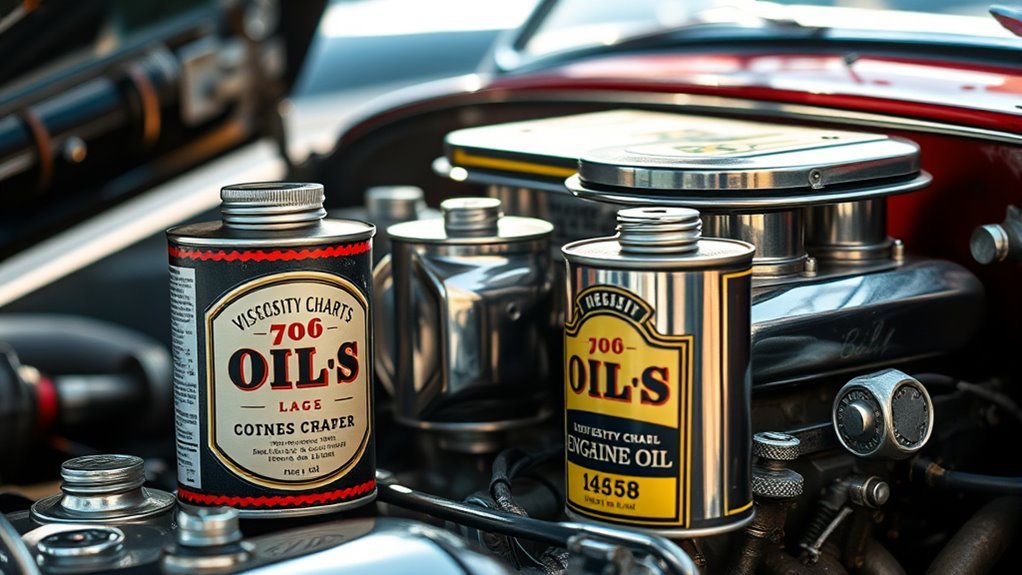
You’ll want to start by checking the manufacturer’s recommended viscosity in your owner’s manual to keep your engine running smoothly.
Remember, climate plays a big role—thinner oils like 5W-30 work better in cold weather, while thicker oils such as 20W-50 protect engines in hotter climates.
Also, consider your driving conditions. Heavy loads or extreme temperatures might call for a higher viscosity to guarantee proper lubrication.
Recommended Viscosity Grades
Selecting the right viscosity grade plays an important role in protecting your classic car’s engine.
For older engines, recommended viscosity grades often include 10W-30, 15W-40, 20W-50, and 5W-30.
Thicker oils usually provide better protection due to the looser tolerances found in vintage engine designs.
Many classic car enthusiasts prefer higher viscosity oils because they help reduce oil consumption and prevent leaks.
However, it’s vital to consult the owner’s manual for the manufacturer’s specific recommendations.
These guidelines consider the engine’s needs and your typical driving conditions.
Choosing the proper viscosity guarantees ideal lubrication, minimizes wear, and keeps your classic car running smoothly.
This way, you won’t compromise performance or reliability.
Climate Impact Considerations
Because engine oil must perform well across varying temperatures, you should match the viscosity grade to your local climate.
In colder areas, thinner oils like 5W-30 improve cold-start performance, guaranteeing your older engine gets proper lubrication quickly.
Conversely, in hot climates, higher viscosity oils such as 20W-50 provide superior engine protection by maintaining thickness and reducing wear.
The climate impact on your engine oil choice is vital. Selecting the wrong viscosity ratings can lead to increased oil leaks and consumption in older engines.
Always check your owner’s manual for recommendations tailored to your climate.
Driving Conditions Influence
When you drive your classic car under heavy loads or in hotter weather, opting for higher viscosity oils like 10W-40 or 20W-50 helps protect the engine better.
Your driving conditions play a major role in selecting the right oil viscosity to maintain engine health. Always consult the owner’s manual for recommended grades tailored to your engine’s needs.
For classic car owners, consider these points:
- In colder climates or during short trips, thinner oils like 5W-30 improve cold starts and reduce wear.
- High-mileage engines may benefit from slightly thicker oils to reduce leaks and maintain compression.
- Frequent short trips require more frequent oil changes to prevent sludge buildup.
Use insights from classic car clubs and forums to fine-tune your choice based on real-world driving conditions.
Conventional Vs Synthetic Oils for Vintage Vehicles
When choosing between conventional and synthetic oils for your vintage vehicle, you’ll want to weigh the reliable protection of conventional oils against the advanced benefits synthetic oils offer, especially for high-mileage engines.
You should also consider how your engine has been maintained, since switching from conventional to synthetic requires careful attention to avoid leaks.
Let’s explore how each oil type supports your classic car’s performance and longevity.
Synthetic Oil Benefits
Although conventional oils have served older engines well for decades, synthetic oils deliver superior protection and performance for vintage vehicles.
Switching to synthetic oil can greatly extend your engine life by reducing wear and sludge buildup.
Here’s why you should consider synthetic oil for your classic car:
- Synthetic oils contain advanced anti-wear additives, offering better lubrication than conventional oils and protecting older engines from damage.
- They provide improved thermal stability, maintaining peak performance under varied driving conditions and reducing the frequency of oil changes.
- Synthetic oil meets modern oil specifications, ensuring compatibility with vintage engines while minimizing leaks and oil consumption common in aging seals.
Always check your owner’s manual for the right synthetic formulation to keep your classic car running smoothly.
Conventional Oil Strengths
While synthetic oils bring advanced protection and performance to vintage engines, conventional oils still hold significant value for many classic car owners.
Conventional oils offer better anti-wear protection thanks to higher levels of ZDDP, which is essential for older engines with flat-tappet camshafts.
Their thicker viscosity suits looser tolerances found in vintage engines, helping to prevent leaks by enhancing seals.
You’ll find conventional oils cost-effective and compatible with original engine designs, especially those under 75,000 miles.
Synthetic oils provide superior longevity but might cause leaks in older engines accustomed to conventional oil.
Because of this, a gradual shift is often recommended when switching to synthetics.
Transitioning Between Oils
Switching from conventional to synthetic oil in your vintage vehicle requires careful consideration to protect aging seals and maintain engine health.
When changing over, start with a synthetic blend to reduce the risk of leaks and allow your engine components to adapt smoothly.
Always prioritize checking your owner’s manual to confirm the recommended type of oil and viscosity grade for your older vehicle.
Keep these points in mind:
- Assess engine condition—well-maintained engines usually tolerate synthetic oil better than those with existing leaks.
- Monitor oil pressure closely after switching to guarantee it stays within ideal ranges.
- Use synthetic oils with proper additives, especially if your classic car needs higher zinc content for anti-wear protection.
A gradual changeover helps maintain performance while safeguarding your vintage engine.
High Mileage Oils and Seal Conditioners Explained
If your classic car has logged over 75,000 miles, you’ll benefit from using high mileage oils.
These oils are specially designed with extra seal conditioners and anti-wear additives. They help reduce oil consumption and minimize leaks by conditioning aging seals.
High mileage oils also contain elevated levels of ZDDP, which offers enhanced protection to critical engine parts, like camshafts and lifters. This is especially important for pre-1996 engines.
Plus, they resist sludge buildup more effectively than standard oils. This promotes cleaner engine operation and helps extend your engine’s life.
Using these oils improves engine performance through better lubrication and prevents excessive oil breakdown.
Switching to high mileage oils tailored with seal conditioners guarantees your classic car runs smoother and stays protected.
This helps you maintain its reliability and value over time.
Recommended Oil Change Intervals for Classic Cars
Because classic cars require careful maintenance, you should change their oil every 3,000 to 5,000 miles or every six months, depending on how you drive and the type of oil you use.
Oil change intervals vary based on driving habits and engine conditions. Here’s what to keep in mind:
Oil change intervals depend on your driving habits and your engine’s condition.
- If you take short trips that prevent your engine from reaching full operating temperature, plan for frequent changes to avoid oil contamination.
- For longer, regular drives, you can extend intervals since the engine burns off contaminants more effectively.
- Follow the owner’s manual closely, especially when storing your classic car. Change the oil before and after storage to protect engine health.
Sticking to recommended oil change intervals preserves your classic car’s engine and performance.
Troubleshooting Common Oil-Related Issues in Classic Engines
Sticking to proper oil change intervals helps prevent many common engine problems. However, you might still encounter issues that need attention.
Oil leaks often stem from worn seals or gaskets. Using oils with seal conditioners can help, but persistent leaks require mechanical repair.
Low oil pressure might indicate incorrect oil levels or worn pumps. So, check regularly and seek professional help if it continues.
Excessive oil consumption could be due to leaks or worn valve stem seals. Switching to a higher viscosity oil might reduce consumption, though severe cases need repair.
Sludge buildup is common in classic engines. Using oil with good detergents can minimize it—severe sludge may need an engine flush.
Engine knocking signals serious trouble. Confirm correct octane fuel and get a professional diagnosis promptly.
Frequently Asked Questions
What Oil Did Dale Earnhardt Use?
Dale Earnhardt used high-performance racing oils, mainly Mobil 1, packed with ZDDP for extra engine protection.
You’d want oils matching intense NASCAR conditions and keep up regular changes to maintain peak engine performance like he did.
Is 10 Year Old Oil Still Good?
No, 10-year-old oil usually isn’t good.
Even unopened, it likely lost key additives and protection.
You should check for cloudiness or odor, but it’s safer to replace it to avoid engine damage.
What Type of Oil Do Older Cars Use?
You’ve gotta use oil that treats your older engine like royalty—usually high-zinc conventional oils with thicker viscosity like 10W-30 to 20W-50.
They protect camshafts and reduce wear, keeping your classic roaring strong!
Should I Use Thicker Oil in an Older Engine?
Yes, you should use thicker oil in an older engine to improve sealing and reduce leaks.
Thicker oils provide better lubrication and protect worn parts, helping your classic car run smoothly and maintain performance.
Using a thicker oil can also help mitigate the effects of wear and tear over time.
Conclusion
Choosing the right engine oil is essential for keeping your classic car running smoothly.
Did you know that oils with high zinc and ZDDP levels can reduce engine wear by up to 40%?
By selecting the proper viscosity and considering high mileage formulas, you’ll protect vintage engines from premature damage.
Stick to recommended oil change intervals, and you’ll avoid common oil-related issues.
Taking these steps helps preserve your classic car’s performance and longevity.
In conclusion, selecting high-quality engine oil specifically designed for classic cars is crucial.
Look for oils with elevated zinc and ZDDP levels for optimal protection against wear.
Also, keep an eye on viscosity and mileage formulations to enhance your engine’s life.
Remember, regular oil changes are key to maintaining your vehicle’s health and ensuring a smooth ride for years to come.