What Is Silicone Lubricant for Car Suspension and Why Is It Necessary?
You use silicone lubricant on your car suspension to reduce friction and prevent squeaks by protecting rubber and plastic parts.
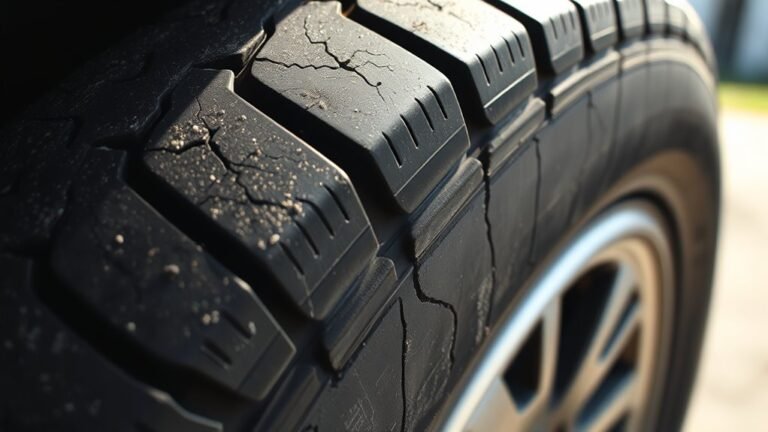
It preserves flexibility in bushings and seals, stopping them from drying out or cracking.
This lubricant also repels water, helping to prevent rust and corrosion on metal components.
Silicone works well across various temperatures, ensuring your suspension stays smooth and quiet.
If you want to know how to choose the best type and apply it effectively, keep exploring to get the full picture.
Key Takeaways
- Silicone lubricant reduces friction and wear on suspension parts, extending their lifespan and maintaining smooth operation.
- It also preserves rubber bushings and seals by preventing drying, cracking, and deterioration from moisture exposure.
- Plus, its water-repellent properties protect metal suspension components from rust and corrosion in varying weather conditions.
- Another great thing is that it’s safe for rubber and plastic parts. This means it avoids damage that petroleum-based products can cause.
- If you have squeaky suspension joints, applying silicone lubricant quickly eliminates that noise. It also helps prevent future friction-related issues.
Benefits of Using Silicone Lubricant on Suspension Components
When you use silicone lubricant on your car’s suspension components, you reduce friction and wear. This helps those parts last longer and operate more smoothly.
Silicone spray is especially effective because it preserves the flexibility of rubber bushings and seals. This prevents them from drying out or cracking over time.
Silicone spray keeps rubber bushings flexible, preventing drying and cracking for longer-lasting suspension components.
Its water-repellent properties also protect metal parts from rust and corrosion. This boosts your suspension’s durability.
Plus, silicone spray works well across a wide temperature range, so your suspension stays reliable whether it’s hot or cold outside.
Since it’s safe for use on plastic and rubber, you don’t have to worry about damaging those sensitive parts.
Using silicone spray on your suspension is a smart way to keep your car running quietly and efficiently.
How Silicone Lubricant Protects Rubber and Plastic Parts
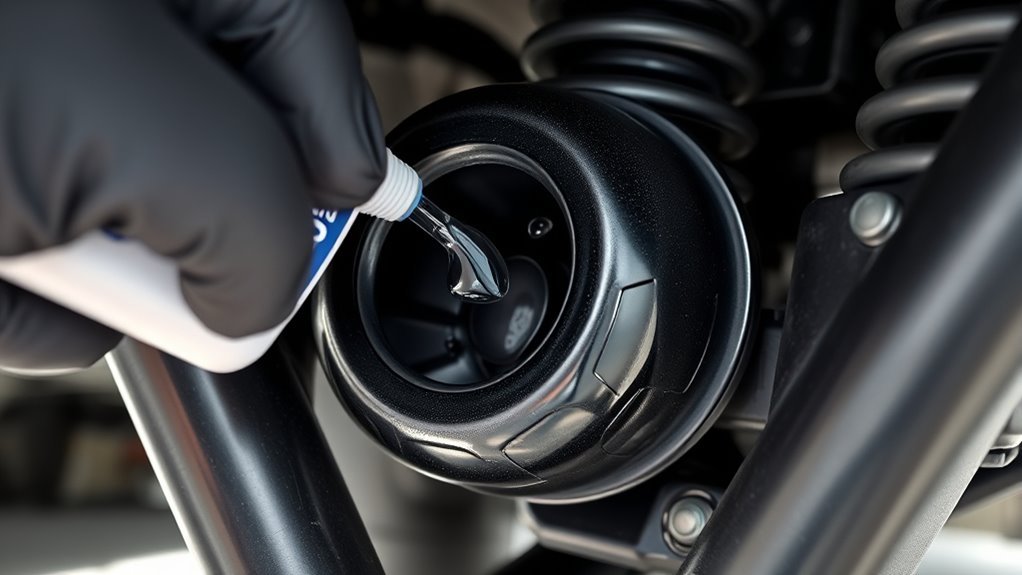
Because silicone lubricant forms a moisture-repellent barrier, it effectively protects rubber and plastic parts from deterioration and corrosion.
When you apply silicone, it shields rubber gaskets, seals, and plastic components from moisture and rust, preserving their elasticity and integrity over time.
Unlike petroleum-based lubricants, silicone won’t degrade these materials, so you can trust it to maintain their long-lasting performance.
By reducing friction between moving parts, silicone lubricant also prevents premature wear, extending the lifespan of your suspension’s rubber and plastic components.
Its versatility makes it ideal for various suspension parts, including control arms and bushings, enhancing overall durability.
Using silicone lubricant guarantees your car’s rubber and plastic parts stay protected, flexible, and functioning smoothly.
Application Tips for Effective Suspension Lubing
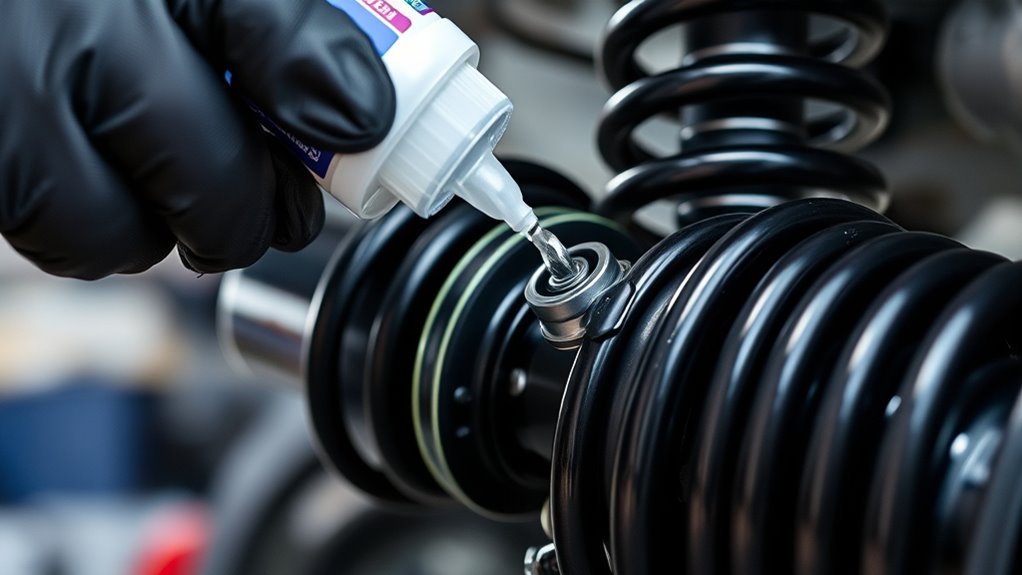
Protecting your suspension’s rubber and plastic parts with silicone lubricant only works if you apply it properly.
First, clean the suspension components thoroughly by wiping down surfaces and dust boots to prevent dirt contamination.
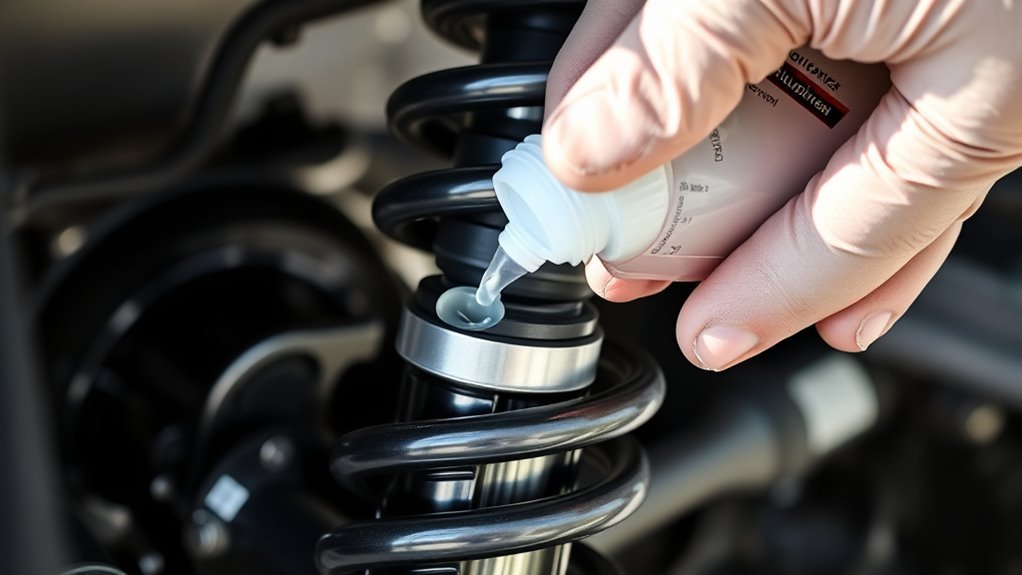
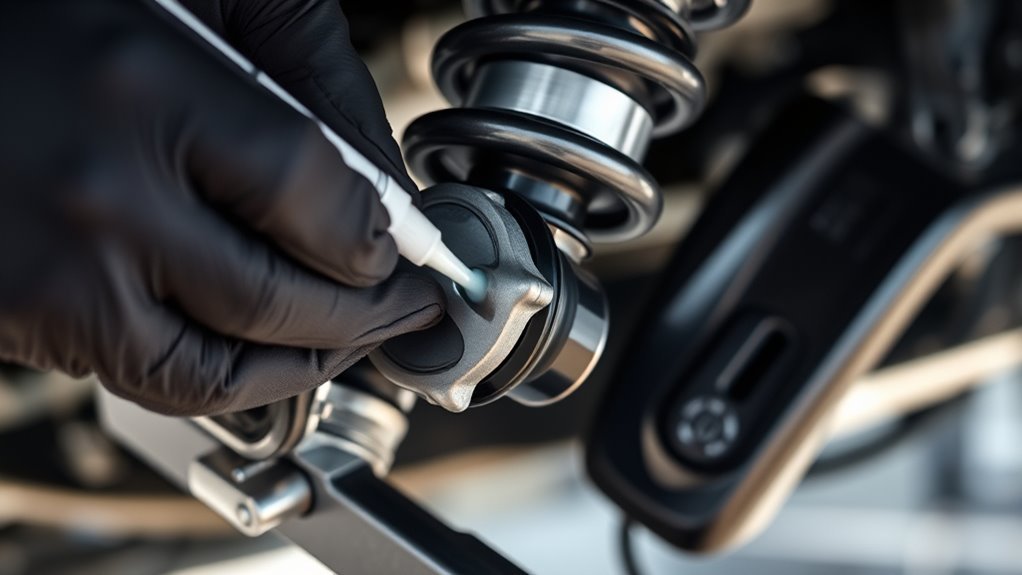
Then, spray silicone lubricant directly onto control arms, shock absorber connections, and rubber bushings. This allows it to penetrate moving parts for effective lubrication.
Spray silicone lubricant on control arms, shock absorber connections, and bushings to ensure deep, effective lubrication.
It can be really helpful to have a helper bounce the vehicle while you inspect underneath. This way, you can spot specific squeaky areas needing targeted application.
After spraying, let the silicone lubricant dry completely. This step is crucial to avoid attracting dust or leaving sticky residue.
Finally, regularly inspect and reapply silicone lubricant, especially in moist or extreme temperature environments. Doing this will help maintain your suspension’s best performance and prolong the life of its rubber and plastic parts.
Addressing Common Suspension Squeaks With Silicone Spray
One of the quickest ways to silence common suspension squeaks is by applying silicone spray directly to the noisy control arms, shock absorber connections, and bushings.
When you use silicone, it forms a protective barrier that reduces friction and cuts down on noise without harming rubber or plastic parts.
Here’s why you should consider silicone spray for your suspension:
- Easy application directly to affected areas
- Safe for rubber and plastic components
- Creates a friction-reducing protective layer
- Provides temporary noise reduction
- Helps prevent squeaks from recurring
Temperature and Moisture Resistance of Silicone Lubricants
While dealing with extreme temperatures and moisture, silicone lubricants keep your suspension components running smoothly by maintaining consistent performance.
They create a water-repellent barrier that prevents rust and corrosion.
Their excellent temperature resistance means they stay effective in both freezing cold and scorching heat, ensuring your suspension parts don’t stick or freeze in cold weather.
Unlike petroleum-based lubricants, silicone won’t let moisture build up, protecting rubber and plastic parts from degradation and preserving their elasticity.
This moisture barrier also prevents corrosion, extending the lifespan of your suspension system.
Thanks to their durability, silicone lubricants require fewer reapplications, saving you time and money while offering reliable protection against harsh environmental conditions.
You can trust silicone lubricants to keep your suspension working efficiently year-round.
Choosing the Right Silicone Lubricant for Your Vehicle
After understanding how silicone lubricants withstand temperature and moisture challenges, you’ll want to choose the right product tailored for your vehicle’s suspension.
Picking the correct silicone lubricant guarantees peak protection and performance.
Here’s what to keep in mind:
- Select silicone lubricant formulated specifically for automotive use to protect rubber and plastic parts.
- Choose a product with a non-sticky finish that resists dirt buildup, extending suspension life.
- Verify temperature resistance to handle both hot and cold conditions typical for cars.
- Opt for sprays offering rust and corrosion protection to safeguard metal components.
- Check user reviews and trust reputable brands like WD-40 known for reducing noise and friction.
Following these tips helps you maintain your suspension effectively with the perfect silicone lubricant.
Frequently Asked Questions
Is Silicone Lubricant the Same as Oil?
No, silicone lubricant isn’t the same as oil.
You’ll find it’s synthetic and protects rubber and plastic without breaking them down.
It stays effective in extreme temperatures and keeps moving parts clean without attracting dust or dirt.
What to Lube Suspension With?
Think of your suspension as a dance partner—lubricate it with silicone spray to keep movements smooth and silent.
It protects rubber and metal parts from friction, moisture, and wear, ensuring your ride stays graceful and steady.
Is WD-40 Silicone Based?
No, WD-40 isn’t silicone-based; it mainly contains solvents and petroleum distillates.
You can use it temporarily, but for lasting lubrication on rubber and plastic parts, you’ll want a dedicated silicone lubricant instead.
Where Should You Not Use Silicone Lubricant?
You shouldn’t use silicone lubricant on brake parts, engine air intakes, or clutch components.
Over 50% of accidents involve brake failure, so avoid compromising brakes.
Also, steer clear of painted or glued surfaces to prevent damage or poor adhesion.
Conclusion
Using silicone lubricant on your car suspension keeps rubber and plastic parts flexible and squeak-free, ensuring a smooth ride.
It resists temperature changes and moisture, protecting your suspension from wear and tear.
Remember, “a stitch in time saves nine”—applying silicone lubricant early prevents costly repairs later.
By choosing the right product and applying it properly, you’re giving your suspension the care it deserves.
This helps your vehicle perform better and last longer.
In conclusion, using silicone lubricant is essential for maintaining your car’s suspension.
It not only enhances flexibility and reduces noise but also protects against environmental factors.
Regular application can save you from expensive repairs down the line and keep your ride comfortable.
So, invest in high-quality silicone lubricant today and enjoy a smoother, longer-lasting driving experience!