Do Electric Cars Require Engine Oil Changes?
You don’t need engine oil changes for your electric car because it has no internal combustion engine.
Electric vehicles use electric motors that don’t require oil for lubrication, saving you time and money on maintenance.
Instead, you’ll focus on checking essential fluids like coolant and brake fluid.
Additionally, tire care and brake system upkeep are important aspects of your EV maintenance.
If you want to understand what maintenance your EV really needs and how to keep it running smoothly, there’s more to discover.
It’s all about ensuring your electric vehicle remains in top condition without the hassle of traditional engine maintenance.
So, let’s dive deeper into the specifics of EV upkeep and what you should prioritize for optimal performance!
Key Takeaways
- Electric cars use electric motors instead of internal combustion engines, so they do not require engine oil.
- There is no engine oil reservoir or filter in electric vehicles.
- Oil changes are unnecessary because electric motors do not need lubrication like combustion engines.
- The absence of engine oil changes reduces overall maintenance and service complexity.
- Electric vehicle maintenance focuses on other fluids like coolant and brake fluid, not engine oil.
No Internal Combustion Engine in Electric Cars

Since electric cars rely on electric motors instead of internal combustion engines, they don’t need engine oil changes.
You won’t find engine oil reservoirs or filters in electric vehicles because they simply don’t have the same components that require lubrication.
Internal combustion engines depend on oil to reduce friction and wear between moving parts, but electric motors operate differently and don’t need this type of maintenance.
Electric motors don’t require oil to reduce friction like internal combustion engines do.
That means you can skip the routine oil changes that are standard for gasoline or diesel cars.
This absence of engine oil needs not only cuts down on maintenance tasks but also helps lower your overall upkeep costs.
When you drive an electric car, you’re free from the hassle and expense of oil changes tied to internal combustion engines.
Maintenance Simplicity of Electric Vehicles

Although electric vehicles skip the need for engine oil changes, they offer even more simplicity in maintenance.
You’ll find fewer maintenance tasks overall since EVs don’t have an internal combustion engine that requires oil lubrication.
This means less wear and tear on components like brake pads thanks to regenerative braking, which also reduces service frequency.
Here’s a quick comparison of maintenance tasks between EVs and traditional cars:
| Maintenance Task | Electric Vehicles |
|---|---|
| Oil Change | Not required |
| Brake Wear and Tear | Reduced due to regeneration |
| Service Frequency | Less frequent |
Essential Fluids and Their Maintenance in EVs
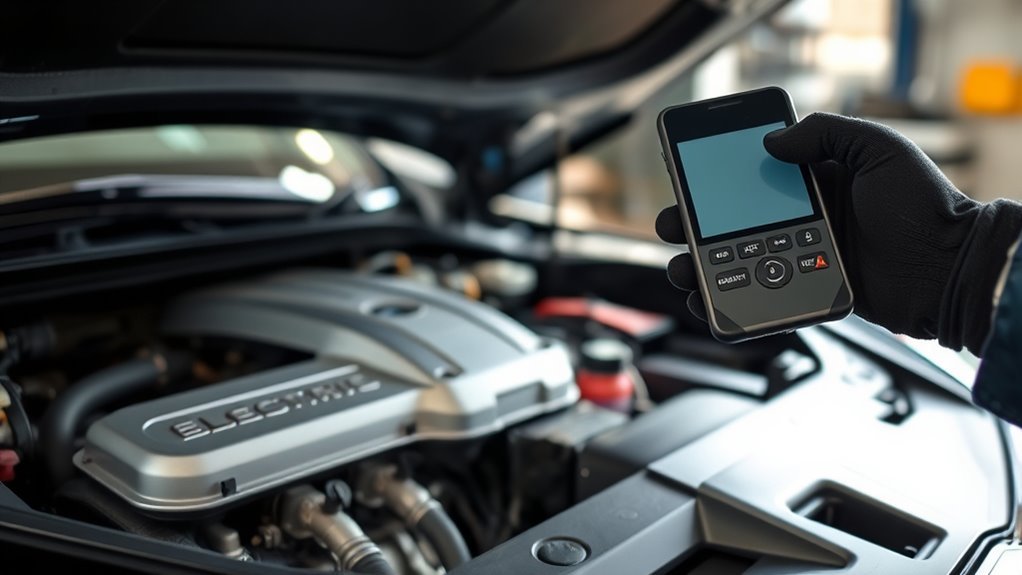
While electric vehicles don’t need engine oil changes, you still have to pay attention to other essential fluids to keep your EV running smoothly.
Coolant plays a key role in preventing your battery from overheating, so regular checks are necessary to maintain peak performance.
Brake fluid is another critical essential fluid; it guarantees your regenerative braking system works properly.
You should replace brake fluid roughly every 40,000 km (25,000 miles) to avoid brake failure.
And don’t forget about windshield washing fluid either, as it helps maintain clear visibility for safe driving.
Tire Care and Replacement for Electric Vehicles
Maintaining your electric vehicle goes beyond fluid checks; tire care plays a significant role in safety and efficiency.
For electric vehicles, regular tire rotation every 6,250 miles or when tread depth difference exceeds 2/32 inch helps guarantee even wear and extends tire life.
Because EVs carry extra weight and torque, you’ll likely need tire replacement every 30,000 to 40,000 miles, depending on your driving habits.
Using special EV tires can improve rolling resistance, reduce noise, and boost grip, enhancing overall performance.
Don’t forget to check tire pressure regularly, as proper inflation improves your range and handling.
When it’s time for tire replacement, expect costs between $100 and $300 per tire, influenced by brand and EV-specific features.
Prioritizing tire care keeps your electric vehicle safe and efficient on the road.
Brake System Maintenance and Regenerative Braking
Since electric vehicles use regenerative braking to capture energy and reduce brake wear, their brake components tend to last longer than those in traditional cars.
Regenerative braking lessens the stress on your braking system, meaning brake pads and rotors don’t require oil-based lubrication like engine parts do.
However, you still need to maintain the brake system regularly. This includes inspecting and lubricating moving parts, which may cost around $150 to $250 annually.
Also, brake fluid plays an essential role and should be replaced roughly every two years for peak performance, usually costing between $100 and $150.
Using brake fluid test strips helps you monitor its condition and prevent corrosion, ensuring your regenerative braking system remains safe and efficient without the need for engine oil changes.
Scheduling Professional EV Service in Elizabeth City, NC
If you own an electric vehicle in Elizabeth City, NC, you can rely on Hall Ford for expert maintenance support.
They specialize in EV services like battery checks, brake system care, and software updates.
Scheduling a service appointment guarantees your EV stays in top condition with local, professional care.
Local EV Service Options
While electric vehicles don’t need oil changes, you can still schedule professional maintenance at Hall Ford Elizabeth City to keep your EV in top shape.
Although electric cars don’t require oil changes, they do need other important upkeep.
At Hall Ford, the local EV service options include battery health checks, coolant and brake fluid inspections, and tire rotation and balancing.
These services guarantee your electric vehicle performs efficiently and safely.
You’ll also benefit from regular software updates that keep your EV running with the latest tech improvements.
If you have questions or want to book your next maintenance appointment, contact us today.
Hall Ford Elizabeth City’s expert team is ready to support your EV’s unique needs without unnecessary oil changes.
Expert Maintenance Support
When you schedule professional EV service at Hall Ford Elizabeth City, you gain access to expert technicians who understand the specific needs of electric vehicles.
Unlike traditional cars, electric motors don’t require engine oil changes, but your EV still needs specialized care.
The expert maintenance support at Hall Ford includes battery health monitoring and software updates tailored to your vehicle.
They also handle essential tasks like brake fluid and coolant maintenance, vital for keeping your electric motor running smoothly.
Regular visits help you stay informed about any upcoming maintenance, ensuring your EV performs efficiently and lasts longer.
Trusting Hall Ford’s skilled team means you’re getting the precise care your electric vehicle needs without unnecessary services like engine oil changes.
Frequently Asked Questions
Is an Electric Car Need an Oil Change?
No, you don’t need to change oil in an electric car since it has no engine oil.
Instead, focus on checking coolant, brake fluid, and battery health to keep your EV running smoothly and efficiently.
What Is the Lifespan of an EV Battery?
While gas engines wear out faster, your EV battery typically lasts 8 to 15 years.
You’ll notice about 70-80% capacity after 8 years.
However, extreme climates and fast charging can shorten its lifespan, so monitor it closely.
Is EV Actually Cheaper Than Gas?
Yes, you’ll find EVs cheaper overall because you save on fuel and maintenance costs.
Even though the upfront price is higher, incentives and lower operating expenses make electric cars a smart financial choice in the long run.
Can Electric Cars Go 500 Miles on One Charge?
Yes, some electric cars can go 500 miles on one charge, especially models with larger battery packs and efficient designs.
Just remember, your driving habits and conditions greatly affect the actual range you’ll get.
Conclusion
Just like a sailboat glides without the need for constant rigging, your electric car skips the hassle of engine oil changes.
While it’s simpler to maintain, don’t overlook essential fluids, tire care, and brake upkeep. These are your EV’s lifelines on the road.
Think of professional service in Elizabeth City, NC, as your trusted lighthouse, guiding you safely through smooth and stormy rides alike.
To keep your electric journey bright and effortless, remember that even though electric vehicles don’t require oil changes, they still need regular maintenance.
So, be proactive about checking fluids, tires, and brakes. A well-maintained EV will ensure a smooth ride and extend its lifespan, allowing you to enjoy every mile.
Keep your electric car in top shape, and it will reward you with reliability and efficiency on the road!