10 Best Engine Oils for Old Cars to Keep Classics Running Smoothly
You’ll want engine oils with higher viscosity like 10W-30 or 20W-50, plus plenty of zinc (ZDDP) to protect your classic’s flat tappet camshafts.
Look for oils formulated for vintage or high-mileage engines that balance additives without harming older seals.
Conventional oils often suit classic engines better, but some synthetics work well too.
Picking the right viscosity depends on your climate and engine condition.
Keep up oil changes regularly to safeguard your vintage ride.
Exploring the best options can help keep your classic running smoothly.
Key Takeaways
– Use multigrade oils like 10W-30 or 20W-50 for stable viscosity suited to classic engines’ needs.
This ensures your engine runs smoothly under various temperatures.
– Select oils with high ZDDP content (above 1000 ppm) to protect flat tappet camshafts and reduce wear.
This is especially critical for older engines that are more susceptible to wear.
– Prefer conventional oils or synthetic blends that align with older engine designs and maintain proper lubrication.
These types of oils work best for keeping your classic engine happy.
– Choose thicker oils for worn engines or hotter climates to ensure adequate oil pressure and protection.
Thicker oils can help compensate for any wear and tear in your engine.
– Follow regular oil changes every 3,000 miles with proper filter replacement to maintain engine health in classics.
Staying on top of maintenance is key to keeping your classic running smoothly!
Understanding the Importance of Oil Grade for Classic Cars

When you own a classic car, choosing the right oil grade is essential because it directly affects your engine’s performance and lifespan.
Classic engines often demand higher viscosity oils like 10W-30 or 20W-50 to handle their age and design.
Multigrade oils are beneficial since they maintain stable viscosity across temperature changes, ensuring consistent lubrication.
You also need to pay attention to the oil’s ZDDP content—especially for flat tappet and overhead cam (OHC) engines—because it prevents wear and protects critical components.
Modern oils sometimes have reduced ZDDP levels, so finding one that meets classic engine needs is significant.
Ultimately, you should consider the manufacturer’s recommendations and your car’s history to select the proper oil grade that keeps your classic running smoothly and reliably.
Key Factors to Consider When Selecting Engine Oil
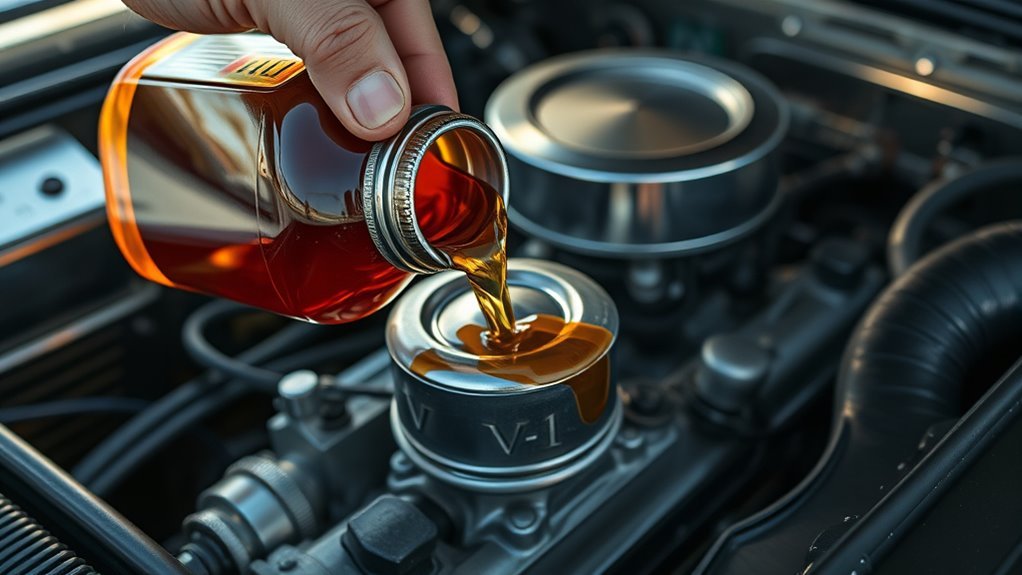
When choosing engine oil for your old car, you need to focus on viscosity since it affects how well the oil performs across different temperatures.
You should also consider your engine’s condition—thicker oil might be necessary if there’s wear or knocking.
Matching oil viscosity to your engine’s needs helps keep it running smoothly and protects essential components.
Oil Viscosity Importance
Although choosing the right engine oil might seem straightforward, understanding oil viscosity is essential to protect your old car’s engine effectively.
Oil viscosity refers to its thickness, affecting lubrication quality under different temperatures. The number before the “W” shows cold viscosity, while the number after indicates hot viscosity.
Multigrade oils like 20W50 adapt well, behaving like 20W when cold and 50W when hot. This ensures smooth starts and proper protection during operation.
Your climate plays a big role—thinner oils help cold starts in colder regions, while thicker oils might be necessary if your engine shows knocking or blue smoke.
Monitoring oil pressure regularly helps confirm whether your chosen oil viscosity suits your engine’s needs, keeping your classic running smoothly.
Engine Condition Impact
Since your engine’s age and wear directly affect how it performs, you need to choose oil that matches its specific condition.
Older engines often have looser tolerances, so your oil choice should include the right viscosity and additives to protect worn parts.
If your classic car has flat tappet camshafts, look for oils with higher zinc or ZDDP levels to prevent wear.
Also, consider the engine’s maintenance history—previous repairs and oil changes influence current oil needs.
Pay attention to unusual noises, oil smells, or pressure drops; these signs help you adjust your oil choice accordingly.
Finally, factor in climate—colder temperatures may require thinner oils for better cold starts.
Tailoring your oil choice to your engine’s condition keeps your classic running smoothly.
The Role of Zinc and Additives in Protecting Older Engines

You need zinc, especially ZDDP, to protect the flat tappet camshafts in your older engine from wear.
Modern oils often have lower zinc levels, so choosing one with the right additives is key.
These additives work together to keep your vintage engine running smoothly and extend its life.
Zinc’s Protective Function
When you care for an older engine, choosing the right oil means paying close attention to zinc content.
Zinc, often paired with phosphorous in ZDDP additives, protects essential parts like flat tappet camshafts by preventing metal-to-metal contact.
This reduces wear and extends your classic car’s engine life.
Since modern oils have lowered zinc levels, you’ll want oils or additives that maintain zinc above 1000 ppm for effective protection.
| Zinc Content (ppm) | Protection Level |
|---|---|
| Below 800 | Insufficient |
| 800-1000 | Moderate |
| 1000-1500 | Recommended |
| Above 1500 | Maximum protection |
Choosing oils rich in zinc and phosphorous guarantees your older engine runs smoothly and lasts longer.
Additive Benefits Overview
Zinc’s role in protecting older engines sets the foundation for understanding how various additives work together to keep your classic car running smoothly.
Modern oils often have lower zinc levels, so you need oils with higher zinc content to protect flat tappet camshafts and other critical parts.
Besides zinc, additives like calcium and magnesium enhance oil performance but must be balanced.
Too much calcium can reduce zinc’s effectiveness, which is something to keep in mind.
Classic car oils also include ingredients that help restore seals and cut down on oil consumption, addressing common aging engine issues.
Key additive benefits include:
- Zinc protects against wear in high-pressure engine areas.
- Balanced calcium and magnesium improve oil stability.
- Seal conditioners reduce leaks and oil burn-off.
- Specialized additives extend engine life in older vehicles.
ZDDP Importance in Oils
ZDDP, or zinc dialkyldithiophosphate, plays an important role in protecting older engines by preventing wear on flat tappet camshafts and other high-stress components.
If you own a classic car, relying on modern oils with reduced ZDDP levels can increase wear on essential parts like lifters and cam followers.
That’s why choosing oils formulated with higher ZDDP content, such as Mobil 1 Classic or AMSOIL Z-ROD, is critical.
These oils help maintain compression and overall engine efficiency by providing the anti-wear protection older engines need.
Without sufficient ZDDP, your engine risks premature wear, leading to costly repairs.
Differences Between Conventional and Synthetic Oils for Classics
Although both conventional and synthetic oils serve the essential purpose of lubricating your classic car’s engine, they differ markedly in composition and performance.
Conventional oils, derived from crude oil, often include additives for improved function.
On the other hand, synthetic oil is chemically engineered for enhanced thermal stability and lower volatility.
Choosing between them depends on your car’s needs and your preferences.
Consider these key differences:
- Synthetic oil offers superior lubrication in extreme temperatures.
- Conventional oil aligns well with the traditional design of older engines.
- Synthetic oil has fewer impurities, reducing engine deposits.
- Your choice may vary based on driving conditions and maintenance history.
Understanding these distinctions helps you pick the right oil to keep your classic running smoothly.
Evaluating Oil Viscosity for Optimal Engine Performance
When selecting oil for your classic car, understanding viscosity is essential.
It determines how well the oil flows and protects your engine across different temperatures.
Oil viscosity affects cold starts and high-temperature performance.
The first number indicates cold viscosity, while the second represents hot viscosity.
Choosing the right viscosity helps reduce engine knocking and blue smoke.
Plus, it ensures proper lubrication.
| Viscosity Type | Impact on Engine |
|---|---|
| Cold (e.g., 20W) | Guarantees smooth flow during startup |
| Hot (e.g., 50) | Provides protection at operating temperature |
| Thicker Oil | Reduces knocking, limits smoke |
Monitoring and adjusting oil viscosity based on engine wear and climate is key.
It keeps your classic running smoothly and extends its lifespan.
Top Engine Oil Brands Preferred by Classic Car Enthusiasts
Many classic car enthusiasts trust specific engine oils that offer superior protection for vintage engines.
If you want to keep your classic running smoothly, choosing high-zinc oils is key. These oils provide essential wear protection for older components, especially those with flat tappet camshafts.
Here are some top engine oil brands favored by classic car owners:
- Lucas Hot Rod Oil: Renowned for its high zinc content and vintage engine protection.
- Valvoline 10W-40 with ZDDP: Reduces wear with its zinc dialkyldithiophosphate additive.
- AMSOIL Z-ROD 10W/30 or 10W/40: Offers elevated zinc and phosphorus levels ideal for classics.
- Mobil 1 Classic: Formulated with higher ZDDP for enhanced protection of high-performance vintage engines.
Choosing from these high-zinc oils helps preserve your classic’s engine integrity and performance.
Specialized Oils Designed for High-Mileage and Vintage Engines
Specialized oils for high-mileage and vintage engines deliver the extra protection your older vehicle needs.
These high mileage oils often contain elevated levels of zinc and phosphorus, which shield critical engine parts from wear and tear.
Brands like Lucas Hot Rod Oil and AMSOIL Z-ROD are tailored specifically for classic cars, offering enhanced anti-wear properties suited to older engine designs.
Additionally, products such as Pennzoil High Mileage include seal conditioners that help rejuvenate aging seals, reducing common oil leaks in vintage engines.
Conventional oils with targeted additives remain popular for their reliable performance in older vehicles.
You’ll also find Valvoline and Quaker State formulations designed to meet the demands of high-mileage engines, helping to extend engine life and keep your classic running smoothly.
How Climate and Driving Conditions Affect Oil Choice
Since your car’s engine faces different stresses depending on the climate and driving habits, choosing the right oil viscosity and additives becomes essential.
Oil viscosity varies with climate: colder regions benefit from thinner oils like 10W-30 for easier cold starts.
Thinner oils like 10W-30 help your engine start smoothly in colder climates.
On the flip side, hotter climates require thicker oils, such as 20W-50, to prevent wear.
Driving conditions also impact oil choice—frequent short trips and stop-and-go traffic increase engine strain.
So, oils with enhanced thermal stability and protective additives work best in these situations.
Consider these factors when selecting oil for your classic:
- Use thinner oils in cold climates for better flow at startup.
- Opt for higher viscosity oils in hot climates to maintain lubrication.
- Choose oils with additives to protect against wear in stop-and-go traffic.
- Select oils with higher ZDDP levels for vintage engine protection.
Tailoring oil to climate and driving conditions keeps your classic running smoothly.
Best Practices for Maintaining Engine Oil in Classic Vehicles
To keep your classic car’s engine running smoothly, you need to stay on top of oil maintenance.
One of the best practices is to regularly check engine oil levels, ideally every 100 miles after an oil change.
Topping up as needed can help prevent wear.
Keep a detailed record of oil changes and mileage, aiming to change oil every 3,000 miles or annually.
Always drain the engine oil while it’s hot and replace the oil filter to avoid contaminants affecting performance.
Use the grade recommended in your vehicle handbook, but feel free to adjust for climate and engine condition.
Finally, monitor for any changes in oil behavior or engine noises so you can address issues early.
Following these steps helps protect your classic car’s engine and keeps it running smoothly.
Community Recommendations and Expert Insights on Engine Oils
When choosing engine oil for your classic car, community recommendations and expert insights can guide you toward the best options.
Many classic car owners swear by oils rich in zinc, like Lucas Hot Rod Oil and AMSOIL Z-ROD, which protect older engine parts.
Enthusiasts also recommend Valvoline 10W-40 with ZDDP additives for maintaining engine health.
Experts note that synthetic versus conventional oils depend on your vehicle’s needs.
For high performance engines, compatibility and protection are key.
Consider these points:
- Use conventional oils with additives for better vintage engine compatibility.
- Choose oils with high zinc content to protect older components.
- Select brands praised for older vehicles, such as Pennzoil High Mileage or Castrol GTX.
- Balance synthetic and conventional based on expert advice and your car’s condition.
Frequently Asked Questions
Can Engine Oil Improve Fuel Efficiency in Old Cars?
Yes, using the right engine oil can improve your old car’s fuel efficiency by reducing friction and wear.
You’ll notice smoother engine performance and potentially better mileage, especially if you choose oils formulated for classic engines.
How Often Should I Change Oil in a Vintage Car?
For faithful fuel flow, you should change your vintage car’s oil every 3,000 miles or every six months.
Regular replacements keep your engine energized, ensuring smooth starts and sustained performance.
This is especially important if you don’t drive it often.
Are Diesel Engine Oils Suitable for Classic Petrol Engines?
No, you shouldn’t use diesel engine oils in classic petrol engines.
Diesel oils have different additives and viscosity tailored for diesel combustion.
Stick to oils formulated for petrol engines to protect your classic car’s engine properly.
Can Old Cars Use Modern Oil Filters With Synthetic Oils?
Yes, you can use modern oil filters with synthetic oils in old cars,
but make sure the filter fits your engine’s specifications.
Modern filters often improve filtration and durability,
helping protect your classic engine effectively.
Does Engine Oil Choice Affect Classic Car Emissions?
Yes, your engine oil choice affects classic car emissions.
Using the right viscosity and additives helps reduce deposits and improves combustion, which lowers harmful emissions.
Choosing oils designed for older engines keeps your classic running cleaner.
Conclusion
Choosing the right engine oil can extend your classic car’s life considerably. Did you know that using high-quality oil can reduce engine wear by up to 50%?
By understanding oil grades, additives like zinc, and viscosity, you’re giving your vintage vehicle the best chance to run smoothly.
Remember, climate and driving habits matter, so tailor your choice accordingly.
With proper maintenance and the right oil, your classic car will keep cruising for years to come.
In conclusion, selecting the best engine oil for old cars is crucial for their longevity. High-quality oil not only minimizes wear but also ensures optimal performance.
Be mindful of factors like oil grades and driving conditions when making your choice. With the right care and attention, your classic vehicle can continue to be a reliable and cherished part of your life for many more years!