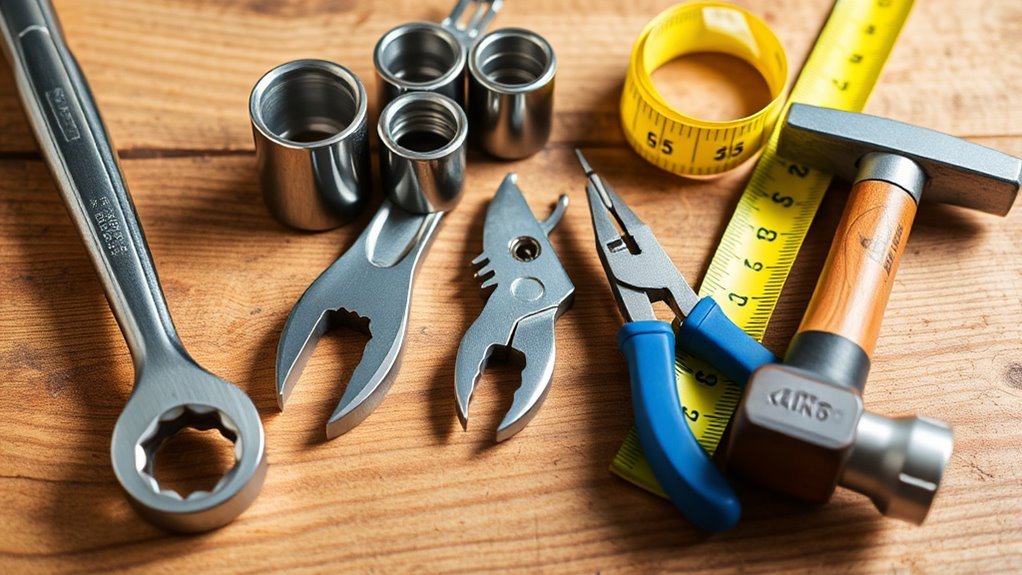
7 Essential Tools in a Starter Mechanic Tool Set
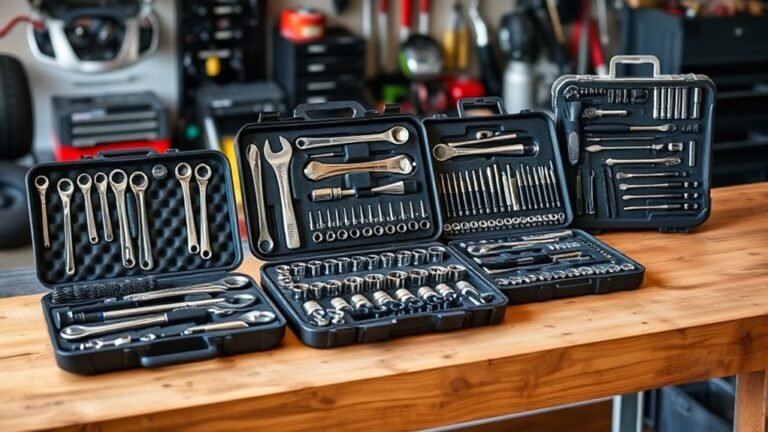
When starting out as a mechanic, having the right tools in your starter mechanic tool set is essential. A well-rounded collection will not only make your work easier but also ensure you can tackle a variety of tasks efficiently.
You’ll want socket wrenches and ratchets for versatility, plus combo wrenches to handle tight spots without rounding bolts.
Screwdrivers in flathead, Phillips, and Torx sizes cover all common fasteners, while pliers help with gripping and cutting tasks.
A torque wrench keeps your work precise and safe.
Don’t forget impact drivers and sockets for tough jobs, along with picks, pry bars, and specialty tools that make tricky repairs easier.
Keep exploring to get a full picture of each tool’s role.
Key Takeaways
– Socket wrenches and ratchets with a variety of metric and SAE sockets provide versatility for tightening and loosening fasteners efficiently.
This means you can tackle a wide range of jobs with ease.
– Combination wrenches with both open and closed ends minimize rounding and fit a range of metric and imperial bolt sizes.
Having both types in your toolkit is super handy for different situations.
– A set of screwdrivers including flathead, Phillips, and Torx types ensures compatibility with various fastener heads without damage.
This way, you won’t strip screws while trying to get the job done.
– Pliers in multiple types, such as needle-nose and cutting pliers, are essential for gripping, twisting, and cutting tasks.
They really come in handy for those tricky spots!
– A torque wrench enables precise bolt tightening to manufacturer specs, preventing damage and ensuring safety in repairs.
You definitely want to make sure everything is tightened just right!
Socket Wrenches and Ratchets
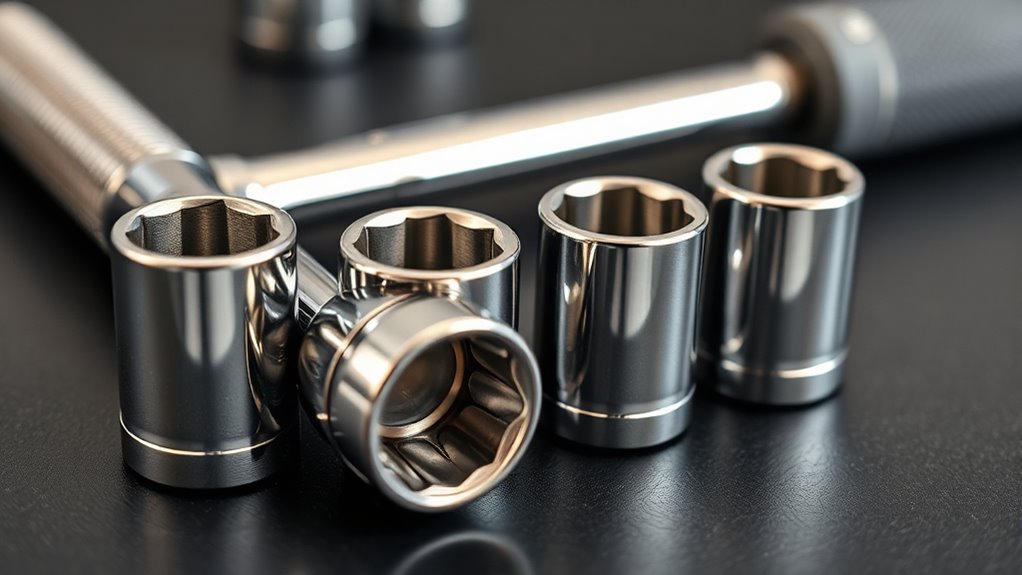
If you’re starting out, a set of socket wrenches and ratchets is essential for tackling a variety of nuts and bolts.
A good socket set comes with interchangeable sockets in both metric and SAE sizes, covering everything from 8mm to 24mm and 1/4″ to 1″.
This versatility lets you handle most automotive and machinery fasteners.
Ratchets make the job faster by allowing continuous motion in one direction, so you don’t have to remove the tool after each turn.
Look for ratchets with a 72-tooth mechanism—they only need a 5-degree swing to engage, which is perfect for tight spaces.
Together, your socket set and ratchets will give you the flexibility and efficiency to handle a wide range of mechanical tasks with ease.
Combination Wrenches
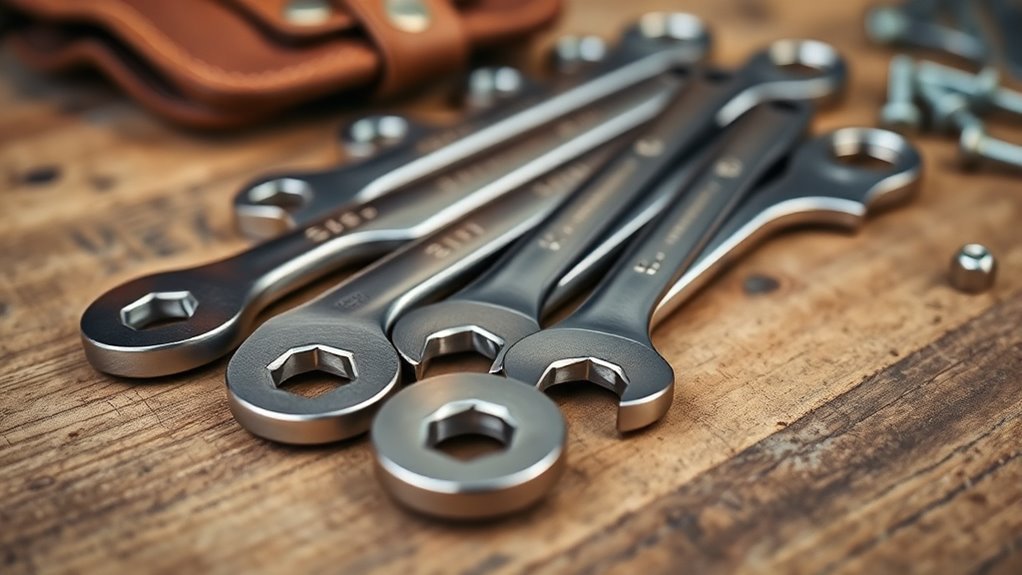
Though socket wrenches handle many tasks, combination wrenches offer unmatched versatility.
They feature a closed-end on one side and an open-end on the other, allowing you to tackle a variety of fastening jobs with ease.
You’ll find them in both metric and imperial sizes, covering most nuts and bolts you’ll encounter.
Their design guarantees a secure grip, minimizing the chance of rounding off corners during use.
For a starter mechanic tool set, having a full range—from 8mm to 19mm metric and 1/4″ to 1″ SAE—is highly recommended.
Quality combination wrenches, made from durable chrome vanadium or chrome molybdenum steel, resist wear and corrosion.
This makes them reliable for long-term use.
Adding these essential tools to your kit boosts your efficiency and precision on the job.
Screwdrivers for Various Fasteners
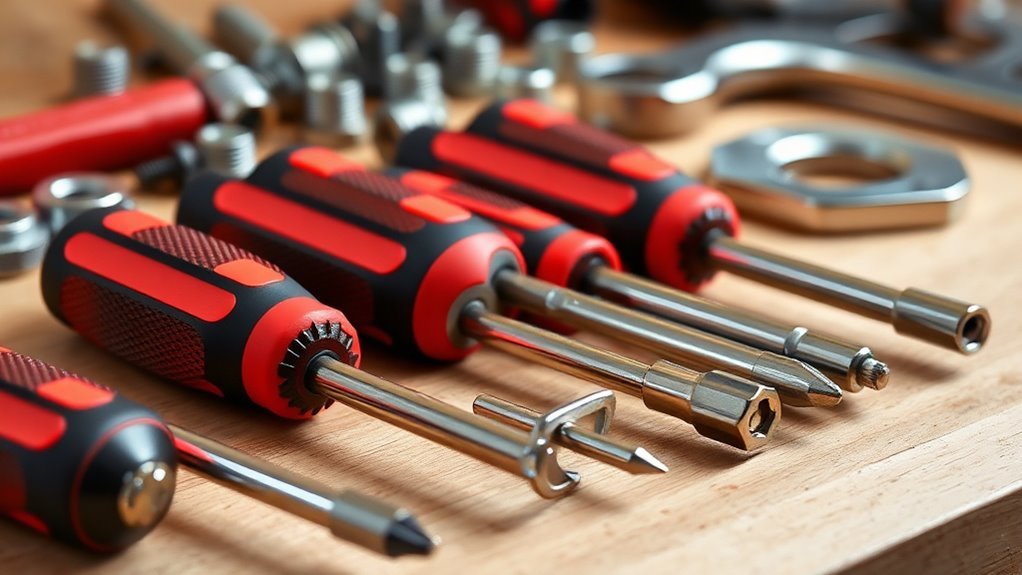
You’ll want to know the different types of screwdrivers, from flathead to Phillips and precision, to match your fasteners.
Understanding screwdriver sizes helps you pick the right fit for each job.
Plus, choosing tools made from durable materials guarantees your set lasts through tough tasks.
Types of Screwdrivers
When working with screws, choosing the right screwdriver is crucial because each type fits a specific fastener shape.
As part of the tools every mechanic needs, screwdrivers come mainly in three types: flathead, Phillips, and Torx.
Flathead screwdrivers have a single flat blade that fits straight, horizontal slots and handle many general tasks.
Phillips screwdrivers feature a cross-shaped tip, offering better grip and torque to reduce slipping during use.
Torx screwdrivers have a star-shaped tip common in automotive work. They prevent stripping and provide ideal torque.
Using the correct screwdriver type protects screw heads from damage and guarantees efficient assembly or disassembly.
This makes these screwdrivers indispensable in any starter mechanic tool set.
Screwdriver Sizes Guide
Choosing the right screwdriver size is key to tackling various fasteners efficiently and avoiding damage.
In your starter mechanic tool set, understanding screwdriver sizes helps you pick the perfect hand tools for the task.
Flathead screwdrivers come in widths matching the screw slot, ensuring a solid grip and proper torque.
Phillips screwdrivers range from #0 for small electronics to #4 for larger fasteners, with bigger sizes offering more torque.
Precision screwdrivers handle tiny, delicate screws and are available in both flathead and Phillips styles.
Using the correct size prevents stripping screw heads and makes assembly or disassembly smoother.
Keep a variety of sizes on hand, so you’re always ready to handle different fasteners confidently.
This will help you protect your tools and components!
Choosing Durable Materials
Matching screwdriver sizes to fasteners is just part of the equation; the materials and design of your tools play a big role in how well they perform and last.
When choosing screwdrivers, look for durable materials like chrome vanadium steel, which resist corrosion and provide strength for tough jobs.
A wide range of screwdriver types—flathead, Phillips, and Torx—ensures you’re equipped for various fasteners in automotive work.
Don’t overlook ergonomic handles, which reduce hand fatigue and improve grip during extended use.
Magnetic tips add efficiency by holding screws securely, especially in tight or hard-to-reach spots.
Pliers for Gripping and Cutting
Pliers serve as essential tools in your mechanic toolkit, enabling you to grip, twist, bend, and cut wires or metal parts with ease.
When building your mechanic tool kits, include a variety of pliers to handle different tasks efficiently.
Here are four key types you should have:
- Needle-nose pliers for precise gripping in tight spaces.
- Slip-joint pliers with adjustable jaws for versatile gripping.
- Cutting pliers designed to snip wires cleanly.
- Multiple sizes of each type to cover delicate to heavy-duty jobs.
Choose high-quality pliers with comfortable grips to reduce hand fatigue during long repairs.
Opt for durable pliers with ergonomic handles to keep your hands comfortable during extended repair sessions.
Having at least two of each type can speed up your workflow and minimize downtime.
This makes your starter mechanic tool set more effective!
Torque Wrenches for Precision
A torque wrench helps you tighten bolts and fasteners exactly to the manufacturer’s specifications.
This prevents damage from over-tightening or loosening from under-tightening.
It’s an essential tool for every mechanic aiming for precision and safety.
Unlike an Impact Wrench, which delivers high torque quickly, a torque wrench lets you control torque accurately.
This protects components and ensures reliable repairs.
You can choose from beam, click, or digital types, typically ranging from 10 to 150 ft-lb, covering most automotive needs.
Remember to calibrate your wrench annually or after heavy use to maintain accuracy.
| Type | Torque Range (ft-lb) | Use Case |
|---|---|---|
| Beam | 10 – 100 | Basic, budget-friendly |
| Click | 10 – 150 | Most common, precise |
| Digital | 10 – 150 | High accuracy, features |
Impact Drivers and Sockets
You’ll find impact drivers essential for tackling tough bolts with high torque.
Pairing them with the right impact sockets makes all the difference.
Choosing metric sockets will fit modern vehicles better, while accessories like wobble extensions and universal joints help you reach tricky spots.
These impact tools boost your efficiency and power, making repairs smoother and faster.
Types of Impact Drivers
Impact drivers deliver high torque that helps you loosen stubborn bolts and fasteners quickly.
When choosing the right tool, you’ll find various types suited for different tasks.
Here are four common types of impact drivers you should know:
- Cordless Impact Drivers – Portable and versatile, perfect for general use.
- Corded Impact Drivers – Offer consistent power without worrying about battery life.
- Pneumatic Impact Drivers – Use compressed air; ideal for heavy-duty jobs and workshops.
- Impact Wrenches – Larger and more powerful, available in various sizes for tougher bolts and automotive work.
Each type serves a unique purpose, so understanding these options helps you pick the best impact driver for your starter mechanic tool set.
Choosing Impact Sockets
How do you guarantee your sockets can handle the intense torque from impact drivers and wrenches?
You choose impact sockets designed specifically for high-torque mechanical tasks. These sockets, usually made from chrome-molybdenum steel, provide superior strength and wear resistance compared to standard chrome-vanadium ones.
Their thicker walls and black finish signal durability, preventing cracking under stress. When working on modern vehicles, selecting metric impact sockets is essential since most fasteners are metric.
Using the right impact sockets guarantees a secure fit, reducing the chance of rounding or damaging fasteners during heavy-duty work.
Investing in quality impact sockets tailored for your impact tools helps you tackle mechanical tasks more efficiently and with confidence.
Benefits of Impact Tools
Power and efficiency define impact tools like drivers and sockets, transforming tough mechanical jobs into manageable tasks.
As a professional mechanic, you’ll appreciate how impact tools boost your workflow and protect your gear. Here’s why they’re essential:
- Deliver high torque output, effortlessly loosening stubborn bolts without damage.
- Use impact sockets built to endure vibration and torque, reducing breakage risk.
- Cut down repair time considerably, speeding up tasks like tire and engine work.
- Fit into tight spaces with their compact, specialized design, enhancing accessibility.
Whether you choose electric or pneumatic options, impact tools give you the power and durability to tackle demanding repairs efficiently.
Integrating them into your starter mechanic tool set guarantees you work smarter, not harder.
Picks, Pry Bars, and Specialty Hand Tools
Although you might not reach for them first, picks and pry bars play an essential role in separating components and accessing tight spots during repairs.
Having at least two of each type can speed up your workflow and reduce downtime.
Specialty hand tools, like tap holder sockets, make threading tasks precise and manageable.
Universal joint sockets add flexibility, letting you work on bolts and nuts from tricky angles.
Wobble head socket extensions further enhance your reach without sacrificing torque or grip.
By including picks, pry bars, and these specialized tools in your starter mechanic tool set, you’ll handle a wider range of tasks efficiently and with greater ease.
Ultimately, this will improve your repair quality and speed.
Frequently Asked Questions
How Do I Maintain and Clean My Mechanic Tools?
You should clean your tools after each use with a rag and mild detergent.
Dry them thoroughly, apply a light oil to prevent rust,
and store them in a dry, organized toolbox to keep them in top shape.
What Safety Gear Should I Use When Working With Tools?
Before you plunge in like a knight charging into battle, always wear safety goggles, gloves, and sturdy boots.
Don’t forget ear protection and a dust mask to keep your eyes, hands, ears, and lungs safe while working.
How Do I Organize My Starter Mechanic Tool Set Efficiently?
You should sort tools by type and size.
Use labeled drawers or trays, and keep frequently used items within easy reach.
Regularly clean and return tools after use to maintain order and efficiency in your workspace.
Are There Essential Power Tools for Beginners Besides Hand Tools?
Power tools can be your secret weapon, but for beginners, a cordless drill and impact driver are must-haves.
They’ll speed up tasks and save your wrists, giving you a solid start without overwhelming your toolkit.
Starting with these tools makes your projects easier and more enjoyable!
What Budget Should I Expect for a Quality Starter Mechanic Set?
You should expect to spend around $100 to $300 for a quality starter mechanic set.
In this price range, you’ll get durable tools that last longer.
They’ll handle basic repairs well without breaking the bank.
Conclusion
You might think starting as a mechanic means owning every tool under the sun, but honestly, these seven essentials will have you covered more than you expect.
Sure, you could buy a million-dollar set, but when you’re elbow-deep in grease, the basics often do the trick better than fancy gadgets.
So, grab these tools, get your hands dirty, and remember—sometimes less really is more, even in a world obsessed with more.
In conclusion, while the temptation to splurge on a comprehensive tool set is strong, starting with these seven essential tools can make all the difference.
They’ll equip you to handle most tasks effectively without overwhelming you.
Focus on mastering the basics, and you’ll find that having the right tools is what truly matters in mechanic work.