10 Best Scalable EV Charging Systems for Small Fleets: Ranked and Compared
Small fleets often face the same problem. Charging can get messy as vehicles grow, schedules shift, and energy use becomes harder to track.
That is where the best scalable ev charging system for small fleets comes in. This product category is built for businesses that run a few electric vans, cars, or service vehicles and want a setup that can grow with demand.
In this review, we will look at what the system does well and where it may fall short. We will also cover setup needs, day-to-day use, and the value it can offer for small fleet operations.
Best Scalable EV Charging Systems for Small Fleets
| Image | Product | Price |
|---|---|---|
Pick 1  | Level 2 EV Charger 48A J1772 EVSE | Check Price On Amazon |
Pick 2  | EV Range Commercial EV Charging Station | Check Price On Amazon |
Pick 3  | LEDVANCE Phase EV Commercial Charger Gen 2 | Check Price On Amazon |
1. Level 2 EV Charger 48A J1772 EVSE
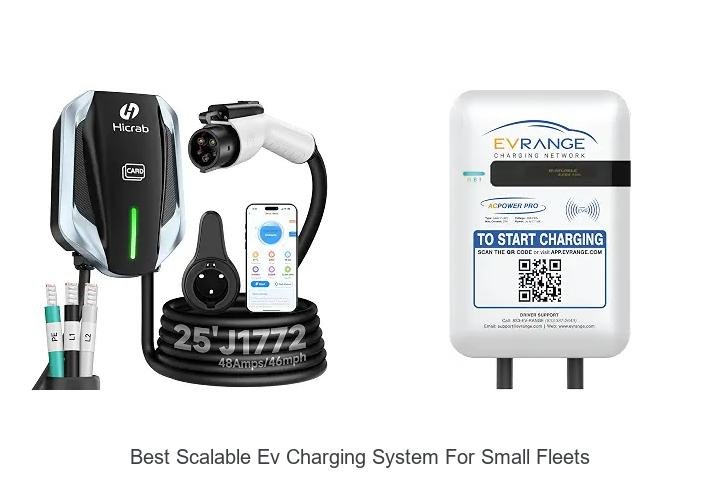
Fleet charging gets simpler when hardware is hardwired and built for steady daily use. The Hicrab Level 2 EV Charger 48A targets that need with 48A output and smart WiFi control. It uses a standard J1772 connector, so it works with non-Tesla EVs and PHEVs in North America.
The hardwired design fits fixed fleet parking better than plug-in units. It needs a licensed electrician and a dedicated 60A, 240V circuit.
The 25-foot cable adds reach for parking layouts with mixed vehicle positions. Its UL compliant and ETL listed construction, plus IP55 weather resistance, suits indoor or outdoor use.
Built-in protections cover over-current, over-voltage, and overheating. The metal housing adds durability for repeated use, while the app support helps managers monitor charging more easily. It suits small fleets that want reliable home-base charging without extra complexity.
Pros
- 48A output supports faster daily charging
- Hardwired design fits fixed fleet installations
- WiFi app adds charging control
Cons
- Requires licensed electrician installation
- Tesla needs a separate adapter
- Only one port is included
Who Should Buy It?
Who should buy it: Small fleet operators with fixed parking spots and non-Tesla vehicles. It fits teams that want hardwired Level 2 charging with smart control and outdoor-ready protection. Managers who need a single dependable charger for regular overnight charging will appreciate the 25-foot cable and 48A output.
It also suits garages, depots, and shared driveways where cable reach matters.
Key Specifications
| Specification | Details |
|---|---|
| Output Voltage | 240V |
| Current Rating | 60A circuit required |
| Amperage | 48A |
| Connector Type | J1772 |
| Number of Ports | 1 |
| Installation Type | Hardwired |
| Connectivity | Smart WiFi App |
| Certification | UL compliant, ETL listed |
| Weather Rating | IP55 |
| Cable Length | 25 ft |
| Smart Features | App control and charging management |
The charger runs on 240V and delivers 48A through a J1772 connector. In everyday use, that means faster charging for non-Tesla EVs and PHEVs. The 25-foot cable gives extra reach across a garage or driveway. A single port keeps the unit focused on one vehicle at a time. For small fleets, that setup works well when each vehicle has a regular parking spot and charging schedule.
Its hardwired installation and required 60A circuit suit fixed charging locations. The UL compliant and ETL listed design, plus IP55 weather resistance, helps it handle indoor or outdoor placement. The smart WiFi app adds remote control for charging sessions. Built-in protections against over-current, over-voltage, and overheating support daily use. Fleet managers with predictable parking layouts will benefit most from the steady setup and long cable reach.
2. EV Range Commercial EV Charging Station
Revenue-focused charging can turn vehicle parking into a new income stream. EV Range Commercial EV Charging Station suits sites that want controlled access and billing. It combines OCPP compatibility with driver pay support through the EV Range app.
Operators can set custom pricing and idle fees, then track usage reports and monthly payouts. The station works for fleets, apartments, hotels, retail sites, and workplaces. Its white polycarbonate enclosure is rated NEMA 4 and IK10.
That gives it weather resistance and impact protection for demanding locations. The J1772 connector and 25-foot cable support most plug-in hybrids and EVs. Tesla drivers can use adapters supplied with their vehicles.
Wall or pedestal mounting adds flexibility for different layouts. With RFID or app access, operators can keep public and private charging organized. It suits small fleets that want charging control plus revenue potential.
Pros
- Supports revenue collection with pricing and idle fees
- Works for both fleet and public access
- Weather-resistant enclosure suits harsh environments
Cons
- Pedestal is not included
- Only one charging port
- Tesla needs an adapter
Who Should Buy It?
Small fleets, property managers, and site operators should consider it. It fits locations that want charging access tied to billing and usage control. Hotels, apartments, workplaces, retail spaces, and rental operations can all use it.
It also suits fleets that want driver access security and monthly revenue reporting. Buyers needing a single-port, network-ready station with flexible access control may find it practical.
Key Specifications
| Specification | Details |
|---|---|
| Output Voltage | 240 volts AC |
| Current Rating | 32 A |
| Amperage | 32 A |
| Connector Type | J1772 |
| Number of Ports | 1 |
| Installation Type | Wall or pedestal mountable |
| Connectivity | OCPP-compliant, EV Range network, app, RFID |
| Certification | Energy Star, UL |
| Weather Rating | NEMA 4 |
| Cable Length | 25 feet |
| Smart Features | Custom pricing, idle fees, usage reports, monthly payouts, access control |
A 240-volt AC output and 32-amp current rating place this charger in familiar Level 2 territory. That means steady charging for plug-in hybrids and many electric vehicles. The J1772 connector works with most non-Tesla vehicles, while Tesla drivers can use an adapter. A single port keeps operation simple for controlled parking spots. The 25-foot cable helps when the vehicle port sits farther from the wall. Those details suit mixed-use sites with one designated charging position.
The NEMA 4 enclosure helps protect the unit in wet or dusty settings. IK10 impact resistance adds confidence for busy commercial areas. Energy Star and UL listings support installation planning for managed properties. Wall or pedestal mounting gives site owners placement choices, though the pedestal is separate. OCPP support, app access, and RFID control help operators manage charging by user group. Fleet managers and property operators benefit most from the billing tools and access controls.
3. LEDVANCE Phase EV Commercial Charger Gen 2
Dual-port commercial charging makes this unit appealing for small fleets with shared parking. Its 48-amp Level 2 output keeps vehicles moving with steady, practical charging speed.
LEDVANCE built it for commercial use, with a 4.3-inch color touchscreen and clear LED status lights. The interface supports English, French, and Spanish, which helps mixed teams operate it easily. A 25-foot J1772 cable gives flexible reach for different parking layouts.
The enclosure carries NEMA 4 and IP65 ratings, plus IK08 impact resistance for harsh locations. WiFi, Ethernet, and 4G LTE support modern site connectivity. ChargeLab software integration adds load balancing, analytics, and revenue tracking when needed.
It also works in free-charging mode without a subscription. For depots needing dependable shared charging, it offers strong hardware and useful control.
Pros
- Dual-port design suits shared fleet parking.
- Multiple connectivity options support varied sites.
- Long cable reaches difficult parking spots.
Cons
- ChargeLab software requires an optional subscription.
- Level 2 charging is slower than DC fast charging.
- Large commercial unit may need planned installation.
Who Should Buy It?
Fleet managers, property operators, and workplace sites should consider it. It fits locations that need two charging points in one commercial unit. The 25-foot cable and dual-port setup help shared parking areas.
Teams that want WiFi, Ethernet, or 4G connectivity will value it. It also suits sites planning future software-based management and load balancing.
Key Specifications
| Specification | Details |
|---|---|
| Output Voltage | 240 volts AC |
| Current Rating | 48 A |
| Amperage | 48 A |
| Connector Type | SAE J1772 |
| Number of Ports | 2 |
| Installation Type | Wall-mount or pedestal |
| Connectivity | WiFi, Ethernet, 4G LTE |
| Certification | Energy Star |
| Weather Rating | NEMA 4, IP65 |
| Cable Length | 25 ft |
| Smart Features | LCD touchscreen, LED status indicator, RFID access cards, ChargeLab software integration, free-charging mode |
The charger runs on 240 volts AC and delivers 48 amps. That gives up to 11.5kW of Level 2 power for routine fleet charging. A J1772 connector works with most North American EVs. Two ports let one unit serve multiple vehicles in a shared lot. The 25-foot cable adds reach for different stall layouts. Wall-mount or pedestal installation gives sites flexibility when planning parking spaces and traffic flow.
WiFi, Ethernet, and 4G LTE provide several ways to connect the charger. That helps sites place it where network access may vary. The NEMA 4 and IP65 enclosure ratings support indoor or outdoor use. IK08 impact resistance adds protection in busy commercial areas. ENERGY STAR certification points to efficient operation. The LCD touchscreen, LED indicator, RFID cards, and optional ChargeLab tools support day-to-day control for managers handling multiple drivers and vehicles.
4. Grizzl-E 48A Level 2 EV Charger

Fleet charging outdoors needs gear that feels built for rough use. The Grizzl-E 48A brings heavy-duty construction and smart control into one unit.
It charges up to 48A at 11.5kW, which suits small fleets with active vehicles. The cast aluminum enclosure and UL Type 4 rating help it handle harsh weather.
A 25-foot J1772 cable gives useful reach around parking spots and drive lanes. Hardwired installation keeps the setup permanent and tidy. The included Grizzl-E Connect software adds real-time monitoring, schedules, and energy tracking.
Charging still works without an online connection, which helps during network issues. OCPP support adds future integration flexibility with a one-time activation fee.
Intelligent load balancing also helps share power across multiple chargers. It suits fleets that need a durable, controlled, outdoor charging station.
Pros
- Heavy-duty metal enclosure suits harsh outdoor conditions
- 48A output supports faster fleet charging
- Load balancing helps multiple chargers share power
Cons
- Hardwired installation needs an electrician
- Single-port design serves one vehicle at a time
- OCPP requires a one-time activation fee
Who Should Buy It?
Small fleet operators should buy it when outdoor durability matters most. It fits sites with hardwired electrical plans and multiple parked vehicles. The 48A output helps reduce downtime between routes or shifts.
Managers who want charging data, scheduling, and load sharing will benefit too. It also suits businesses that need a weather-ready charger with future software flexibility.
Key Specifications
| Specification | Details |
|---|---|
| Output Voltage | 240 volts of alternating current |
| Current Rating | 48 A |
| Amperage | 48 A |
| Connector Type | J1772 |
| Number of Ports | 1 |
| Installation Type | Hardwired |
| Connectivity | Wi-Fi |
| Certification | UL Certified, Energy Star Certified |
| Weather Rating | UL Type 4 |
| Cable Length | 25 feet |
| Smart Features | Real-time monitoring, charging schedules, energy statistics, diagnostics, load balancing, OCPP support |
The charger runs on 240 volts and delivers 48 amps of current. That level suits drivers who need faster turnaround between trips. The J1772 connector works with many electric vehicles using the standard port. A single port keeps the unit straightforward for one vehicle at a time. The 25-foot cable gives extra reach when parking spaces are awkward. For small fleet lots, that cable length helps place the charger away from traffic.
Wi-Fi connectivity adds monitoring, schedules, energy statistics, and diagnostics. Those tools help managers track charging activity and plan vehicle use. Load balancing can share power across several chargers or favor one vehicle. UL Certified and Energy Star Certified ratings add confidence for commercial use. The UL Type 4 weather rating supports outdoor placement in harsh conditions. Hardwired installation suits fixed fleet sites, while the included mounting hardware helps setup.
5. Level 2 EV Charger for Tesla

Fleet charging gets easier when speed, control, and safety come together. The IYILO Level 2 EV Charger gives Tesla fleets a hardwired 48A setup with smart app management.
It delivers up to 46 miles of range per hour, which helps vehicles return to service faster.
The charger supports adjustable current from 6A to 48A in 1A steps, giving managers flexible control. Its NACS connector includes an NTC temperature sensor that monitors heat in real time.
If the connector reaches 221°F, charging power drops or stops automatically. The unit also supports scheduled charging, power sharing, and dynamic load balancing. Its app tracks energy use, cost, and multiple user accounts.
UL 2594, ETL, Energy Star, and FCC certifications add trust for daily fleet use. With a 3 year warranty and RFID cards included, it suits Tesla-based small fleets needing organized home or depot charging.
Pros
- Fast 48A charging suits active fleet schedules
- App supports scheduling, cost tracking, and multiple users
- Connector temperature protection adds charging safety
Cons
- Hardwired installation needs a licensed electrician
- Works only with Tesla-style NACS vehicles
- Single port limits simultaneous vehicle charging
Who Should Buy It?
Buyers managing a small Tesla fleet should consider this charger. It fits depots, home garages, and shared parking areas needing controlled charging. The adjustable amperage helps match electrical limits and daily routes.
App-based scheduling and usage tracking also help teams manage charging times and energy data. It suits operators who want fast Level 2 charging with safety monitoring and smart control.
Key Specifications
| Specification | Details |
|---|---|
| Output Voltage | not provided |
| Current Rating | 48A |
| Amperage | 6A to 48A |
| Connector Type | NACS (Tesla-style) |
| Number of Ports | 1 |
| Installation Type | Hardwired |
| Connectivity | WiFi |
| Certification | UL 2594, ETL, Energy Star, FCC |
| Weather Rating | not provided |
| Cable Length | not provided |
| Smart Features | Scheduled charging, app control, power sharing, dynamic load balancing, temperature monitoring |
The 48A output and hardwired setup define how the charger fits daily fleet use. It can add up to 46 miles of range per hour. Current adjusts in 1A steps from 6A to 48A. That lets managers match charging to available electrical capacity. The NACS connector fits Tesla vehicles directly. WiFi connectivity supports app control, so charging data and settings stay easy to manage from one place.
Safety and control features matter when several vehicles share the same charging setup. The built-in temperature sensor watches connector heat during use. When heat rises past 221°F, charging slows or stops automatically. Power sharing and dynamic load balancing help distribute power across connected charging points. The listed certifications also support confidence in everyday operation. Small fleets benefit most when they need faster charging, better oversight, and fewer manual checks.
6. Level 2 EV Charger 40A Smart App

Charging a small fleet gets easier when speed and control work together. The 40A Level 2 output delivers up to 9.6kW, cutting waiting time during busy schedules.
EVDANCE adds app-based control, so operators can start, stop, and monitor charging remotely. Smart scheduling helps vehicles charge when power use fits the routine.
That makes overnight charging simpler for drivers and supervisors. The 25-foot cable adds useful reach across garages and driveways. J1772 compatibility keeps it useful for many EVs and plug-in hybrids.
The NEMA 14-50 plug supports straightforward home-style installation. ETL certification and IP66 weather protection add confidence for indoor or outdoor use.
Build quality feels practical, with a design aimed at everyday charging. It suits small fleets needing budget-friendly smart charging without extra complexity.
Pros
- 40A Level 2 charging speeds up daily turnaround.
- App control supports remote start, stop, and monitoring.
- 25-foot cable helps reach awkward parking spots.
Cons
- Only one charging port is listed.
- Requires a NEMA 14-50 outlet.
- Smart features depend on app use.
Who Should Buy It?
Buy this charger if you manage a small fleet with mixed parking spots and want smart control without complicated hardware. It fits drivers who need faster overnight charging and simple remote monitoring. J1772 compatibility suits many everyday EVs and plug-in hybrids.
The long cable and outdoor-ready design also help sites with garage, driveway, or light commercial parking needs.
Key Specifications
| Specification | Details |
|---|---|
| Output Voltage | 240 volts of alternating current |
| Current Rating | 40 A |
| Amperage | 40 A |
| Connector Type | SAE J1772 Connector |
| Number of Ports | 1 |
| Installation Type | NEMA 14-50 Plug |
| Connectivity | Smart APP Control |
| Certification | ETL Certified |
| Weather Rating | IP66 Waterproof |
| Cable Length | 25 FT |
| Smart Features | Remote start/stop, charging status monitoring, smart scheduling |
The charger runs on 240 volts and supplies 40 amps. That power level supports up to 9.6kW charging. In daily use, that means faster top-ups after work or overnight. The SAE J1772 connector works with many common EVs and plug-in hybrids. A single port keeps operation simple. The NEMA 14-50 plug points to an easy outlet-based setup for homes, garages, or light fleet parking areas.
Smart APP control changes how charging fits a schedule. Operators can start or stop sessions from a phone. They can also check charging status without walking outside. Scheduled charging helps vehicles charge during preferred hours. The 25-foot cable gives more reach when parking varies. ETL certification and IP66 waterproofing add confidence for indoor or outdoor placement. These specs suit drivers who need flexible placement and simple remote control.
7. ChargePoint Home Flex Level 2 EV Charger

Fleet charging gets easier when the network matters as much as the hardware. ChargePoint Home Flex brings a connected Level 2 setup that suits small fleets needing shared charging oversight.
It delivers up to 45 miles per hour, depending on the vehicle, and works through the ChargePoint mobile app. Managers can handle charging reminders, station data, and smart home integrations from one place.
The charger uses a J1772 connector for non-Tesla EVs, with Tesla support through an adapter. It plugs into a 240V NEMA 14-50 outlet and needs a 40A or 50A circuit.
The unit feels practical for indoor or outdoor installation by an electrician. Its UL certification, ENERGY STAR listing, and cold-resistant cable point to a durable design. The 23-foot cable gives useful reach for varied parking layouts.
Adjustable amperage settings from 16 to 50 amps add flexibility for different electrical setups. For small fleets, that matters when vehicles, outlets, and schedules vary.
The biggest strength is network access, since ChargePoint supports hundreds of thousands of stations across North America and Europe, plus roaming partners. It suits buyers who value app-based control and broad charging support.
Pros
- Large ChargePoint network support
- App control for charging management
- Flexible amperage settings
Cons
- Single port only
- Tesla needs an adapter
- Requires 240V outlet setup
Who Should Buy It?
Buy it for small fleets that want network-backed charging and app control. It suits teams that manage mixed parking locations and need a connected charger for daily use. The adjustable amperage and indoor or outdoor installation also help when electrical setups vary.
It works best for non-Tesla vehicles, though Tesla drivers can use an adapter.
Key Specifications
| Specification | Details |
|---|---|
| Output Voltage | 240 volts |
| Current Rating | 50 A |
| Amperage | 50 A |
| Connector Type | NEMA 14-50 Plug (J1772)-Non Tesla |
| Number of Ports | 1 |
| Installation Type | Indoor/Outdoor |
| Connectivity | WiFi |
| Certification | UL |
| Weather Rating | Indoor/Outdoor rated |
| Cable Length | 23-foot |
| Smart Features | App control, charging reminders, station data, smart home device connection |
The 240-volt output and 50-amp rating place this charger in Level 2 territory. That means faster daily charging than a standard wall outlet can provide. The NEMA 14-50 plug and J1772 connector support non-Tesla EVs directly. One port keeps the setup simple for single-vehicle charging needs. WiFi connectivity and app control let users check charging data and manage reminders from a phone.
Indoor and outdoor rating gives flexibility for garages, lots, and covered fleet spaces. The 23-foot cable helps reach vehicles parked in different positions. UL certification adds confidence for installations handled by an electrician. Adjustable amperage offers setup choices between 16 and 50 amps, which helps match electrical capacity. Small fleets benefit most when they need connected control, reliable charging, and straightforward hardware for mixed parking arrangements.
8. ChargePoint HomeFlex EV Charger

A strong home charging setup can simplify small-fleet charging fast. ChargePoint HomeFlex fits that role well for Tesla-heavy households and work vehicles. It delivers Level 2 charging through a hardwired NACS connector for Tesla vehicles.
The unit provides up to 37 miles of range per hour. That speed depends on the vehicle and circuit setup. It requires a 20A or 80A circuit, depending on installation needs.
The compact black enclosure measures 7.06 by 11.19 by 5.2 inches. That size suits garages, driveways, and controlled parking areas.
Its single-port design keeps operation straightforward for one vehicle at a time. The 240-volt input and 50-amp rating support faster daily charging than standard outlets. Build quality appears geared toward fixed installation rather than portable use.
A three-year warranty is included with the unit. That adds confidence for buyers planning regular home-based fleet charging.
It works best for drivers managing one Tesla or a small Tesla mix. The charger suits users who value simple operation, wired installation, and dependable overnight charging. For small fleets centered around Tesla vehicles, it offers a practical charging anchor.
Pros
- Tesla-friendly NACS connector
- Charges up to 37 miles per hour
- Hardwired setup suits fixed installations
Cons
- Only one vehicle charges at a time
- Requires professional hardwired installation
- Best suited to Tesla vehicles only
Who Should Buy It?
Buy it if your small fleet includes Tesla vehicles and you want a fixed home charging point. It suits home garages, light-duty shared parking, and operators charging one vehicle overnight. The hardwired design works well for repeat daily use and simple plug-in habits.
Buyers needing a single, reliable charger for a Tesla home-fleet mix will find it practical.
Key Specifications
| Specification | Details |
|---|---|
| Output Voltage | 240 volts |
| Current Rating | 50 A |
| Amperage | 50 A |
| Connector Type | NACS (Tesla) |
| Number of Ports | 1 |
| Installation Type | Hardwired |
| Certification | NEMA |
| Cable Length | Not provided |
| Smart Features | Not provided |
The charger runs on 240 volts, which supports Level 2 charging at home. Its 50-amp rating points to stronger charging capability than a basic wall outlet. The NACS connector works with Tesla vehicles, so plug compatibility is direct. A single port means one vehicle charges at a time. In everyday use, that setup suits overnight charging in a garage or dedicated parking spot. The hardwired installation also keeps the unit fixed in place for regular routine charging.
These specifications matter most when charging a Tesla regularly at home. A 240-volt supply and 50-amp capacity help reduce wait time between drives. The hardwired format can feel less flexible, but it suits permanent fleet parking areas. The NEMA certification signals standard electrical compatibility for installation planning. Because cable length and smart features are not provided, buyers should plan around the mounting location. It works best for owners who want simple, fixed charging without extra controls.
9. Level 2 EV Charger J1772 Connector

App-based charging control gives small fleets a practical way to manage daily charging. The CleverCharge J1772 unit focuses on scheduling, monitoring, and vehicle tracking from one phone.
It delivers Level 2 charging at 40 amps and 240 volts, adding up to 38 miles of range per hour. That makes it useful for drivers who need steady overnight charging and simple coordination across vehicles.
The charger uses a NEMA 14-50 plug, so installation stays straightforward on an available outlet. Its 25-foot cable gives helpful reach for different parking positions.
The J1772 connector works with North American EVs and PHEVs that use that port type. Build quality looks practical, with Energy Star, FCC, and UL listings.
The smart app features suit multi-vehicle users, while the AI-powered scheduling tools appeal to households or small fleets managing several charging routines. It fits users who want organized charging without hardwired installation.
Pros
- App scheduling simplifies charging routines
- 25-foot cable helps flexible parking
- Works with many J1772 vehicles
Cons
- CleverKey features depend on vehicle compatibility
- Requires a NEMA 14-50 outlet
- Single-port design limits charging concurrency
Who Should Buy It?
Buyers managing one charger across several vehicles may like this setup. It suits drivers who want app-based scheduling, charging notifications, and energy tracking without hardwired installation. Small fleet operators, shared households, and multi-property owners can benefit most.
The J1772 connector also makes it a practical choice for many North American EVs and PHEVs.
Key Specifications
| Specification | Details |
|---|---|
| Output Voltage | 240 volts AC |
| Current Rating | 40 A |
| Amperage | 40 |
| Connector Type | J1772 |
| Number of Ports | 1 |
| Installation Type | Plug-in, NEMA 14-50 |
| Connectivity | Smart app control |
| Certification | Energy Star, FCC, UL |
| Cable Length | 25 ft |
| Smart Features | AI scheduling, real-time notifications, energy monitoring, multi-home and multi-vehicle management |
The 240-volt output and 40-amp rating point to Level 2 charging speed. In daily use, that means less waiting and more ready vehicles. The J1772 connector supports many North American EVs and plug-in hybrids. A single port suits one vehicle at a time, while the 25-foot cable helps reach parked cars in varied spots. The plug-in NEMA 14-50 setup also avoids permanent wiring for locations that already have the outlet.
Smart app control changes how charging fits into a routine. Scheduling lets managers set charging windows around work hours or utility timing. Real-time notifications and energy monitoring help track usage from a phone. Multi-home and multi-vehicle management can help families or small fleets centralize charging across properties. The Energy Star, FCC, and UL listings add confidence for buyers who want recognized compliance, while the 18.7-pound weight suggests a portable, manageable unit for flexible placement.
10. Ubiquiti EV Charging Adapter

Fleet charging becomes easier when access control and outdoor durability matter most. Ubiquiti’s 11 kW weatherproof EV charging adapter targets growing operations that need controlled expansion.
The Ubiquiti EV Charging Adapter is a Level 2 charger built for outdoor use, with a weather-resistant design and waterproof protection. It delivers 11 kW of charging power, which suits regular daily fleet top-ups without adding unnecessary complexity. Its adaptable access management is the standout feature, especially for teams that want network-managed scaling across multiple users or vehicles.
It also requires UniFi OS version 4.0.6 or newer, along with UniFi Identity Enterprise, so it fits best inside an existing Ubiquiti-managed environment. Build quality appears focused on weather exposure and practical deployment rather than decorative features. That makes it a strong match for depots, shared parking areas, and other controlled charging locations.
Setup may feel more technical than basic wall chargers, but the management tools should help once installed. For small fleets already using UniFi infrastructure, it offers a tidy path toward organized charging access.
It suits operators who value centralized oversight more than plug-and-play simplicity.
Pros
- Weatherproof design suits outdoor fleet charging
- Access management helps scale usage control
- 11 kW output supports daily Level 2 charging
Cons
- Requires UniFi OS 4.0.6 or newer
- Depends on UniFi Identity Enterprise
- Best fit for existing Ubiquiti users
Who Should Buy It?
Who should buy it: Small fleet operators using UniFi tools will gain the most here. It fits teams that want controlled access across multiple vehicles and charging spots. Outdoor depots, shared lots, and managed facilities benefit from the weatherproof build.
Buyers wanting simple standalone charging may prefer a less connected option.
Key Specifications
| Specification | Details |
|---|---|
| Output Voltage | 11000 volts_of_alternating_current |
| Current Rating | 11 Kiloamps |
| Amperage | 11 Kiloamps |
| Number of Ports | 1 |
| Connectivity | UniFi OS version 4.0.6 or newer; UniFi Identity Enterprise |
| Weather Rating | Waterproof |
| Smart Features | Adaptable access management |
The listed output voltage and 11 kW power show a charger made for Level 2 use. In daily fleet settings, that usually means steady charging for vehicles parked between routes or overnight. The single port keeps the unit focused on one vehicle at a time. Waterproof construction matters when the charger lives outside or near exposed parking spaces. Adaptable access management helps supervisors decide who can use the charger and when. That makes shared charging easier to organize without manual oversight each day.
The connectivity requirements shape where and how the charger works best. It needs UniFi OS version 4.0.6 or newer, plus UniFi Identity Enterprise. That makes it a better fit for sites already using Ubiquiti network tools. For those operations, management can stay centralized and easier to scale. The weatherproof design supports outdoor placement, which helps reduce setup limits at depots and yards. Drivers get a charger built for consistent access, while managers get tighter control over usage.
Best Scalable EV Charging Systems for Small Fleets: A Smart Buying Guide
Charging capacity and fleet growth planning
Fleet charging hardware needs enough networked capacity to handle today’s vehicles while also leaving room for tomorrow’s additions, because a system that maxes out too soon can force costly upgrades or service interruptions. Number of vehicles supported now should match daily charging demand without overloading the site, while room for future additions helps the setup scale as the fleet grows.
Load balancing across multiple chargers is equally important, since it distributes available power efficiently, reduces the risk of tripped circuits, and keeps several vehicles charging at once without wasting energy or stressing the electrical infrastructure.
- Current capacity: Confirms the setup can support the present fleet size reliably.
- Growth margin: Leaves space for extra vehicles and new charging points later.
- Power management: Shares electrical load intelligently across chargers to maintain performance.
Charging speed and daily vehicle turnaround
Charging infrastructure that cannot communicate with fleet software or grow alongside additional vehicles can quickly become a bottleneck for small operations. A system with strong network features lets managers monitor usage, track energy costs, and coordinate charging schedules so vehicles are ready at the right time, while modular hardware makes it easier to add ports or power capacity as the fleet grows. AC and DC charging needs should also match the vehicles’ daily patterns: AC is often suitable for longer dwell windows, while DC is more effective for fast top-ups between demanding shifts. Dwell time between routes or shifts matters because shorter breaks require faster charging and smarter load management to avoid delays.
Just as important, the setup should protect vehicle availability by reducing downtime, preventing scheduling conflicts, and ensuring the fleet can stay in service without overloading the site.
Installation requirements and site readiness
Electrical service capacity, parking layout, and site approval needs directly shape how smoothly an EV charging setup can grow with a small fleet. A site with limited available power may require a panel upgrade, load management, or utility coordination before additional chargers can be added, so reviewing service capacity early helps avoid costly delays later.
The arrangement of parking spaces also matters because charger placement affects cable reach, vehicle access, and the number of chargers that can fit without disrupting daily operations. In addition, local permitting and construction work can add timelines, design changes, and budget requirements, especially if trenching, concrete work, or electrical inspections are involved. A site that is ready for these demands is far easier to scale, while an underprepared location can quickly turn a simple installation into a long and expensive project.
- Electrical service capacity: Confirm that the property can support present charging demand and future growth without overloading the system.
- Parking layout and charger placement: Make sure vehicles can park, connect, and move efficiently as the fleet grows.
- Permitting and construction needs: Check for utility approvals, local permits, and any site work that could affect cost and installation time.
Software and fleet management features
Software and fleet management features play a major role in how efficiently a small fleet can charge, track, and scale its operations over time. Smart scheduling and charge prioritization help ensure vehicles are ready for routes with minimal downtime, while usage tracking and reporting make it easier to control energy costs, spot charging patterns, and plan future needs with confidence. Remote monitoring and alerts add another layer of control by letting managers respond quickly to faults, stalled sessions, or unexpected power issues before they affect vehicle availability.
Together, these tools reduce manual oversight, improve daily efficiency, and give fleet operators the visibility needed to support growth without unnecessary complexity.
Cost, incentives, and total ownership
Upfront hardware and installation costs set the foundation for how affordable an EV charging setup will be over time, because the price of chargers, electrical upgrades, permitting, and labor can vary widely from site to site. Ongoing software and maintenance fees also matter, since network access, load management, diagnostics, and support services can add recurring expenses that affect the true long-term budget.
At the same time, utility rebates and tax incentives can significantly reduce net costs, so it is worth verifying which programs apply in your area and whether the equipment meets the eligibility rules. A clear view of all three areas helps prevent surprises and makes it easier to compare options based on total ownership rather than just the sticker price.
Reliability, compatibility, and support
Vehicle and connector compatibility determines whether a charging setup will work smoothly across different vans, cars, and future additions to the fleet, so it is essential to confirm that the hardware supports the plug types, power levels, and communication standards your vehicles use today. Uptime and warranty coverage matter just as much, because a charging station that is frequently offline can disrupt routes, while a solid warranty helps reduce long-term repair costs and protects the investment.
Vendor support and service response time should also be reviewed carefully, since fast troubleshooting, remote diagnostics, and timely on-site repairs can keep daily operations moving without costly delays.
- Verify compatibility with current fleet vehicles and any planned additions.
- Check uptime commitments, warranty length, and what is actually covered.
- Confirm how quickly the vendor responds to service requests and repairs.
When to Replace EV Chargers
Small fleets need EV charging systems that last for years, but no charger lasts forever. Most units can run well for many years when they are installed correctly and kept clean. The useful life depends on build quality, weather exposure, charging load, and how often the system is used.
For a small fleet, a scalable EV charging system should hold up to daily use without frequent downtime. Commercial-grade units often last longer than basic home chargers because they are made for heavier use. Indoor units usually age more slowly than outdoor ones, since they face less heat, moisture, and dust.
Watch for signs that the system is nearing the end of its life. These can include slow charging, repeated error codes, damaged cables, loose connectors, or chargers that stop communicating with fleet software. Rising repair costs can also point to a charger that is no longer worth keeping.
A good rule is to compare repair costs with replacement costs. If a charger needs repeated service, loses uptime, or no longer supports your fleet software, replacement may save money over time. Newer systems may also offer better load sharing, stronger network tools, and higher power levels for growing fleets.
Basic care can help chargers last longer:
- Keep connectors clean and dry.
- Inspect cables for cracks or fraying.
- Check for loose mounting hardware.
- Update software when the vendor releases fixes.
- Protect outdoor units from direct impact when possible.
For small fleets, the best time to replace a charger is before it fails during busy hours. Planning ahead helps avoid downtime and keeps vehicles ready for daily routes.
FAQ’s
What Features Make An Ev Charging System Scalable For Small Fleet Operations?
A scalable EV charging system for small fleets should offer modular hardware, easy software management, and the ability to add chargers or vehicles without major infrastructure changes. It should also include load balancing, remote monitoring, and compatibility with different EV models to keep costs and operations flexible.
How Do I Choose The Best Ev Charging Solution For A Small Fleet Budget?
Focus on the charger type and usage pattern: for a small fleet, Level 2 chargers are often the most cost-effective, while DC fast chargers are usually only worth it if vehicles need quick turnaround. Compare total cost of ownership, including installation, utility upgrades, software, and maintenance, and choose a scalable solution that can grow with your fleet.
What Are The Key Differences Between Smart Charging Systems And Standard Chargers For Fleets?
Smart charging systems optimize when and how vehicles charge based on grid conditions, electricity prices, and fleet needs, helping reduce costs and avoid demand spikes. Standard chargers simply supply power at a fixed rate without intelligent scheduling or load management.
How Can Small Fleets Manage Charging Demand As They Add More Electric Vehicles?
Small fleets can manage charging demand by staggering vehicle charging times, using smart chargers, and setting charging schedules around route needs and utility rate periods. They can also monitor energy use and add infrastructure gradually as the fleet grows.
Which Ev Charging Systems Offer The Easiest Installation And Future Expansion For Small Businesses?
Modular Level 2 EV charging systems are usually the easiest to install and expand because they require less electrical infrastructure than DC fast chargers and can be added incrementally as demand grows. Networked chargers with scalable software and load management also make future expansion simple for small businesses.
Final Verdict
For small fleets that need a dependable, easy-to-scale setup, the best scalable ev charging system for small fleets is the Level 2 EV Charger 48A J1772 EVSE, especially for buyers who want a fleet-friendly hardwired unit. It suits operators planning for steady daily use and a clean installation path across a few vehicles.
Budget-minded buyers should start with the Level 2 EV Charger 40A Smart App, which fits smart charging needs without a high upfront cost. For commercial sites that want more throughput, the LEDVANCE Phase EV Commercial Charger Gen 2 stands out as the best premium choice thanks to its dual-port design. If charging access needs to support billing or controlled entry, the EV Range Commercial EV Charging Station is the strongest match for revenue-generating access.
Choose the 48A hardwired Level 2 model for most small fleets, switch to the 40A smart-app unit for tighter budgets, or pick the dual-port or access-controlled options when commercial use and monetization matter.