10 Best Generator to Charge Ev: Expert Picks and Buying Guide
Charging an EV at home or on the road can be frustrating when power is limited. Many drivers want a backup source that can keep charging simple during outages, travel, or remote use. That is where the best generator to charge ev becomes useful for daily EV owners and long-trip drivers.
That is where the best generator to charge ev becomes useful for daily EV owners and long-trip drivers. This review looks at generators that can support EV charging without adding too much noise, fuel use, or setup trouble. It is made for people who want a practical power solution for home backup, camping, or emergency charging.
You will also see which models handle output well and which ones fit smaller budgets. This introduction sets the stage for a clear review of performance, portability, runtime, and charging compatibility. By the end, you will have a better idea of which generator matches your EV charging needs.
Best generators for charging EVs safely and efficiently
| Image | Product | Price |
|---|---|---|
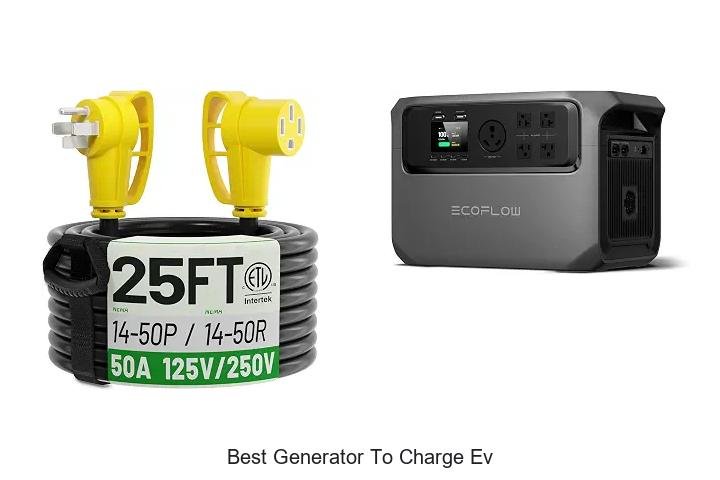
Pick 1  | NEMA 14-50P to 14-50R Extension Cord | Check Price On Amazon |
Pick 2  | EF ECOFLOW DELTA 3800 Gen4 Portable Power Station | Check Price On Amazon |
Pick 3  | Jackery HomePower 3600 Plus Power Station | Check Price On Amazon |
1. NEMA 14-50P to 14-50R Extension Cord
A long, weather-ready extension cord can make EV charging far more flexible at home or on the road. Here, the 25-foot reach and 50-amp NEMA 14-50 connection give Level 2 charging setups extra placement freedom.
Built with a heavy-duty jacket and IP65 waterproof rating, it handles outdoor use, abrasion, heat, and flame resistance well. The nickel-plated pure copper wiring helps keep contact stable and resist corrosion and oxidation.
That can mean less heat buildup during charging sessions. The cord stays pliable in cold weather and includes a spacious insulated grip for easier plugging and unplugging. It is ETL certified and designed for 125/250-volt, 6250/12500-watt use.
It suits drivers who need a compact EV backup cord for compatible Tesla or other Level 2 charging setups.
Pros
- 25-foot reach adds useful charging placement flexibility
- Weatherproof jacket supports outdoor use
- Nickel-plated copper wiring resists corrosion
Cons
- Only fits compatible 14-50 outlets
- Must be fully unfolded during use
- Heavier-duty cord may store less compactly
Who Should Buy It?
Buyers who need a portable EV charging extension cord will find this useful. It fits Level 2 charging setups using compatible NEMA 14-50 connections. Drivers with a Tesla Model 3, S, X, or Y may appreciate the 25-foot reach.
It also suits RV owners who need a 50-amp outdoor cord with weather resistance and ETL certification.
Key Specifications
| Specification | Details |
|---|---|
| Brand | POWGRN |
| Model | HA1450P-A, HA1450R-A, 5018440 |
| AC Output (W) | 12500 watts |
| Surge Power (W) | 6250 watts |
| Voltage | 125/250 volts |
| Fuel Type | Electric |
| Power Source | Corded electric |
| Weight | Not listed |
| Special Features | Weatherproof, IP65 waterproof, nickel-plated pure copper wiring, flexible in cold weather, insulated grip, ETL certified |
| Compatibility | Level 2 EV charging, Tesla Model 3, S, X, and Y, NEMA 14-50 outlets |
The 50-amp, 125/250-volt rating describes the power level it can carry safely. In real use, that matches many Level 2 EV charging setups and RV power needs. The 25-foot length gives extra reach between an outlet and the vehicle or charger. The NEMA 14-50P to 14-50R design means both ends use four-prong 14-50 connections. That matters for owners who need a matching outlet and plug arrangement.
The weatherproof jacket and IP65 rating help it handle outdoor conditions better. Nickel-plated pure copper wiring supports stable contact and helps limit corrosion over time. The cord stays flexible in cold weather, down to -40°F, which helps during winter setup. The insulated grip can make plugging and unplugging easier, while the ETL certification adds confidence for regular use. It suits drivers who want a portable charging extension for compatible EV and RV setups.
2. EF ECOFLOW DELTA 3800 Gen4 Portable Power Station
Low-cost EV charging starts with steady stored power, and this unit brings that idea into one portable box. Its 3763Wh battery and 3600W AC output make it a strong backup source for home or travel use. The DELTA 3800 Gen4 focuses on practical capacity, fast switchover, and flexible expansion.
It can run major appliances, handle surge loads up to 7200W, and switch to battery backup in under 10 milliseconds. The LFP battery chemistry supports long service life and low self-discharge.
Build quality leans toward portability for its class, with a 67.5-pound frame and compact size. It is the smallest and lightest unit in its category, which helps when moving it around the home or loading it into an RV. The ultra-low 3W standby draw helps conserve stored energy between uses.
Compatibility with expandable batteries lets buyers start smaller and add capacity later. That makes it a practical choice for users who want EV charging support through a solar-powered backup setup.
Pros
- Large 3763Wh capacity for long backup runtime
- 3600W output handles demanding household loads
- Expandable to 12kWh for growing needs
Cons
- 67.5-pound weight still needs careful lifting
- Not a dedicated EV charger
- Expansion batteries are sold separately
Who Should Buy It?
Buyers who want the lowest-cost path into EV charging backup should consider this model. It suits people building a solar-powered home battery setup for outages, camping, or RV travel. The 3600W output and expandable capacity make it useful for charging support, while the compact design helps in smaller spaces.
It works best for users who value portability, long runtime, and future expansion.
Key Specifications
| Specification | Details |
|---|---|
| Brand | EF ECOFLOW |
| Model | DELTA 3800 Gen4 |
| Capacity (Wh) | 3763Wh |
| AC Output (W) | 3600W |
| Surge Power (W) | 7200W |
| Fuel Type | Solar |
| Power Source | Solar Powered |
| Weight | 67.5 pounds |
| Special Features | Portable; 4–12kWh expandable; under 10 ms UPS backup; ultra-low 3W standby power |
| Compatibility | EcoFlow DELTAPro 3 Smart Extra Battery; EcoFlow DELTA 3 Max Plus Smart Extra Battery |
The 3763Wh capacity means it stores a large amount of energy for backup use. A 3600W AC output can support many household appliances at once. The 7200W surge rating helps with brief startup spikes from motors or compressors. Solar power support means it can pair with solar charging setups. For everyday use, that translates to longer runtime during outages and more flexibility for home essentials, travel gear, or emergency power needs.
Its 67.5-pound weight and compact size make moving it more manageable than many large battery stations. The under 10 ms UPS switch helps keep essential devices powered when grid power drops. Ultra-low standby use reduces wasted energy while stored. Expandable capacity from 4kWh to 12kWh gives buyers room to grow later. Users who want a portable backup source with room for future solar storage will benefit most.
3. Jackery HomePower 3600 Plus Power Station
Power outages feel far less disruptive when a home backup system can keep major appliances running. Jackery’s HomePower 3600 Plus is built for that role, with strong output, expandable storage, and flexible charging options.
It delivers 3600W AC output, or 7200W in parallel, which supports pumps, heaters, dryers, and other demanding loads. The 3584Wh battery can be expanded far beyond the base unit, making it useful for larger households and longer outages.
Build quality is a major part of its appeal. The battery uses high-temperature resistant ceramic membrane cells, and Jackery lists protection against thermal runaway from heat or overcharge.
It is designed for residential use, with plug-and-play operation through MTS and no complex installation required. Charging options are practical, too. It can recharge from hybrid AC and DC in two hours, or from AC, solar, or a gas generator on different timelines.
At 77.2 pounds, it is still portable enough for a wheeled design, though it is clearly meant for serious home backup rather than casual travel. Buyers who want quiet, clean emergency power with strong scaling options will find a lot to like here.
Pros
- Strong 3600W output handles demanding home appliances
- Expandable capacity supports longer backup runtimes
- Plug-and-play design simplifies setup
Cons
- Heavy at 77.2 pounds
- Only two outlets listed
- More setup than a small portable power bank
Who Should Buy It?
Buyers who want premium home backup power should consider this model. It suits households that need to keep appliances, lighting, and charging running during outages. It also fits people who want dual-voltage support and expandable storage for longer use.
The plug-and-play design helps families who want strong backup power without complex installation.
Key Specifications
| Specification | Details |
|---|---|
| Brand | Jackery |
| Model | JHP-3600A |
| Capacity (Wh) | 3584Wh |
| AC Output (W) | 3600W |
| Voltage | 120V |
| Fuel Type | Battery-Powered |
| Power Source | Battery-Powered |
| Weight | 77.2 pounds |
| Special Features | Easy to Install |
| Compatibility | Residential |
The 3584Wh capacity gives this unit a large energy reserve for home use. That means it can keep lights, chargers, and essential appliances running longer during outages. The 3600W AC output helps it handle heavier loads, including pumps, heaters, and dryers. Its 120V output fits common household equipment, while the battery-powered design keeps operation clean and quiet. For homes that want backup power without fuel handling, the core specs make sense for practical daily readiness.
Its 77.2-pound weight reflects a large battery system, not a lightweight travel pack. That size supports higher output and longer runtime, while the residential compatibility matches its home backup purpose. The easy-to-install design and plug-and-play approach reduce setup hassle for families. With only two outlets listed, it suits planned backup use more than crowded device charging. People needing dependable power for critical household loads will benefit most from these specifications.
4. EF ECOFLOW DELTA 3 Ultra Plus Portable Power Station

Powerful backup arrives in a portable form, ready for home or travel use. Its expandable design gives households room to grow as needs change. The EF ECOFLOW DELTA 3 Ultra Plus delivers 3,072Wh of capacity and 3,600W output for heavy loads.
With a 7,200W surge rating, it can support demanding appliances during outages. The unit also supports under-10ms UPS switching for sensitive devices.
Quiet operation at 25dB helps it fit indoor spaces comfortably. Six charging methods add flexibility, including home outlets, solar, car charging, EV stations, and generators. Fast charging reaches 80% in under an hour.
Its metal, plastic, and rubber build feels suited to regular use. At 74 pounds, it is portable, though not light. It suits RV owners, homeowners, and campers needing high-capacity backup.
Pros
- Large 3,072Wh capacity for extended backup use
- 3600W output supports demanding household appliances
- Expandable up to 11kWh for added runtime
Cons
- 74-pound weight makes carrying harder
- Two AC outlets may feel limited
- Large size needs considerable storage space
Who Should Buy It?
Buyers needing high-capacity backup for outages should pay attention here. It suits homes, RVs, and camping setups that need strong AC output and flexible charging options. People who want quiet indoor operation, fast charging, and expandable storage will value it most.
It also fits users protecting computers, routers, or medical equipment with UPS support.
Key Specifications
| Specification | Details |
|---|---|
| Brand | EF ECOFLOW |
| Model | DELTA 3 Ultra Plus |
| Capacity (Wh) | 3072Wh |
| AC Output (W) | 3600W |
| Surge Power (W) | 7200W |
| Voltage | 50 hertz |
| Fuel Type | Solar |
| Power Source | Solar Powered |
| Weight | 74 pounds |
| Special Features | Portable, Expandable to 11kWh, <10ms UPS, 25dB operation, 6 charging methods |
| Compatibility | Camping, Residential, RV, home outlets, solar panels, car chargers, EV stations, generators, EcoFlow Smart Generator |
The 3,072Wh capacity gives a large energy reserve for longer backup periods. The 3,600W AC output can handle strong household loads, while 7,200W surge power helps during startup spikes. That matters when appliances briefly need extra power. The unit uses solar power and supports six charging methods, including home outlets, car chargers, EV stations, generators, and solar panels. Its 50 hertz rating and portable format suit varied home and travel setups.
In daily use, the expandable design matters most for households with changing needs. Capacity can grow from 3kWh to 11kWh with extra batteries. The under-10ms UPS feature helps keep computers, routers, and medical equipment running during outages. Quiet 25dB operation supports indoor placement and RV living without much noise. At 74 pounds, movement takes effort, so it suits users who plan a fixed spot. The two AC outlets fit focused backup needs better than wide distribution.
5. 4 Prong 30 Amp to 50 Amp Adapter Cord

A simple adapter cord can make generator hookups far easier. The CircleCord 4 Prong 30 Amp to 50 Amp Adapter Cord is built for that exact job. It connects a 30 amp NEMA L14-30P male plug to a 50 amp NEMA 14-50R female receptacle.
That makes it useful for powering a 50 amp RV from a generator, and for some Tesla charging setups.
The cord uses 10 AWG copper wiring inside a flame-retardant, UV-resistant PVC jacket. It is rated for indoor and outdoor use, and the water-resistant build adds extra practicality.
The molded plug and ergonomic grip handle help with plugging and unplugging. At 12 inches long, it stays compact and easy to store. The blue color also helps it stand out in a crowded kit.
It suits buyers who want a durable adapter without unnecessary complexity.
Pros
- Compact 12-inch length is easy to store.
- Grip handle makes unplugging easier.
- Water-resistant jacket suits indoor and outdoor use.
Cons
- Only works as an adapter cord, not a generator.
- Short length may limit placement flexibility.
- Single outlet design offers one connection only.
Who Should Buy It?
Buyers needing a budget adapter cord for generator-to-RV or compatible EV charging setups should consider it. It fits users who want a compact, color-coded cable with a locking male plug and a 50 amp female receptacle. RV owners, camper users, and Tesla drivers with matching equipment may find it especially useful.
Key Specifications
| Specification | Details |
|---|---|
| Brand | CircleCord |
| Model | GAC43050 |
| Capacity (Wh) | No data |
| AC Output (W) | 7500 watts |
| Surge Power (W) | No data |
| Voltage | 250 volts |
| Fuel Type | No data |
| Power Source | Generator |
| Weight | 1.2 pounds |
| Special Features | Heavy Duty |
| Compatibility | NEMA L14-30P to 14-50R, Tesla Model S/3/X/Y charging, RV trailer camper |
The cord is rated at 30 amps and 250 volts, with 7500 watts listed output. That combination fits generator hookups that need a 4 prong locking male plug on one end. The other end is a 50 amp female receptacle for compatible RV or EV charging equipment. Its 12-inch length keeps the adapter short and easy to handle. The 1.2-pound weight also makes it simple to move and store.
The 10 AWG copper wiring supports practical power delivery for matching setups. A flame-retardant, UV-resistant, water-resistant PVC jacket adds useful protection for indoor or outdoor use. The molded plug and ergonomic grip handle help with everyday connection and removal. Blue coloring makes the cord easier to find in storage. These features suit people who want a compact adapter for RV travel, generator use, or compatible Tesla charging equipment.
6. NEMA 6-50P to 14-50R Adapter Cord

Charging flexibility gets a practical boost with this dedicated EV adapter cord. It bridges a NEMA 6-50P source to a 14-50R connection for Tesla and other electric vehicles. Suplevel built it for EV use only, and the listing clearly excludes RV and household outlet use.
The cord uses 6 AWG wire, a 50 amp, 250 volt rating, and ETL listing for added confidence. Its 1-foot length keeps the connection compact and tidy near your charging setup.
The molded copper construction and flame-retardant sleeve support durability during repeated use. The ergonomic handle also makes plugging and unplugging easier. Two ends face opposite directions, so setup avoids twisting during operation.
It suits drivers who need a dedicated adapter for Level 2 charging access.
Pros
- Dedicated EV adapter with clear plug compatibility
- 6 AWG wire supports higher current handling
- Compact 1-foot cord keeps setups tidy
Cons
- Not compatible with RVs or household outlets
- Short length may limit placement flexibility
- Requires charging current set to 32A or less
Who Should Buy It?
Buy this if you need a dedicated adapter for EV charging from a NEMA 6-50P source. It fits Tesla UMC, Cybertruck, Model 3, Y, X, and S, plus J1772 EVs. Drivers who want a compact, heavy-duty connector for Level 2 charging will appreciate the 6 AWG build and simple plug orientation.
It suits garage or workshop setups where the outlet type already matches the source.
Key Specifications
| Specification | Details |
|---|---|
| Brand | Suplevel |
| Model | 648227f2-5609-41d2-9b55-7be03be6be2f |
| Voltage | 250 volts |
| Fuel Type | Electric |
| Power Source | Corded Electric |
| Weight | Not provided |
| Special Features | Heavy Duty |
| Compatibility | Tesla UMC, Cybertruck, Model 3, Y, X, S, J1772 EVs |
| AC Output (W) | 12500 watts |
| Surge Power (W) | 12500 watts |
| Capacity (Wh) | Not provided |
The listed 250-volt rating and 12,500-watt output describe the adapter’s electrical capacity. In everyday use, that means it is built for higher-power EV charging connections. The 50-amp rating and 6 AWG wire point to a heavier conductor size. That matters because thicker wire helps carry current with less heat buildup. The 1-foot length keeps the adapter short, which suits tight charging areas and reduces extra cord clutter near the outlet.
Compatibility covers Tesla UMC, Cybertruck, Model 3, Y, X, S, and J1772 EVs. That makes it useful for drivers with mixed vehicle setups or shared charging gear. The male-to-female NEMA 6-50P to 14-50R format matches a specific charging path, not general household use. Heavy-duty construction, flame-retardant sleeve material, and pure copper wiring support repeat connection use. People who charge at one fixed location will benefit most from the compact layout and straightforward plug orientation.
7. NEMA L14-30P to 14-50R Adapter

A simple adapter can make generator hookups far more useful. It bridges a 30 amp twist lock source to a 50 amp RV outlet.
The NEMA L14-30P to 14-50R Adapter is built for that job with a compact, direct plug design.
Its NEMA L14-30P male plug connects to a generator or onboard power source. The NEMA 14-50R female side accepts a 50 amp RV cord. Rated for 125/250V and up to 7500W, it supports practical power delivery for RV and EV charging setups that use a 14-50 connection.
The molded plug, copper wiring coating, and flame-retardant build support everyday handling. A green working light shows when power is active.
Its small 2 x 2 x 2 inch size and 10.5 ounce weight make storage and transport easy. It suits RV owners, generator users, and anyone needing a compact connector for compatible EV charging gear.
Pros
- Converts 30 amp generator power to 50 amp RV connection
- Compact size makes storage and transport easy
- Green light shows active power connection
Cons
- Limited to compatible NEMA L14-30P generators
- Still limited by 30 amp source capacity
- Not a full charging solution by itself
Who Should Buy It?
Buy this if you need a compact adapter for a generator, RV, or compatible EV charging cord. It suits people using a NEMA L14-30P source who need a NEMA 14-50R connection. RV owners and generator users will get the most value.
It also fits setups where portability, simple hookup, and clear power indication matter more than extra features.
Key Specifications
| Specification | Details |
|---|---|
| Brand | Not listed |
| Model | NEMA L14-30P to 14-50R Adapter |
| Capacity (Wh) | Not listed |
| AC Output (W) | 3750W |
| Surge Power (W) | 7500W |
| Voltage | 125V/250V |
| Fuel Type | Not listed |
| Power Source | Generator |
| Weight | 10.5 ounces |
| Special Features | Green working light, molded plug, copper wiring coated, flame retardant |
| Compatibility | NEMA L14-30P male to NEMA 14-50R female, RV and EV setups |
The listed voltage, 125/250V, tells you it works with common generator-style power arrangements. Its 3750W output rating reflects the steady power it can pass through a 30 amp source. The 7500W surge rating shows the higher brief load it can handle during startup conditions. In daily use, that means the adapter supports a compatible RV or EV charging cord without adding bulk. The green working light also gives a quick visual check after connection.
Its 10.5 ounce weight and 2 x 2 x 2 inch size make it easy to carry. The molded plug and flame-retardant housing support regular outdoor handling. Copper wiring coating helps the adapter stay practical for repeated connection and removal. The NEMA L14-30P male end and NEMA 14-50R female end define the exact hookup style. That matters for owners of generators, RVs, and compatible EV charging equipment who need a compact connector that fits specific outlets and cords.
8. Lectron NACS to J1772 EV Charging Adapter

Tesla charging hardware becomes more useful with the right adapter. Lectron’s NACS to J1772 adapter gives J1772 EV owners access to Tesla Wall Connectors, Destination Chargers, and Mobile Connectors. It supports up to 80 amps and 240 volts, so it suits faster Level 2 charging at home or on the road.
The adapter is designed for J1772 electric vehicles and works with Level 1 and Level 2 NACS chargers. It is not compatible with Tesla Superchargers or Tesla vehicles.
UL 2252 certification and built-in temperature monitoring support safer operation, while IP67 protection helps it handle dust and water. The reinforced housing and lightweight form factor make it practical for regular carry and daily use.
Performance stays focused on charging flexibility and speed. High current support helps reduce charging time when paired with compatible equipment. Setup is simple, since the adapter sits between the vehicle and charger without extra hardware.
The black enclosure uses durable plastic, which keeps the unit portable while still built for indoor or outdoor use. It suits J1772 drivers who want wider charging access without changing their vehicle setup.
Pros
- Works with Tesla Wall Connectors and Destination Chargers
- Supports up to 80A Level 2 charging
- IP67 protection adds weather resistance
Cons
- Not compatible with Tesla Superchargers
- Only works with J1772 vehicles
- Requires compatible NACS charging equipment
Who Should Buy It?
Drivers with J1772 EVs should buy it for broader Tesla charging access. It fits people who use Tesla Wall Connectors, Destination Chargers, or Mobile Connectors at home, work, or travel stops. Those who want faster Level 2 charging and a portable adapter will benefit most.
It suits users who need a simple way to connect to NACS charging gear.
Key Specifications
| Specification | Details |
|---|---|
| Brand | Lectron |
| Model | Lectron NACS to J1772 EV Charging Adapter |
| AC Output (W) | 20000 |
| Voltage | 240 volts |
| Fuel Type | Electric |
| Power Source | Electric |
| Weight | Lightweight |
| Special Features | Lightweight Design, Built-in temperature monitoring, IP67 protection, UL 2252 Certified |
| Compatibility | All J1772 Electric Vehicles, Tesla Wall Connectors, Destination Chargers, Mobile Connectors |
The Lectron adapter is built for J1772 electric vehicles and Tesla NACS charging gear. Its 240-volt rating and 80-amp current support point to Level 2 charging use. The listed 20,000-watt output shows it is aimed at high-power charging sessions when paired with matching equipment. The lightweight form factor also makes it easier to keep in a vehicle, so drivers can use it at home or while traveling.
Protection features matter in daily use, and this adapter includes several. UL 2252 certification and built-in temperature monitoring support safer charging behavior. IP67 protection helps against dust and water, which benefits outdoor charging locations. Because it works with Tesla Wall Connectors, Destination Chargers, and Mobile Connectors, it helps J1772 owners access more charging points. Drivers who want portability and wider compatibility will get the most value from it.
9. Jackery Explorer 1000 v2 Portable Power Station

Compact power matters when home backup also needs mobility. Jackery Explorer 1000 v2 brings 1,024Wh of LFP storage and 1,500W output. It fits emergency charging, camping, road trips, and light household backup.
The unit includes two USB-C ports, one USB-A port, a DC car port, and two AC outlets. That mix supports phones, laptops, small appliances, and essential home devices at once.
Its 10ms UPS switchover helps keep critical gear running during outages. Fast charging is another strong point, with a full charge in about 50 minutes.
Standard charging defaults to 1.25 hours to protect battery health. The 23.3-pound body stays fairly portable, and the foldable handle helps with carrying. Build quality centers on a durable LiFePO4 battery rated for over 4,000 cycles.
It suits users who want expandable home backup with a practical size and smart app control.
Pros
- Fast 50-minute charging with app control
- 10ms UPS supports essential devices
- Lightweight for a 1,024Wh power station
Cons
- Not ideal for very large home loads
- Battery life depends on charging habits
- Requires app use for fastest charging
Who Should Buy It?
Buyers who want portable backup for outages, travel, and light home use will appreciate it. It suits households that need quick charging, app control, and support for several devices at once. People wanting a lighter power station with UPS support and a long-life LFP battery should find it practical.
Key Specifications
| Specification | Details |
|---|---|
| Brand | Jackery |
| Model | JE-1000D |
| Capacity (Wh) | 1024Wh |
| AC Output (W) | 1500W |
| Surge Power (W) | 3000W |
| Voltage | 120V |
| Fuel Type | Electricity |
| Power Source | Battery Powered, Solar Powered |
| Weight | 23.4 pounds |
| Special Features | 10ms Seamless UPS for Home Backup, Fast Charging, LFP Battery, Lightweight, Smart App Control (Wi-Fi & Bluetooth) |
| Compatibility | Camping, Emergencies, Home Backup, RV |
The 1,024Wh battery gives enough stored energy for many smaller needs. Its 1,500W AC output supports common appliances and electronics. The 3,000W surge rating helps with brief startup spikes from some devices. The 120V output matches standard household use. Because it runs on electricity and supports solar power, it works for indoor backup and off-grid charging. The 23.4-pound weight keeps transport manageable for a unit with this capacity.
The LiFePO4 battery and 4,000-cycle rating point to long service life. A 10ms UPS switchover helps sensitive devices stay powered during outages. Fast charging and smart app control make setup easier for daily use. Wi-Fi and Bluetooth support also help manage charging modes from a phone. These features suit people who want backup power for home essentials, travel gear, and RV use without carrying a much larger unit.
10. PowerSmart 4300 Watt Portable Generator

Power outages feel far less disruptive with a generator built for steady household backup. The PowerSmart 4300 Watt Portable Generator combines inverter technology, long runtime, and portable sizing for everyday emergency support.
It delivers 4300 starting watts and 3500 running watts, which suits fridges, TVs, phones, and other common appliances during blackouts. The 1.9-gallon tank can run up to 12 hours at 25 percent load, which helps reduce refueling stops.
Clean power under 3 percent THD also supports sensitive electronics.
Its steel construction and 68-pound weight keep it manageable for portable use. The control panel includes a 120V 30A twist-lock outlet, a 120V 20A household outlet, and a 12V DC port. Cold start technology, digital display, eco-mode, and low-oil shutdown add useful convenience.
Parallel readiness gives more setup flexibility when higher output is needed. It suits buyers who want gas-powered backup for home essentials, camping, or emergency charging support.
Pros
- Long runtime for blackout backup
- Clean power for sensitive electronics
- Portable size with useful outlet options
Cons
- Gas fuel requires storage and refueling
- Not designed for indoor use
- Heavy enough to move carefully
Who Should Buy It?
Buyers needing gas-powered backup for home essentials should consider it. It fits households that want a portable emergency source for refrigerators, televisions, phones, and small electronics. The inverter output and outlet selection also suit camping or backup charging needs.
People who value longer runtime, simple controls, and a manageable size will appreciate it most.
Key Specifications
| Specification | Details |
|---|---|
| Brand | PowerSmart |
| Model | DB5041 |
| Capacity (Wh) | Not provided |
| AC Output (W) | 3500 watts |
| Surge Power (W) | 4300 watts |
| Voltage | 120 volts |
| Fuel Type | Gasoline |
| Power Source | Fuel Powered |
| Weight | 68 pounds |
| Special Features | Cold Start Technology, Digital Display, Portable, Parallel Ready, Low-oil Shutdown, Eco-mode, Inverter Tech |
| Compatibility | Fridges, TVs, phones, tablets, cameras, camping, residential backup |
The generator offers 3500 running watts and 4300 starting watts. That means it can support essential appliances with extra startup headroom. It runs on gasoline and uses a 1.9-gallon tank for long stretches. The 120-volt output matches common household gear, while inverter technology keeps power cleaner for sensitive electronics. Its 12V DC port adds another charging option. For emergency use, that combination supports practical home backup and portable charging.
A 68-pound steel body makes it portable without feeling tiny. The digital display helps track operation more easily. Cold start technology can help during cooler starts, while eco-mode can reduce fuel use during lighter loads. The low-oil shutdown adds protection during operation. With parallel readiness, the unit can fit larger power needs later. People who want a portable gas backup generator will benefit most from these traits.
Best Generator to Charge an EV: A Smart Buyer’s Guide
Power output requirements
Power output requirements determine whether an EV charger will run reliably or shut down under load. EV charging equipment draws a steady amount of electricity for long periods, so the generator must provide enough wattage to support the charger’s normal operating demand, not just a brief spike. Continuous power is the figure that matters most for everyday charging, while surge power helps cover the short startup demand from the charger and any connected accessories.
It also pays to match the generator’s output to the type of charger you use, since Level 1, Level 2, and portable charging setups all have different power needs. A unit with insufficient capacity can slow charging, trigger overload protection, or fail to run the charger at all, so checking these requirements first helps ensure dependable performance and better long-term value.
Generator type and fuel source
Gasoline, propane, and dual-fuel models each offer different advantages that can affect how reliably an EV charger runs during outages or off-grid use. Gasoline units are widely available and usually deliver strong output, while propane stores longer and burns cleaner, making it a practical option for infrequent use.
Dual-fuel generators add flexibility by letting you switch between fuel sources based on what is easiest to obtain at the time. Inverter generators are especially valuable because they produce cleaner, more stable power that is better suited for sensitive charging equipment. Portability also matters, since a unit that is easier to move can be placed where it is most efficient and convenient, and fuel availability can make the difference between uninterrupted charging and a stalled setup.
A thoughtful review of these factors helps ensure the generator can support EV charging safely, efficiently, and with fewer limitations.
Charging speed and compatibility
Charging speed and compatibility can determine whether a generator will actually keep an EV useful in real-world driving. Level 1 and Level 2 charging support matters because a unit that only handles lower output may add just a few miles of range per hour, while higher-capacity setups can deliver a much more practical charge rate.
It is also important to check the generator’s voltage and amperage output, since an EV charger will only perform as well as the power it receives; if the supply is too weak or unstable, charging can slow down or stop altogether. Equally important are vehicle-specific charging limitations, because some EVs cap the amount of power they can accept regardless of the charger or generator used. Reviewing all three factors together helps ensure the setup matches the car’s requirements and avoids costly mismatches.
Runtime and fuel efficiency
Tank size, refueling frequency, and real-world load all have a direct impact on how well a generator can support EV charging. A larger tank usually means fewer interruptions, which matters because charging an electric vehicle can draw power for an extended period rather than in short bursts. Load-dependent runtime is equally important, since a unit may run much longer at a moderate output than at full capacity, and EV charging demands can shorten runtime faster than many people expect. Fuel use during charging should also be part of the decision, because an efficient generator can deliver steadier power with less waste, helping control operating costs over time.
Fuel use during charging should also be part of the decision, because an efficient generator can deliver steadier power with less waste, helping control operating costs over time. In practice, the most reliable option is one that balances a practical tank size with low fuel consumption under sustained load, so the generator can keep an EV charged without constant refueling.
Safety and power quality
A clean sine wave output is essential because EV charging equipment and onboard electronics rely on stable, low-distortion power to operate efficiently and safely. A generator with strong overload and low-oil protection adds another layer of reliability by reducing the risk of damage during heavy demand or extended runtime, which is especially important during long charging sessions.
Together, these features help ensure consistent charging performance, protect sensitive components, and reduce the chance of interruptions or costly repairs.
- Clean sine wave output: supports safe, efficient EV charging and helps prevent electronic issues.
- Overload protection: shuts down the unit before excessive demand can cause harm.
- Low-oil protection: helps preserve engine life and avoids internal damage.
- Grounding and outdoor use: improve safety and ensure the setup meets required operating conditions.
Practical features and budget
A quiet unit can make a major difference in daily use, especially for homes where family members, neighbors, or pets are sensitive to sound, so noise level should be checked before anything else. Practical design details also matter: a compact frame, sturdy wheels, and a comfortable handle can make transport far easier, especially if the unit needs to move between storage, the garage, and outdoor charging spots.
A clear comparison of these practical features helps ensure the unit is convenient to use, simple to move, and affordable to maintain for everyday charging needs.
Buying Mistakes to Avoid
A generator can help recharge an EV in a pinch, but the wrong one can waste money and time. Many buyers focus only on wattage and miss other details that matter just as much.
One common mistake is choosing a generator that is too small. EV charging can draw more power than people expect, especially if the battery is low and the charger runs at a steady rate. A unit with enough continuous output is a safer pick than one that only has a high peak rating.
Another mistake is ignoring the charger type. Some EVs charge more slowly than others on a generator, and some portable chargers need a stable sine wave output. Check the vehicle manual and the charger specs before buying.
Noise, fuel use, and runtime also matter. A cheap model may work for a short charge, but it can be loud, thirsty, and hard to refuel during long outages. Portability matters too. A very heavy unit may be hard to move, store, or place safely outdoors.
Avoid skipping the safety details. Look for overload protection, proper grounding, and clear outlet labels. Never run a generator in a garage or near open windows, since carbon monoxide can build up fast.
- Match the generator’s continuous watt rating to your charger needs.
- Check that the output type works with your EV charger.
- Look at fuel type, runtime, and noise before buying.
- Choose a model with safety features and outdoor-safe placement in mind.
Taking a little time now can save a lot of trouble later. The right generator should charge your EV safely, fit your space, and handle the load without strain.
FAQ’s
What Size Generator Do I Need To Charge An Ev At Home?
For most home EV charging, a **portable generator of at least 7,000–10,000 watts** is typically needed for Level 2 charging, depending on the car and charger. If you only need slow charging from a standard outlet, a **3,000–4,000-watt generator** may work, but check your EV charger’s power draw first.
Can A Portable Generator Safely Charge An Electric Vehicle?
Yes, a portable generator can charge an electric vehicle, but only if it provides enough stable power and the EV charger is compatible with the generator’s output. In practice, it’s usually slow and not ideal for regular charging, so it’s best used as an emergency option.
What Type Of Generator Is Best For Fast Ev Charging?
A high-output diesel or natural gas generator with stable, clean power is usually best for fast EV charging. For the best performance, it should be sized to handle the charger’s peak load and include proper voltage regulation.
How Long Does It Take To Charge An Ev With A Generator?
It depends on the generator’s output and the EV charger, but it usually takes much longer than charging from the grid. In many cases, a generator can add only a few miles of range per hour unless it’s very large and matched to a level 2 charger.
Are Inverter Generators Better For Charging Electric Cars?
Yes, inverter generators are generally better for charging electric cars because they provide cleaner, more stable power. They’re also usually quieter and more fuel-efficient than conventional generators.
Final Verdict
For buyers who want the best generator to charge ev without overcomplicating the setup, the NEMA 14-50P to 14-50R Extension Cord is the best overall pick for compact EV backup. It suits drivers who need a simple, space-saving way to connect compatible equipment. The EF ECOFLOW DELTA 3800 Gen4 Portable Power Station is the best value choice for shoppers focused on the lowest-cost setup, while the Jackery HomePower 3600 Plus Power Station is the best premium option for households wanting higher-end home backup support.
The NEMA 6-50P to 14-50R Adapter Cord is the best pick for dedicated EV adapter use, especially for buyers who already have the right charging gear and want a targeted connection solution. Pick the cord or adapter that matches your existing EV equipment first, then choose a power station only if you need full backup capability.
Choose the NEMA 14-50P to 14-50R Extension Cord for the simplest compact EV backup, or step up to the EcoFlow or Jackery power stations if you need a fuller home-backup setup.