Can You Drive Your EV Through Flooded Roads? Safety Guide
Electric vehicles (EVs) have become a common sight on roads worldwide, but they have also sparked new questions about safety—especially during severe weather. One of the most common concerns is whether an EV can safely drive through flooded roads without damaging its battery or creating an electrical hazard.
While modern electric vehicles are engineered with sealed battery packs, sophisticated electrical protection systems, and extensive water-resistance testing, they are not designed to tackle deep floodwater.
In reality, floodwater presents serious risks to all vehicles, whether they run on electricity or gasoline. This guide explains how EVs are built, the real dangers of floodwater, and the safest decisions drivers can make during heavy rain or flooding.
Why People Think EVs and Water Don’t Mix
The idea of an electric vehicle driving through water can make some people uneasy. After all, most of us learn from an early age that electricity and water are a dangerous combination. It’s easy to assume that an EV’s large battery pack and high-voltage components would make it especially vulnerable during heavy rain or flooding.
Social media has only added to this confusion. Viral videos often show vehicles stranded in floodwater, followed by claims that electric cars are unsafe because they could electrocute their occupants or instantly catch fire after getting wet. While dramatic stories attract attention, they rarely explain how modern electric vehicles are actually engineered.
In reality, today’s EVs undergo extensive testing before reaching customers. Manufacturers expose battery systems and electrical components to water, mud, vibration, temperature extremes, and other harsh conditions to ensure they perform safely in everyday driving.
That doesn’t mean electric vehicles are waterproof. Instead, they are designed to operate safely in rain, through puddles, and in normal wet-road conditions while protecting high-voltage systems from moisture intrusion.
It’s important to separate two very different situations:
- Driving during heavy rain on wet roads.
- Driving through standing or flowing floodwater.
The first is an everyday driving condition that modern EVs are built to handle. The second introduces risks that no passenger vehicle is designed to overcome safely.
Are EV Batteries Waterproof?
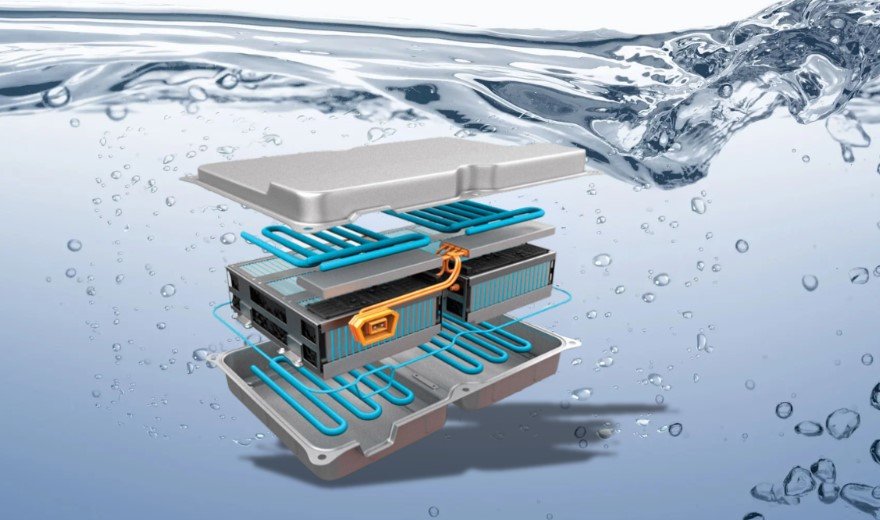
One of the biggest misconceptions about electric vehicles is that the battery sits exposed underneath the car, making it vulnerable whenever it encounters water. While the battery pack is typically mounted beneath the floor, it is enclosed inside a robust protective housing designed to shield it from water, dirt, road debris, and impacts.
Manufacturers use sealed battery enclosures, reinforced casings, waterproof electrical connectors, and sophisticated monitoring systems to protect the high-voltage battery. Many battery packs also incorporate pressure-management systems and carefully designed cooling circuits that are tested under demanding conditions.
However, there’s an important distinction between waterproof and water-resistant.
A waterproof object can theoretically remain unaffected regardless of water exposure. A water-resistant component, on the other hand, is designed to withstand specified levels of moisture under controlled conditions.
Modern EV battery systems are engineered to resist rain, splashes, puddles, and other everyday driving conditions. They are not intended to remain submerged in floodwater or operate in deep standing water for extended periods.
Another important safety feature is electrical isolation. If the vehicle detects a serious fault, many EVs are designed to disconnect the high-voltage battery from the rest of the electrical system automatically. This helps reduce electrical hazards during collisions or significant system failures.
These protective systems have made modern electric vehicles remarkably safe in wet weather. Nevertheless, even the best engineering has practical limits when floodwater becomes deep enough to reach critical vehicle components.
Can You Safely Drive Through Flooded Roads?
The simplest answer is no. If you can avoid driving through flooded roads, you should.
This advice applies not only to electric vehicles but also to gasoline, diesel, and hybrid vehicles. Floodwater is dangerous regardless of what powers your car.
One of the biggest problems is that drivers rarely know how deep the water actually is. A road that appears to have only a few inches of water may conceal potholes, open storm drains, debris, or sections of damaged pavement. Entering unexpectedly deep water can quickly leave any vehicle stranded.
Moving water creates another major hazard. Just a relatively shallow current can begin pushing a vehicle sideways, reducing tire grip and making steering almost impossible. Larger vehicles may tolerate slightly deeper water than compact cars, but none are immune to strong currents.
Floodwater also reduces braking effectiveness. Wet brake components often require extra distance to stop, while slippery road surfaces reduce tire traction during acceleration and cornering.
For electric vehicles specifically, deep floodwater increases the possibility of water reaching sensitive electrical components that were never intended to remain submerged. Although high-voltage systems are sealed, manufacturers generally advise avoiding floodwater whenever possible because prolonged water exposure can lead to expensive repairs and difficult inspections.
It’s also worth remembering that the battery isn’t the only concern. Electric motors, sensors, cameras, parking systems, lighting, wiring harnesses, suspension components, wheel bearings, and interior electronics can all be affected by significant flooding.
Electric Vehicle vs. Gasoline Vehicle in Floodwater
|
Feature |
Electric Vehicle | Gasoline Vehicle |
| High-voltage protection | Sealed battery and electrical systems |
Not applicable |
|
Engine air intake |
No conventional engine intake | Air intake vulnerable to water ingestion |
| Risk of engine hydro-lock | No |
Yes |
|
Electronic systems |
Extensive electronics protected by sealed connectors |
Extensive electronics also vulnerable to water damage |
|
Floodwater risk |
High | High |
| Safe to drive through flooded roads? | No |
No |
Contrary to popular belief, gasoline vehicles don’t automatically perform better in flooding. In fact, if water enters the engine through the air intake, it can cause hydro-lock, a condition where water prevents engine movement and can result in severe internal damage. An EV avoids hydro-lock because it doesn’t use a conventional combustion engine, but that advantage doesn’t make it suitable for driving through floodwater.
The safest decision is usually the simplest one: if you cannot clearly judge the depth of the water—or if authorities have closed the road—turn around and choose another route. A short detour is far less costly than flood-related vehicle damage or risking your personal safety.
What Happens If an EV Is Submerged?
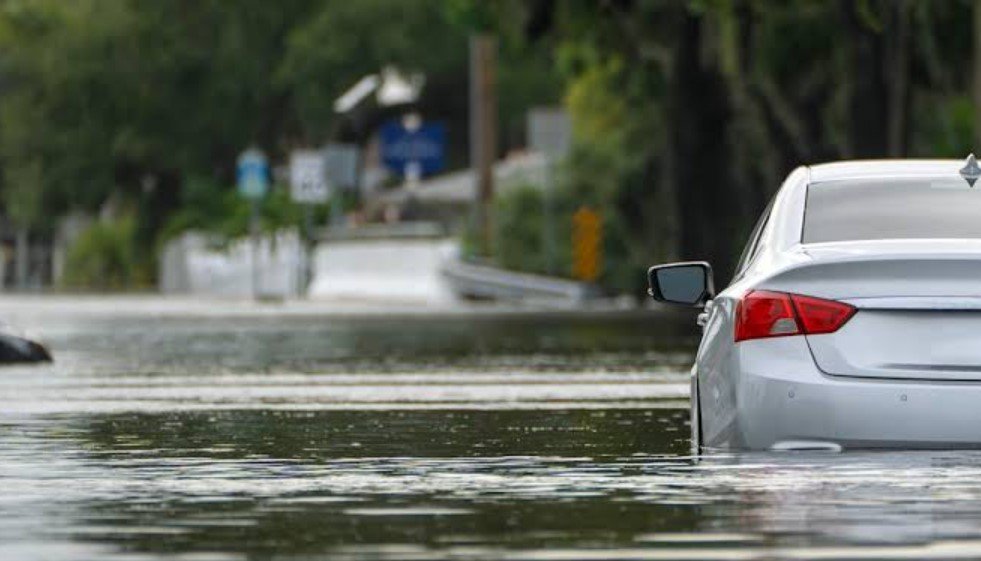
Driving through a shallow puddle is very different from having an electric vehicle partially or completely submerged in floodwater. Once water rises high enough to enter areas it wasn’t designed to reach, the risk of damage increases significantly.
Modern EVs continuously monitor their high-voltage systems. If the vehicle detects abnormal electrical conditions, many models automatically disconnect the high-voltage battery from the rest of the vehicle. This protective feature helps reduce the risk of electrical faults and protects both occupants and emergency responders.
However, automatic safety systems do not prevent flood damage. Water can still affect charging components, electric motors, wiring harnesses, sensors, cameras, lighting systems, wheel bearings, braking components, and numerous electronic control modules.
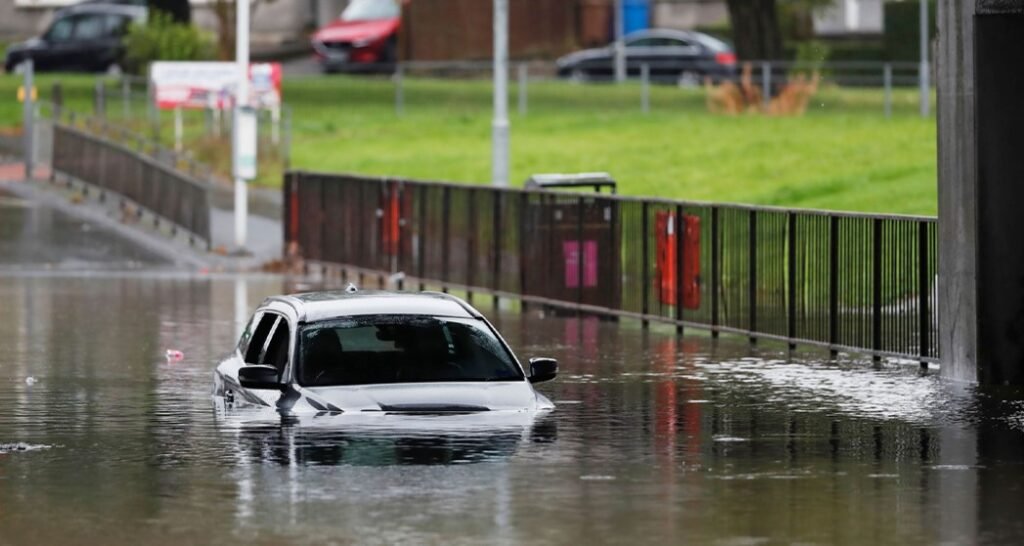
Floodwater is particularly harmful because it rarely consists of clean rainwater. It often contains mud, salt, sewage, chemicals, and other contaminants that can accelerate corrosion. Even if an EV appears to operate normally after a flood, hidden corrosion may develop over time, leading to expensive repairs months later.
The vehicle’s interior is equally vulnerable. Upholstery, carpets, insulation, speakers, climate control components, and electronic modules located beneath seats or inside the cabin may all require replacement after significant flooding.
For this reason, manufacturers and insurers generally recommend a professional inspection following any substantial flood exposure.
Heavy Rain vs. Floodwater
Many drivers confuse heavy rain with flooding, but they represent two very different situations.
Driving during heavy rain is part of normal vehicle operation. Electric vehicles are extensively tested to operate safely in rain, on wet highways, and through ordinary puddles encountered during everyday driving. Rain alone is not considered hazardous for a properly maintained EV.
Floodwater introduces entirely different risks. Instead of simply driving on a wet road surface, the vehicle may encounter standing or moving water that hides road damage, floating debris, submerged obstacles, or unexpectedly deep sections.
Another important difference is visibility. Heavy rain can reduce how far you can see, but floodwater prevents you from seeing the road beneath your vehicle. A seemingly shallow flooded street could conceal a damaged roadway or an open drainage channel.
Even if the water is not deep enough to damage the vehicle, entering floodwater at speed can reduce tire contact with the road and increase the risk of hydroplaning.
The safest approach is to treat rain and flooding differently. Rain usually requires slower speeds and greater following distances. Flooded roads require careful judgment—and, in many cases, the decision not to proceed at all.
Tips for Driving an EV During Storm Season
Stormy weather doesn’t always mean you should leave your electric vehicle at home. With sensible precautions, EVs perform well in rain and other challenging weather conditions.
Before setting out, check the latest weather forecasts and road conditions. Heavy rainfall can quickly lead to flash flooding, especially in low-lying areas or regions with poor drainage. If flooding is expected, planning an alternative route before leaving can save time and reduce unnecessary risk.
While driving, reduce your speed and leave more space between your vehicle and the one ahead. Wet roads increase stopping distances, regardless of whether you’re driving an electric or gasoline-powered car.
Pay attention to official road closure signs and flood warnings. These are issued for public safety, and attempting to bypass them can put both you and emergency responders at risk.
Avoid following other vehicles through floodwater simply because they appear to make it across successfully. Different vehicles have different ground clearance, weight, and capabilities. A larger SUV may cross a section that could easily disable a smaller sedan.
It’s also wise to keep your EV well maintained. Healthy tires, properly functioning brakes, windshield wipers, and exterior lights all play an important role in wet-weather safety.
Finally, maintain a healthy battery charge during severe weather. Unexpected road closures or detours may require longer journeys than originally planned, and having extra battery range provides greater flexibility.
What Should You Do If You Accidentally Drive Through Floodwater?
Despite your best efforts, you may occasionally find yourself entering floodwater unexpectedly. If that happens, stay calm and avoid sudden steering or hard braking unless absolutely necessary.
If the water is shallow and you can safely continue, drive slowly and steadily until you reach dry ground. Rapid acceleration can create larger waves that increase water exposure around the vehicle.
Once you’re safely parked, inspect the vehicle carefully. Look for visible damage, unusual warning lights, unusual noises, or changes in steering or braking performance.
If the floodwater was deeper than expected, avoid plugging the vehicle into a charger until it has been professionally inspected. Charging a vehicle that may have suffered water intrusion is not recommended because hidden damage may not be immediately visible.
Should warning lights appear or the vehicle behave abnormally, contact roadside assistance or your dealership rather than attempting to diagnose high-voltage components yourself. Electric vehicles contain systems that require specialized equipment and training to inspect safely.
Even if everything appears normal, consider scheduling an inspection after significant flood exposure. Early detection of water intrusion or corrosion can prevent more expensive problems later.
How Manufacturers Design EVs for Wet Conditions
Modern electric vehicles are built to operate safely in a wide range of weather conditions. Engineers understand that drivers will encounter rain, snow, puddles, and wet roads throughout a vehicle’s lifetime, so water protection is a major part of EV development.
Battery packs are enclosed within rigid, sealed housings designed to protect high-voltage components from water and road debris. Electrical connectors throughout the vehicle are also sealed to reduce moisture intrusion during everyday operation.
Manufacturers perform extensive durability testing before releasing new models. These evaluations may include simulated heavy rain, water spray, high-pressure washing, humidity exposure, extreme temperatures, vibration testing, and repeated driving over wet surfaces.
In addition to physical sealing, EVs rely on sophisticated software that continuously monitors battery temperature, voltage, insulation resistance, and other safety parameters. If the system detects abnormal conditions, protective measures such as electrical isolation may activate automatically.
Corrosion protection is another important design feature. Vehicle frames, fasteners, electrical connectors, and underbody components receive protective coatings to help withstand years of exposure to water, road salt, and changing weather conditions.
However, it’s important to understand the purpose of these protections. They are intended to ensure reliable operation during normal driving—not to encourage drivers to enter flooded roads.
Just as waterproof hiking boots don’t make it safe to walk across a fast-moving river, sealed battery packs don’t make floodwater safe for electric vehicles.
Common Myths About EVs and Floodwater
As electric vehicles become more common, misinformation about their performance in wet conditions continues to circulate online. Understanding the facts can help drivers make better decisions during severe weather.
Myth 1: An EV Will Electrocute Its Occupants in Floodwater
This is one of the most widespread misconceptions. Modern EVs are designed with multiple layers of electrical protection, including sealed battery packs, insulated high-voltage cables, and automatic isolation systems that can disconnect the battery if a serious fault is detected. Simply driving through rain or standing in shallow water does not mean the vehicle becomes electrically dangerous.
Myth 2: Gasoline Cars Are Always Safer in Floods
Neither type of vehicle is designed for flooded roads. Gasoline-powered vehicles can suffer engine hydrolock if water enters the air intake, often resulting in severe engine damage. Electric vehicles avoid hydrolock because they don’t rely on an internal combustion engine, but they can still sustain costly damage to electrical and mechanical components if floodwater reaches sensitive areas.
Myth 3: EV Batteries Will Explode After Getting Wet
Modern lithium-ion battery packs are built with robust protective housings and advanced safety management systems. While severe physical damage or contamination can create safety concerns, simply encountering rain or splashing through normal puddles does not cause a battery to explode. Flood-damaged batteries should always be inspected by qualified professionals, but sensational claims online often ignore the sophisticated engineering built into modern EVs.
Myth 4: Only the Battery Needs Inspection After Flooding
The battery is only one part of the vehicle. Floodwater can affect charging ports, electric motors, suspension components, wheel bearings, brakes, cameras, parking sensors, lighting, interior electronics, and wiring harnesses. A thorough inspection looks at the entire vehicle, not just the battery pack.
Myth 5: If the EV Still Drives, Everything Is Fine
Some flood damage isn’t immediately obvious. Corrosion inside connectors or electronic modules may take weeks or even months to cause problems. That’s why manufacturers and insurers often recommend professional inspections after significant flood exposure, even if the vehicle appears to operate normally.
When Is It Safe to Drive Again After Flood Exposure?
If your EV has been exposed to deep water, resist the temptation to assume everything is fine simply because the vehicle starts.
Begin with a careful visual inspection. Check for warning lights, unusual noises, changes in steering feel, braking performance, or water inside the cabin. If any of these symptoms are present, avoid driving until the vehicle has been inspected.
If floodwater reached the charging port or you suspect water intrusion, do not connect the vehicle to a charger until it has been evaluated by a qualified technician. Charging a flood-damaged EV could create additional risks or worsen existing damage.
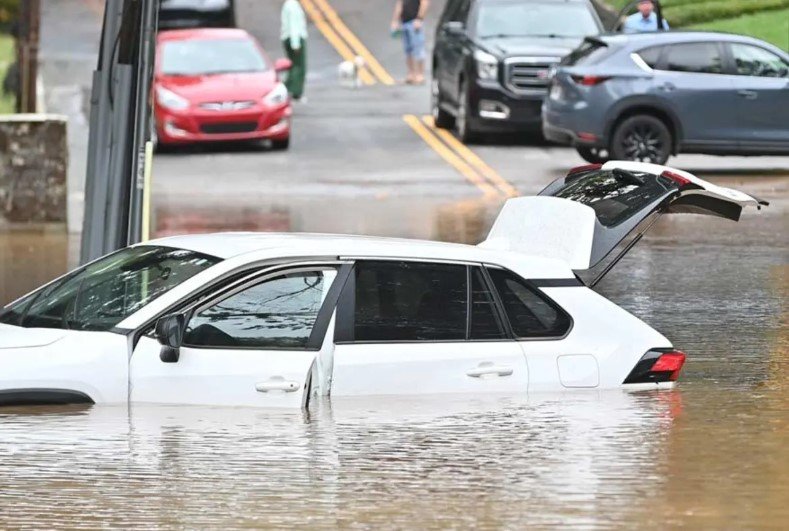
A professional inspection may include diagnostic scans, insulation resistance testing, battery evaluation, brake inspection, suspension checks, and examination of electrical connectors for signs of moisture or corrosion.
Even if repairs are not required, documenting the inspection can be helpful for warranty or insurance purposes should future issues arise.
Remember that hidden damage is one of the biggest concerns after flooding. Taking the time to have the vehicle inspected can prevent expensive repairs and provide peace of mind.
Heavy Rain vs. Standing Water vs. Flooded Roads
|
Driving Condition |
Risk Level | Recommendation |
| Heavy rain | Moderate |
Reduce speed, increase following distance, drive cautiously. |
|
Shallow puddles |
Low to Moderate | Proceed carefully and avoid creating large splashes. |
| Standing water (depth unknown) | High |
Avoid whenever possible and choose another route. |
|
Flooded roadway with moving water |
Very High |
Turn around immediately. Never attempt to cross. |
Frequently Asked Questions
Can EV batteries get wet?
Yes. Modern EV battery packs are enclosed in sealed, water-resistant housings designed to withstand rain, road spray, and everyday wet driving conditions. However, they are not intended to remain submerged in floodwater.
Will an EV electrocute me if I drive through floodwater?
Modern electric vehicles incorporate multiple safety systems to protect occupants from electrical hazards. While the risk of electric shock inside a properly functioning EV is extremely low, driving through floodwater is still unsafe because of the many other dangers it presents.
How deep is too deep for an EV?
There is no universal safe depth that applies to every vehicle. Ground clearance, vehicle design, road conditions, and water movement all matter. If you cannot confidently determine the depth, the safest choice is to avoid crossing altogether.
Is An EV better than a gasoline car in floodwater?
Each vehicle type has different vulnerabilities. Gasoline vehicles can experience hydro-lock, while EVs may suffer electrical or corrosion-related damage. The safest approach is the same for both: avoid flooded roads.
Should I charge My EV after driving through floodwater?
If the vehicle was exposed to significant flooding or you suspect water reached the charging system, wait until it has been professionally inspected before charging.
Does Insurance Cover flood damage?
Coverage depends on your policy. Comprehensive auto insurance often covers flood damage, while liability-only policies generally do not. Review your insurance documents or contact your insurer to confirm your coverage.
Can floodwater permanently damage an EV battery?
It can, depending on the severity of the exposure. Even when the battery itself remains undamaged, other electrical components may require repair or replacement.
What warning signs should I watch for after driving through water?
Pay attention to dashboard warning lights, unusual noises, reduced braking performance, charging problems, water inside the cabin, or any unexpected changes in vehicle operation.
Conclusion
Modern electric vehicles are built to handle rain, wet roads, and everyday driving conditions with impressive safety features, including sealed battery packs and advanced electrical protection systems. However, these technologies should never be mistaken as an invitation to drive through flooded roads.
Deep or fast-moving water can damage critical components, hide dangerous obstacles, and place both drivers and passengers at risk—regardless of whether the vehicle is electric or gasoline-powered.
When flooding is present, the safest decision is almost always to turn around and find another route. A few extra minutes of travel are a small price to pay compared with the potential cost of vehicle repairs or the risk to your personal safety.