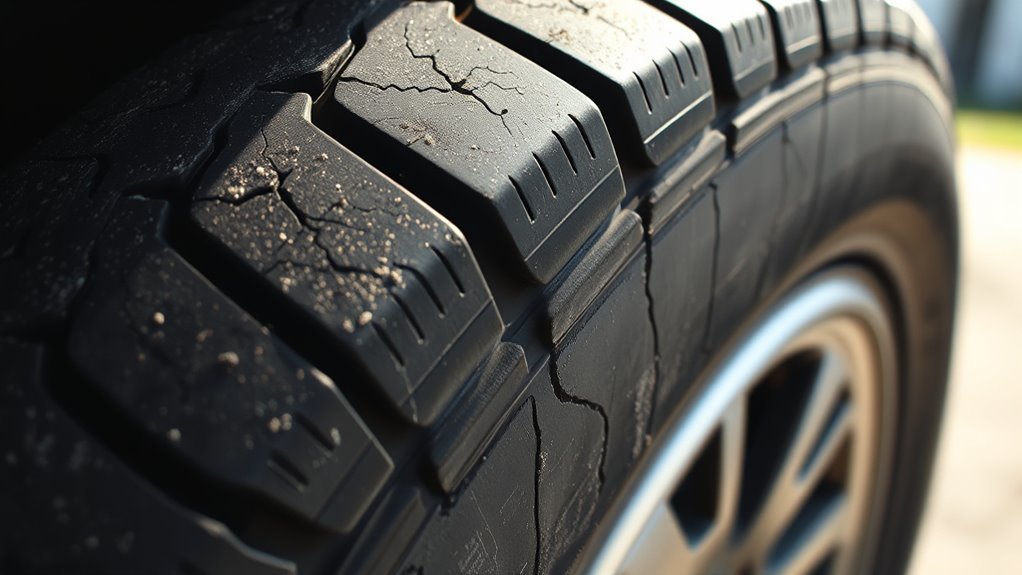
What Causes Tire Sidewall Cracking
Tire sidewall cracking is a common issue that many vehicle owners face. It occurs when the rubber breaks down over time due to various factors such as age, UV light exposure, and harsh weather conditions.
When tires aren’t inflated correctly, they tend to flex more than they should, which accelerates the damage.
Additionally, harsh chemicals and extreme temperatures can dry out and weaken the rubber, leading to visible cracks.
These cracks can worsen over time and pose serious safety risks, including blowouts.
To ensure your tires remain in good condition, it’s essential to spot these issues early and take steps to protect them better.
Let’s explore how to identify tire sidewall cracking and what preventative measures you can take.
Key Takeaways
- Tire sidewall cracking is mainly caused by rubber deterioration from UV light, harsh chemicals, and extreme temperatures.
- Aging naturally breaks down rubber compounds, which accelerates cracks and reduces tire integrity over time.
- Incorrect tire inflation, especially underinflation, increases sidewall flexing and stress. This can lead to cracking.
- Prolonged exposure to sunlight and weather conditions makes rubber brittle and prone to dry rot.
- If you notice visible cracks, color fading, or surface roughness, these are signs of dry rot indicating serious tire damage.
Understanding Tire Sidewall Cracks
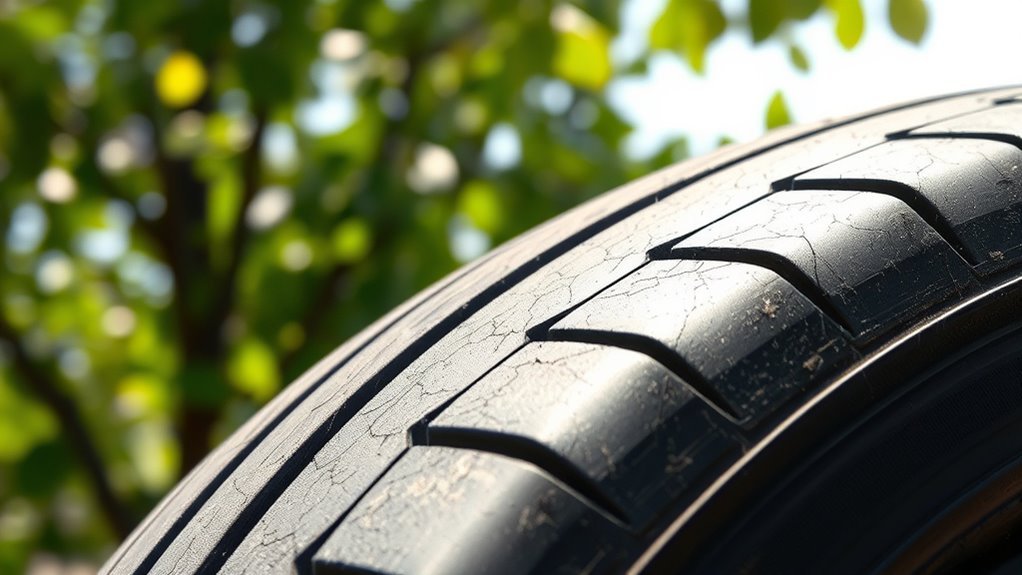
How do tire sidewall cracks develop, and why should you care?
These cracks are small fissures that form on the tire’s sidewall due to rubber deterioration.
The main causes include exposure to UV light, harsh chemicals, and extreme temperatures.
All of these factors accelerate the breakdown of the rubber compound.
As the rubber weakens, cracks appear and can grow over time, which compromises the tire’s structural integrity.
You should regularly inspect your tires for these cracks.
While minor ones might not be immediately dangerous, worsening cracks increase the risk of tire failure or blowouts.
Catching these signs early helps you replace the tire before it becomes a safety hazard.
Understanding these causes keeps you safer on the road and extends your tire’s reliable lifespan.
Age and Environmental Factors Affecting Tires
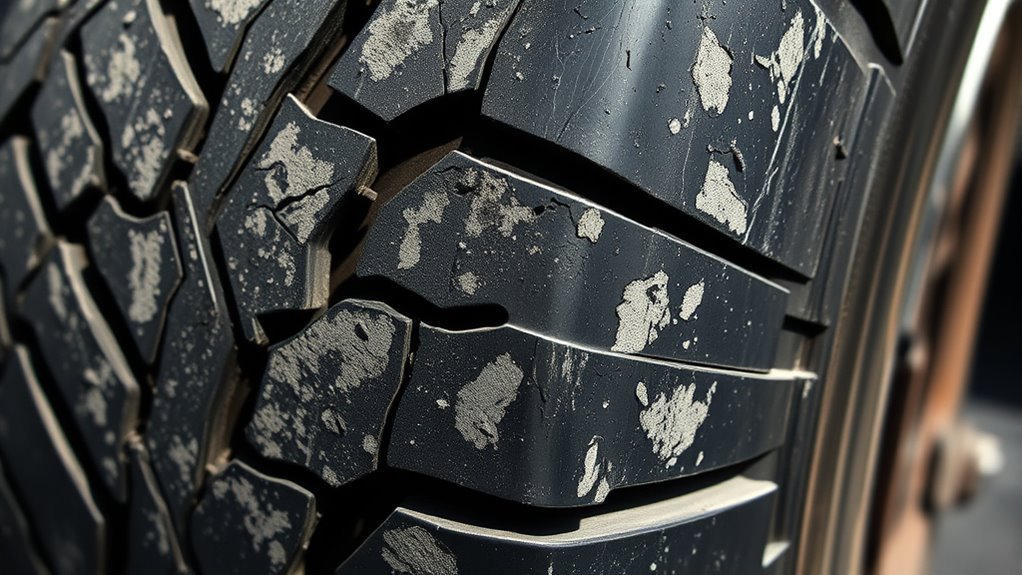
You’ll notice that as your tires age, their rubber compounds naturally break down, leading to sidewall cracks even if the tread looks fine.
Environmental factors like UV rays and harsh weather speed up this deterioration, making your tires less flexible and more vulnerable.
Keeping your tires properly inflated and regularly checking them can help slow these effects and extend their life.
Tire Aging Effects
Although tires might look durable, their rubber compounds deteriorate over time due to aging, which can cause sidewall cracking.
When your tires’ sidewalls face prolonged exposure to direct ultraviolet (UV) rays, heat, and oxygen, oxidation speeds up. This process reduces the tire’s flexibility and weakens its structural integrity.
These tire aging effects make your tires more prone to visible cracks, especially if you neglect proper care like regular inspections and maintaining correct inflation.
Manufacturers suggest replacing tires every 6 to 10 years to avoid safety risks associated with aging.
Using your tires regularly and storing them correctly helps slow down aging, preserving their flexibility and minimizing sidewall damage.
Environmental Damage Impact
Since your tires constantly face environmental stressors, factors like UV rays, temperature swings, and ozone exposure can accelerate sidewall cracking.
UV light breaks down rubber compounds, while excessive heat and cold cause expansion and contraction, leading to cracks.
Ozone and chemicals further degrade the tire’s flexibility, increasing environmental damage.
Without proper tire maintenance, sidewall cracks form faster.
| Environmental Factor | Impact on Tires |
|---|---|
| UV Light | Accelerates rubber aging |
| Temperature Swings | Causes rubber expansion |
| Ozone Exposure | Deteriorates rubber |
| Chemicals & Salt | Break down compounds |
To protect your tires, avoid prolonged environmental exposure.
Also, ensure proper tire care to minimize sidewall cracks and extend tire life.
Impact of Tire Inflation on Sidewall Integrity
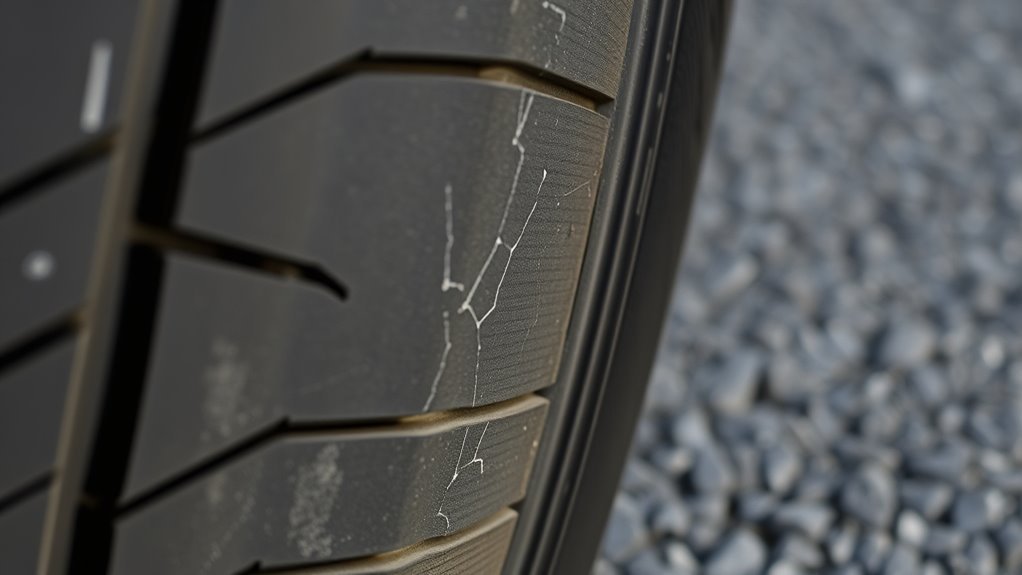
You might not realize that both underinflating and overinflating your tires can harm the sidewalls.
When tires are underinflated, the sidewalls flex too much, increasing the chance of cracks.
On the other hand, overinflation puts uneven stress on the sidewalls, making them more prone to damage.
Effects of Underinflation
When your tires run underinflated, their sidewalls flex excessively with each rotation. This speeds up wear and can cause cracking over time.
Underinflation increases sidewall stress by up to 25%, making your tires more prone to sidewall cracks that compromise their structural integrity.
This excessive flexing generates heat buildup inside the tire, which accelerates deterioration and reduces overall safety.
Keeping the correct tire pressure is essential to prevent this damage and extend your tire’s lifespan.
You should check your tire inflation at least once a month to catch underinflation before sidewall cracks develop.
Ignoring proper tire pressure not only risks costly repairs but also jeopardizes your safety on the road.
Weakened sidewalls can lead to sudden tire failure, which is something no one wants to deal with!
Risks of Overinflation
Just as low tire pressure can harm your sidewalls, overinflation brings its own set of risks.
When your tire pressure exceeds recommended levels, it increases stress on the sidewalls, making them more prone to sidewall cracks and potential tire failure.
Overinflation reduces the tire’s contact with the road, causing uneven wear and reducing flexibility.
This means your tires can’t absorb bumps well.
To maintain peace of mind and avoid issues like manufacturing defect-related weaknesses becoming worse, keep your tire pressure within 2-3 PSI of the recommended value.
Key risks of overinflation include:
- Increased stress on sidewalls
- Higher chance of sidewall cracks
- Uneven tire wear
- Reduced impact absorption
- Elevated risk of tire failure
Regular checks protect you from costly damage.
Effects of UV Exposure and Weather on Tires
Although tire rubber is designed to withstand various conditions, prolonged exposure to ultraviolet (UV) rays and extreme weather can cause significant damage to sidewalls.
UV exposure breaks down the tire rubber, making it brittle and prone to cracking. You might notice a dry rot look developing on the sidewall of the tire, which signals rubber deterioration.
Extreme weather only worsens this—freezing temperatures stiffen the rubber, while heat causes it to expand and contract, creating stress that leads to sidewall cracking.
To prevent tire dry rot and extend the life of your tires, protect them from excessive sun and harsh conditions.
Park in shaded areas or use tire covers to shield them from UV rays and extreme weather. This helps preserve the sidewall integrity and keeps your tires safe longer.
Signs of Dry Rot and Rubber Deterioration
Anyone inspecting their tires should watch for visible cracks on the sidewalls. This is a clear sign that dry rot has set in and the rubber is deteriorating.
You might also notice changes in the tire rubber caused by exposure to UV and other elements. Here are some signs to look out for:
- Cracks in tire sidewall that deepen or spread
- Visible cracking extending into the tread
- Color shifting from black to gray
- Rough, flaky surface texture
- Tire brittleness making splits or bursts more likely
Ignoring these signs can jeopardize tire safety.
Once you see dry rot, it’s important to contemplate replacing your tires promptly to avoid potential blowouts and maintain your vehicle’s performance.
Preventive Measures to Protect Your Tires
Because tire sidewall cracking can compromise your safety, taking preventive measures is vital to protect your tires and extend their lifespan.
First, regularly inspect your tire tread and sidewalls for any signs of wear or damage. If sidewall cracks continue to appear, it’s a clear sign to act quickly to prevent further deterioration.
Always keep your tires properly inflated. Both underinflation and overinflation can lead to cracking by putting uneven stress on the rubber.
Store vehicles in a garage or shaded area to minimize UV exposure, which accelerates aging.
Clean your tires regularly to remove dirt and moisture that can contribute to damage.
Finally, rotate and balance your tires often to guarantee even wear and extend tire life effectively.
Frequently Asked Questions
Are Cracks in the Sidewall of a Tire Bad?
Yes, cracks in your tire’s sidewall are bad because they weaken its structure, risking air loss or failure.
You should inspect them regularly and replace the tire if cracks grow to stay safe on the road.
Can a Tire Sidewall Crack Be Repaired?
You can’t safely repair a tire sidewall crack because it compromises the tire’s structure.
It’s best to replace the tire, as repairs won’t restore integrity and might void your warranty.
Stay safe and switch it out.
Is It Normal for Tires to Crack After 3 Years?
Think of your tires like old leather boots—yes, it’s normal for them to crack after three years.
These cracks signal aging, so keep an eye on them and replace tires before they become unsafe.
How Much Cracking Is Okay on a Tire?
You shouldn’t ignore minor cracks, but small, superficial ones are usually okay.
If cracks grow in length, depth, or number, you need to replace the tire to stay safe and avoid possible failure.
Conclusion
Now that you know what causes tire sidewall cracking, you can take steps to keep your tires in top shape.
Age, weather, and improper inflation all play a part, so don’t let your guard down.
Remember, an ounce of prevention is worth a pound of cure.
Regular checks and proper care will save you from costly replacements and keep you safe on the road.
Stay proactive and protect your investment.
To avoid tire sidewall cracking, make it a habit to check your tire pressure regularly and inspect for any signs of wear.
Also, consider the environment where you park your vehicle; extreme temperatures can accelerate the aging of tires.
By staying vigilant and informed, you can extend the life of your tires and ensure a safer driving experience.
Keep your tires healthy and enjoy peace of mind on every journey!