Why Does My Steering Wheel Shake When I Brake
If your steering wheel shakes when you brake, it can be quite concerning. This usually indicates an issue with your brake rotors, which may be warped, or your brake pads, which could be worn unevenly.
These problems can create vibrations that travel through the steering system, making your drive uncomfortable.
But that’s not all! Tire imbalance, poor wheel alignment, or worn suspension parts can also cause shaking.
These factors contribute to instability during braking, which can compromise your safety on the road.
Neglecting these issues can lead to decreased brake effectiveness and increase the risk of accidents.
So, let’s dive deeper into what might be causing your steering wheel to shake when braking and explore how to fix it.
Key Takeaways
– Warped brake rotors cause uneven brake pad contact, leading to steering wheel vibrations during braking.
This means that when you apply the brakes, the pads don’t grip evenly, which can really shake things up.
– Worn or uneven brake pads contribute to shaking by creating inconsistent braking forces.
If your brake pads are in bad shape, they’ll make it hard for your car to stop smoothly.
– Suspension issues, like worn shocks or ball joints, increase wheel movement and steering wheel shake when braking.
When your suspension isn’t doing its job, it can lead to a bumpy ride and a shaky steering wheel.
– Tire imbalance or poor wheel alignment causes uneven tire wear, resulting in vibrations felt through the steering wheel.
If your tires aren’t balanced or aligned properly, you’ll definitely notice some unsettling vibrations.
– Loose or damaged wheel bearings create play in the wheel assembly, amplifying steering wheel shake during braking.
When wheel bearings are off, it can really exaggerate that shaking feeling when you hit the brakes.
Common Causes of Steering Wheel Shake During Braking

When you feel your steering wheel shake as you brake, it’s often due to warped brake rotors. This causes uneven contact with the brake pads.
Steering wheel shake during braking usually signals warped brake rotors causing uneven pad contact.
That uneven brake surface creates vibrations that transfer directly to your steering wheel.
Worn or uneven brake pads can make the shaking worse, which means braking won’t be as smooth.
Suspension problems, like worn shocks or loose parts, also play a role. They allow extra movement during braking, contributing to the shake.
Additionally, improper wheel alignment can lead to uneven tire wear. This causes instability and noticeable shaking.
Tires that are out of balance or improperly inflated can make the vibrations even worse, especially at higher speeds.
To prevent these issues, it’s essential to have your car inspected regularly.
How Warped Brake Rotors Affect Your Steering

When your brake rotors warp, their uneven surfaces cause the brake pads to grip inconsistently.
This sends vibrations straight to your steering wheel.
You’ll feel this shaking especially when you apply the brakes at higher speeds.
Understanding how these irregularities transmit through your steering system helps explain why addressing warped rotors is so important.
Rotor Surface Irregularities
Since brake rotors can develop uneven surfaces over time, you may start feeling vibrations in the steering wheel whenever you brake.
These rotor surface irregularities cause the brake pads to make inconsistent contact, resulting in a shaking steering wheel.
When you press the brake pedal, the warped brake rotors create uneven friction in your braking system, producing noticeable vibration.
This shaking often worsens at higher speeds due to increased rotor distortion.
Ignoring these issues can accelerate brake pad wear and compromise safety.
That’s why regular brake inspection is essential—it helps spot rotor problems early.
To fix the problem, you’ll likely need to resurface or replace the rotors, restoring smooth contact and eliminating the vibration that makes your steering wheel shake.
Vibration Transmission Mechanics
Uneven rotor surfaces don’t just cause surface irregularities—they send vibrations straight through your steering wheel as you brake.
When the brake pads press against warped rotors, they create a pulsating force. This pulsation travels through the suspension and steering system, causing noticeable shaking in your steering wheel.
Over time, lateral runout worsens, increasing vibration and uneven wear on brake pads and rotors. High-speed braking amplifies these effects, making the shaking more pronounced.
Regular inspection prevents excessive wear and keeps your brake system functioning smoothly.
| Cause | Effect on Braking | Impact on Steering Wheel |
|---|---|---|
| Warped rotors | Uneven pad contact | Pulsating vibration |
| Lateral runout | Inconsistent gripping | Increased shaking |
| Brake pad wear | Reduced braking power | Amplified vibration |
| High-speed braking | More pronounced pulsation | Noticeable steering shake |
| Lack of maintenance | Accelerated component wear | Persistent steering vibration |
The Role of Worn Brake Pads in Vibration Issues
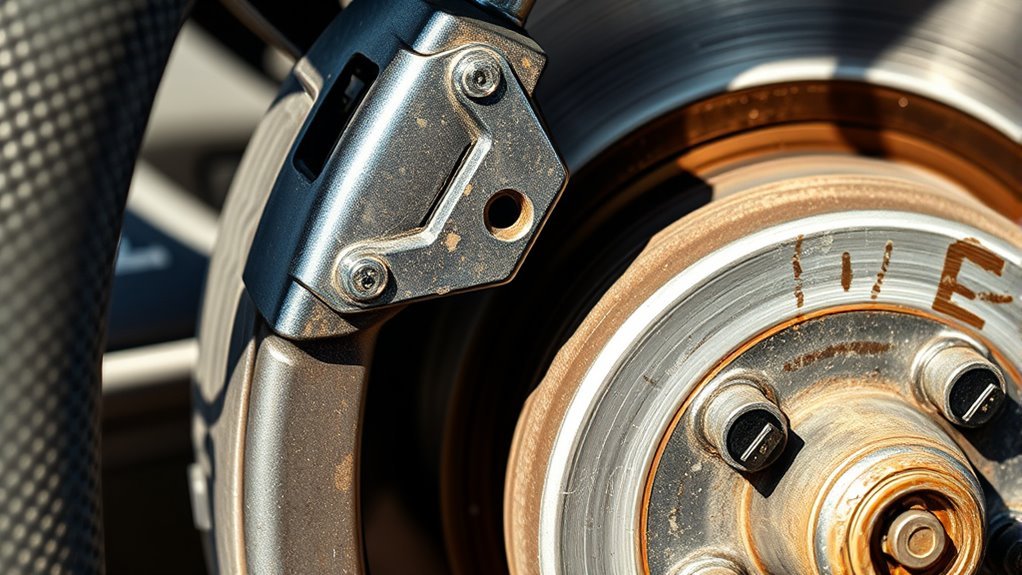
When your brake pads wear down unevenly or get clogged with debris, you’ll likely feel vibrations through the steering wheel as you brake.
These worn pads can seriously impact your steering stability and overall braking performance.
Knowing the signs of pad deterioration helps you catch problems early before they affect your safety.
Causes of Brake Pad Wear
If you notice vibrations in your steering wheel while braking, worn brake pads could be the culprit.
Understanding what causes brake pad wear helps you prevent that annoying shake when you brake. Here are three common causes:
- Uneven Wear: Brake pads can wear unevenly due to misaligned brake calipers. This can lead to vibration during braking.
- Accumulation of Dirt and Debris: Dirt on the pads reduces friction. This causes inconsistent contact with the rotors, resulting in vibration.
- Lack of Regular Inspection: Without regular inspection, you might miss early signs of wear. This decreases braking efficiency and increases the chance of steering wheel shake.
Keeping an eye on your brake pads and addressing wear promptly guarantees smooth braking.
This approach minimizes vibrations in the steering wheel.
Impact on Steering Stability
Because worn brake pads reduce their grip on the rotors, you’ll often feel vibrations through the steering wheel when braking.
These shakes occur because the pads no longer maintain consistent contact, causing uneven wear and pulsating forces that disrupt steering stability.
As the brake pads wear down, their diminished brake performance leads to increased vibrations, which can make controlling your vehicle more challenging.
Dirt and debris buildup worsen this issue by accelerating uneven wear, intensifying the shakes you experience.
If you ignore worn brake pads, the problem can escalate, affecting not just braking but your overall driving safety.
Keeping your brake pads clean and in good condition is essential to minimizing vibrations and maintaining smooth, stable steering during braking.
Signs of Pad Deterioration
As brake pads wear down, you’ll notice a pulsating vibration in the steering wheel during braking. This signals uneven contact with the rotors.
This worn brake condition often leads to steering wheel shaking and other vibration issues. Here are key signs of pad deterioration to watch for:
- Shaking during braking becomes more frequent and intense. This is caused by degraded brake pad material reducing friction.
- Decreased braking efficiency can occur as worn brake pads fail to grip the brake rotors effectively.
- You might also see an accumulation of dirt and debris on the brake pads. This worsens vibration issues and accelerates wear.
Regularly inspecting and replacing worn brake pads is crucial. It helps restore smooth braking and prevents damage to brake rotors.
This way, your steering wheel will stop shaking, and your vehicle can brake safely!
Impact of Tire Imbalance and Alignment on Steering Stability
When your tires are out of balance or misaligned, you’ll often feel vibrations in the steering wheel, especially during braking.
Tire imbalance causes uneven weight distribution, leading to noticeable shaking that compromises steering stability.
Similarly, poor wheel alignment means your tires don’t sit correctly on the road, causing uneven tire wear and reducing control.
Worn suspension components often contribute to misalignment, worsening steering vibrations.
These issues not only affect how smoothly your vehicle handles but can also put extra stress on brake pads and other parts.
To prevent this, regularly check tire balance and wheel alignment, and replace worn suspension components promptly.
Routine tire rotations and inspections help maintain even tire wear, ensuring your steering remains stable and vibrations stay minimal when you brake.
Suspension and Wheel Bearing Problems Contributing to Shaking
Tire imbalance and alignment issues often cause noticeable steering wheel vibrations.
Steering wheel vibrations are often caused by tire imbalance and alignment problems.
But worn suspension components and faulty wheel bearings can make these shakes worse.
When you brake, these parts directly affect how stable your vehicle feels and can intensify vibrations.
Here’s what to watch for:
1. Worn suspension parts like shock absorbers and ball joints cause excessive wheel movement.
This leads to a shake in the steering wheel during braking.
2. Loose or damaged wheel bearings create play in the wheel assembly.
This results in noticeable vibrations you feel through the steering wheel.
3. A misaligned suspension causes uneven tire contact.
This changes weight distribution and contributes to steering wheel shake when braking.
Regular maintenance and inspections of your suspension and wheel bearings help prevent these issues.
They also keep your steering wheel steady.
When to Seek Professional Brake and Steering Inspection
If you notice your steering wheel shaking during braking, don’t ignore it—this can signal serious issues like warped rotors or worn brake pads that affect your safety.
You should seek a professional inspection promptly, especially if vibrations worsen at higher speeds or if the steering wheel pulls to one side.
This pulling indicates uneven brake pressure.
Certified brake specialists can thoroughly assess your brake system, identifying worn brake pads, warped rotors, or caliper problems causing the shaking.
Regular checks every 6 months or 6,000 miles help catch early wear before it leads to costly repairs or more severe damage.
Timely professional inspection guarantees your braking remains safe and effective, protecting both you and your vehicle from further complications.
Frequently Asked Questions
Is It Safe to Drive My Car if It Shakes When I Brake?
You shouldn’t drive your car if it shakes when you brake.
It’s unsafe and can worsen damage.
Get it inspected and repaired promptly to maintain control and avoid costly repairs or accidents on the road.
What Is the Most Common Cause of Steering Wheel Shaking?
Imagine your steering wheel as a heartbeat—when it shakes, it usually signals warped brake rotors.
You’ll want to fix this quickly, as uneven rotors cause those unsettling vibrations every time you brake.
Why Does My Steering Wheel Shake When I Brake at 40 Mph?
Your steering wheel shakes at 40 mph when braking because your brake rotors might be warped or your brake pads worn unevenly.
Tires or suspension issues can also cause vibrations, so get them checked to stay safe.
Why Does My Car Vibrate When I Brake at 60 Mph?
Imagine you’re cruising at 60 mph and suddenly feel your car vibrate when braking.
That’s likely warped brake rotors causing uneven pad contact.
You’ll want to inspect your brakes and tires to fix this quickly.
Conclusion
You want smooth, steady control when you brake, but instead, your steering wheel shakes—frustrating and unsafe.
While worn brake pads and warped rotors directly cause that vibration, don’t overlook tire imbalance or suspension issues that quietly worsen the problem.
Ignoring the shake might feel harmless now, but it can quickly turn into costly repairs or dangerous driving.
So, don’t wait—get a professional inspection to keep your ride safe and steady.
In conclusion, if your steering wheel shakes during braking, it’s essential to address it promptly.
Worn brake pads, warped rotors, tire imbalance, and suspension issues can all contribute to this unsettling experience.
Taking action now can save you from more significant problems down the road.
Get your vehicle inspected by a professional to ensure your safety and maintain smooth driving.