Why Does My Steering Wheel Squeak When I Turn?
Your steering wheel squeaks when you turn because of worn or dry components, such as tie rods, ball joints, or suspension bushings.
These issues increase friction in the steering system, leading to those annoying noises.
Lack of lubrication is often the main culprit, especially during tight turns or when your vehicle is stationary.
Additionally, loose or damaged parts in your suspension can contribute to the problem.
Addressing these issues through proper inspection and maintenance will help restore smooth steering.
So, it’s essential to keep an eye on these components.
Keep exploring to understand which parts might need your attention and how to fix them effectively.
Key Takeaways
- Worn or damaged tie rods and ball joints often cause steering wheel squeaking during turns due to increased friction.
- Lack of lubrication in steering components leads to dry friction, resulting in squeaky noises when turning.
- Worn suspension bushings and sway bar endlinks can produce squeaks, especially when the vehicle corners or turns.
- Squeaking while turning may indicate loose or damaged steering parts that need inspection and possible replacement.
- Regular maintenance and lubrication of steering and suspension parts prevent squeaking and ensure smooth steering operation.
Common Sources of Steering Wheel Squeaking

Several common issues can cause your steering wheel to squeak, often pointing to worn or damaged components like tie rods and ball joints.
When your tie rod gets worn or damaged, it can create friction during steering, leading to that annoying squeak.
Lack of lubrication in the steering mechanism also increases friction, making noises more noticeable when you turn the wheel.
Besides tie rods, suspension parts such as sway bar endlinks and bushings might be the culprits if they’re worn or loose.
If you hear squeaking even when your vehicle is stationary, dry ball joints or loose steering assembly parts could be the problem.
Regularly inspecting and maintaining these components helps prevent squeaks and keeps your steering smooth and safe.
Identifying Symptoms and When the Noise Occurs

When exactly do you notice your steering wheel squeaking?
Identifying when your steering wheel squeaks helps pinpoint potential issues early and ensures safer driving.
It often happens during left or right turns, especially when maneuvering tight corners. You might also hear the noise when driving over bumps or rough surfaces, which can hint at suspension or steering issues.
Sometimes, the squeak occurs even when your vehicle is stationary, pointing to possible lubrication problems or worn components.
Pay attention if the noise comes with vibrations through the steering wheel, as this could indicate more serious underlying concerns.
Noticing when the squeak started is important, too—if it appeared suddenly, it might mean certain steering components are worn or damaged.
Potential Mechanical Causes Behind the Noise
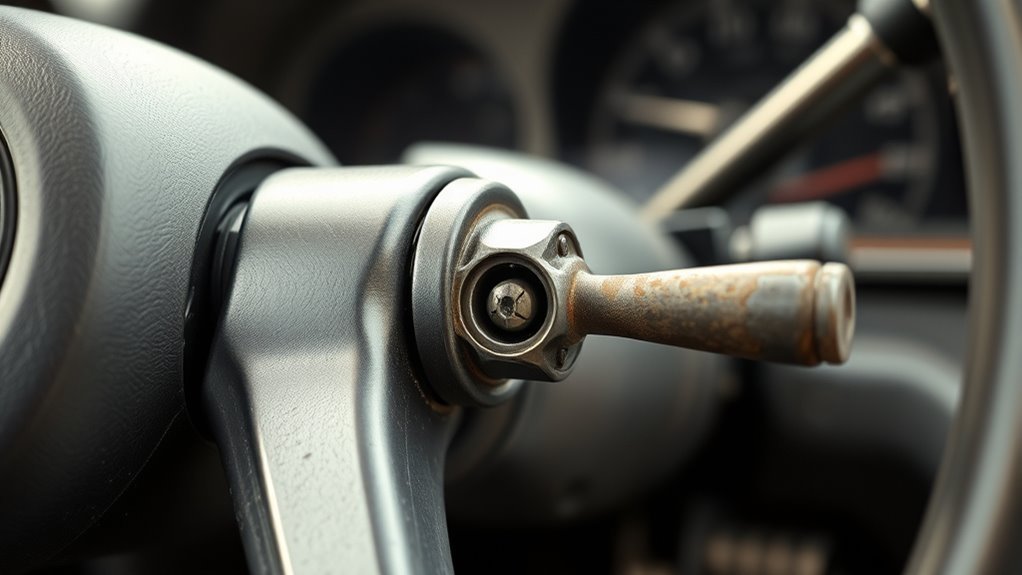
If your steering wheel squeaks, worn steering components like tie rods could be the culprit.
You might also hear noise from dry or damaged suspension bushings that need attention.
Checking these parts can help you pinpoint the source of the squeak.
Steering Component Wear
One common cause of a squeaking steering wheel is worn or damaged steering components like inner and outer tie rods.
When these parts wear, friction increases, especially near the front wheel area, causing that annoying squeak when you turn.
Lack of lubrication only makes it worse, as metal parts rub without proper cushioning.
| Component | Common Issue |
|---|---|
| Inner Tie Rod | Wear causing friction |
| Outer Tie Rod | Damage leading to noise |
| Steering Linkages | Lack of lubrication |
Regularly inspect these parts to avoid squeaks and maintain smooth steering.
Fixing worn steering components promptly helps prevent more serious front wheel problems and keeps your vehicle safe.
Suspension and Bushings
Worn steering components often signal that other parts, like your suspension and bushings, might also be causing that squeaky noise.
When suspension components such as control arms or bushings wear out or deteriorate, they increase friction and reduce support, making your steering wheel creak as you turn.
Soft or damaged bushings compromise stability, causing groaning sounds during maneuvers.
If your suspension joints lack proper lubrication, metal-on-metal contact can create persistent squeaks.
Dirt and debris trapped in suspension components worsen these noises by interfering with smooth movement.
To fix this, regularly inspect and maintain your suspension components, clean debris, and apply lubrication where needed.
Doing so keeps your steering system performing smoothly and prevents those annoying squeaks from coming back.
The Role of Suspension Components in Steering Noise
Because suspension components like bushings and ball joints directly influence your steering system‘s smoothness, they can cause squeaking noises when they dry out or wear down.
When you hear squeaky sounds while turning, it often points to issues with parts like the lower lateral arms or sway bar endlinks.
These worn components increase friction, leading to those annoying noises and can even affect your vehicle’s alignment and handling.
Without proper lubrication, suspension parts rub against each other, making the squeaking worse.
Since these components impact steering performance and safety, paying attention to any unusual squeaking noises is crucial.
Addressing these signs early helps maintain smooth steering and keeps your vehicle safe on the road.
Recommended Inspection and Maintenance Procedures
Suspension components like bushings and ball joints need regular attention to keep your steering quiet and responsive.
To prevent squeaks when you turn your steering wheel, follow these recommended inspection and maintenance steps:
- Inspect tie rods, bushings, and CV joints for wear or damage.
- Lubricate all steering mechanism parts regularly to avoid dry friction.
- Check ball joints and sway bar endlinks for looseness or play using a pry bar.
- Verify if any suspension parts have recalls with your dealer to guarantee safe, cost-free replacements.
- Replace worn components promptly to maintain smooth steering and avoid further noise.
Addressing and Repairing Steering System Noises
You should start by pinpointing the exact source of the squeak in your steering system.
Squeaking noises often come from worn or damaged components like inner and outer tie rods, so inspect them for play or wear.
Check bushings and ball joints, ensuring they’re properly lubricated, as lack of lubrication is a common cause of noise.
Don’t overlook suspension parts like sway bar endlinks and lower lateral arms, which can also produce squeaks if damaged.
Regular maintenance helps catch issues early, so test these parts frequently.
If squeaking noises persist after lubrication and minor repairs, it’s best to consult a mechanic for a thorough diagnosis.
Fixing steering noise promptly can prevent safety risks and costly repairs down the road.
Frequently Asked Questions
How Do You Fix a Squeaky Steering Wheel?
You fix a squeaky steering wheel by inspecting and lubricating dry joints, tightening loose parts, and checking tie rods and ball joints.
If the noise continues, don’t hesitate to get a mechanic’s thorough diagnosis.
Can I Drive With a Squeaky Steering Wheel?
You can drive briefly with a squeaky steering wheel, but don’t ignore it.
Get your vehicle checked soon to avoid worsening damage or safety risks.
Addressing it promptly keeps your steering smooth and reliable.
Does Low Steering Fluid Cause Squeaking?
Yes, low steering fluid can cause squeaking.
When your fluid’s low, parts rub without proper lubrication, making noise.
You should check and refill the fluid, and inspect for leaks to avoid worsening steering issues.
What Could Be Causing a High-Pitched Squeal When Turning Left?
Did you know 70% of steering squeals come from worn components?
Your high-pitched squeal when turning left likely results from dry ball joints, worn tie rods, or insufficient lubrication.
Check these parts and get them maintained promptly.
Conclusion
Your steering wheel’s squeak is like a warning whisper from your car, signaling that something’s amiss beneath the surface.
When you turn, you’re not just changing direction—you’re listening to the subtle language of your vehicle’s health.
Don’t ignore these sounds; they’re the creaks of a system asking for care.
By inspecting and maintaining your steering components, you keep the road ahead smooth and your drive confident.
Turning every squeak into silence is essential for a safe ride.
So, pay attention to those noises!
They could be a sign that your steering system needs some TLC.
Regular check-ups and maintenance will not only prolong the life of your vehicle but also ensure a comfortable driving experience.
In conclusion, addressing that steering wheel squeak promptly can save you from more significant issues down the line.
Stay proactive, and keep your steering system in top shape for a smooth and safe journey!