How to Tow an All-Wheel Drive Vehicle Safely
If you need to tow an all-wheel drive (AWD) vehicle, it’s crucial to do so safely to prevent any potential damage. Dragging the vehicle with its wheels on the ground can cause serious issues with the drivetrain.
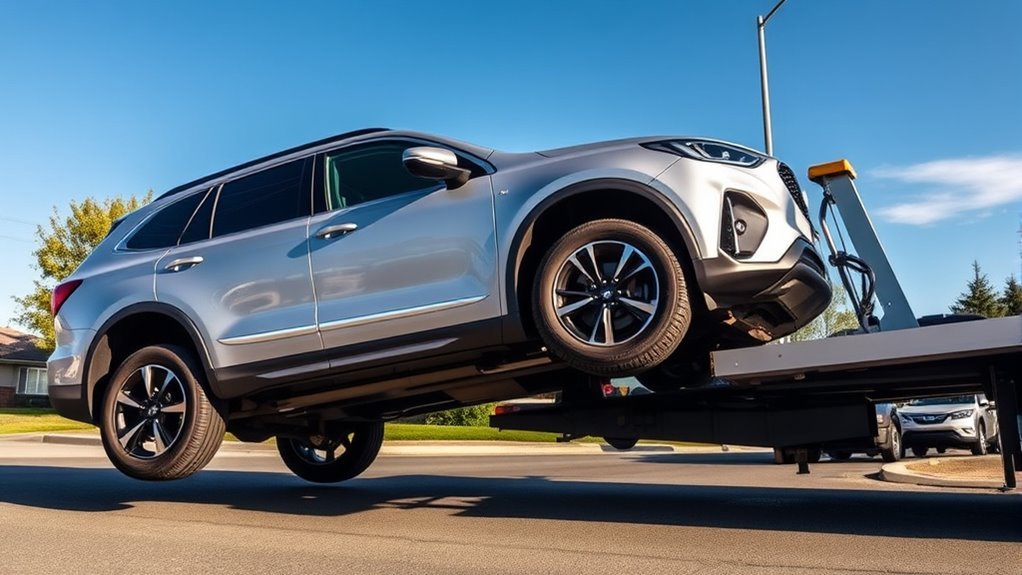
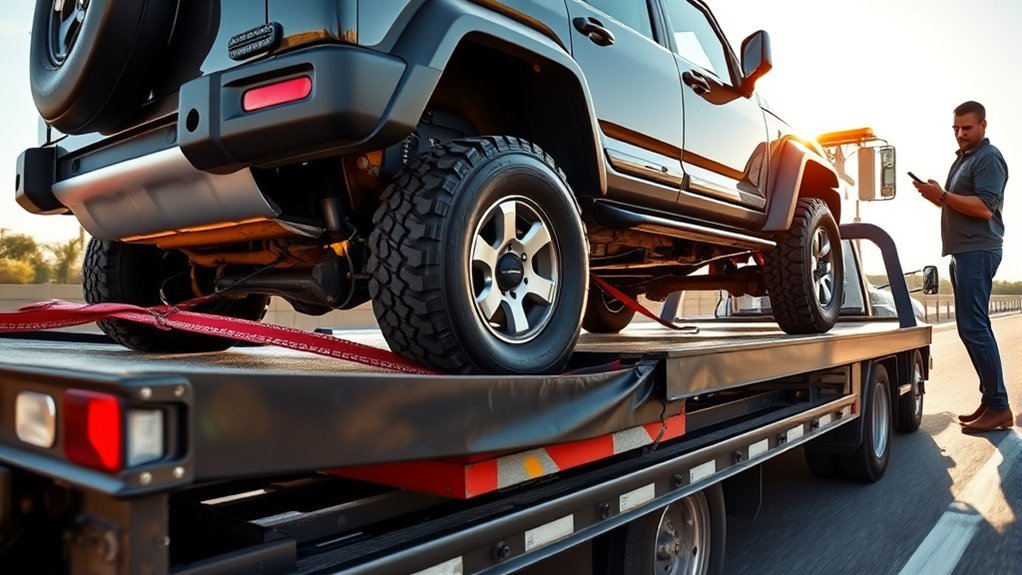
The safest method for towing an AWD vehicle is flatbed towing. This technique keeps all wheels off the road, ensuring the transmission remains safe and protected.
Always check your owner’s manual for specific towing instructions. Many AWD models don’t have a neutral towing mode, which could lead to complications if not properly addressed.
Following the right guidelines not only protects your vehicle but also helps maintain your warranty.
Keep reading to discover key tips and essential precautions for towing your AWD safely.
Key Takeaways
- Use a flatbed tow truck to keep all wheels off the ground and prevent drivetrain damage.
- Always consult the vehicle owner’s manual for specific AWD towing instructions.
- Avoid towing with any wheels on the ground unless explicitly allowed by the manufacturer.
- Secure the vehicle properly with winch cables or chains and engage the parking brake during transport.
- Follow local laws and insurance guidelines to ensure compliance and protect warranties.
Understanding AWD Systems and Their Towing Challenges
Because AWD vehicles send power to all four wheels, towing them isn’t as simple as just lifting two wheels off the ground.
AWD systems are designed with interconnected drivetrains. This means that when you tow an AWD vehicle with wheels on the ground, unintended rotation can cause serious damage to the transmission and drivetrain.
Unlike some 4WD vehicles, many AWD models lack a neutral towing position, limiting your options.
That’s why flatbed towing is often the safest choice—it keeps all wheels off the ground, preventing costly harm.
Before towing, always check your vehicle’s owner’s manual for specific guidelines, as AWD designs vary widely.
Understanding these challenges helps you avoid mistakes and protect your vehicle’s complex drivetrain during towing.
Recommended Towing Methods for AWD Vehicles
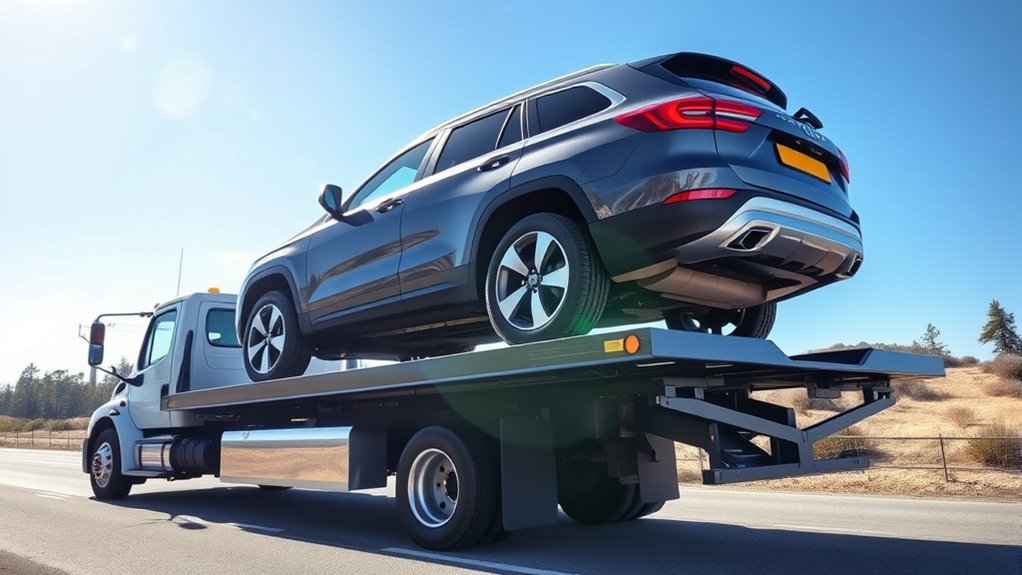
When it comes to towing your AWD vehicle, using a flatbed tow truck is your safest bet.
This method keeps all four wheels off the ground, preventing costly drivetrain damage.
Avoid other towing methods unless your owner’s manual specifically says otherwise.
Flatbed Towing Benefits
Although you might consider various towing options, flatbed towing stands out as the best choice for your all-wheel drive vehicle.
This method keeps all four wheels off the ground, which helps to prevent damage to the drivetrain.
Industry experts recommend flatbed towing for AWD vehicles because it effectively protects transmission components.
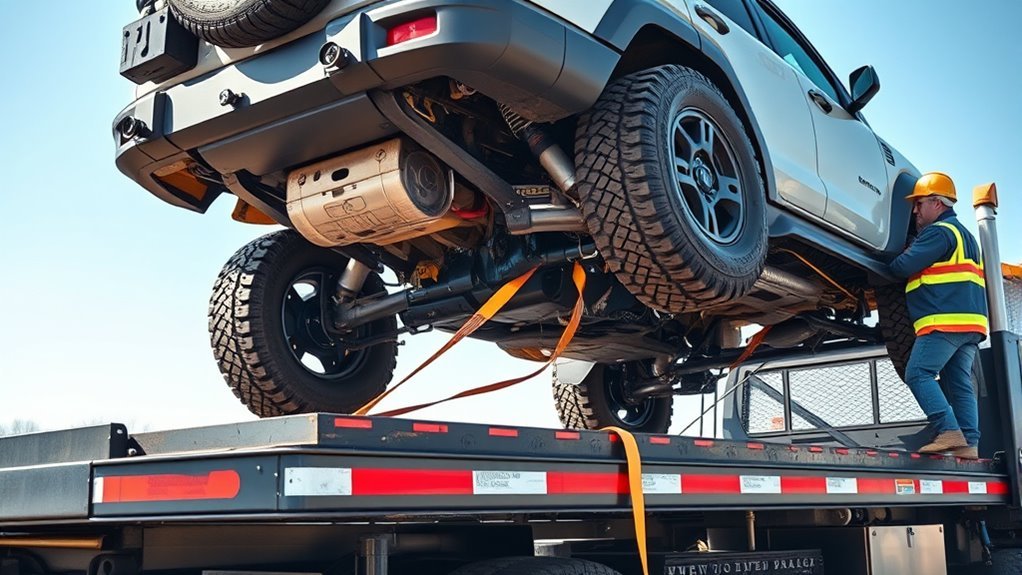
When using a towing service, it’s essential to ensure that your vehicle is secured firmly with winch cables or chains.
Also, remember to engage the parking brake to guarantee safe transport.
The entire process usually takes about 15 to 30 minutes and costs between $75 to $150, making it a practical and reliable option.
Always check your manufacturer guidelines and owner’s manual first to confirm flatbed towing is the appropriate method for your specific AWD vehicle.
Doing this can help you avoid any potential issues.
Avoiding Drivetrain Damage
Flatbed towing offers the safest way to protect your all-wheel drive vehicle’s drivetrain by keeping all wheels off the ground.
Using a flatbed tow truck guarantees none of your AWD vehicle’s wheels touch the road, preventing drivetrain damage caused by improper wheel rotation.
Avoid tow dollies, as they leave some wheels on the ground, risking overheating and costly transmission issues.
Wheel lift towing also isn’t a good choice since it lifts only one axle, potentially harming your drivetrain.
Always check your owner’s manual for the recommended towing method specific to your AWD vehicle.
If you’re unsure, rely on professional towing services experienced with AWD vehicles.
Choosing the right towing method keeps your drivetrain intact and saves you from expensive repairs down the road.
Risks of Improper Towing Techniques
If you tow your AWD vehicle improperly, you risk causing serious drivetrain damage that can be expensive to fix.
Towing with two wheels on the ground can lead to transmission overheating and premature wear on key components.
Paying close attention to proper methods protects your vehicle from costly repairs.
Drivetrain Damage Risks
When you tow an all-wheel drive (AWD) vehicle improperly, you risk causing serious damage to its drivetrain.
Towing an AWD vehicle with its wheels on the ground can create excessive heat and stress in components like couplings, clutches, and bearings.
This leads to premature wear and costly repairs.
Ignoring manufacturer guidelines often results in unintended wheel rotation, damaging the transmission or transfer case.
You might notice warning lights or driveline binding after incorrect towing, signaling drivetrain issues.
The risk of damage increases considerably at highway speeds or during long-distance towing if you don’t follow proper protocols.
To avoid drivetrain damage, always adhere to recommended towing methods specific to your AWD vehicle and never tow it flat with the wheels turning freely on the road.
Transmission Overheating Issues
Because improper towing techniques can cause excessive heat buildup, your AWD vehicle’s transmission risks overheating and potential failure.
When you tow an AWD car without lifting all drive wheels off the ground, internal components like clutches and bearings generate friction, leading to transmission overheating.
To prevent damage, always use the safest method that guarantees all wheels are lifted.
| Towing Method | Transmission Risk |
|---|---|
| Two wheels on ground | High risk of overheating |
| Dolly towing (partial) | Moderate risk |
| All wheels lifted | Minimal risk |
Manufacturer Guidelines and Owner’s Manual Importance
Two key resources you should never overlook before towing your AWD vehicle are the manufacturer guidelines and the owner’s manual.
These documents provide vital instructions tailored to your vehicle, helping you avoid damage to the drivetrain and transmission.
Many AWD models lack a neutral towing position, so the owner’s manual will specify the correct towing methods to use.
Following these proper towing practices not only protects your vehicle’s complex drivetrain but also guarantees you don’t void warranties with improper handling.
Manufacturer guidelines often recommend flatbed towing as the safest option for AWD vehicles.
Legal and Insurance Considerations for AWD Towing
Although towing your AWD vehicle might seem straightforward, you need to be aware of local laws and insurance rules that govern proper towing methods.
Many regions impose mandatory towing methods to prevent damage when towing AWD vehicles, so familiarize yourself with these regulations. Ignoring proper towing guidelines can void your vehicle’s warranty, leaving you responsible for costly repairs.
Insurance policies often include specific requirements for towing AWD vehicles; failing to comply could lead to denied claims if damage occurs during towing.
To protect yourself, document the towing process and all communications with towing services. Understanding the legal implications helps you avoid financial liabilities and safeguards your investment.
Following these steps guarantees you meet both legal and insurance standards for AWD towing.
Seeking Professional Assistance for Safe AWD Vehicle Towing
When you need to tow your AWD vehicle, relying on professional services guarantees the job is done correctly and safely.
Experts use proper towing methods, primarily flatbed towing, to avoid drivetrain damage.
Professional assistance assures your vehicle’s safety and compliance with the vehicle’s owner’s manual, preserving warranty coverage.
Services like Falzone Towing operate specialized flatbed trucks designed specifically for AWD vehicles, following strict safety protocols.
Key benefits of seeking professional assistance include:
- Proper use of flatbed towing to prevent transmission and transfer-case damage.
- Verification of towing methods against the vehicle’s owner’s manual guidelines.
- Assurance that safety protocols are followed, including secure vehicle transport and reliable equipment checks.
Trusting professionals reduces costly repairs and provides peace of mind when towing your AWD vehicle.
Frequently Asked Questions
Can I Tow an AWD Car in Neutral?
You can tow an AWD car in neutral only if your owner’s manual explicitly allows it.
Otherwise, towing in neutral risks damaging the drivetrain.
Always check manufacturer guidelines before towing to avoid costly repairs or overheating issues.
What Happens if You Tow an AWD Car With a Tow Dolly?
If you tow an AWD car with a tow dolly, you’ll likely cause drivetrain damage.
The non-lifted wheels rotate improperly, leading to heat buildup and wear.
This increases the risk of costly transmission or transfer case failure.
Can You Tow an AWD Car Without a Flatbed?
You generally can’t tow an AWD car safely without a flatbed.
Using dollies or wheel lifts risks damaging the drivetrain since not all wheels stay off the ground.
Always follow your owner’s manual to avoid costly repairs.
Can You Put a 4WD Car on a Tow Dolly?
You can put a 4WD car on a tow dolly, but only if your vehicle’s drivetrain lets you disengage the wheels safely.
Check your owner’s manual first—don’t risk turning your tow into a costly mess.
Conclusion
Towing your AWD vehicle is like guiding a delicate dance—one misstep can lead to a costly tumble.
Just as a skilled dancer knows each move, you need to understand your AWD system and follow the right steps to keep everything in harmony.
Stick to manufacturer guidelines and avoid risky shortcuts.
Don’t hesitate to call in the pros if you’re unsure.
Treat your vehicle with care, and it’ll glide safely through any towing challenge ahead.
Remember, towing an AWD vehicle requires attention to detail and adherence to safety measures.
By following the proper procedures, you can prevent damage and ensure a smooth towing experience.
Always prioritize the health of your vehicle by understanding its unique system.
Take the time to learn and respect your AWD’s needs, and you’ll keep it performing well.
In conclusion, safe towing of your AWD vehicle hinges on understanding your system, following guidelines, and seeking help when needed.
Your care and attention will pay off, ensuring your vehicle remains in top shape for every journey ahead.