Understanding Wheel Studs and Their Importance
You rely on wheel studs to firmly secure your vehicle’s wheels to the hub using threaded fasteners. This is crucial for ensuring safe and stable driving.
Unlike wheel bolts, studs stay fixed, which makes tire changes faster and maintenance easier.
Choosing the right studs with the correct length, diameter, and thread pitch is essential, especially if you’re using spacers or aftermarket wheels.
They also come in various materials to enhance strength and durability.
Understanding these details will help you keep your wheels safe and improve their performance.
Whether you’re a car enthusiast or just looking to maintain your vehicle, knowing about wheel studs is key for your safety on the road.
Key Takeaways
– Wheel studs are threaded fasteners that secure wheels to hubs.
They allow lug nuts to clamp wheels firmly in place.
– Proper stud dimensions, including length and knurl diameter, are crucial.
They ensure secure fitment and prevent wheel detachment.
– There are two main types of wheel studs: press-in and screw-in.
These differ in installation methods and applications.
– When installing wheel spacers, using longer studs is essential.
This helps maintain full lug nut engagement and ensures safety.
– High-strength materials like chromoly steel enhance wheel stud durability.
They resist shear forces and improve overall safety.
What Are Wheel Studs and How Do They Work
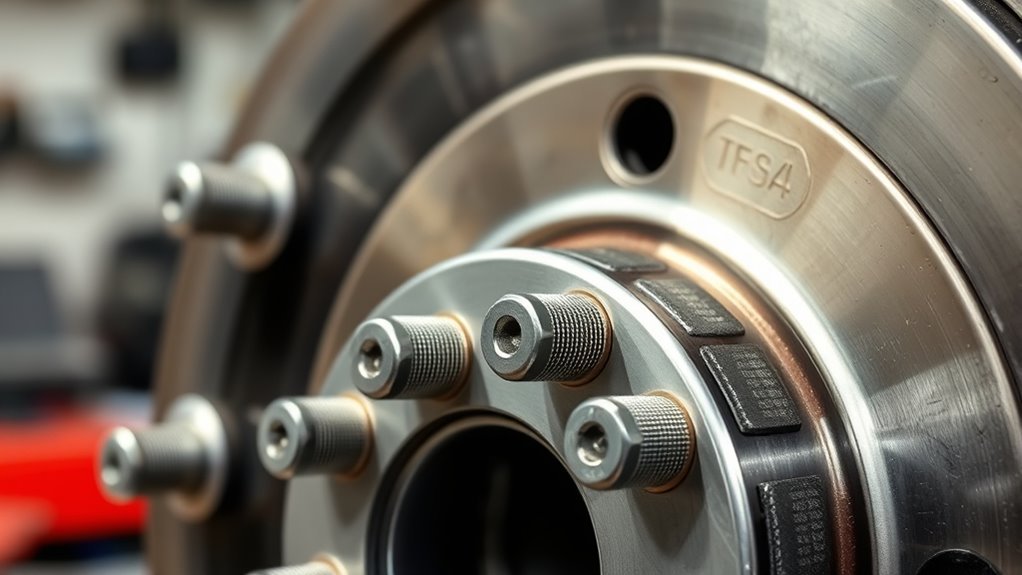
Wheel studs are the essential threaded fasteners that hold your vehicle’s wheels securely to the hub.
They work by allowing lug nuts to thread onto them, clamping the wheel tightly in place.
You’ll find two main types of wheel studs: press-in studs, which you install from the back of the hub, and screw-in studs, which thread directly into existing holes.
Proper installation is vital—incorrect torque or alignment can cause lug nuts to loosen, risking wheel detachment and compromising safety.
Proper installation prevents lug nuts from loosening, ensuring your wheels stay secure and safe on the road.
When you replace wheel studs, you can swap out individual ones without changing the whole hub, making maintenance easier.
Also, the right dimensions—like length and thread size—ensure your lug nuts fit perfectly and keep your wheels firmly attached during every drive.
Comparing Wheel Studs and Wheel Bolts
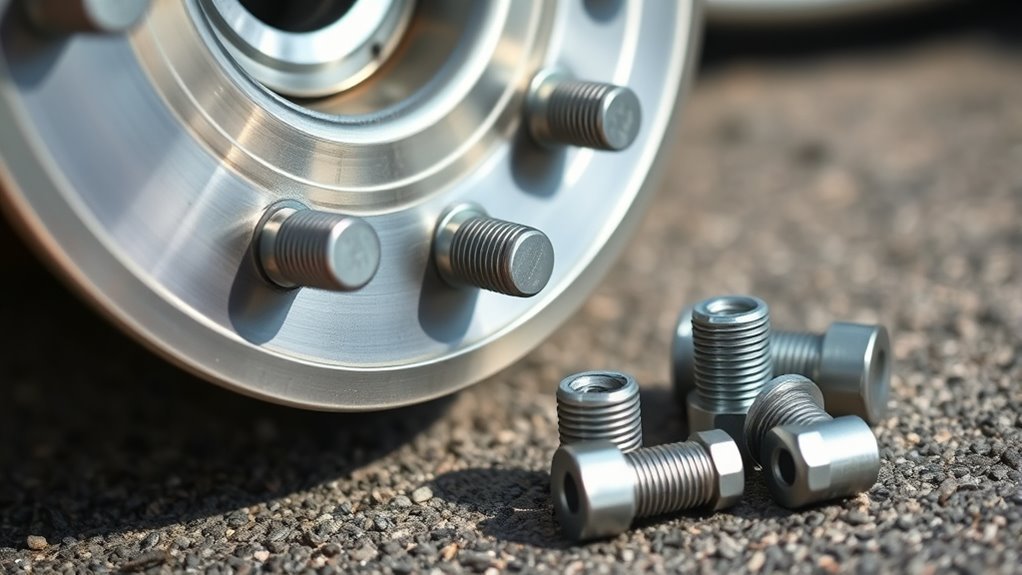
When securing your vehicle’s wheels, you might encounter two common methods: studs paired with lug nuts or bolts that thread directly into the hub.
Wheel studs and lug nuts are torqued onto studs mounted in the hub, making tire changes quicker since the studs stay put while you remove the wheel.
On the other hand, wheel bolts pass directly through the wheel into the hub and require precise realignment each time you change a tire.
If wheel bolts get stripped, you often need to replace the entire hub. But damaged wheel studs can be swapped out without that hassle.
While wheel studs add complexity by needing lug nuts, they generally reduce maintenance time and cost compared to wheel bolts.
It’s interesting to note that European manufacturers tend to prefer wheel bolts.
Types of Wheel Studs and Their Installation Methods
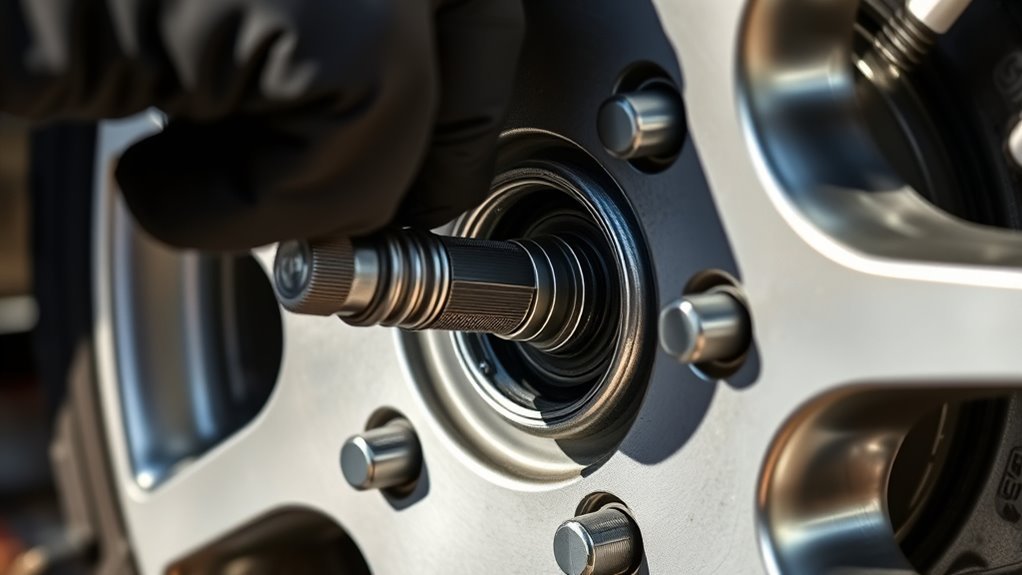
Although you might not notice them often, the studs that secure your wheels come in two main types: press-in and screw-in.
Press-in studs require installation from the back side of the hub using a mechanical or hydraulic press. This method guarantees a tight fit without stretching.
On the other hand, screw-in studs thread directly into existing bolt holes and can often be installed by hand if the threads are clean.
| Type | Installation Method |
|---|---|
| Press-in | Use mechanical/hydraulic press |
| Screw-in | Thread into bolt holes by hand |
| Aftermarket | Larger diameter or longer studs |
| Importance | Prevents stripped threads |
| Safety | Guarantees secure wheel attachment |
Knowing these installation methods helps you maintain wheel stud safety and durability.
It’s crucial to stay informed about how to install and maintain your wheel studs for optimal performance.
Key Dimensions and Specifications of Wheel Studs
Understanding the types and installation methods of studs helps you appreciate why their dimensions matter so much.
When dealing with wheel studs, you need to take into account overall length, knurl diameter, and thread length carefully.
The knurl diameter guarantees the stud fits snugly in the wheel hub, preventing unwanted movement.
The knurl length provides the grip needed to hold the stud securely in place during operation.
Thread length is critical because it determines how much thread is available for lug nut attachment, directly affecting wheel security.
Matching thread size—whether SAE like 7/16”-20 or metric like 12 mm x 1.50—to your vehicle’s specs is equally important.
Ensuring the correct thread size, SAE or metric, is crucial for proper wheel stud fitment and safety.
Paying attention to these key dimensions guarantees proper fitment and safe, reliable wheel installation.
Benefits of Using Wheel Studs Over Lug Bolts
When you use wheel studs, changing tires becomes much easier since the studs stay fixed in the hub. This lets you align the wheel quickly.
They also help prevent thread damage that often happens with lug bolts, which protects your hub from costly repairs.
Plus, if a stud gets damaged, you can replace it individually without having to replace the entire hub.
This ultimately saves you both time and money!
Installation Convenience
Because wheel studs stay firmly in place during tire changes, you can quickly mount the wheel without struggling to align bolts or hold the wheel up.
Wheel studs provide unmatched installation convenience by allowing you to simply slide the wheel onto the studs, unlike lug bolts that require precise positioning.
This design eliminates the need for locator pins, which often complicate the mounting process.
When you use wheel studs, tire changes become faster and less frustrating since the studs remain securely attached to the hub, preventing misalignment.
This not only saves time but also reduces the physical effort involved.
Thread Damage Prevention
Although wheel studs might seem similar to lug bolts at first glance, they offer significant advantages in preventing thread damage.
With wheel studs, you reduce the risk of stripping threads inside the hub since studs remain semi-permanent. This allows consistent torque application and lowers the chance of wheel detachment.
When you use wheel studs, lug nuts go directly onto the studs. This simplifies tire changes and minimizes cross-threading risks that are common with lug bolts.
Unlike lug bolts, if threads on wheel studs get damaged, you can replace the stud alone without swapping the entire hub. This can save you costs in the long run.
Also, wheel studs eliminate the need for locator pins, which can warp lug bolts over time.
Just make certain to apply proper torque to avoid stud failure and guarantee safety.
Replacement Flexibility
If you ever encounter stripped threads on a wheel stud, you can replace just the stud instead of the entire hub.
This saves you time and money.
This replacement flexibility is a key advantage over lug bolts, which often require hub replacement when damaged.
Here’s why wheel studs stand out:
- You can quickly swap out damaged wheel studs without disturbing the hub.
- Lug nuts secure easily and consistently on wheel studs, ensuring proper clamping force.
- Aftermarket studs allow larger wheel hole diameters and spacer use for customization.
- Studs hold the wheel in place during installation, simplifying tire changes.
With wheel studs, you get durable, cost-effective, and flexible solutions that improve safety and maintenance efficiency.
Aftermarket Wheel Stud Options and Compatibility
When choosing aftermarket wheel studs, you’ll want to take into account stud length variations to guarantee proper fitment with your wheels and spacers.
Pay close attention to thread specifications and material quality for safety and durability.
Matching these factors with your vehicle’s lug pattern is key to a secure and compatible setup.
Stud Length Variations
Because aftermarket wheel studs come in various lengths, choosing the right size is key to guaranteeing proper fit and safety.
Understanding stud length variations helps you pick wheel studs that work seamlessly with your vehicle and accessories. Here’s what you need to take into account:
- Standard 90mm studs fit most wheel specs and spacers, offering broad compatibility.
- Longer studs are essential if you’re adding wheel spacers (up to 35mm thick) to maintain enough thread engagement.
- Different cars, like the BMW E30 (4-lug) and E36 (5-lug), need specific stud kits for proper alignment and performance.
- Match the knurl diameter and thread size closely to your lug nuts and hub to avoid fitment issues.
Choosing the right stud length guarantees your lug nuts tighten securely, keeping your wheels safe and stable.
Spacer Compatibility Considerations
Choosing the right wheel stud length naturally leads to contemplating how spacers fit into your setup.
When using wheel spacers, longer wheel studs are essential to guarantee your lug nuts fully engage the threads, maintaining safety and performance.
Aftermarket wheel studs often accommodate larger diameter wheel holes, allowing for a broader range of wheel spacers up to 35mm thick.
To avoid issues like off-center mounting, make certain to use hub-centric spacers paired with properly sized studs that match your vehicle’s thread size, length, and knurl diameter.
This guarantees secure fitment and proper wheel alignment.
Material and Thread Differences
You’ll find that aftermarket wheel studs come in a variety of materials and thread specifications designed to enhance strength and compatibility.
When selecting studs, consider these key factors:
- Material: High-strength chromoly steel or heat-treated alloys boost durability and resist shear forces better than OEM studs.
- Thread Size & Pitch: Must match your wheel studs and nuts perfectly to guarantee proper clamping force and safe fit.
- Length: Longer studs accommodate spacers, but make sure the stud remains fully engaged in the hub to avoid failure.
- Design Features: Knurled sections improve grip inside the hub, reducing loosening risks over time.
Choosing the right combination guarantees your wheels stay secure and your vehicle handles as intended.
Frequently Asked Questions
How Do I Know What Size Wheel Studs I Need?
You’ll know what size wheel studs you need by measuring your current studs’ length, thread pitch, and knurl diameter.
Check your vehicle’s manual for specs, and use a thread pitch gauge to guarantee a perfect fit and safety.
What Are the Different Types of Wheel Studs?
You’ll find two main types of wheel studs: press-in and screw-in.
Press-in studs are installed from the hub’s back and grip tightly.
On the other hand, screw-in studs thread directly into bolt holes, making them easier to replace and customize.
What Grade Should Wheel Studs Be?
You should always choose Grade 8 wheel studs—they’re as tough as a tank’s armor, boasting around 150,000 psi tensile strength.
This grade guarantees your wheels stay secure under intense stress and heavy loads without fail.
Can I Drive With 4 Out of 5 Wheel Studs?
You shouldn’t drive with only 4 out of 5 wheel studs.
It puts extra stress on the remaining studs, risking wheel detachment and unsafe driving conditions.
Replace missing studs promptly to keep your vehicle safe and reliable.
Conclusion
Think of wheel studs as the unsung heroes holding your wheels firmly in place, like the roots anchoring a mighty tree.
Understanding their types, dimensions, and installation guarantees your safety and performance on the road.
By choosing the right studs over lug bolts, you gain reliability and ease of maintenance.
Whether stock or aftermarket, the right wheel studs keep everything spinning smoothly—giving you peace of mind every time you hit the road.
In conclusion, wheel studs play a critical role in vehicle safety and functionality.
Selecting the appropriate type and size increases both performance and durability.
So, remember, investing in the right wheel studs means prioritizing your safety and ensuring a smooth driving experience.
Stay informed about your options, and enjoy the confidence that comes with well-secured wheels!