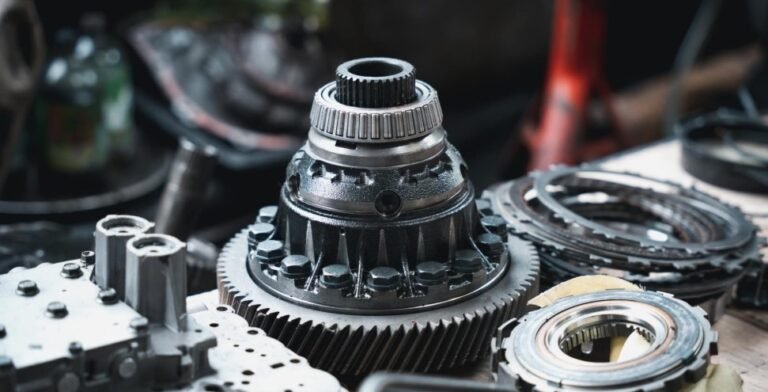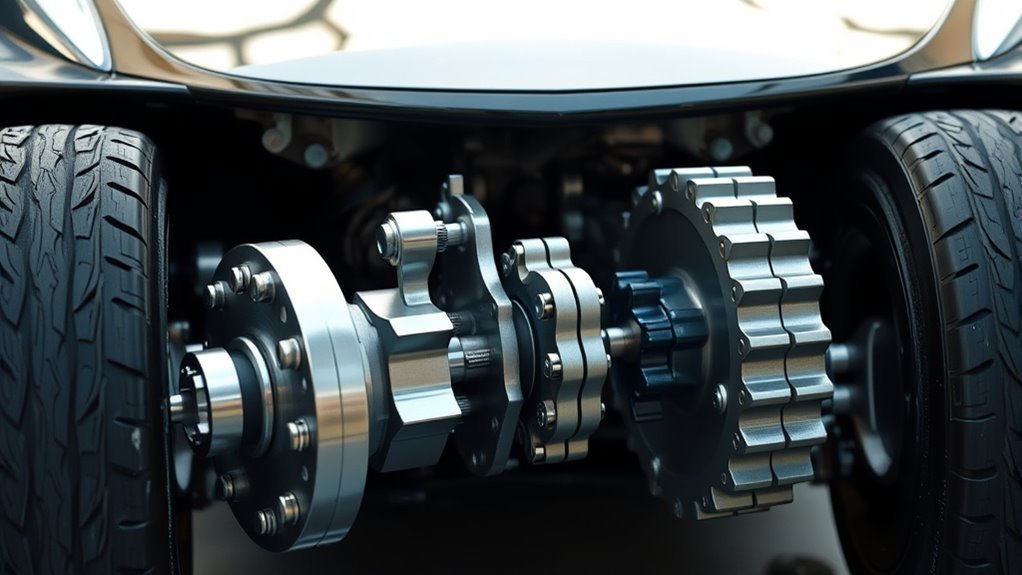
What Role Do Differentials Have in Front-Wheel Drive Cars?
In front-wheel drive cars, differentials play a crucial role in performance and handling. They allow the front wheels to turn at different speeds when navigating corners, which prevents tire scrubbing and enhances overall control.
By smoothly splitting engine power between the front wheels, differentials help improve traction, especially during tight turns.
Most front-wheel drive models are equipped with open differentials, but some vehicles feature limited-slip differentials for better grip on slippery surfaces.
To maintain smooth operation and ensure the longevity of your vehicle, it’s essential to keep the differential fluid fresh.
If you’re curious about how different types of differentials affect performance and maintenance, keep exploring!
Key Takeaways
– Differentials allow front wheels to rotate at different speeds during turns, which helps prevent tire scrubbing.
This improves maneuverability, making it easier to navigate corners.
– They also distribute engine torque efficiently to both front wheels for smooth power delivery.
This ensures that the car handles well under various driving conditions.
– Open differentials enable independent wheel rotation, but they can reduce traction if one wheel slips.
This means that in certain situations, you might lose power to one side of the vehicle.
– Limited-slip differentials enhance grip by transferring power to the wheel with better traction, especially in slippery conditions.
This feature is particularly useful in adverse weather or rough terrain.
– Proper differential fluid maintenance is essential to ensure smooth operation.
It also helps prevent wear and tear, extending the life of your vehicle’s drivetrain.
Definition and Function of Differentials in Vehicles
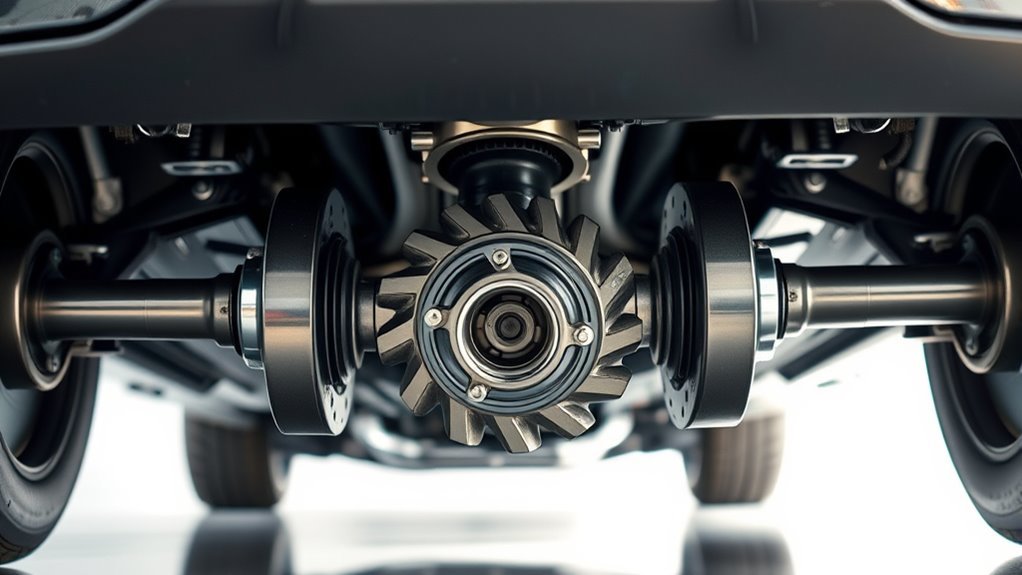
A differential in a front-wheel drive car lets your front wheels rotate at different speeds when you turn, preventing tire scrubbing and improving your vehicle’s handling.
In front-wheel drive systems, differentials are usually housed within the transaxle, combining transmission and differential functions efficiently.
These differentials use ring and pinion gears along with spider and side gears to distribute torque between the front wheels.
Ring and pinion gears, combined with spider and side gears, work together to evenly distribute torque to the front wheels.
Most front-wheel drive cars employ open differentials, which allow wheels to spin independently but can cause power loss if one wheel slips.
Understanding the role of these components helps you appreciate how your car maintains control and traction during turns.
Keeping the differential fluid in good condition is crucial to avoid wear and guarantee the differential operates smoothly.
How Differentials Operate in Front-Wheel Drive Systems
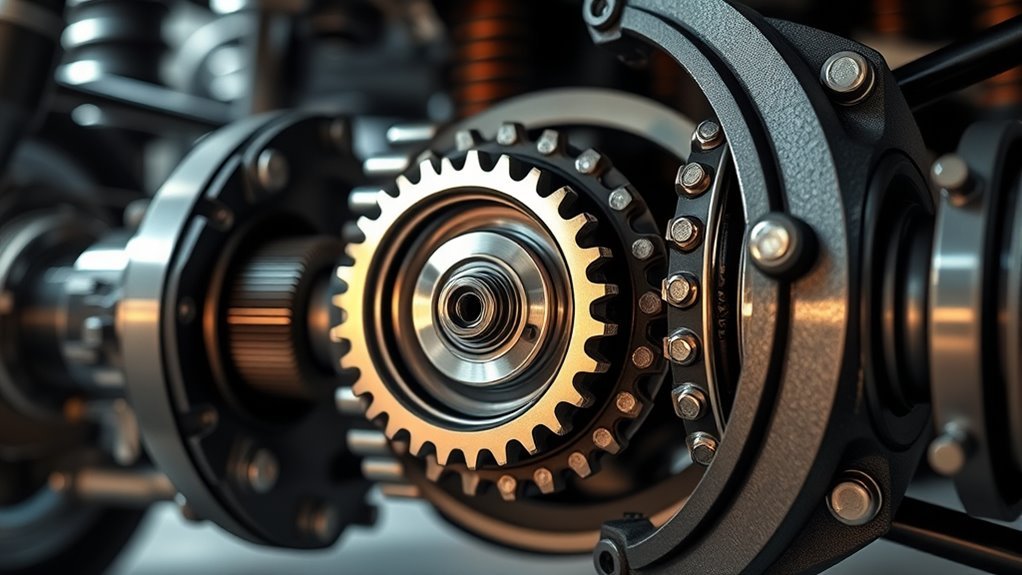
Although you might not always notice it, the differential in your front-wheel drive car plays an essential role by allowing the front wheels to spin at different speeds during turns.
It’s located within the transaxle, which combines the transmission and differential. This setup efficiently transmits power from the engine to the front wheels, preventing tire scrubbing and maintaining handling stability.
The differential’s gears manage how power is split between the front wheels, ensuring smooth cornering.
However, traditional open differentials can reduce traction if one wheel slips. Limited-slip versions help address this issue, offering improved performance in slippery conditions.
To keep your differential working properly, it’s important to maintain the differential fluid. Low or degraded fluid can cause wear or failure, leading to bigger problems down the line.
This system keeps your car balanced and responsive every time you drive, which is crucial for an enjoyable driving experience.
Types of Differentials Found in Front-Wheel Drive Cars
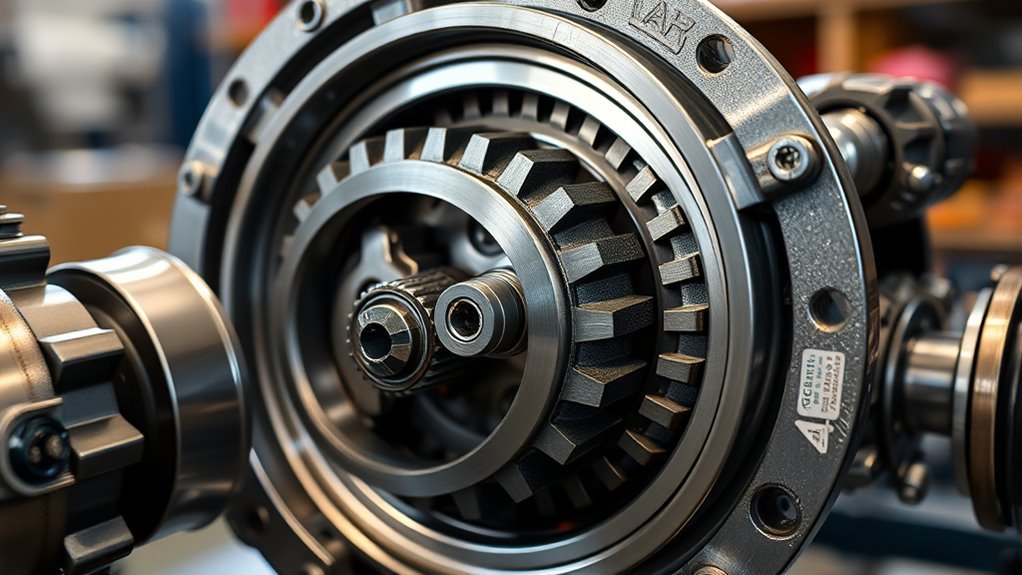
Understanding how differentials work in your front-wheel drive car sets the stage for exploring the types you might encounter.
Most front-wheel drive vehicles use an open differential, allowing each front wheel to rotate at different speeds during turns, which improves maneuverability.
However, when traction is a concern, you might find a limited-slip differential that actively distributes power between wheels to prevent slipping.
Some advanced front-wheel drive cars feature torque-vectoring differentials, which adjust power dynamically between the front wheels for enhanced handling and stability.
These differentials are usually integrated with the transaxle, making the system compact and efficient.
Knowing these types helps you appreciate how your car maintains grip and control in various driving conditions.
Common Signs of Differential Wear and Maintenance Needs
When your front-wheel drive car’s differential starts showing signs of wear, you’ll often notice unusual noises like grinding or clunking that signal gear or bearing problems.
You might also feel vibrations during acceleration or turns, which indicate differential wear affecting performance.
Keep an eye out for oil leaks around the differential casing; these leaks are critical signs that demand immediate attention to avoid more severe damage.
Regularly check your differential fluid levels and condition since low or dirty fluid accelerates wear and risks failure.
To meet maintenance needs, change the differential fluid every 30,000 to 60,000 miles, ensuring smooth operation and longevity.
Addressing these signs promptly helps keep your differential in good shape and prevents costly repairs down the road.
Impact of Differentials on Vehicle Handling and Safety
You rely on your front-wheel drive differential to keep traction steady, especially during tight turns.
It balances power between the wheels, helping you maintain control and avoid slipping.
Understanding how it supports your vehicle’s safety can help you appreciate why proper maintenance is key.
Differential Effects on Traction
Although differentials might seem like a minor component, they play an essential role in how your front-wheel drive car handles and maintains traction.
The differential guarantees the front wheels rotate at different speeds during turns, which improves grip and control.
Without it, you’d face understeer and uneven tire wear.
Here’s how differentials affect traction in your FWD vehicle:
- They distribute torque to the front wheels, sending power to the wheel with better grip.
- In slippery conditions, an open differential may cause one wheel to spin freely, reducing traction.
- Limited-slip differentials help by transferring power to the wheel with more traction, enhancing stability and control.
Understanding this helps you appreciate how your car maintains traction and handles various driving situations.
Safety Benefits of Differentials
Because differentials let your front wheels spin at varying speeds during turns, they greatly boost your car’s maneuverability and stability.
This mechanism improves traction, preventing slipping and skidding, which directly enhances your safety on the road.
Limited-slip differentials take it further by transferring power from a slipping wheel to the one with better grip.
This increases stability during acceleration on uneven surfaces.
Maintaining your differential is crucial; worn parts or low fluid can reduce its effectiveness and compromise handling.
| Feature | Benefit | Impact on Safety |
|---|---|---|
| Variable Wheel Speed | Smooth turns | Prevents skidding |
| Traction Control | Reduces slipping | Maintains vehicle control |
| Limited-Slip Diff. | Transfers power effectively | Enhances stability |
Differential Fluid and Its Importance in FWD Vehicles
Differential fluid plays an essential role in front-wheel drive (FWD) vehicles by lubricating the gears and preventing overheating during operation.
Without proper lubrication, friction increases, which can damage the differential and reduce your car’s traction and overall performance.
To keep your FWD vehicle running smoothly, you should:
- Change the differential fluid every 30,000 to 60,000 miles to avoid gear wear and maintain performance.
- Use the recommended type of differential fluid, with synthetic options offering better protection under extreme conditions.
- Regularly check the fluid condition; a burnt smell or dark color signals contamination and the need for immediate replacement.
Frequently Asked Questions
Do FWD Cars Need Differential Fluid Change?
Yes, you need to change the differential fluid in FWD cars roughly every 30,000 to 50,000 miles.
It keeps the gears lubricated, prevents wear, and guarantees smooth performance.
This is especially important during cornering and tough driving conditions.
What Happens When a Front Differential Goes Bad?
When your front differential goes bad, you’ll notice grinding noises, vibrations, and steering trouble.
It may leak oil, lose lubrication, and eventually cause power loss to the front wheels.
This can make your car hard to drive.
How Much Does It Cost to Fix a Front Differential?
Coincidentally, fixing your front differential usually costs between $300 and $1,500.
You’ll pay more if parts or labor take longer, but regular maintenance can save you from those pricey repairs down the road.
Is It Worth Replacing the Differential?
Yes, replacing the differential is worth it if your car shows signs of wear or performance issues.
It helps maintain safety, handling, and fuel efficiency.
Preventing further damage and costly repairs down the road is key.
Conclusion
Just like the unsung gears behind a clock’s precision, differentials quietly guarantee your front-wheel drive car moves smoothly and safely.
Without them, turns would be clumsy, and control would slip away.
By understanding their role and maintaining them well, you’re not just preserving parts—you’re safeguarding your driving experience.
So, treat your differential like a trusted partner, and it’ll keep guiding you through every twist and turn with confidence.
In conclusion, differentials play a crucial role in the functionality of front-wheel drive cars.
They ensure smooth handling and control, especially during turns.
Regular maintenance of these components is essential for a safe and enjoyable driving experience.
So, remember to care for your differential, as it’s key to your car’s performance and your overall driving comfort.