8 Signs You Need Automobile Brake Repair
If you’re noticing issues with your brakes, it’s crucial to address them promptly.
Squealing or grinding noises when braking can indicate that your brake pads are worn out and in need of repair.
A vibrating brake pedal often signals rotor problems, which can lead to further complications if ignored.
Additionally, a soft or spongy pedal usually points to hydraulic issues, such as low brake fluid or air trapped in the lines.
If your vehicle pulls to one side when braking, that’s another warning sign you shouldn’t overlook.
Burning smells after braking or the illumination of warning lights can also indicate serious problems.
Increased stopping distance or visible wear on your brake components means it’s definitely time to take action.
Stay vigilant and take these signs seriously to ensure your safety on the road.
Key Takeaways
– High-pitched squealing or grinding noises indicate worn brake pads needing immediate attention.
If you hear these sounds, it’s time to get your brakes checked out.
– A soft or spongy brake pedal suggests hydraulic issues or air in brake lines.
This could lead to a dangerous situation, so don’t delay in investigating.
– Vehicle pulling to one side during braking signals uneven pad wear or caliper problems.
This imbalance can affect your control while driving, so it’s best to address it quickly.
– Brake warning or ABS dashboard lights indicate urgent brake system malfunctions.
When these lights pop up, it’s a sign that your vehicle needs professional help.
– Visible brake pad thinning, rotor warping, or fluid leaks require professional brake repair.
Ignoring these signs can lead to more severe issues down the line, so take action!
Squealing or Grinding Noises Indicate Worn Brake Pads
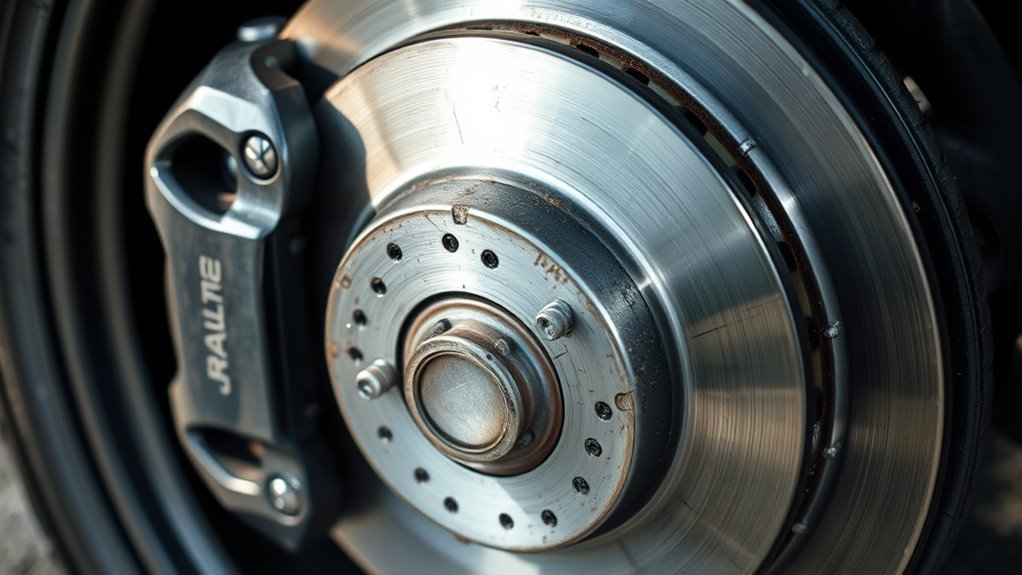
A high-pitched squeal when you brake usually means your brake pads are worn down and the wear indicator tab is scraping against the rotor.
This squealing noise serves as a warning that your brake pads need attention. If you ignore it, you might soon hear a grinding sound, which indicates the pads have worn completely through, causing metal-to-metal contact with the rotor.
This grinding noise can lead to serious damage and costly repairs, including rotor replacement. To protect your vehicle safety, you should never dismiss these noises.
A quick inspection can help identify the problem early, but if you’re unsure, getting a professional inspection is essential.
Addressing squealing or grinding promptly guarantees your brakes work reliably and keeps you safe on the road.
Vibration or Pulsation When Braking Points to Rotor Problems
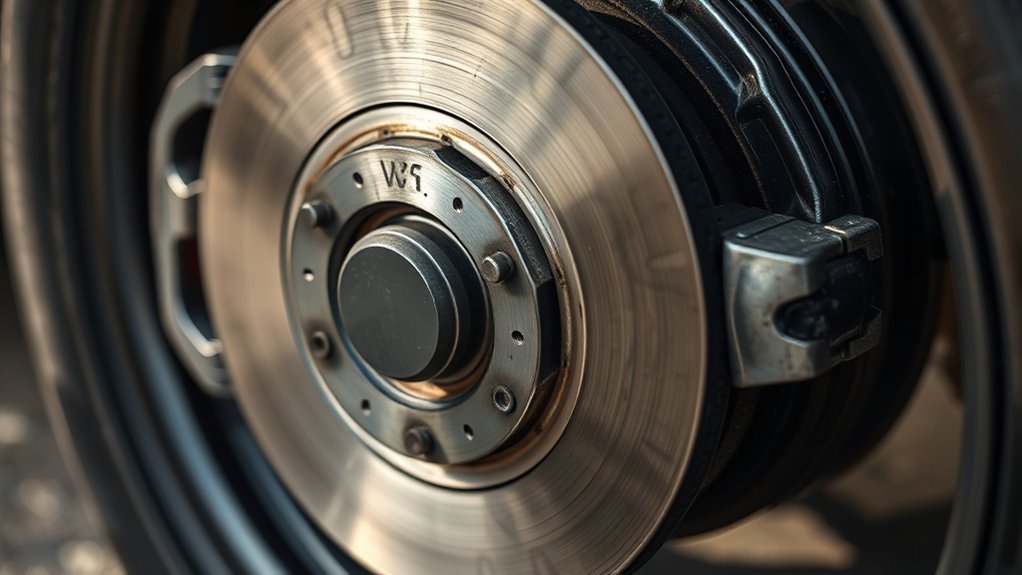
If you feel vibration or pulsation when you brake, it often means your rotors are warped or unevenly worn.
You can usually tell which rotors are causing the problem by where the shaking occurs—steering wheel or brake pedal.
Checking how the vibration changes at different speeds helps you pinpoint the issue quickly.
Causes of Brake Vibration
When you feel vibration in the brake pedal or steering wheel while braking, it usually signals warped or damaged rotors that need your attention.
This vibration often results from rotor distortion, which can worsen if left unchecked, compromising your braking performance.
If the steering wheel shakes, it often points to front rotors.
On the other hand, pulsation felt only in the brake pedal may indicate rear rotor issues.
Testing your braking at different speeds helps pinpoint the source of vibration, letting you address problems before they cause further rotor damage.
Regular maintenance and inspections of your brake components, especially the rotors, are crucial to keep your brakes functioning safely.
This also extends their lifespan.
Don’t ignore these signs—timely care prevents costly repairs and guarantees reliable stopping power.
Front vs. Rear Rotors
Understanding the difference between front and rear rotor issues can help you quickly identify the source of vibration or pulsation during braking.
If your steering wheel shakes when braking, the problem likely lies with the front brakes and their rotors.
On the other hand, if you feel pulsation in the brake pedal without any wheel movement, the rear rotors may be warped.
Warped rotors affect braking performance and can cause uneven wear on your brake pads.
Regular inspection services are crucial to catch rotor problems early and maintain safe braking.
Testing braking at different speeds also helps pinpoint which rotors need attention.
Addressing these issues promptly prevents further damage and guarantees your vehicle stops smoothly every time.
Diagnosing Vibration Location
Anyone experiencing vibration or pulsation while braking should consider checking their rotors for warping.
If you feel vibration in the steering wheel, it usually points to front rotor issues causing uneven contact with the brake pads.
On the other hand, pulsation felt specifically in the brake pedal without steering wheel shake often indicates rear rotor problems.
To diagnose the exact location, test braking at various speeds and note where the vibration or pulsation occurs.
Regular brake inspection helps catch developing rotor issues early, preventing costly repairs and unsafe driving conditions.
Identifying these signs promptly not only extends the life of your brake pads but also maintains overall vehicle safety.
Don’t ignore these symptoms; addressing rotor problems guarantees reliable stopping power and safer rides.
Soft or Spongy Brake Pedal Signals Hydraulic Issues
If your brake pedal feels soft or spongy, it usually means your braking system is losing hydraulic pressure.
This can seriously reduce your stopping power.
This issue often stems from air trapped in the brake lines or low brake fluid levels.
Both conditions compromise braking effectiveness and increase the risk of brake failure.
You should regularly check the brake fluid reservoir to catch low fluid early.
If the pedal feels mushy, bleeding the brakes can remove air pockets and refresh the brake fluid.
This process helps restore pedal firmness.
Ignoring a soft or spongy brake pedal puts you in danger, signaling the need for prompt brake repair.
Addressing hydraulic issues quickly ensures your vehicle stops safely every time.
Vehicle Pulls to One Side During Braking
A soft or spongy brake pedal can signal hydraulic issues, but another common warning sign is your vehicle pulling to one side when you brake.
This usually means uneven braking forces caused by problems like sticking calipers or uneven pad wear.
To confirm, perform a slow brake test on clean pavement. If your vehicle pulls to one side only during braking, brake system issues are likely.
Before assuming brake trouble, rule out tire pressure or alignment problems.
Addressing this pulling sensation early helps maximize brake pad life and prevents premature rotor wear.
Ignoring it can compromise vehicle safety and lead to more severe braking problems.
Burning Smell After Hard Braking Suggests Overheating
When you notice a burning smell after hard braking, it usually means your brakes are overheating and at risk of damage.
This burning smell is a clear sign that your brake components, like pads or rotors, are under stress from excessive heat. Overheating reduces braking efficiency and can cause serious issues like warped rotors or stuck calipers.
If you detect this odor along with decreased braking efficiency or unusual noises, your brakes need immediate attention.
These are vital signs that your brakes aren’t functioning properly and require a professional inspection to prevent further damage or potential brake failure.
Don’t ignore a burning smell after braking—it’s a warning that your vehicle’s safety depends on timely brake repair.
Brake Warning Lights Illuminate on the Dashboard
When brake warning lights light up on your dashboard, they’re signaling that something needs your immediate attention.
These lights can indicate issues like low brake fluid, worn brake pads, or problems with the ABS system.
Paying close attention to these indicators helps you stay safe and avoid costly repairs down the road.
Common Brake Lights
Three common brake warning lights can appear on your dashboard, each signaling a different issue that needs your attention.
The brake warning light often indicates low brake fluid levels, an engaged parking brake, or a hydraulic problem in the brake system requiring immediate care.
The ABS light signals a malfunction in the Anti-lock Braking System, which can compromise your vehicle’s braking performance.
The pad-wear indicator warns you when your brake pads have worn down to a critical level, meaning it’s time for replacement.
Sometimes, the traction control light will also illuminate, showing the stability system is detecting brake-related issues.
Ignoring these lights can lead to serious safety hazards, costly repairs, and even brake system failure, so don’t delay addressing them.
Dashboard Indicator Meanings
Dashboard brake warning lights alert you to critical issues that need your immediate attention.
If you see a brake system warning lamp, it could mean low brake fluid levels, an engaged parking brake, or a hydraulic fault.
The ABS light signals a possible problem with your anti-lock braking system, which needs prompt inspection.
When the pad-wear indicator comes on, it’s time to replace your brake pads to maintain safe brake performance.
The traction control light might appear during slippery conditions or signal a malfunction affecting your brakes.
Ignoring these dashboard alerts can lead to compromised brake performance and serious safety risks.
Always address brake warning lights promptly to keep your vehicle safe and reliable on the road.
Noticeably Increased Stopping Distance
If you notice it takes longer for your vehicle to come to a stop, your brakes might be worn or compromised.
An increased stopping distance often signals issues like worn brake pads, low brake fluid, or air in the brake lines.
These factors reduce brake performance, making it harder to stop quickly and safely.
At 60 mph, just an extra 10 feet can raise your collision risk by 20-25%, so don’t ignore this sign.
Regular vehicle maintenance, including routine brake inspections, helps identify these problems early.
Addressing increased stopping distance promptly with brake repair guarantees your brakes remain effective and reliable, keeping you safer on the road while preventing costly repairs down the line.
Stay alert to this vital brake warning.
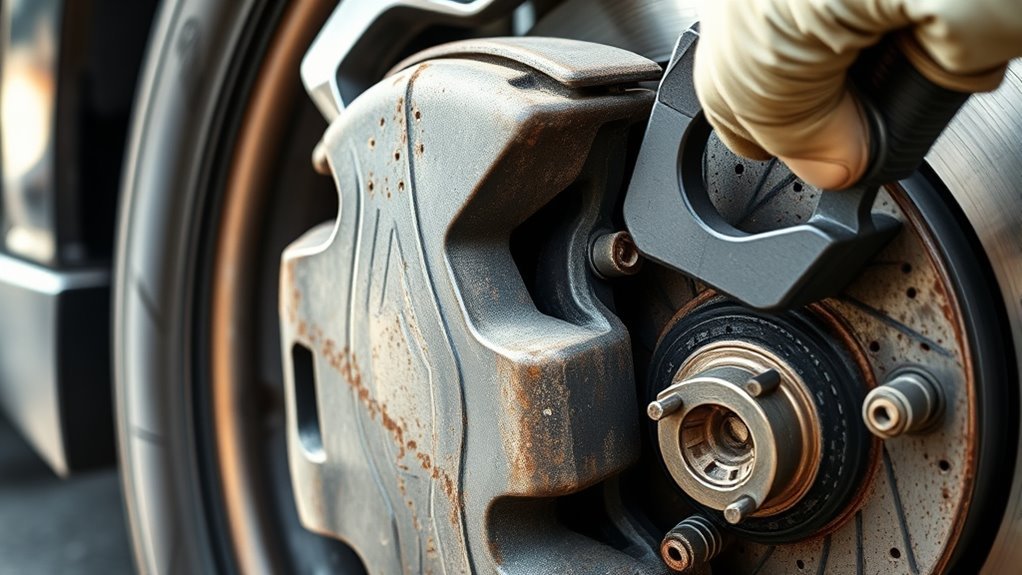
Visible Wear or Damage on Brake Components
When you notice your vehicle taking longer to stop, it’s also a good idea to check the brake components themselves for visible wear or damage.
Visible wear on brake pads, like thinning material or a shiny surface, often means they need replacing to maintain braking efficiency.
Look out for cracks or warping in brake rotors, which can cause vibrations and reduce performance.
Uneven wear patterns on brake pads might signal alignment or caliper issues.
Additionally, fluid leaks around brake lines are a red flag for serious problems that impact safety.
Spotting rust or corrosion on brake components also means they’re deteriorating.
If you find any of these signs, don’t wait—seek professional brake repair services to keep your vehicle safe and responsive.
Frequently Asked Questions
How Do I Know if I Need to Change My Car Brakes?
You’ll know it’s time to change your brakes if you hear high-pitched squealing, feel a soft pedal, or notice vibrations.
Your car pulling to one side or a burning smell after braking are also key indicators.
Don’t ignore these signs—get them checked promptly!
Will Autozone Replace My Brake Pads?
If you asked AutoZone to replace your brake pads, they’d likely say they don’t install parts.
For example, one customer bought pads there, used their Loan-A-Tool, and replaced them yourself with AutoZone’s advice.
How Much Does It Cost to Replace Brakes?
Replacing your brakes typically costs between $300 and $800, including parts and labor.
Prices vary by vehicle and service complexity, but regular maintenance can help you avoid pricier repairs down the road.
What Are the Possible Reasons Why My Car Brakes Are Not Working?
Your brakes might not work due to low brake fluid, air in brake lines, worn pads, warped rotors, or sticking calipers.
Check these issues promptly to guarantee your safety and avoid costly repairs later.
It’s really important to stay on top of your brake system! Regular maintenance can help you catch these problems early.
Conclusion
Just like a knight trusts their armor, you need to trust your brakes to keep you safe on every journey.
If you notice squealing, vibrations, or that burning smell, don’t ignore these signs—they’re your car’s way of waving a red flag.
Staying alert and addressing brake issues quickly guarantees you’re always in control.
You’ll be ready to face the road ahead with confidence and peace of mind.
Your safety is worth every brake check.
Make sure to pay attention to your vehicle’s brake system. Regular maintenance is essential for ensuring your brakes function properly.
When you notice any warning signs, it’s crucial to seek professional help.
In conclusion, trusting your brakes is vital for your safety on the road.
Stay vigilant, and don’t overlook the importance of brake repair.
Your ability to drive confidently depends on functioning brakes, so prioritize timely inspections and repairs!