10 Best Car Loan Rates 60 Months: Our Favorite Picks Compared
Are you trying to find a car loan that keeps monthly payments manageable without stretching the term too far? A 60-month auto loan can be a practical choice for many buyers. It may offer a balance between lower payments and a shorter payoff period.
It may offer a balance between lower payments and a shorter payoff period. This review looks at the best car loan rates 60 months for buyers who want clear terms and steady costs. It is useful for people shopping for a new or used car, or for anyone refinancing an existing loan.
The right loan can affect both the monthly budget and the total interest paid. In the sections below, we will compare key features, rate factors, and borrower fit.
Best 60-Month Car Loan Rates Compared
| Image | Product | Price |
|---|---|---|
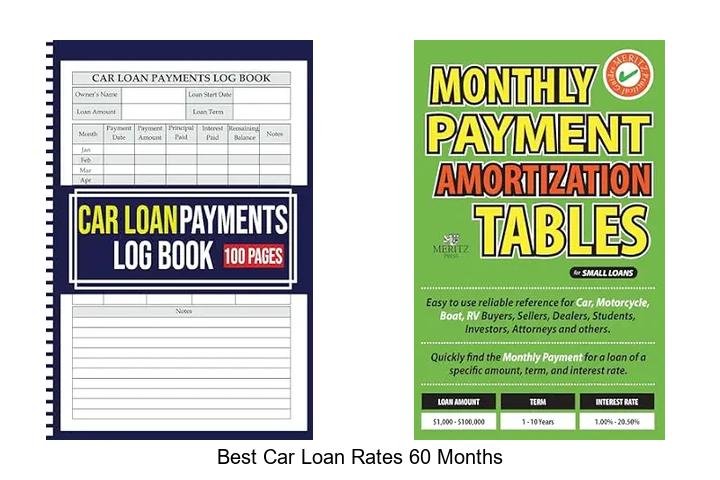
Pick 1  | Car Loan Payments Log Book | Check Price On Amazon |
Pick 2  | Monthly Payment Amortization Tables | Check Price On Amazon |
Pick 3  | The New Car Buyer’s Playbook | Check Price On Amazon |
1. Car Loan Payments Log Book
Keeping auto loan payments organized can feel messy without a simple record. A dedicated log book helps track monthly payment details in one place. Car Loan Payments Log Book focuses on payment tracking for auto loans.
It offers space to record monthly payment, principal, interest, and balances. The book has 100 pages and a compact 6 x 9 inch size. That smaller format makes it easy to store in a glove box or desk drawer.
Its independently published format keeps the design straightforward and practical. The English language layout supports clear, simple note taking. The 102-page print length gives steady room for ongoing entries.
Build quality is defined by paperback book dimensions and light weight. At 7.4 ounces, it stays easy to carry between home and car. It suits drivers who like handwritten records for budgeting and loan progress.
People managing one auto loan or several payments may find it useful. It works well for anyone who prefers paper over apps.
Pros
- Tracks payment, principal, interest, and balance details
- Compact size fits easily in small storage spaces
- Lightweight format is easy to carry
Cons
- No digital backup or automatic calculations
- Limited to handwritten record keeping
- Only 100 pages for long loan terms
Who Should Buy It?
People who want a simple paper record for auto loan payments should find it useful. It suits drivers who track principal, interest, and balances by hand. The compact size works well for glove boxes, desks, or bags.
Anyone managing a car loan and preferring written organization may benefit most from it.
Key Specifications
| Specification | Details |
|---|---|
| Title | Car Loan Payments Log Book: Track Monthly Payment, Principal, Interest, and Balances with Ease – Perfect Financial Organizer for Auto Loans. 100 Pages, 6″x9″ Inch. |
| Format | Paperback |
| Pages | 102 pages |
| Language | English |
| Publication Date | January 25, 2025 |
| Dimensions | 6 x 0.23 x 9 inches |
| Item Weight | 7.4 ounces |
The 6 by 9 inch size makes the log book easy to store and carry. Its 0.23 inch thickness keeps it slim for bags, drawers, and vehicle storage. A 7.4 ounce weight means it feels light in hand during routine use. The 102-page count gives room for repeated monthly entries without feeling bulky. English text supports straightforward use for recording payment amounts, interest, principal, and balances by hand.
Paperback construction suits regular handling while staying simple and familiar. The January 25, 2025 publication date shows a recent release in a practical format. That can matter for buyers who want a current layout for loan tracking. The compact dimensions help make note taking comfortable at a desk or in a car. People who prefer paper records over apps may appreciate the portable size and low effort setup.
2. Monthly Payment Amortization Tables
Clear payment tables make loan math easier to follow. Readers can check monthly costs without complex calculations.
Monthly Payment Amortization Tables for Small Loans offers a simple reference for buyers and sellers. It focuses on small loans, including car and home purchases, students, and investors. The book helps readers find a monthly payment for a specific amount, term, and interest rate.
Its 124 pages give a compact format that suits quick lookup use. The paperback size, 5 x 0.28 x 8 inches, keeps it easy to store and carry.
Meritz Press published it in English on March 15, 2016. The layout should suit readers who want a straightforward printed aid rather than a digital calculator.
Build quality details are limited, though the lightweight 4.7-ounce format suggests easy handling. It works well for borrowers, sellers, and anyone comparing payment scenarios by hand.
Value comes from fast reference use, especially when loan terms need repeated checking.
Pros
- Simple reference tables for quick payment checks
- Useful for car, home, student, and investor needs
- Compact paperback format fits easily on a shelf
Cons
- Limited to printed lookup, not interactive calculations
- Focused on small loans, not broader financing needs
- No digital features or searchable table functions
Who Should Buy It?
People comparing small loan payments may find this useful. It suits car buyers, home buyers, sellers, students, and investors who want printed amortization tables. Readers who prefer manual reference tools over apps or calculators will appreciate the simple format.
It also fits anyone checking monthly payments for a fixed amount, term, and interest rate.
Key Specifications
| Specification | Details |
|---|---|
| Title | Monthly Payment Amortization Tables for Small Loans: Simple and easy to use reference for car and home buyers and sellers, students, investors, car … a specific amount, term, and interest rate. |
| Format | Paperback |
| Pages | 124 pages |
| Language | English |
| Publication Date | March 15, 2016 |
| ISBN-10 | 0692670548 |
| ISBN-13 | 978-0692670545 |
| Dimensions | 5 x 0.28 x 8 inches |
| Item Weight | 4.7 ounces |
| Accessibility | Not listed |
The paperback format and 124 pages make the book easy to handle. Its 5 x 0.28 x 8 inch size supports shelf storage and portability. At 4.7 ounces, it feels light enough for a bag or desk drawer. English text keeps the reference accessible to many readers. The March 15, 2016 publication date shows it has a fixed printed edition. ISBN numbers help identify the exact edition when ordering or cataloging it.
These specifications point to a practical printed reference for regular use. The compact dimensions make it simple to keep near a calculator or paperwork. Its light weight helps when carrying it between home, office, or classroom settings. Paperback binding usually suits readers who want quick access without bulk. People who compare loan terms by hand may benefit most from the format. The listed accessibility field is not provided, so digital access details remain unclear.
3. The New Car Buyer’s Playbook
Financing a car can feel confusing fast, especially when rates and credit scores matter. A short guide can make those moving parts easier to handle.
The New Car Buyer’s Playbook focuses on auto loan basics for new buyers. It covers financing success, credit scores, interest rates, and negotiating a better deal.
The guide is practical, with plain language that suits readers who want clear direction. At 50 pages, it stays concise and easy to work through.
Word Wise support and screen reader support add useful accessibility for many readers. Enhanced typesetting and page flip features also improve everyday reading comfort.
The file size is 8.3 MB, so it should be simple to store and open. Since it centers on financing tips, it fits readers who want help making smarter loan choices.
It is especially useful for shoppers comparing auto loan terms and planning a 60-month payment approach. The material is likely to suit first-time buyers and anyone wanting a steadier loan conversation.
Pros
- Covers auto loans, credit scores, and interest rates.
- Short length makes it easy to finish quickly.
- Screen reader support improves accessibility.
Cons
- Only 50 pages, so coverage stays brief.
- No ISBN details were provided in the data.
- Focused on guidance, not vehicle buying itself.
Who Should Buy It?
People who want clearer financing guidance should buy it. It suits first-time car buyers, readers comparing auto loan terms, and anyone preparing to discuss interest rates or credit scores. The short format helps busy shoppers get practical tips without a long commitment.
It also fits readers who want a simple, text-focused reference for loan conversations.
Key Specifications
| Specification | Details |
|---|---|
| Title | The New Car Buyer’s Playbook: Essential Tips for Financing Success: A Practical Guide to Auto Loans, Credit Scores, Interest Rates, and Negotiating the Best Deal |
| Format | eBook |
| Pages | 50 pages |
| Language | English |
| Publication Date | August 20, 2026 |
| Accessibility | Screen Reader Supported |
The 50-page length means the guide stays compact and easy to finish. English language text makes the content straightforward for a wide range of readers. Word Wise support can help with word meanings during reading, which suits newer buyers. Page Flip and enhanced typesetting also make the digital reading experience feel more organized. In daily use, these features help readers move through financing advice without getting stuck.
Screen reader support gives the guide better access for people who listen instead of read. The 8.3 MB file size is light enough for easy download and storage. Enhanced typesetting helps the pages display clearly on different devices. Since the book is short, readers can revisit key financing sections quickly before loan discussions. These specs make it a practical choice for buyers who want simple digital access and quick reference use.
4. WAIT. READ THIS. Before You Sign a Car Loan

Dealer paperwork can feel intimidating, especially before a long-term auto loan. This guide focuses on the 48-hour window before signing, when faster preparation can help you compare dealer interest offers.
The book is short, English-language, and built for quick reading. Its compact length makes it easy to review before a dealership visit or during a lending discussion.
The main appeal is its narrow focus on dealer rate preparation. It is built for readers who want a quick, structured approach instead of a long finance manual.
The 30-page length keeps the material manageable, while Word Wise and screen reader support improve accessibility. Page Flip and enhanced typesetting also help with smooth reading on supported devices.
The writing format should suit buyers who want practical guidance without a heavy time commitment. Since it is a digital file, setup is simple and reading can begin quickly.
It suits shoppers who want clearer loan discussions and a more prepared conversation before signing.
Pros
- Focused on dealer rate preparation
- Short length supports quick review
- Accessible reading tools included
Cons
- Very brief compared with longer finance guides
- No print edition details listed
- Limited to one narrow loan topic
Who Should Buy It?
Buyers preparing for a dealer financing conversation should consider it. It suits readers who want a brief, focused guide before discussing loan terms. The short format works well for busy shoppers who need quick background reading.
It may also help people comparing lender offers before a 60-month auto loan decision.
Key Specifications
| Specification | Details |
|---|---|
| Title | WAIT. READ THIS. Before You Sign a Car Loan: The 48-Hour Strategy to Beat Dealer Interest Rates |
| Format | Kindle eBook |
| Pages | 30 pages |
| Language | English |
| Publication Date | August 13, 2026 |
| ISBN-10 | Not provided |
| ISBN-13 | Not provided |
| Dimensions | Not provided |
| Item Weight | Not provided |
| Accessibility | Learn more |
The 30-page length signals a compact reading experience. That makes the guide easy to finish before a dealership meeting or loan review. English language support keeps the content straightforward for most readers. The Kindle eBook format also means it opens on compatible devices without physical handling. For buyers who want quick preparation, these details point to a short, focused reference rather than a long manual.
Accessibility tools matter for everyday reading comfort. Screen reader support helps users who prefer audio or assistive technology. Enhanced typesetting can improve text flow on smaller screens, while Word Wise may help with clearer reading of unfamiliar terms. Page Flip supports easier movement through the book. Those features are useful for readers who want fast access, simple setup, and less strain during short study sessions.
5. Loan Tracker Log Book

Staying organized can make long-term debt planning feel far less messy. A dedicated log book gives borrowers one place to track every payment detail clearly.
Loan Tracker Log Book centers on five-year payment scheduling and payoff tracking. It records due dates, payment amounts, interest rates, extra principal, and remaining balances.
That layout suits personal car, student, and mortgage debt management. The 140-page format gives enough room for ongoing entries across many payments. Its 8.5 by 11-inch size offers generous writing space for neat notes.
The paperback journal format should feel familiar and simple to carry. Independently published production may appeal to buyers wanting a straightforward planner without extra digital features.
It works well for people who prefer handwritten records and steady progress tracking. The structured pages help make payoff planning more organized and easier to review over time.
Pros
- Tracks payment, interest, and balance details together
- Five-year schedule supports long payoff planning
- Large page size leaves room for notes
Cons
- No digital syncing or automatic calculations
- Paperback format may not suit every user
- ISBN details were not provided
Who Should Buy It?
People paying off car, student, or mortgage debt may like this journal. It suits borrowers who track payment dates, interest rates, and extra principal by hand. The five-year schedule works well for organized planners who want a steady paper record.
It also fits anyone who prefers a simple bookkeeping tool over digital apps.
Key Specifications
| Specification | Details |
|---|---|
| Title | Loan Tracker Log Book: 5-Year Payment Schedule Journal and Debt Payoff Planner to Record Due Date Amount Interest Rate Extra Principal and Remaining Balance for Personal Car Student and Mortgage Debt |
| Format | Paperback journal |
| Pages | 140 pages |
| Language | English |
| Publication Date | December 11, 2025 |
| ISBN-10 | Not provided |
| ISBN-13 | Not provided |
| Dimensions | 8.5 x 0.32 x 11 inches |
| Item Weight | 15 ounces |
| Accessibility | Not provided |
The title shows exactly what the journal tracks each month. It covers due dates, payment amounts, interest rates, extra principal, and remaining balance. That means users can keep one written record for several debt types. The 140 pages give enough space for repeated entries across a long payoff period. English language formatting also makes the planner easy to read for many buyers. The publication date is December 11, 2025, which identifies its current edition details.
Its 8.5 by 11-inch dimensions create a roomy writing surface. That extra space helps keep numbers, dates, and notes legible during regular use. At 15 ounces, it should feel substantial without becoming awkward to store. The 0.32-inch thickness suggests a slim paper journal that fits on a shelf or desk. The paperback format may suit people who want a simple manual tracker. Buyers who write frequently should appreciate the larger layout and clear entry structure.
6. Car Loan Payment Tracker

Staying organized can make monthly car payments feel much easier to manage. This log book gives drivers a simple place to record each payment and keep financial records tidy.
Car Loan Payment Tracker is a straightforward paperback designed for monthly tracking and personal recordkeeping.
The book has 110 pages, giving room for many months of entries. Its 8.5 x 11 inch size offers a spacious writing area for notes, dates, and payment details. Published in English by an independent publisher, it suits drivers who prefer paper records over apps.
The format feels practical rather than flashy, with a focus on easy logging and consistent use. For anyone managing a car loan over time, the layout can help keep payment history in one place.
It suits people who want a simple, low-effort system for staying organized.
Pros
- Simple layout for monthly payment records
- Spacious pages for clear handwritten notes
- Useful for organizing long-term loan history
Cons
- No digital features or automatic reminders
- Requires manual updates after each payment
- Not suited for users wanting app-based tracking
Who Should Buy It?
People who prefer paper records for monthly car payment tracking should find it useful. It suits drivers who want one dedicated place for payment dates, notes, and loan progress. The large page size helps anyone who likes roomy handwriting space.
It also fits buyers seeking a simple organizational tool rather than digital budgeting software.
Key Specifications
| Specification | Details |
|---|---|
| Title | Car Loan Payment Tracker: Simple Log Book for Managing and Tracking Your Monthly Car Loan Payments For Better Financial Management |
| Format | Paperback |
| Pages | 110 pages |
| Language | English |
| Publication Date | February 23, 2024 |
| Dimensions | 8.5 x 0.25 x 11 inches |
| Item Weight | 12.2 ounces |
The 110-page paperback format gives plenty of room for monthly payment entries. Its 8.5 x 11 inch size is larger than many notebooks, so handwriting feels less cramped. That extra space can help with recording payment dates, amounts, and notes clearly. Published in English, it suits readers who want a straightforward log book for personal finance records. The print format keeps everything in one physical place, which many people find easy to reference at home.
These specifications point to a practical planner rather than a compact pocket notebook. The 0.25-inch thickness and 12.2-ounce weight make it light enough to store easily. At the same time, the larger dimensions support clearer writing and better page organization. People who track loans over many months may appreciate the roomier layout. It works well for drivers who prefer a visible paper trail and do not want digital setup.
7. Car Loan Payments Log Book

Keeping auto payments organized can reduce confusion fast. A simple paper log helps track each monthly balance change clearly.
Car Loan Payments Log Book offers a focused place to record principal, interest, and balances. The layout suits drivers who want handwritten records beside their financing plan. Its 100-page format gives room for months of payment tracking.
The English-language interior matches straightforward everyday use. At 6 by 9 inches, it fits easily in a glove box or desk drawer. The independently published format suggests a straightforward, no-frills organization tool.
It works best for anyone who prefers manual tracking over digital apps. The book supports steady recordkeeping without extra features or distractions. That makes it practical for budgeting, payoff monitoring, and personal finance routines.
Build quality appears suited to light, portable use. The 7.2-ounce weight keeps it easy to carry.
Pages should be simple to fill out during monthly payment updates. It suits borrowers who want a dedicated auto payment log rather than a complex planner.
Pros
- Tracks principal, interest, and balances in one place
- Portable size fits glove boxes and desks
- Simple format suits manual monthly recordkeeping
Cons
- No digital tracking or syncing features
- Limited to handwritten record management
- Not designed for broader budgeting categories
Who Should Buy It?
Drivers who prefer handwritten payment records should find this useful. It suits people managing monthly auto financing who want a dedicated log for principal, interest, and balance updates. The compact format works well for home filing or keeping inside a vehicle.
It also fits buyers who want a simple, paper-based tool without extra features.
Key Specifications
| Specification | Details |
|---|---|
| Title | Car Loan Payments Log Book: Monthly Auto Finance Tracker for Recording Principal, Interest, and Balances |
| Format | Paperback |
| Pages | 100 |
| Language | English |
| Publication Date | July 21, 2025 |
| Dimensions | 6 x 0.23 x 9 inches |
| Item Weight | 7.2 ounces |
The title shows exactly what the book helps track each month. It focuses on auto finance records, including principal, interest, and balances. That matters for anyone who wants clear handwritten payment history. The 100 pages give enough space for repeated entries over time. English-language text keeps the pages easy to read and fill out. The compact 6 by 9 inch size makes storage simple at home or in a vehicle.
Its paperback format and light 7.2-ounce weight support easy carrying. That makes it practical for monthly use without adding bulk. The slim 0.23-inch profile also helps it fit in small spaces. A July 21, 2025 publication date means it is a recent release. People who prefer physical records will appreciate the straightforward setup. The format suits drivers, budget planners, and anyone tracking loan progress by hand.
8. Car Loan Payments Log Book

Keeping car payments organized feels easier with a dedicated paper log. The log book offers a simple place to track monthly payments and related details. Designed for straightforward recordkeeping, it suits drivers who prefer pen and paper over apps.
The 120-page format gives plenty of room for ongoing notes, helping users stay consistent over time.
Published independently in English, it has a clean, practical setup. The 6 x 9 inch size fits easily into a glove box, desk drawer, or bag.
At 8.3 ounces, it stays light enough for regular carrying. The paperback-style format is comfortable for everyday use, and the compact dimensions make it easy to open, fill out, and store. It works well for anyone wanting a simple loan log without extra complexity or digital clutter.
Pros
- Simple layout for recording loan payments
- Compact size fits easily in small spaces
- Lightweight and easy to carry
Cons
- No digital tracking features included
- Limited only to paper-based organization
- ISBN details are not provided
Who Should Buy It?
People who want a straightforward paper log for tracking car loan payments should consider it. It suits drivers who prefer writing things down, keeping records offline, and storing payment notes in one compact book. The format works well for personal organization, roadside glove box storage, or desk use.
Buyers wanting a simple, low-fuss tracking tool will appreciate its plain setup.
Key Specifications
| Specification | Details |
|---|---|
| Title | Car Loan Payments Log Book |
| Format | Paperback |
| Pages | 120 pages |
| Language | English |
| Publication Date | May 16, 2025 |
| Dimensions | 6 x 0.28 x 9 inches |
| Item Weight | 8.3 ounces |
The title tells you exactly what the book is for. It focuses on tracking car loan payments in written form. The paperback format and 120 pages give enough space for repeated entries over time. English text makes it easy for many buyers to use immediately. The publication date is May 16, 2025, which places it among newer independently published books. Those details point to a simple, purpose-built log for daily recordkeeping.
Its 6 x 9 inch size is practical for storage and handling. The 8.3-ounce weight keeps it light enough to carry without trouble. At 0.28 inches thick, it should slip easily into a bag or glove box. Those measurements favor users who want a portable paper record. The unspecified ISBN and accessibility details mean buyers should not expect extra catalog information. It suits people who value a compact, basic tracking tool.
9. Best Car Title Loans in Regina
Title loans can feel confusing, and this listing keeps the focus narrow. It centers on Regina, making the search scope clear right away. The title suggests a practical guide for title loan shoppers.
That focus suits people comparing local borrowing options quickly.
The product appears as a book-style listing, with basic catalog details provided. No page count, language, or publication date appears in the data. That means the listing offers limited publication specifics for shoppers.
Still, the title alone signals a region-specific loan search resource. It may help readers who want a local starting point.
The format looks simple and direct, which can suit fast research. Build quality cannot be judged from the available information.
Performance details also remain unavailable from the product data. Ease of use may depend on how clearly the content is organized. Value comes from relevance to Regina title loan searches.
It suits borrowers comparing local title loan information before deciding. People wanting broad loan-rate comparisons may find it too narrow.
Pros
- Focused on Regina title loan searches
- Clear title for quick identification
- Simple listing format
Cons
- No page count provided
- No publication details provided
- Limited product information overall
Who Should Buy It?
Who should buy it: People searching for title loan information in Regina may find it useful. It suits readers who want a locally focused starting point. Borrowers comparing title loan options can use it for quick reference.
Those needing detailed loan-rate comparisons or full publication data may want more information first.
Key Specifications
| Specification | Details |
|---|---|
| Title | Best Car Title Loans in Regina |
The title tells readers exactly what the listing covers. It points to car title loans in Regina, which narrows the topic well. In everyday use, that means less time spent sorting through unrelated loan material. A clear title can help shoppers decide quickly whether the content fits their search. It works best for people who want a location-based title loan reference.
Because only the title is provided, other practical details remain unknown. That limits how much users can judge reading length or format needs. Still, the title gives a direct signal about purpose and audience. People seeking focused Regina loan information may benefit most. Those wanting broader loan education or detailed publication data may need more complete specs before choosing.
10. Secure Car Finance with Bad Credit Rating Guide
Bad credit can make car finance feel hard to approach. A clear guide can simplify the process and reduce confusion.
How to Secure Car Finance with a Bad Credit Rating offers a focused guide for readers facing credit challenges. Its main appeal is practical guidance for a difficult borrowing situation. The title suggests a direct, topic-specific resource for car finance planning.
The book format makes it easy to read at home or on the go. Readers can move through the material at their own pace and revisit key sections.
The guide appears suited to people who want plain explanations and a steady path forward. It should help readers understand the basic steps involved in securing finance. Its value comes from targeted information rather than broad, general advice.
That makes it useful for someone with a specific credit concern. The straightforward presentation suits buyers who want clear guidance without extra clutter.
Pros
- Focused on bad credit car finance guidance
- Easy to read in book format
- Useful for targeted borrowing questions
Cons
- No detailed product specifications provided
- Limited appeal outside bad credit cases
- May feel too narrow for general readers
Who Should Buy It?
People with poor credit history should consider this guide first. It suits readers who want focused help before applying for car finance. Buyers who prefer straightforward explanations will likely appreciate the format.
It also fits anyone comparing finance options for a sixty-month plan. Those seeking broad financial theory may want something more detailed.
Key Specifications
| Specification | Details |
|---|---|
| Title | How to Secure Car Finance with a Bad Credit Rating A Comprehensive Guide |
| Format | Book |
The title shows the book focuses on bad credit car finance. That tells readers the content targets a specific lending challenge. The format listed as a book means it suits careful, section-by-section reading. People can study the material during application planning or while comparing lenders. A book format also works well for marking pages and returning to key advice later. Readers who want written guidance may find that practical and familiar.
These specifications point to a reading-based guide rather than a quick reference tool. The title suggests a narrow subject, which helps readers seeking focused support. The book format may suit people who want time to absorb details slowly. That can help when planning finance applications and reviewing steps before submitting forms. It may be most useful for buyers who prefer clear written explanations over digital tools. Those readers often value structure and easy revisiting of information.
Best Car Loan Rates for 60-Month Terms: How to Find the Lowest Deal
Check your credit profile first
A higher credit score range often opens the door to lower APRs, which can make a 60-month auto loan far more affordable over time. Check your credit report carefully before applying, since even a small error can push your rate higher or weaken your approval odds.
- Review your credit score range: Know whether your score falls into excellent, good, fair, or poor territory so you can estimate the rate you may qualify for.
- Check for errors on your credit report: Look for incorrect balances, missed payments, or accounts that do not belong to you, and dispute anything inaccurate.
- Understand how score tiers affect APR: A stronger tier typically means a lower APR, while a weaker tier can add hundreds or even thousands in interest over a 60-month term.
Compare total loan cost, not just the monthly payment
Compare total loan cost, not just the monthly payment because a low installment can hide a much more expensive deal over the full 60-month term. The interest rate and APR reveal two different parts of the expense: the interest rate shows the base charge for borrowing, while the APR includes additional lender costs that affect the real price of the loan. Over five years, even a small difference in rate can add up to a large amount of extra interest, so estimating the total interest paid across 60 months gives a clearer picture of affordability.
Over five years, even a small difference in rate can add up to a large amount of extra interest, so estimating the total interest paid across 60 months gives a clearer picture of affordability. It is also important to watch for fees such as origination charges, documentation costs, or prepayment penalties, since these can raise the overall cost and reduce the value of an otherwise attractive offer.
- Interest rate: Shows the core borrowing charge.
- APR: Includes interest plus many lender fees for a fuller cost comparison.
- Total interest over 60 months: Helps reveal the long-term price of the loan.
- Extra fees: Can increase the final amount paid well beyond the headline rate.
Evaluate loan terms and flexibility
A 60-month loan term can keep monthly payments manageable, but it only works well if the total cost still fits comfortably within your budget. Before committing, review the payment amount against your income, fixed expenses, and any room for unexpected costs so the loan does not strain your finances over five years. It is also wise to compare prepayment policies, since a lender that allows extra payments without fees can help you reduce interest and pay off the balance sooner.
A clear review of these terms gives you a better picture of the loan’s flexibility and helps you avoid surprises later.
Review lender options and requirements
Different lenders can set very different loan terms, approval rules, and vehicle standards. Banks often appeal to borrowers with strong credit and established banking relationships, while credit unions may offer lower rates or more flexible service for members. Online lenders can be faster and more convenient, but their requirements and fees may vary widely, so it helps to compare all three before moving forward.
- Compare lender types: Banks may provide stability, credit unions can offer member-friendly rates, and online lenders often focus on speed and convenience.
- Check vehicle rules: Some lenders require a minimum loan amount or limit financing for older vehicles, so the car’s age can affect approval.
- Review borrower criteria: Income and employment standards help lenders judge repayment ability, and meeting them can improve your approval chances.
A clear review of these requirements can prevent delays, reduce surprises, and help you focus on lenders whose terms fit both your budget and the vehicle you want.
Assess the vehicle and loantovalue ratio
Newer vehicles often qualify for lower interest costs, while used cars may carry tighter lending terms because of faster depreciation and higher risk for the lender. A careful review of the loan amount against the vehicle’s value helps prevent borrowing more than the car is worth, which can lead to negative equity if prices fall or the vehicle is damaged. A larger down payment can improve the loan-to-value ratio, reduce monthly payments, and sometimes make it easier to obtain more favorable terms because the lender is financing less overall risk.
A larger down payment can improve the loan-to-value ratio, reduce monthly payments, and sometimes make it easier to obtain more favorable terms because the lender is financing less overall risk.
- Vehicle age: New cars usually receive stronger terms than used ones.
- Loan-to-value ratio: The closer the loan stays to the car’s actual value, the healthier the financing structure.
- Down payment: A higher upfront payment can lower both the amount financed and the interest burden.
Prepare to strengthen your approval odds
A strong credit profile and organized paperwork can improve loan approval odds, especially for a 60-month auto financing term. Having your income and identity documents ready helps lenders verify your application faster, while reducing existing debt can lower your debt-to-income ratio and make your finances appear more stable.
It also helps to get prequalified with multiple lenders, since comparing offers can reveal differences in rates, fees, and repayment terms without affecting your credit as much as a full application.
- Gather income and identity documents: recent pay stubs, tax returns, bank statements, and a valid ID can speed up the review process and prevent delays.
- Reduce existing debt before applying: paying down credit cards or other balances may improve your financial standing and create a stronger application.
- Get prequalified with multiple lenders: comparing several offers can help you understand your options and identify the most favorable terms.
Smart Extras for a 60-month Auto Loan
With a 60-month auto loan, the main goal is a payment that fits your budget. A few add-ons can also make the loan easier to manage and less stressful over time.
One useful extra is autopay. Many lenders offer a small rate discount when you set up automatic payments. It can also help you avoid late fees. Just make sure the payment date lines up with your payday and checking balance.
Gap insurance is another add-on to think about. Cars can lose value faster than the loan balance goes down, especially in the first few years. If the car is totaled or stolen, gap coverage may help pay the difference between what you owe and what the car is worth.
You may also want payment protection or a lender plan that gives you a little room during financial trouble. These products vary, so read the details closely. Some are useful, while others add cost without much benefit.
- Autopay for on-time payments and possible rate savings
- Gap insurance for new or fast-depreciating cars
- Extended warranty only if the coverage fits the car and your repair budget
- Roadside assistance for towing, lockouts, or flat tires
Try to skip extras that duplicate coverage you already have. Check your auto policy, credit card perks, and dealer offers before you agree to anything. The best add-ons are the ones that lower risk without pushing your monthly payment too high.
FAQ’s
What Are The Best Car Loan Rates For 60-Month Terms Right Now?
The best 60-month car loan rates right now are typically offered to borrowers with excellent credit and often start in the low single digits, though exact rates vary by lender, credit score, and whether the car is new or used. To find the lowest rate for you, compare offers from banks, credit unions, and online lenders and get preapproved.
Final Verdict
For buyers comparing the best car loan rates 60 months, the right pick depends on how much help they want after choosing a loan. Car Loan Payments Log Book is the best overall choice for people who want a simple way to track monthly payments and stay organized. The New Car Buyer’s Playbook is the best value for shoppers who want practical financing tips without paying for extras they may not need.
Choose Car Loan Payments Log Book for payment tracking, The New Car Buyer’s Playbook for budget-friendly financing guidance, Loan Tracker Log Book for payoff planning, or Monthly Payment Amortization Tables for rate comparison reference.