10 Best Hammer Drill for Concrete: Top Picks for Every Budget
Concrete drilling can waste time fast when the tool lacks power. A weak drill bit slips, overheats, and slows the whole job down.
That is why many buyers search for the best hammer drill for concrete before starting a project. This review is for homeowners, DIY users, and tradespeople who need steady drilling in hard materials. A good hammer drill can make anchor holes, wall mounts, and masonry work easier.
It can also help reduce strain when the task needs repeated drilling. The focus here is on models that offer strong impact action, solid control, and practical comfort. You will also see how each option handles concrete, brick, and other tough surfaces.
You will also see how each option handles concrete, brick, and other tough surfaces. This guide will cover the main features, performance, and value of each drill.
Best Hammer Drills for Concrete Compared
| Image | Product | Price |
|---|---|---|
Pick 1  | SDS-Plus Rotary Hammer Drill | Check Price On Amazon |
Pick 2  | Seesii SDS-Plus Rotary Hammer Drill | Check Price On Amazon |
Pick 3  | Berserker 26FA SDS-Plus Rotary Hammer Drill | Check Price On Amazon |
1. SDS-Plus Rotary Hammer Drill
Concrete drilling gets easier when power stays steady and control stays simple. A lightweight corded rotary hammer like this one handles masonry work with less strain. DESHUO gives it a 9 amp motor, four working modes, and SDS-Plus bit compatibility.
That combination suits drilling, light chiseling, and tile removal around the home. It delivers 0 to 1,100 RPM and 0 to 5,300 BPM, with 2.21 ft.lbs. of impact energy.
Those numbers support fast drilling in concrete, brick, cement, and tile. The 7.2-pound build also helps during overhead work and downward drilling.
A safety clutch, vibration control, variable speed trigger, and reverse button add useful control. The included bits, chisels, depth gauge, and case make setup more convenient. It feels geared toward DIY users who want strong corded performance without heavy demolition demands.
For concrete tasks, it offers a practical mix of power, control, and portability.
Pros
- Powerful 9 amp motor for concrete drilling
- Lightweight enough for overhead work
- Four modes add useful versatility
Cons
- Uses SDS Plus bits only
- Not meant for heavy demolition work
- Maximum chuck size is limited
Who Should Buy It?
Who should buy it: DIY users who need a corded rotary hammer for concrete, masonry, brick, and tile work. It suits people who want strong drilling power, low weight, and multiple modes in one tool. The SDS-Plus setup also helps users who already own compatible bits and want quick changes, reverse control, and steadier handling for home projects.
Key Specifications
| Specification | Details |
|---|---|
| Power Source | Corded Electric |
| Maximum Rotational Speed | 1100 rpm |
| Voltage | 120 volts_of_alternating_current |
| Amperage | 9 A |
| Maximum Chuck Size | 10 millimeters |
| Maximum Power | 1050 watts |
| Torque | 2.21 ft-lb |
| Drill Type | Hammer Drill |
| Number of Speeds | Variable Speed |
| Additional Features | Adjustable Handle, Keyless Chuck, Lock Speed Button, Reverse Rotation, Variable Speed |
| Drilling Capacity Wood | Not provided |
A 9 amp corded motor gives steady power for repeated drilling tasks. The tool reaches 1,100 revolutions per minute and 5,300 beats per minute. That combination helps the bit cut through concrete and masonry more quickly. The 120-volt supply matches standard household power in many locations. A 10 millimeter maximum chuck size and SDS-Plus bit system limit bit choices. In everyday use, that means matching the right bits before starting work.
The 2.21 foot-pounds of impact energy suits drilling more than demolition. Four modes let you switch between hammer drilling, rotary drilling, hammer-only work, and chisel positioning. That flexibility helps when drilling holes or removing tile. The 7.2-pound weight supports overhead use, while the vibration control system helps reduce strain. A safety clutch and reverse button add control when the bit binds. DIY users will notice the balance between handling and power.
2. Seesii SDS-Plus Rotary Hammer Drill
Concrete jobs get easier when a rotary hammer brings real punch. Seesii aims squarely at budget buyers who still need serious drilling power. The 1500W copper motor delivers 6J impact energy and 4000 BPM.
That gives it enough force for concrete, brick, stone, wood, and metal.
The four functions add useful range for drilling, hammer drilling, chiseling, and chisel alignment. Six speed settings help match the tool to harder or softer materials.
A 360° adjustable auxiliary handle improves control during overhead or angled work. The soft-grip design and balanced body help reduce fatigue during longer sessions.
Build quality also looks geared toward harder work. High-strength forged components, a reinforced SDS-Plus chuck, and wear-resistant gears support heavy use.
The all-copper motor and precision cylinder add confidence for repeated jobs. Included drill bits, chisels, a depth gauge, grease, and a dust cap improve setup convenience.
It suits DIY users, remodelers, and budget-minded buyers needing dependable concrete performance.
Pros
- Strong 6J impact energy for concrete work
- Four modes cover drilling and chiseling tasks
- Includes useful accessories for immediate setup
Cons
- Heavier tools can tire some users faster
- Not as compact as lighter household drills
- Budget build may not suit constant professional abuse
Who Should Buy It?
Buyers who need a budget rotary hammer for masonry should consider this model. It suits DIY concrete drilling, light demolition, tile removal, and occasional jobsite work. The included bits and chisels help get started quickly.
Users who want strong impact power, multiple modes, and easier control will get the most benefit.
Key Specifications
| Specification | Details |
|---|---|
| Power Source | Corded Electric |
| Maximum Rotational Speed | 800 rpm |
| Voltage | 18 volts |
| Amperage | 13 A |
| Maximum Chuck Size | 32 millimeters |
| Maximum Power | 1500 watts |
| Torque | Not provided |
| Drill Type | Hammer Drill |
| Number of Speeds | 6 |
| Additional Features | Adjustable Handle, Adjustable Mode, Heavy-Duty, Quick Release Chuck, Variable Speed |
| Drilling Capacity Wood | 1.57 inches |
A corded electric design gives steady power during longer concrete tasks. The 18-volt listing and 13-amp current support the 1500-watt motor output. That motor pairs with a maximum 800 rpm rotational speed and 32 millimeter chuck size. In everyday use, those numbers point to a tool made for larger bits and harder materials. The wood drilling capacity reaches 1.57 inches, which helps with mixed renovation work.
The six speed settings give more control across drilling and chiseling jobs. Variable speed and adjustable mode help match output to material hardness. The adjustable handle and quick release chuck improve handling and setup speed. Heavy-duty construction supports repeated use, while the hammer drill type targets masonry work. For users who drill concrete, brick, stone, and some wood or metal, these specs favor flexibility, control, and useful jobsite durability.
3. Berserker 26FA SDS-Plus Rotary Hammer Drill
Heavy concrete drilling needs serious impact energy, and the Berserker 26FA delivers it. Its 1,050-watt motor and 3.3 ft.lbs. of impact energy make hard material work feel more manageable. The Berserker 26FA is a corded SDS-Plus rotary hammer built for concrete, brick, masonry, and similar jobs.
It weighs 9.5 pounds, which helps during overhead or downward drilling without feeling overly bulky. Three operating modes give you rotation only, hammering with rotation, or hammering only for chisel work.
That flexibility helps it handle drilling and light renovation tasks with less setup. The 360-degree adjustable handle adds control and reduces fatigue during longer sessions.
SDS-Plus compatibility also supports tool-free bit changes and steady impact transfer. An overload clutch helps protect your wrists when bits bind, while the aluminum alloy housing adds durability. It ships with chisels, drill bits, a depth gauge, and grease, which improves immediate usefulness.
It suits users who need steady concrete drilling for renovation, not demolition-scale removal work.
Pros
- Strong 1,050-watt motor for concrete drilling
- Three modes handle drilling and light chiseling
- Includes useful bits and chisels
Cons
- Only works with SDS-Plus bits
- Not meant for heavy demolition work
- Heavier than smaller household drills
Who Should Buy It?
Buyers handling concrete, brick, or masonry renovation work should consider it. The 9.5-pound corded design suits steady drilling and light chiseling better than portability alone. Contractors, remodelers, and dedicated DIY users will appreciate the three modes, adjustable handle, and clutch protection.
It fits projects where SDS-Plus compatibility and stronger impact matter more than compact size.
Key Specifications
| Specification | Details |
|---|---|
| Power Source | Corded Electric |
| Maximum Rotational Speed | 1050 rpm |
| Voltage | 120 volts_of_alternating_current |
| Amperage | 9 A |
| Maximum Chuck Size | 10 millimeters |
| Maximum Power | 1050 watts |
| Torque | 5 ft-lb |
| Drill Type | Hammer Drill |
| Number of Speeds | 1 |
| Additional Features | Adjustable Handle, Adjustable Mode, Keyless Chuck, Portable |
| Drilling Capacity Wood | 1.25 inches |
The 1,050-watt corded motor gives the drill steady power for hard surfaces. Its 120-volt, 9-amp setup suits standard household outlets. The 1,050 rpm speed is modest, but the 4,200 bpm impact rate helps break into concrete more effectively. A 10 millimeter maximum chuck size and SDS-Plus compatibility mean it accepts the right bits only. The 5 ft-lb torque rating points to strong turning force for drilling and chiseling tasks. In everyday use, that means fewer stalls and more consistent work in masonry.
Its single-speed design keeps operation simple, while the adjustable handle helps guide the 9.5-pound body. The keyless SDS-Plus system supports faster bit changes and better impact transfer. The hammer drill type and adjustable modes let users switch between rotation, hammering, and chiseling. A 1.25-inch wood drilling capacity shows it can handle mixed renovation tasks beyond concrete. These specs suit users who need controlled power, wrist protection, and dependable handling for repetitive drilling or light removal work.
4. DEWALT 20V MAX XR Hammer Drill DCD806B

Power and control meet in a compact cordless hammer drill. The DEWALT DCD806B targets demanding drilling jobs with strong torque, two-speed control, and safety-minded features. It is a brushless 20V MAX XR model built for users who want precision without giving up speed.
The ANTI-ROTATION System adds confidence when the bit binds or twists. A red LED alerts you when that protection engages.
The drill uses a high-speed transmission with a variable speed trigger. Its two settings run from 0 to 650 rpm and 0 to 2,000 rpm.
That range helps when starting holes, driving hardware, or moving into harder material. A 1/2-inch metal ratcheting chuck helps keep bits locked in place. The adjustable LED light supports dim work areas, and the tool can make up to 175 holes per charge.
At 3.4 pounds, it stays manageable for overhead or extended work. It suits users who want cordless convenience, strong control, and professional-grade drilling performance.
Pros
- ANTI-ROTATION System helps reduce sudden twisting.
- Two-speed range supports controlled drilling.
- Lightweight body helps reduce fatigue.
Cons
- Tool only, so battery and charger are separate.
- No included battery for immediate use.
- Hammer drill setup may be more than needed.
Who Should Buy It?
Buyers who want cordless control and strong drilling performance will like this model. It fits professionals and serious DIY users who already use DEWALT 20V MAX batteries. The safety-focused ANTI-ROTATION System helps when working in tougher material.
Its compact weight and adjustable light also suit overhead tasks, tight spaces, and jobs where precision matters more than raw bulk.
Key Specifications
| Specification | Details |
|---|---|
| Power Source | Battery Powered |
| Maximum Rotational Speed | 2000 rpm |
| Voltage | 20 volts |
| Amperage | 5 A |
| Maximum Chuck Size | 0.5 inches |
| Maximum Power | Up to 109% more powerful |
| Torque | Not provided |
| Drill Type | Hammer Drill |
| Number of Speeds | 2 |
| Additional Features | Brushless Motor, Compact, Cordless, Variable Speed |
| Drilling Capacity Wood | 12.7 millimeters |
The DCD806B runs on DEWALT’s 20V MAX battery platform. Its 20-volt setup pairs with a 5-amp rating and a brushless motor. The drill reaches 2,000 rpm at the high end. That speed range helps with fast drilling and careful starts alike. A 1/2-inch chuck accepts common bits and keeps them secure. For wood, the listed capacity is 12.7 millimeters, which gives a clear sense of its everyday drilling limits.
Two speed settings let users match power to material and task. Lower speed helps with controlled starts and tighter work. Higher speed supports faster drilling when the bit is moving cleanly. The compact cordless design helps with mobility around jobsites and home projects. At 3.4 pounds, it stays relatively light for a hammer drill. The adjustable LED light helps in darker areas, while the anti-rotation protection adds confidence for users tackling tougher drilling work.
5. AOBEN Rotary Hammer Drill 1-1/4 Inch SDS-Plus

Heavy concrete work needs power, and this rotary hammer brings plenty. Its 13 amp motor and SDS-Plus setup make it suited for drilling and chiseling demanding materials. The AOBEN rotary hammer drill combines a 1500W motor, three operation modes, and vibration control for practical jobsite use.
It handles hammering, drilling, and chiselling with simple mode changes and double switch buttons.
The included 360 degree auxiliary handle helps with control during tougher tasks. A rubber grip and ergonomic layout support steadier handling during longer sessions. It also includes three drill bits, two chisels, a dirt proof boot, lubricant, spare carbon brushes, and a carrying case.
For concrete, it reaches up to 1-1/4 inch drilling capacity. For users who want a high-value rotary hammer with useful accessories, it offers strong everyday utility.
Pros
- Powerful 13 amp motor for heavy concrete work
- Three modes cover drilling, hammering, and chiselling
- Useful accessory kit included in the box
Cons
- Heavy at 12 pounds for extended overhead use
- Corded design limits movement on larger sites
- Maximum metal drilling capacity is only 1/2 inch
Who Should Buy It?
Buyers who need a capable corded rotary hammer for concrete, masonry, and light metal work should consider it. It suits homeowners, contractors, and maintenance crews that want multiple functions in one tool. The included bits, chisels, and case help users start work quickly.
Those who value control, vibration handling, and practical accessories will get the most from it.
Key Specifications
| Specification | Details |
|---|---|
| Power Source | Corded Electric |
| Maximum Rotational Speed | 4300 rpm |
| Voltage | 120 volts |
| Amperage | 13 A |
| Maximum Chuck Size | 13 millimeters |
| Maximum Power | 1500 watts |
| Drill Type | Hammer Drill |
| Number of Speeds | 13 |
| Additional Features | Portable |
| Drilling Capacity Wood | Not provided |
The 13 amp, 1500 watt motor gives the tool strong driving power. Its 120 volt corded design suits steady indoor or workshop use. A maximum rotational speed of 4300 rpm supports fast drilling action when needed. The 13 millimeter chuck size works with SDS-Plus bits and included accessories. For everyday projects, that means fewer interruptions and more predictable operation on concrete, masonry, and metal surfaces.
These specifications point to a drill made for sustained work rather than portability alone. The corded power source supports continuous output, while the 13 speed setting gives more control during different tasks. A portable case and included handle help with setup and transport. Users handling concrete repairs, demolition jobs, or mixed material drilling will benefit most from the stronger power, clearer control, and accessory support.
6. Hammerhead 1/2 Inch Variable Speed Hammer Drill

A budget-friendly corded hammer drill can still handle hard jobs with confidence. Hammerhead’s 7.5-amp motor gives it practical power for drilling tasks. The 1/2-inch metal chuck supports frequent bit changes with less hassle.
Its variable speed trigger helps you control drilling across different materials. A lock-on feature also supports longer, steadier drilling sessions. The 2-in-1 function lets you switch modes quickly for the task.
It comes with six bits, plus a depth gauge and auxiliary handle. The soft grip handle helps reduce strain during extended use. At 5.2 pounds, it stays manageable for overhead or tight spaces.
One important limit stands out clearly. It should not be used in reinforced concrete walls. For general home drilling into concrete, it offers solid value.
It suits buyers who want basic power and simple controls.
Pros
- Low-cost option with corded 7.5-amp power
- Variable speed trigger improves control
- Includes bits, depth gauge, and auxiliary handle
Cons
- Not for reinforced concrete walls
- Single speed setting limits flexibility
- Heavier than compact drill-only models
Who Should Buy It?
Buyers needing a basic, corded hammer drill should consider it. It suits light to moderate concrete drilling around the home. The included bits and auxiliary handle help first-time users get started.
People needing reinforced concrete drilling should choose another tool. Anyone wanting simple controls and steady power may appreciate it most.
Key Specifications
| Specification | Details |
|---|---|
| Power Source | Corded Electric |
| Maximum Rotational Speed | 3000 rpm |
| Voltage | 120 |
| Amperage | 7.5 A |
| Maximum Chuck Size | 13 millimeters |
| Maximum Power | 900 watts |
| Drill Type | Hammer Drill |
| Number of Speeds | 1 |
| Additional Features | Variable Speed |
| Drilling Capacity Wood | 25 millimeters |
The corded electric power source keeps output steady during drilling jobs. A 7.5-amp motor and 120-volt supply support demanding household tasks. The 3000 rpm maximum rotational speed gives the tool quick bit movement. A 13 millimeter chuck accepts common drill bits for many projects. The 900-watt rating shows where the drill sits in basic power output. Those numbers fit users who want dependable drilling without battery charging or runtime concerns.
A single-speed setup keeps operation simple, while variable speed adds control. The hammer drill action helps when working on harder surfaces. The 25 millimeter wood capacity points to useful general-purpose drilling ability. At 5.2 pounds, it should feel manageable for most users. The corded design suits workshops and garages with nearby outlets. The included auxiliary handle can help steady the tool during longer jobs. These specs favor casual users and budget shoppers needing basic concrete drilling.
7. DCA ADJZ2055i Hammer Drill
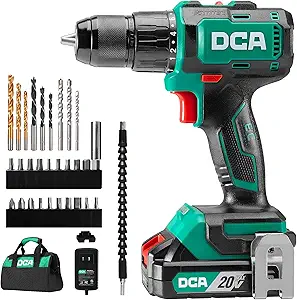
Compact drilling gets a strong boost from this cordless hammer drill. Its brushless motor, 20V battery, and metal chuck make it useful for masonry work. The DCA ADJZ2055i balances power and portability well for home repairs and jobsite touch-ups.
It delivers up to 27,000 BPM for hammer drilling in brick and masonry. Two speed ranges and 18+1+1 torque settings give useful control.
The 1/2-inch all-metal keyless chuck adds stability during repetitive drilling. At 1.3 kilograms, it stays manageable in tight spaces and overhead work. The rubberized grip and LED light help with comfort and visibility.
It also comes with a battery, charger, bits, holders, a flexible shaft, and a bag. That makes setup easier for users who want a ready-to-use kit. It suits buyers who need cordless convenience, smaller size, and practical drilling power.
Pros
- Compact 1.3-kilogram design suits tight spaces.
- Brushless motor supports efficient cordless drilling.
- Includes useful bits, holders, and storage bag.
Cons
- 2.0Ah battery may limit longer sessions.
- Not as heavy-duty as larger corded drills.
- Single included battery may need recharging breaks.
Who Should Buy It?
People who want a compact cordless hammer drill should consider it. It fits light masonry work, home repairs, and mixed drilling tasks. The smaller size helps in tight areas, while the brushless motor and metal chuck add confidence.
It also suits users who prefer a kit with bits, charger, and carrying bag included.
Key Specifications
| Specification | Details |
|---|---|
| Power Source | Battery Powered |
| Maximum Rotational Speed | 1800 rpm |
| Voltage | 20 volts |
| Amperage | 2000 milliamps |
| Maximum Chuck Size | 0.5 inches |
| Maximum Power | 400 watts |
| Torque | 492 in-lb |
| Drill Type | Hammer Drill |
| Number of Speeds | 2 |
| Additional Features | Adjustable Torque, Brushless Motor, Cordless, Lock Speed Button, Rechargeable |
| Drilling Capacity Wood | 19.05 millimeters |
The 20V battery powers a cordless hammer drill with 492 in-lb of torque. Two speed settings reach 0-450 rpm and 0-1800 rpm for different tasks. The 1/2-inch chuck accepts common bits and helps hold them securely. Up to 27,000 BPM supports hammer drilling in masonry and brick surfaces. The 2.0Ah battery size points to a compact power pack. That makes the drill easy to carry, while still giving useful drilling force for home projects.
A brushless motor usually runs more efficiently than brushed designs. That can help with runtime, heat control, and long-term durability. The 1.3-kilogram weight and rubberized grip make it friendlier for longer use. An LED light helps when working in dim corners or cabinets. The included charger, bits, holders, flexible shaft, belt hook, and bag reduce setup time. Users who want portability and starter accessories will benefit most from these specs.
8. ENEACRO SDS-Plus Rotary Hammer Drill

Heavy concrete drilling calls for serious power, and this ENEACRO model brings plenty of it. Its 13-amp motor and 7.4-joule impact energy target tough masonry jobs with confidence.
The ENRH3201 is a corded SDS-Plus rotary hammer built for demanding concrete work. It offers four modes, including drill only, hammer only, hammer drill, and chisel position adjustment.
That flexibility helps it handle wood, steel, brick, and concrete with one tool. The safety clutch protects your wrist during high torque moments, while the adjustable handle improves control. ENEACRO also added a double-layer anti-vibration system and a PU soft grip for better comfort during longer sessions.
The magnesium-aluminum alloy housing adds durability, and the anti-dust bottom structure helps extend motor life. With a maximum drilling diameter of 1.25 inches in concrete, it suits drilling and chiseling tasks around job sites. The 820 rpm speed and 4200 bpm impact rate support steady, forceful operation.
At 12.6 pounds, it feels substantial, which suits controlled heavy-duty work. Contractors and serious DIY users will appreciate the included bits, chisels, auxiliary handle, and case.
Pros
- Strong 13-amp motor for heavy concrete work
- Four modes add useful jobsite flexibility
- Safety clutch and vibration control improve handling
Cons
- Corded design limits mobility
- Heavier than lighter-duty drills
- Top speed is modest for lighter drilling
Who Should Buy It?
Buyers handling regular masonry, brick, or concrete jobs should consider it. It suits contractors, remodelers, and serious DIY users who want a corded rotary hammer with drilling and chiseling options. The included bits, chisels, and auxiliary handle add value for immediate use.
Its weight and power fit users who prefer stability over portability.
Key Specifications
| Specification | Details |
|---|---|
| Power Source | Corded Electric |
| Maximum Rotational Speed | 820 rpm |
| Voltage | 120 volts |
| Amperage | 13 A |
| Maximum Chuck Size | 1.25 inches |
| Maximum Power | 1500 watts |
| Torque | 5.5 ft-lb |
| Drill Type | Hammer Drill |
| Number of Speeds | 4 |
| Additional Features | Adjustable Handle, Keyless Chuck, Magnesium-aluminum Alloy Housing, Safery Clutch, Vibration Control Handle |
| Drilling Capacity Wood | 1.25 inches |
A 13-amp corded motor gives steady power for long concrete sessions. The 120-volt setup suits standard outlets, while 1500 watts supports demanding drilling. The 820 rpm maximum speed is not about rapid spin alone. It pairs with 7.4 joules of impact energy and 4200 bpm impact frequency. That combination helps the tool punch through masonry, brick, and concrete more effectively. A 1.25-inch maximum chuck size also supports larger SDS-Plus bits and chisels.
These specifications point to a tool built for controlled force, not light touch work. The 5.5 ft-lb torque and safety clutch help manage resistance during hard drilling. Four speed and mode options let users match the setting to the material. The adjustable handle and vibration control handle help reduce fatigue during longer jobs. At 12.6 pounds, it offers stability for drilling and chiseling, which benefits users doing concrete repairs, anchor holes, or demolition prep.
9. CRAFTSMAN V20 Cordless Hammer Drill Kit CMCD711C2

A cordless hammer drill kit with two batteries makes jobsite work easier. The CRAFTSMAN V20 CMCD711C2 focuses on practical drilling power and quick turnaround. It is built for concrete and brick drilling, while still handling fastening tasks well.
The 1/2-inch hammer drill uses a high performance motor that produces 280 unit watts out. It also reaches 25,500 beats per minute for faster masonry drilling. A two-speed gearbox offers 0 to 350 and 0 to 1,500 RPM.
That range helps balance control and speed across different tasks. The ratcheting chuck improves bit retention during harder applications.
Two included 20V MAX lithium batteries add useful runtime. The charger can bring the included battery to full charge in 60 minutes or less. At 5.4 pounds, it stays fairly manageable for a hammer drill kit.
It suits homeowners, remodelers, and tradespeople who want extra battery support.
Pros
- Two batteries and charger included
- Fast 60-minute or less charging
- Good hammering speed for masonry
Cons
- Battery capacity is relatively small
- Heavier than compact drill-only models
- No dust control features listed
Who Should Buy It?
Buyers who want a ready-to-use hammer drill kit should consider it. The included batteries and charger make setup simple for everyday drilling jobs. It fits users who work on concrete, brick, and fastening tasks.
Homeowners and light-duty pros will like the two-speed control and manageable weight. It also suits anyone who values spare battery support during longer projects.
Key Specifications
| Specification | Details |
|---|---|
| Power Source | Battery Powered |
| Maximum Rotational Speed | 1500 rpm |
| Voltage | 20 volts |
| Maximum Chuck Size | 1/2 in |
| Maximum Power | 280 unit watts out |
| Drill Type | Hammer Drill |
| Number of Speeds | 2 |
| Additional Features | Ratcheting chuck, two batteries, charger included, Versatrack compatible |
The 20-volt battery system powers the drill without a cord. A maximum speed of 1,500 rpm helps with fastening and lighter drilling. The 1/2-inch chuck accepts common bits, while the ratcheting design helps keep them secure. The hammer drill format adds 25,500 beats per minute for masonry work. Included lithium-ion batteries and charger make the kit ready from the box. That setup suits users who want cordless convenience for concrete and brick tasks.
The two-speed gearbox gives users more control across different materials. Lower speed helps when starting holes or driving fasteners carefully. Higher speed helps when drilling faster through tougher surfaces. The 280 unit watts out rating shows solid output for jobsite work. At 5.4 pounds, it should feel manageable during repeated use. The included charger reaches full charge in 60 minutes or less, which helps reduce waiting between tasks. Buyers who want portable, ready-to-use equipment will benefit most.
10. DCK 20V Brushless Hammer Drill KDJZ05-13

Cordless power and hammer-drill strength meet in a compact, ready-to-work package. The DCK KDJZ05-13 brings brushless efficiency, strong torque, and a 4.0Ah battery for longer sessions.
Built for brick, metal, and wood, it combines a 22+1+1 clutch with two speed ranges. The brushless motor outputs 600 watts and helps reduce wear during repeated drilling jobs.
Its 531 in.lbs of torque and 36,000 IPM impact rate give solid drilling force for masonry work. The 1/2-inch all-metal chuck adds confidence, while the LED light helps in dim work areas.
Included bits, charger, belt hook, and carry bag make setup simple.
Performance feels well balanced for a cordless all-around tool. The lower 0-550 RPM range suits control work, while 0-2200 RPM helps speed through lighter tasks. With hammer, drilling, and screw-driving modes, it handles varied home and jobsite needs without extra gear.
It suits users who want one drill for concrete blocks, wood projects, and metal fastening. The kit offers good versatility for general use, especially when portability matters more than heavy corded output.
Pros
- Brushless motor improves efficiency and reduces wear.
- Strong torque helps with masonry and metal tasks.
- Includes battery, charger, bits, and carrying bag.
Cons
- Single battery may limit longer uninterrupted work.
- Not designed for the heaviest concrete drilling.
- Higher-speed setting may feel less controlled.
Who Should Buy It?
Buyers wanting a cordless all-around hammer drill will appreciate this model. It fits homeowners, DIY users, and light trade work around brick, wood, and metal. The included 4.0Ah battery, brushless motor, and three operating modes make it useful for mixed projects.
It suits people who value portability, simple setup, and a complete accessory kit.
Key Specifications
| Specification | Details |
|---|---|
| Power Source | Battery Powered |
| Maximum Rotational Speed | 2000 rpm |
| Voltage | 20 volts |
| Amperage | 4 A |
| Maximum Chuck Size | 0.5 inches |
| Maximum Power | 600 watts |
| Torque | 531 in-lb |
| Drill Type | Hammer Drill |
| Number of Speeds | 2 |
| Additional Features | 20V Hammer Drill with 22+1+1 Torque Setting, Brushless Hammer Drill with Variable Speed, Built-In LED Working Light, Cordless Drill with Forward and Reverse |
| Drilling Capacity Wood | 1.5 inches |
A 20-volt battery powers the drill, and the 4.0Ah capacity supports longer work sessions. The 1/2-inch chuck accepts standard bits for many common tasks. Two speed settings, up to 2000 rpm, help separate careful driving from faster drilling. The 22+1+1 clutch gives more control for screws, drilling, and hammer work. In everyday use, that means better handling across masonry, wood, and metal jobs around the home.
The 600-watt brushless motor and 531 in-lb torque give the drill steady pushing force. A 36,000 IPM impact rate helps when drilling brick and similar materials. The listed wood drilling capacity reaches 1.5 inches, which suits many common projects. Forward and reverse controls, plus the LED light, make setup easier in tight spaces. These specs favor users who want one cordless tool for mixed tasks and regular repair work.
Best Hammer Drill for Concrete: The Ultimate Buying Guide
Hammer drill type and power source
Corded and cordless hammer drills deliver very different results on concrete jobs, and the motor setup plays a major role in how well each one performs. A corded model usually provides steady power for long drilling sessions, which is useful for tough materials and repeated holes, while a cordless version offers greater mobility but depends on battery strength for sustained output. Motor power and torque matter because concrete demands enough force to keep the bit moving without slowing down under pressure, especially during deeper drilling. For cordless models, battery voltage and runtime are equally important since higher voltage often supports stronger performance, and longer runtime reduces interruptions on larger projects.
For cordless models, battery voltage and runtime are equally important since higher voltage often supports stronger performance, and longer runtime reduces interruptions on larger projects. A drill that balances power delivery, torque, and battery life can save time, reduce strain, and handle demanding concrete work more reliably.
Concrete drilling performance
High impact energy and a strong blows-per-minute rating are vital because they determine how efficiently the tool breaks through dense concrete, while adjustable drill speed and precise control help keep the bit steady during start-up and reduce the risk of wandering. A model with the right hole-size capacity for your projects matters just as much, since undersized limits can slow work or force you to switch tools for anchors, conduit, or larger fasteners.
- Impact energy and blows per minute: Higher figures usually mean faster penetration and less strain on the motor during tough drilling jobs.
- Drill speed and control: Variable speed settings improve accuracy, especially at the beginning of a hole or in brittle material.
- Hole size capacity in concrete: Confirm the maximum diameter so the tool matches your typical anchors and fixture installations.
Chuck, bits, and compatibility
A hammer drill’s chuck type and size directly affect which bits it can hold, how securely they stay in place, and how efficiently the tool transfers force into concrete. SDS, SDS Plus, and standard chucks each serve different needs: SDS systems deliver better grip and impact performance for heavy masonry work, while a standard chuck offers more versatility for general drilling and may require an adapter for some specialty bits.
Compatible masonry bit options matter just as much, since the right setup determines whether you can use common carbide-tipped bits, specialty SDS bits, or other attachments without wasting time on mismatched accessories. A drill with the proper chuck style and a wide range of bit compatibility gives you more flexibility for future projects and helps avoid frustration from limited tool support.
Comfort, handling, and safety
Weight and balance directly affect how accurately a hammer drill works on hard concrete, because a tool that feels too front-heavy or awkward can tire your arms quickly and make steady drilling harder. A well-balanced design supports cleaner control, especially during overhead or repeated tasks, while a lighter body can reduce strain during longer sessions.
Vibration control matters just as much, since strong impact action can transfer shock into your hands and wrists. Good anti-vibration design helps reduce fatigue, improves precision, and makes extended use more comfortable, which is especially important on dense masonry where the tool has to work harder.
The auxiliary handle and safety features also deserve attention because they improve grip stability and overall confidence. A sturdy side handle gives you better leverage and control, while features such as a depth stop, clutch protection, and secure grip surfaces help support safer operation and more consistent drilling results.
- Weight and balance: Helps reduce fatigue and improves control.
- Vibration control: Limits strain on hands and wrists during long use.
- Auxiliary handle and safety features: Strengthens stability and supports safer handling.
Durability and build quality
A drill’s gear housing and casing materials directly affect how well it withstands heavy masonry work, because reinforced metal housings and impact-resistant shells help protect internal parts from stress, vibration, and repeated use. Dust protection and heat management are just as important, since fine concrete dust can wear down components quickly while poor cooling can lead to overheating, reduced performance, and a shorter tool life.
A strong warranty and a trusted brand also add real value, as they often reflect better manufacturing standards, easier access to service, and greater confidence that the tool will hold up over time.
- Gear housing and casing materials: Look for sturdy construction that can handle vibration and rough jobsite conditions.
- Dust protection and heat management: Effective sealing and cooling systems help maintain performance and extend lifespan.
- Warranty and brand reliability: A solid warranty and established brand support reduce long-term risk and repair concerns.
Extra features and value
Variable speed and mode control can make a major difference in concrete work because it lets you match drilling power to the material, reduce bit wear, and improve accuracy on delicate starts or tougher sections. A depth stop helps keep holes uniform, which is especially useful for anchors and repeated fastening jobs, while a hammer-only function adds versatility for light chiseling or breaking away small areas without needing a separate tool. These features also affect long-term value: a model with useful accessories, such as auxiliary handles, depth gauges, and a solid set of bits, can save extra expense later and make the tool more ready for immediate use.
These features also affect long-term value: a model with useful accessories, such as auxiliary handles, depth gauges, and a solid set of bits, can save extra expense later and make the tool more ready for immediate use. In this way, the right balance of price, included extras, and practical functions often matters more than the sticker price alone.
| Feature | Why It Matters |
|---|---|
| Variable speed and modes | Improves control, reduces mistakes, and adapts to different drilling tasks. |
| Depth stop and hammer-only function | Helps achieve consistent hole depth and adds flexibility for light demolition work. |
| Price, accessories, and overall value | Determines whether the tool offers enough included features to justify the cost. |
Set Up for Better Drilling
A hammer drill can make holes in concrete much faster than a standard drill, but setup matters. A few simple steps can help you get cleaner holes and reduce wear on the tool and bit.
Start with the right bit. Use a masonry bit made for concrete. Check that the shank matches your chuck type. If the bit is dull, bent, or cracked, replace it before you begin.
Mark the hole first, then keep the drill steady. Start at a low speed so the bit does not wander. Once it is seated, increase speed as needed. Let the hammer action do the work. Pushing too hard can slow the drilling and overheat the bit.
For best results, hold the drill straight to the surface. A crooked angle can enlarge the hole and make it harder to place anchors. If the concrete is very hard, drill a short way, pull the bit out, and clear dust from the hole. This helps the bit cut better.
Depth stops, side handles, and vacuum dust attachments can also help. A depth stop keeps holes even. A side handle gives more control. Dust collection can improve visibility and reduce cleanup.
- Wear safety glasses and hearing protection.
- Use both hands when the drill has a side handle.
- Stop and let the tool cool if it feels hot.
- Match the bit size to the anchor or fastener.
Use hammer mode only for masonry, brick, or concrete. Switch it off for wood or metal. With the right setup and a steady hand, a hammer drill can handle concrete jobs with less fuss.
FAQ’s
What Features Should I Look For In The Best Hammer Drill For Concrete?
Look for a hammer drill with a high-impact rate, strong torque, and a reliable hammer action designed for masonry or concrete. Also check for variable speed, an SDS or keyless chuck for easier bit changes, and good vibration control for comfort and safety.
How Does A Hammer Drill For Concrete Differ From A Regular Drill?
A hammer drill for concrete adds a rapid hammering action as it spins, which helps break up hard materials like brick and concrete. A regular drill only rotates, so it works well for wood, metal, and softer materials but struggles in masonry.
Which Hammer Drill Is Best For Drilling Into Reinforced Concrete?
For drilling into reinforced concrete, the best choice is usually a heavy-duty rotary hammer drill with SDS-Plus or SDS-Max, depending on the hole size. Brands like Bosch, Makita, Hilti, and DeWalt make strong options with enough impact energy for tough concrete and rebar.
What Size And Power Of Hammer Drill Is Ideal For Home Concrete Projects?
For most home concrete projects, a 1/2-inch hammer drill with about 7 to 10 amps of power is ideal. It’s strong enough for drilling into concrete while still being manageable for typical DIY use.
Are Cordless Hammer Drills Powerful Enough For Concrete Drilling?
Yes, many cordless hammer drills are powerful enough for light to medium concrete drilling, especially for small holes and occasional use. For larger holes or heavy-duty concrete work, a corded hammer drill or rotary hammer is usually better.
Final Verdict
For heavy-duty concrete work, the Berserker 26FA SDS-Plus Rotary Hammer Drill is the best overall pick thanks to its focus on tough drilling jobs. Buyers who want the best hammer drill for concrete with strong corded power at a lower price point should look at the SDS-Plus Rotary Hammer Drill in our Best Value slot. For users who want a more premium experience, the ENEACRO SDS-Plus Rotary Hammer Drill is the strongest fit for pro-level concrete drilling.
If cordless flexibility matters most, the DEWALT 20V MAX XR Hammer Drill DCD806B is the best choice for cordless premium control. Each model fits a different buyer, so the best pick depends on whether you care most about raw power, price, premium performance, or portability.
Choose the Berserker for heavy concrete work, the SDS-Plus Value pick for strong corded performance, the ENEACRO for premium pro use, or the DEWALT if cordless control matters most.