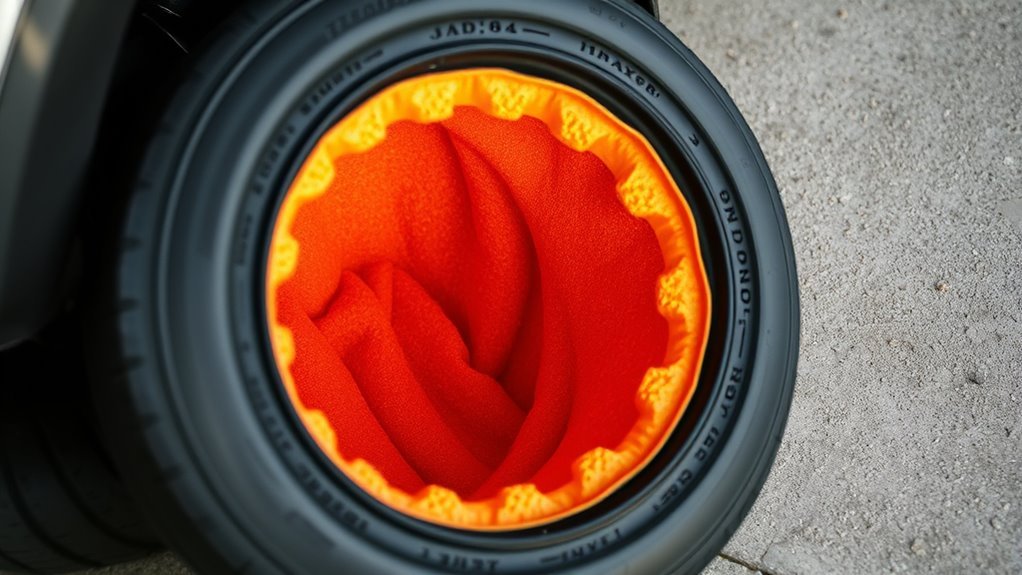
What Is Tire Foam and How Does It Work?
Tire foam is a revolutionary solution for anyone looking to enhance tire durability and eliminate the hassle of flats. This two-part polyurethane elastomer is injected into your tire, creating a flat-proof core that mimics a properly inflated tire.
It works by quickly expanding and gelling, usually within minutes. This innovative approach not only provides better puncture resistance but also reduces maintenance and downtime since you won’t have to worry about air pressure or flat tires.
Foam-filled tires are especially beneficial for off-road equipment, allowing them to withstand tough terrains and conditions.
Plus, they significantly extend tire life.
To understand how tire foam works and the numerous benefits it offers, keep exploring the details ahead!
Key Takeaways
- Tire foam is a two-part polyurethane elastomer mixed and injected into tires to create a flat-proof core.
- It expands and gels quickly to fill the tire, curing fully in 24 to 48 hours for durability.
- The foam-filled tire maintains the original footprint and simulates proper inflation for smooth ride quality.
- Plus, foam filling prevents punctures, reduces maintenance, and eliminates the need for air pressure checks.
- Ideal for slow-moving equipment, foam-filled tires lower downtime and extend tire lifespan compared to traditional tires.
Understanding Tire Foam Composition
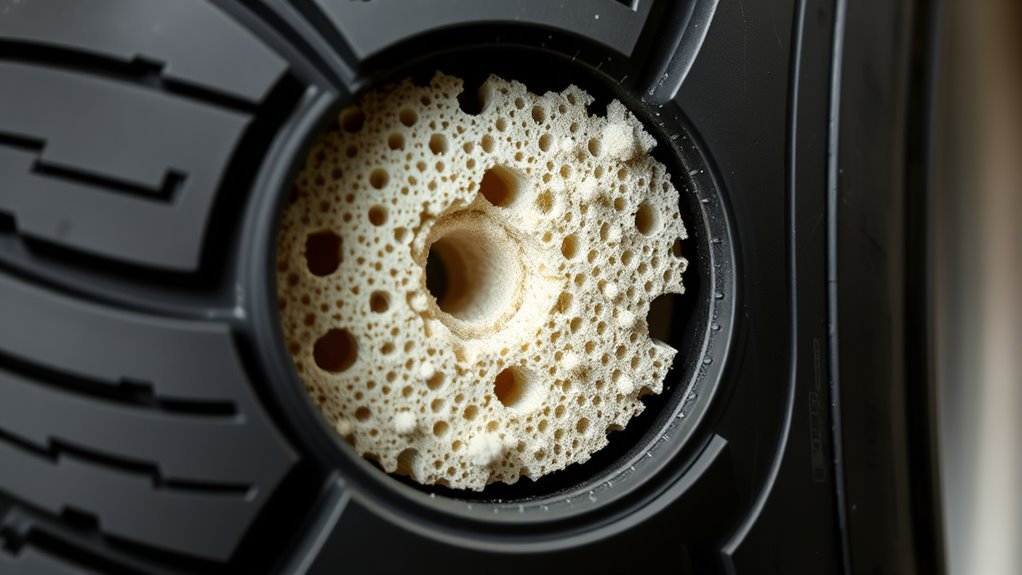
Although tire foam comes in several formulations, it primarily consists of a two-part polyurethane elastomer that you mix and inject into a tire to replace air and create a flat-proof core.
Tire foam is a two-part polyurethane elastomer mixed and injected to create a flat-proof tire core.
When you use Foam Fill, the material expands and gels quickly, usually within minutes, then fully cures in 24 to 48 hours.
This process guarantees your foam-filled tires maintain their structural integrity and firmness, mimicking a properly inflated pneumatic tire.
You can choose from different formulations—re-grind recycled, full virgin, or ultra premium—each tailored to specific performance needs.
Foam-filled tires keep the original footprint of pneumatic tires and let you adjust fill pressure, offering versatility for various equipment.
This eliminates flat tire risks and provides a reliable, firmer ride.
The Tire Foam Application Process
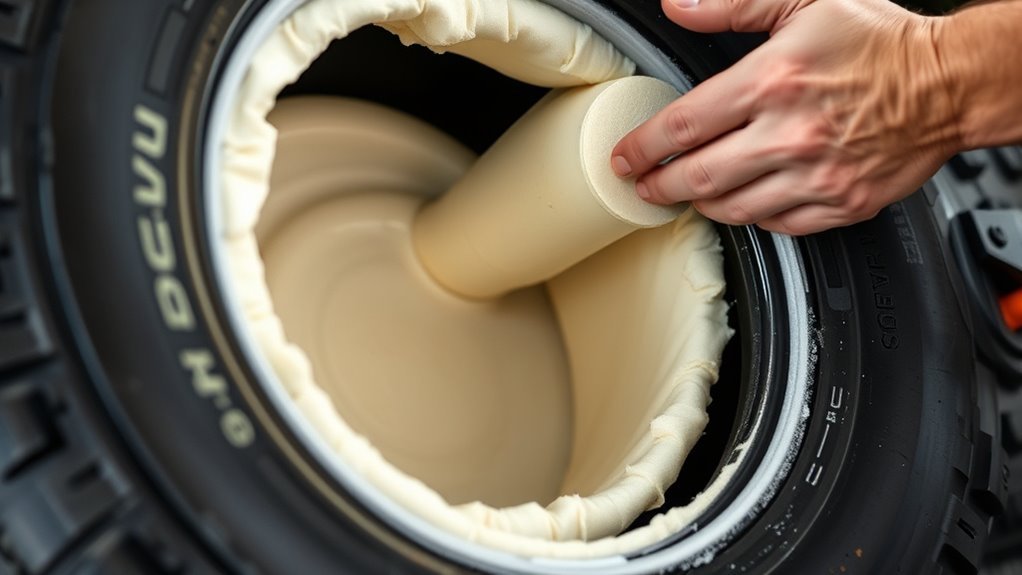
Before applying tire foam, you’ll need to inspect the tire carefully for any damage or weaknesses.
Once you’ve done that, a two-part polyurethane compound gets injected through the valve or sidewall.
This process quickly begins to gel, which is pretty cool!
After injection, the foam cures within 24 to 48 hours.
This creates a solid, flat-proof core that’s ready for use.
Tire Inspection Steps
You start the tire foam application process by thoroughly inspecting each tire casing for cuts, separations, or any damage that could compromise its integrity.
This tire inspection is vital to guarantee the casing can support foam filling without risking failure.
After confirming the tire’s condition, you mount it and verify proper fitment.
Checking the air pressure is also essential, as the foam will displace any remaining air inside.
This step helps prevent issues like a flat tire after foam application.
Only once the tire passes inspection and fitment do you proceed with the foam fill.
Proper tire inspection and preparation confirm that the final foam-filled tire performs like a well-inflated tire, eliminating flat tire risks while maintaining safety and reliability.
Foam Injection Method
The foam injection method uses a two-part polyurethane compound injected through the valve stem or sidewall port to replace air inside the tire. This creates a flat-proof solution.
Before injection, you’ll inspect the tire casing for cuts or separations to verify it’s suitable.
Once injected, the foam quickly gels, mimicking a properly inflated tire by providing firmness and eliminating puncture risks.
This process is especially valuable for OTR equipment like skid steers and loaders that face harsh, puncture-heavy environments.
By preventing flats, you boost productivity and reduce downtime.
Remember, the foam filling maintains the tire’s structural integrity without sacrificing ride comfort.
Rights reserved, this method is a reliable way to enhance tire durability and performance in demanding work conditions.
Curing and Drying
Although the foam gels quickly after injection, it needs 24 to 48 hours to fully cure and dry inside the tire.
Once you inject the two-part polyurethane compound through the valve stem or sidewall port, it displaces the air and begins to solidify within minutes.
However, the curing process guarantees the foam reaches full strength and firmness, maintaining a structure similar to a properly inflated tire.
Before filling, inspections check for cuts or damage that could affect performance.
After curing, your tire becomes flat-proof, which is ideal for puncture-prone environments.
When fully dried, the foam-filled tire provides a firmer ride and reliable support, so you can confidently return it to service, knowing it won’t suffer flats or sudden deflation.
Benefits of Using Tire Foam in Repairs
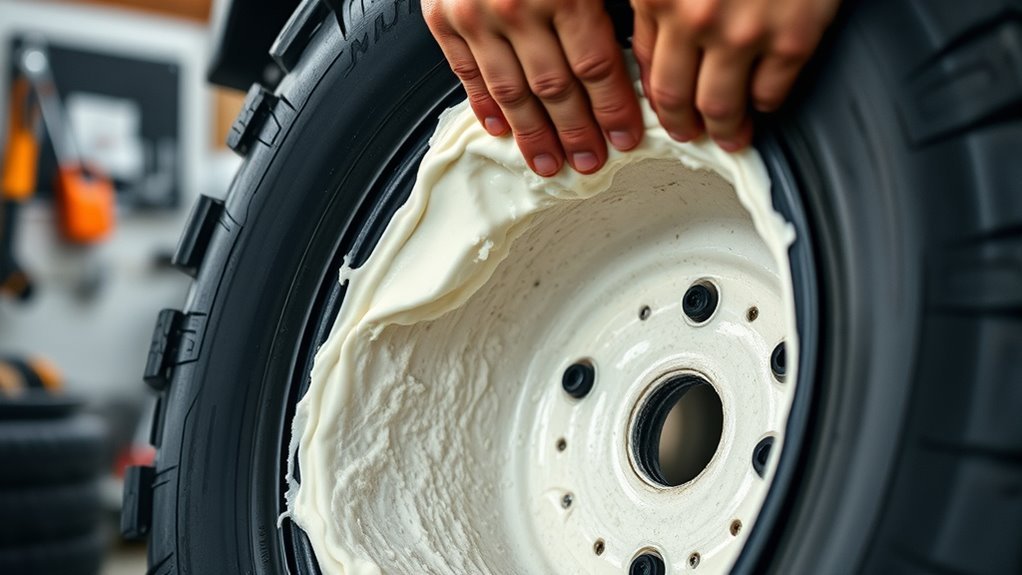
When you use tire foam in repairs, you boost your tire’s resistance to punctures.
This keeps you safer on the road.
It also cuts down on maintenance costs by extending your tire’s lifespan.
You’ll spend less time and money fixing flats while enjoying a smoother ride.
Enhanced Puncture Resistance
Since you rely on your tires to keep equipment running smoothly, using tire foam can dramatically boost their puncture resistance.
When polyurethane elastomer foam is injected, it replaces the air inside your tire, forming a flat-proof core that resists sharp debris common in tough environments.
This flexible structure cures inside the tire, preventing air loss and virtually eliminating flats.
With foam-filled tires, you maintain the original tire footprint and adjustable fill pressure, so your performance and ride quality stay intact.
This means you won’t have to stop frequently for tire repairs or replacements, keeping your equipment running longer without interruptions.
Cost-Effective Maintenance
Tire foam offers a cost-effective maintenance solution by eliminating flats, saving you valuable downtime and labor expenses.
By filling your tires with polyurethane foam, you reduce the need for frequent replacements, which lowers your total cost of ownership despite the higher initial investment.
Foam-filled tires also boost your equipment’s stability and performance, especially in environments prone to punctures. This helps you avoid disruptions and keep productivity high.
The foam filling process includes thorough inspections and a curing period of 24 to 48 hours, ensuring your tires are ready for flat-proof operation with minimal workflow impact.
Investing in foam-filled tires shifts your expenses from ongoing maintenance to a long-term, profit-protecting solution that enhances operational efficiency.
Comparing Tire Foam to Traditional Repair Methods
Although traditional repair methods like patching or replacing tires have been standard practice, they often lead to downtime and recurring issues.
When you rely on patches or replacements, flat tires interrupt your operations, causing costly delays.
Tire foam changes this by injecting polyurethane foam inside the tire, creating a flat-proof core that eliminates punctures altogether.
Unlike patching, foam fills the entire tire structure, offering a permanent fix and consistent performance.
The curing process takes just a few hours, much faster than traditional repairs that require adhesive drying time.
Plus, foam-filled tires keep the original footprint and adjust pressure for a smoother ride, avoiding the harshness of solid tires.
With tire foam, you get continuous operation and improved reliability without repeated repairs.
Suitable Equipment and Tire Types for Foam Filling
When you operate slow-moving, off-highway equipment like skid steers, loaders, telehandlers, or agricultural tractors in puncture-prone environments, foam filling offers a reliable solution.
This method works well with various tire types, especially pneumatic tires, which can be injected with polyurethane to prevent flats while maintaining their original footprint.
Before filling, McCarthy technicians inspect tire casings for cuts and overall integrity to guarantee suitability.
You can choose from different foam fills: re-grind recycled fill for economical low-speed use, full virgin fill for most off-road and construction tires, and ultra premium fill for severe-duty applications needing maximum heat resistance and ride quality.
Foam-filled tires mimic properly inflated tires by providing a firmer ride, eliminating flats, and reducing downtime in tough conditions.
Maintenance and Longevity of Foam-Filled Tires
Once you’ve chosen the right foam fill and confirmed your tires are in good condition, maintaining foam-filled tires becomes straightforward.
You won’t need to check air pressure or fix flats, which cuts down on downtime and lowers operational costs.
Thanks to the polyurethane elastomer foam, your tires stay durable and resistant to punctures, lasting longer than traditional air-filled ones.
Still, it’s smart to inspect the casing regularly to spot any issues early and keep performance at its best.
You can also adjust the foam fill to tailor the tire’s footprint for different conditions.
While foam-filled tires might cost more upfront, you’ll save money over time with fewer replacements and less maintenance, making them a solid investment for long-term use.
Frequently Asked Questions
Is Tire Foam Good for Your Tires?
Yes, tire foam is good for your tires because it prevents flats, reduces maintenance, and extends tire life.
You’ll enjoy smoother rides and less downtime.
This ultimately saves you money despite the higher initial cost.
How Much Does It Cost to Have a Tire Filled With Foam?
Getting your tire filled with foam usually costs between $25 and $75.
Though it might pinch your pocket upfront, it saves you from flat tire headaches and downtime.
This makes it a smart long-term investment.
How Long Does Tire Foam Last?
Tire foam typically lasts as long as your tire does, often 2-3 years or more with proper use.
It cures in 24-48 hours and requires minimal maintenance.
This keeps your tires flat-proof and reliable throughout their lifespan.
What Are the Disadvantages of Foam-Filled Tires?
You’ll face higher upfront costs,
a firmer ride that may tire you out,
limited tread options, and downtime for curing.
Plus, not every tire casing suits foam filling,
so you’ll need careful inspections beforehand.
Conclusion
Just like a trusted shield in battle, tire foam stands guard inside your tires, offering protection and resilience where you need it most.
By choosing foam filling, you’re not just repairing—you’re upgrading your ride’s strength and reliability.
Whether you’re cruising city streets or tackling rugged trails, this modern solution keeps you moving confidently.
Embrace tire foam, and experience the peace of mind that comes from a tire tough enough to face any journey with you.
In conclusion, tire foam is an innovative way to enhance your driving experience. It not only repairs but fortifies your tires against various terrains and conditions.
With tire foam, you can enjoy a smoother ride and greater durability. So, why not upgrade to tire foam today and feel the difference on every adventure?