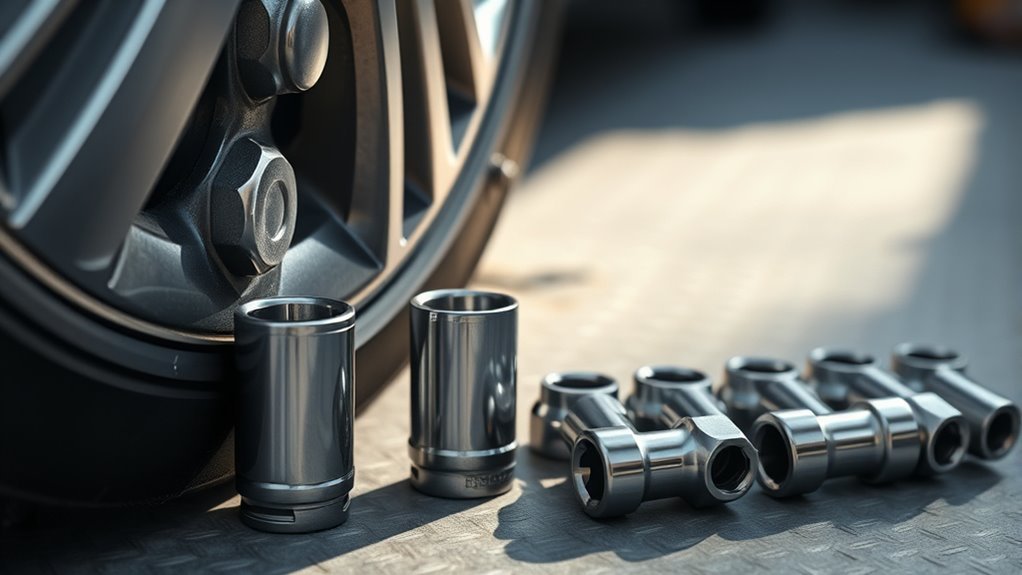
What Size Socket for Wheel Nuts
You’ll want a 13/16-inch 6-point deep CR-MO socket for most wheel nuts to guarantee a secure fit and prevent rounding or damage.
Deep sockets clear protruding studs for full engagement, while 6-point designs grip flat surfaces firmly for high torque without slipping.
Using a 1/2-inch or 3/4-inch drive impact tool helps you apply proper torque safely.
Keep the nuts tight and your wheels secure—there’s more to know about getting it just right for your vehicle.
Key Takeaways
- Most wheel nuts require a 13/16-inch 6-point socket for optimal grip and torque application.
- Deep sockets are essential to fit over protruding studs and prevent damage during high torque use.
- CR-MO impact sockets are preferred for durability and safe high torque handling over chrome sockets.
- For BMW wheels, use a 17mm 6-point socket with 1/2-inch drive and 85mm length for proper fit.
- Always follow vehicle manufacturer specifications for exact torque and socket size requirements.
Why Deep Sockets Are Essential for Wheel Nuts

When you’re working with wheel nuts, deep sockets are essential because they fit over the protruding studs on hub-piloted wheels. This design allows for full flat engagement with the nut.
Standard-depth sockets often bottom out on the stud before fully engaging, which can damage both the nut and socket during high torque. Deep sockets enable you to apply installation torques exceeding 450 ft-lbs effectively without slipping.
Standard sockets can slip and cause damage; deep sockets handle over 450 ft-lbs torque safely without slipping.
This full engagement also prevents camming off during hammering. It reduces the risk of rounding the nut corners, making loosening easier later on.
For example, a deep socket like the 90mm-long SK083-33M is designed specifically to meet wheel nut requirements.
Using deep sockets guarantees that you work safely and efficiently, protecting your tools and wheel nuts from unnecessary wear or damage.
Advantages of 6-Point Sockets Over 12-Point Designs
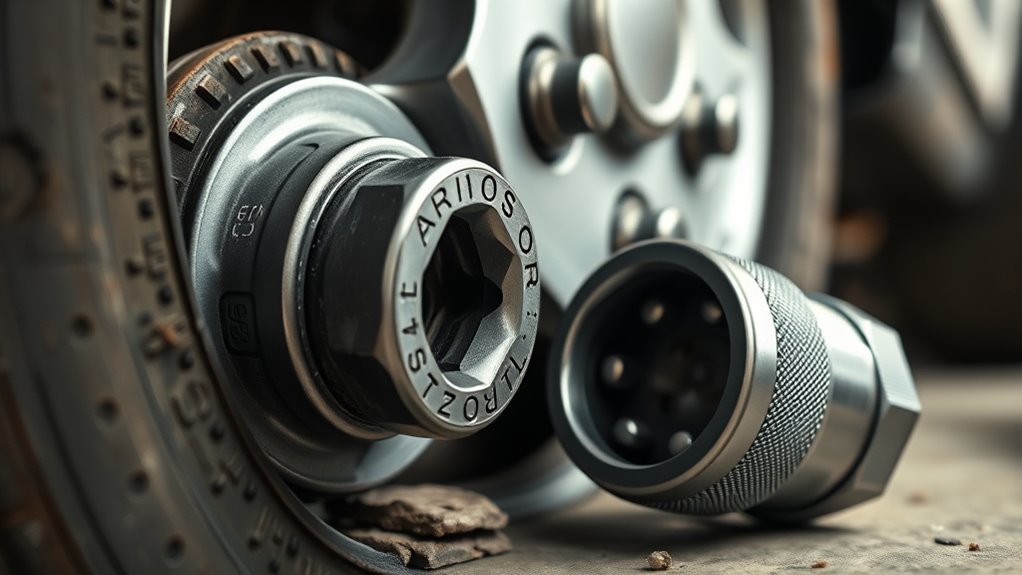
Although 12-point sockets are common, you’ll find 6-point sockets offer a stronger grip on wheel nuts by engaging the flat sides instead of the corners.
This design reduces the risk of rounding fasteners, which is especially helpful when dealing with corroded or worn nuts.
When you use a 6-point socket, you can apply higher torque without slipping. That makes it ideal for loosening or tightening stubborn wheel nuts.
The broader contact area distributes force evenly, protecting both the nut and socket during high-stress tasks.
Many automotive experts recommend a 6-point socket for wheel nuts because it performs better under tough conditions like road salt exposure and heavy torque demands.
Choosing a 6-point socket guarantees you work more efficiently and avoid damaging your wheel nuts.
Choosing CR-MO Impact Sockets Instead of Chrome Hand Sockets
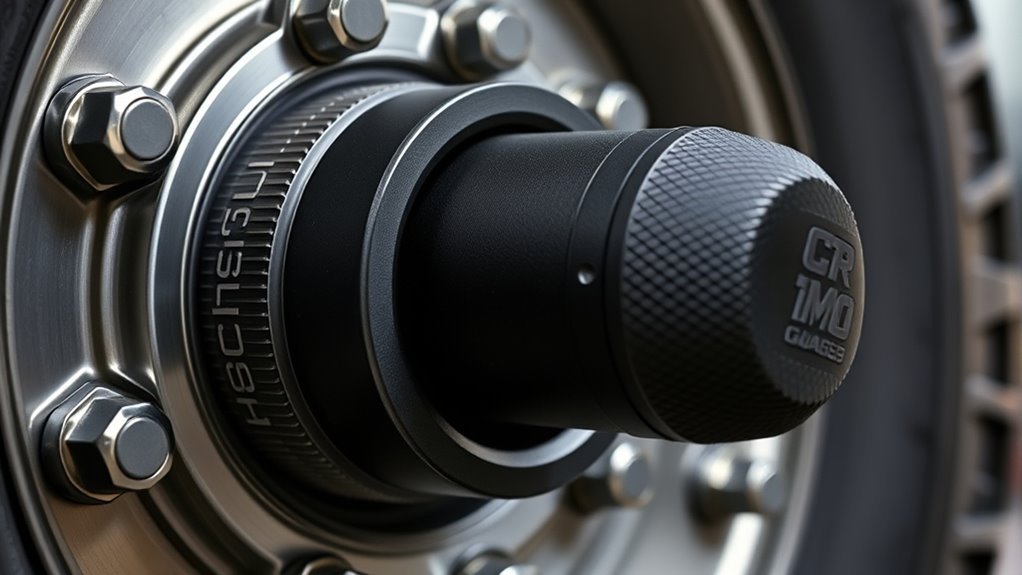
When you’re using an impact wrench on wheel nuts, you need sockets made from CR-MO steel.
They handle high torque and absorb shock without cracking.
Chrome hand sockets are too brittle and can break dangerously under stress.
Choosing CR-MO impact sockets keeps you safer and guarantees your tools last longer.
Impact Socket Material
Since high-torque tasks like loosening wheel lug nuts generate extreme forces, you need impact sockets made from chrome-molybdenum (CR-MO) instead of standard chrome vanadium hand sockets.
CR-MO impact sockets flex under stress, preventing cracking or shattering during impact wrench use. This flexibility keeps you safe from dangerous shrapnel that brittle chrome sockets can produce at torque levels beyond 2,000 ft-lbs.
Impact sockets are specifically designed to absorb shock and endure the high torque generated by impact tools, unlike chrome hand sockets that can fail suddenly.
Using the right impact socket material guarantees durability and reliable performance when tightening or loosening wheel nuts.
Always choose CR-MO impact sockets to handle the extreme forces safely and effectively without risking tool failure or injury.
Safety Benefits
Three key safety benefits make choosing CR-MO impact sockets over chrome hand sockets essential for wheel nut tasks.
First, CR-MO sockets flex under high torque instead of cracking like brittle chrome sockets. This flexibility prevents dangerous shrapnel from flying around.
Second, these impact sockets are engineered to handle torque exceeding 2,000 ft-lbs safely, which is common when loosening tight wheel nuts.
Third, CR-MO sockets reduce the risk of catastrophic failure during repeated use. This ensures long-term reliability and protects you from injuries.
Using impact-rated sockets minimizes equipment damage and keeps your work environment safer.
When working on wheel nuts, relying on CR-MO impact sockets isn’t just smarter—it’s a critical safety choice.
It prevents accidents and improves your overall efficiency. Don’t compromise safety by using chrome hand sockets.
Selecting Between 1/2-Inch and 3/4-Inch Drive Tools
Although both 1/2-inch and 3/4-inch drive tools can handle wheel nuts, you’ll want to choose based on your vehicle’s torque needs and the typical wheel nut specifications.
Most lug nuts require torque between 450-500 ft-lbs, making a 1/2-inch drive tool like the AW-280GL more than capable.
It delivers up to 2,200 ft-lbs for easy loosening and tightening.
However, if you’re working on heavy-duty wheel-end applications, a 3/4-inch drive tool such as the AW-222P provides higher torque capacity at 2,400 ft-lbs.
Avoid using 3/4-to-1 adapters, since they can cause energy loss and increase failure risk.
Always match your tool size to the lug nuts’ torque requirements to guarantee efficient and safe wheel maintenance.
Proper Torque Application for Wheel Nut Installation
You’ll want to apply the correct torque, usually between 450 and 500 ft-lbs, to keep your wheel nuts secure.
Tighten them in a star pattern to evenly distribute pressure and avoid warping the wheel.
Don’t forget to re-torque after the first 50–100 miles to make sure nothing has loosened up.
Correct Torque Values
When installing wheel nuts, applying the correct torque is essential to keep your wheels secure and prevent damage.
Typically, torque values range from 450 to 500 ft-lbs, but you should always check your vehicle manufacturer’s specifications for the exact number.
Using the right size socket, preferably a 6-point socket, guarantees full engagement with the nut, reducing the risk of rounding corners during tightening.
After your initial installation, re-torque the nuts after 50 to 100 miles to confirm they remain secure.
Remember, proper torque prevents wheel warping and loosening over time.
Star Pattern Tightening
A star pattern is crucial for tightening wheel nuts because it distributes torque evenly across all nuts, preventing wheel warping and guaranteeing proper alignment.
When you install your wheel, start by snugging each nut lightly in this pattern to seat them properly.
Avoid using an impact wrench for final tightening; instead, rely on a torque wrench to apply the correct torque—usually between 450 and 500 ft-lbs.
This method guarantees each nut is tightened evenly, reducing stress and enhancing safety.
Using an impact wrench only for initial loosening or snugging helps prevent over-tightening.
Following the star pattern not only secures the wheel properly but also prolongs the lifespan of your wheel and nuts by minimizing uneven pressure points.
Re-Torque Importance
Although tightening your wheel nuts to the correct torque is crucial, re-torquing them after the first 50 to 100 miles of driving is just as critical to guarantee safety.
This step helps account for any settling or stretching of the fasteners under driving stress.
For heavy-duty vehicles, wheel lug nuts often require torque between 450 and 500 ft-lbs, so precise re-torque is essential.
You should always follow a star pattern when tightening to distribute pressure evenly and prevent damage.
Don’t overlook re-torqueing after initial installation; neglecting it can cause dangerous wheel detachment.
If your wheel nuts have a lock removal system, make sure it’s properly disengaged before re-torquing.
Taking these steps keeps your wheels secure and protects you from costly, hazardous failures on the road.
Recommended Socket Sizes and Specialized Tools for Various Vehicles
Since wheel nuts vary widely across different vehicles, you’ll need the right socket size and type to guarantee a secure fit and prevent damage.
Most wheel lug nuts use a 13/16-inch 6-point wheel lug nut socket for ideal grip and torque.
A 13/16-inch 6-point socket ensures optimal grip and torque for most wheel lug nuts.
For BMWs, a 17mm 6-point socket with a 1/2 drive and 85mm length fits perfectly.
Porsche owners should invest in specialized center lock wheel sockets, which can be pricey but necessary for proper wheel removal.
Mercedes models require specific lug bolt sockets like the Hazet, compatible with S600 and GLK350.
Remember, using a deep socket is vital on hub-piloted wheels where studs protrude.
Standard sockets may not fully engage, risking damage to both the nut and your tools.
Frequently Asked Questions
What Size Lug Nuts Are Used on a Kenworth Truck?
Kenworth trucks use 33mm lug nuts on their wheels.
You’ll want a 6-point deep socket, preferably chrome-moly, to properly fit and tighten them without damage.
This ensures safe and secure wheel attachment every time.
Are 13 16 and 21MM the Same?
No, 13/16 inch and 21 mm sockets aren’t the same.
You’ll find 13/16 inch is slightly smaller than 21 mm.
Is There a Trick to Getting Lug Nuts Off?
Yes, you can loosen lug nuts by applying penetrating oil.
Let it sit for a bit, then use a deep 6-point socket with an impact wrench or breaker bar.
Always remember to loosen nuts in a star pattern to avoid any wheel damage.
What Size Socket Do I Need for a 1/2 Inch Nut?
Like a glove fits your hand, you’ll need a 13/16 inch socket for a 1/2 inch nut.
Choose a 6-point, impact-rated CR-MO socket to grip firmly and avoid rounding the nut’s edges.
Conclusion
Choosing the right socket for your wheel nuts is like picking the perfect key for a lock—it guarantees a secure fit and smooth operation.
By opting for deep, 6-point CR-MO impact sockets and matching them with the correct drive tools, you’ll make your wheel maintenance easier and safer.
Always apply proper torque to avoid damage and keep your wheels secure.
With the right tools, you’ll handle wheel nuts confidently every time.
In conclusion, selecting the appropriate socket size for your wheel nuts is essential for efficient maintenance and safety.
Using deep, 6-point CR-MO impact sockets ensures a snug fit, while proper torque application keeps everything secure.
By investing in the right tools, you simplify the process of changing or maintaining your wheels, allowing you to tackle any job with confidence and ease.