How Far Away Should You Be From the Steering Wheel
You should sit about 10 to 12 inches away from the steering wheel to maintain a safe distance between your chest and the airbag. This spacing significantly reduces the risk of injury during airbag deployment.
Additionally, being at this distance allows you to comfortably reach the pedals and steering wheel with slightly bent elbows. This ensures better control and posture while driving.
Make sure to adjust your seat for full back support and ideal visibility. Maintaining this position not only enhances your safety but also improves your overall comfort on the road.
Keep going to uncover tips for different driver needs and what to do after a crash.
Key Takeaways
- Maintain a distance of 10 to 12 inches from your chest to the steering wheel for optimal safety.
- Sitting too close increases the risk of injury from airbag deployment during a crash.
- Ensure your elbows are slightly bent when your wrists rest on the steering wheel for proper control.
- Adjust your seat height and position to allow comfortable reach to pedals with slightly bent knees.
- Regularly reassess and fine-tune your seating position to balance comfort, control, and safety.
The Importance of Maintaining Proper Distance

Although many drivers overlook it, maintaining the proper distance from the steering wheel is essential for your safety.
You should keep about 10 to 12 inches between your chest and the steering wheel to guarantee safe airbag deployment.
Sitting too close increases your risk of serious injury when the airbag inflates, potentially harming your face, arms, and torso.
At the same time, sitting too far can affect your control, making pedal operation and responsiveness harder.
Sitting too far from the wheel can reduce your control and delay pedal responsiveness.
Adjusting your seating position not only protects you but also promotes comfortable driving.
It supports an ergonomic posture that reduces fatigue.
Make it a habit to regularly check and fine-tune your distance from the steering wheel to adapt to any changes in your vehicle or comfort needs.
Understanding Safety Risks of Incorrect Seating

When you sit too close to the steering wheel, you greatly increase your risk of injury from airbag deployment.
The airbag can strike with great force, causing harm to your face, arms, and torso.
Maintaining the proper distance—at least 10 inches from the steering wheel’s center to your chest—is essential for airbag safety.
Sitting too close not only raises your injury risk but also forces a cramped posture, which restricts your movement and comfort.
Incorrect seating distance can reduce your control over the vehicle, slowing your response in emergencies.
By keeping an ideal distance, you protect yourself during crashes and promote better posture.
This also helps reduce fatigue on long drives.
Prioritizing steering wheel distance directly improves both your safety and driving comfort.
Step-by-Step Guide to Adjusting Your Driving Position
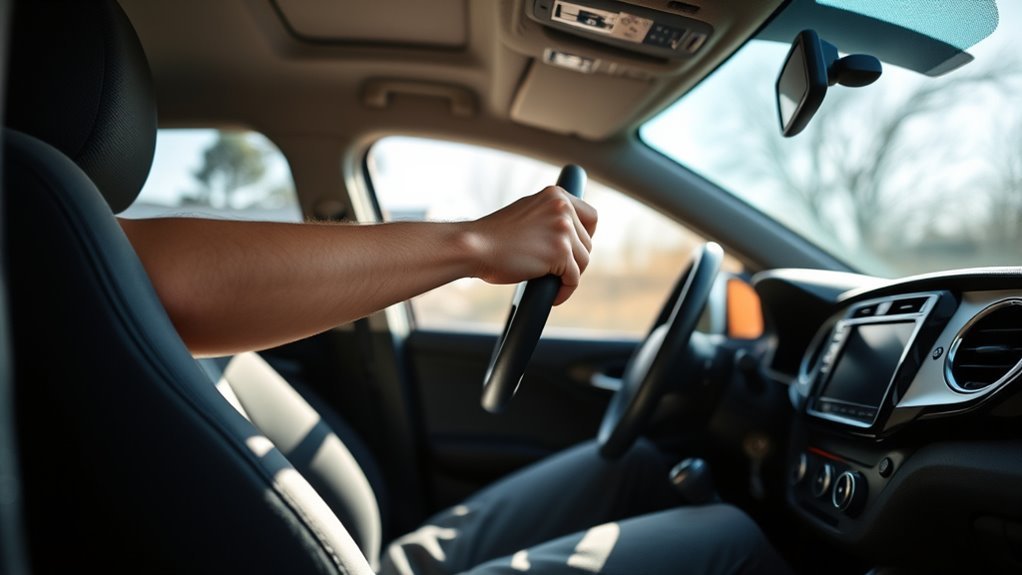
Start by adjusting your seat so your back is fully supported and your chest stays at least 10 inches from the steering wheel.
Make sure your elbows are slightly bent when your wrists rest on the wheel’s 12 o’clock position to confirm the right distance.
Finally, angle the steering wheel toward your chest, not your face, for safer control.
Seat Distance Adjustment
Adjusting your seat properly involves a few key steps to confirm comfort and safety.
When you sit, make sure your back is fully supported against the seat back. Adjust your seat so you can comfortably reach the pedals with a slight bend in your knees.
Position yourself so your wrist rests over the top of the steering wheel at the 12 o’clock position, keeping your elbows slightly bent.
- Sit with your back against the seat back and knees slightly bent.
- Adjust your seat forward or backward to rest your wrist over the steering wheel’s top.
- Verify there’s at least 10 inches from your breastbone to the steering wheel center for airbag safety.
Regularly reassess your position to maintain ideal control and comfort.
Steering Wheel Positioning
Although it might seem simple, positioning your steering wheel correctly plays an essential role in driving comfort and safety.
Start by sitting in your seat with your breastbone at least 10 inches from the steering wheel’s center to allow safe airbag deployment.
Adjust the seat so your elbows bend slightly when your wrists rest over the steering wheel at the 12 o’clock position—this gives you better steering control.
Make sure your back is fully supported by the seat, and you can press the pedals without stretching your legs too much.
Position the steering wheel close enough to your chest to see the dashboard clearly, but not so close that you have to lean forward or strain.
Regularly check your position after any adjustments to maintain comfort and safety.
Special Considerations for Different Driver Profiles
When you fit behind the wheel, your unique physical characteristics should guide how you position yourself for both safety and comfort.
Your individual physique should determine how you sit for optimal safety and comfort behind the wheel.
Many drivers sit too close or too far away from the steering wheel, which affects control and safety. You should adjust your seat so you can comfortably reach the pedals without fully extending your legs and maintain a slight bend in your knees.
If you’re shorter, use seat-height and steering adjustments to keep a safe distance from the steering while ensuring clear road visibility.
Taller drivers must avoid knee interference with controls and stay at least 10 inches from the steering wheel.
Pregnant drivers should position the lap belt below the belly and keep a safe space between their belly and the steering wheel.
Identifying Signs of Unsafe Seating Distance
You want to check your elbow and arm angles—if your elbows are sharply bent, you’re sitting too close.
Make sure there’s at least 10 inches between your chest and the steering wheel to stay safe.
Also, if your knees or thighs touch the wheel or dashboard, it’s time to adjust your seat for better control and comfort.
Elbow and Arm Angle
Three key indicators reveal if your seating distance from the steering wheel is unsafe, focusing on your elbow and arm angles.
Check these signs to guarantee proper control and comfort:
1. Your elbows should have a slight bend while your wrist rests over the top of the steering wheel at the 12 o’clock position.
This shows the right distance for ideal steering control.
2. If your elbows are sharply bent or pressed tightly against your body, you’re sitting too close.
This raises the risk of injury if the airbag deploys.
3. If your arms are nearly straight when holding the wheel, you’re too far back, reducing your ability to steer effectively.
Adjust your seat until these elbow and arm angles feel natural and secure.
Distance From Chest
Proper elbow and arm positioning sets the foundation, but how far your chest sits from the steering wheel plays an equally important role in your safety.
You should maintain at least a 10-inch distance from chest to steering wheel to reduce injury risk if the airbag deploys.
Sitting too close increases the chance of severe impact, making it vital to adjust your seat accordingly.
Check that your elbows have a slight bend without being sharply bent while gripping the wheel.
Regularly reassess your position after any adjustments to keep a safe driving posture.
If you find yourself cramped or leaning forward, it’s a clear sign your distance from chest isn’t safe.
Keeping this space guarantees better control and protection every time you drive.
Knee and Thigh Contact
When your knees and thighs press against the dashboard or steering wheel, it’s a clear sign that you’re sitting too close and risking injury.
Proper knee and thigh contact—or rather, the lack of it—is vital to maintaining a safe seating position.
You should keep at least 10 inches between your knees and the steering wheel to allow for safe airbag deployment.
Here’s how to recognize unsafe seating:
- Your knees are cramped against the dashboard, limiting your control.
- Your elbows bend sharply while gripping the steering wheel, signaling you’re too close.
- You lean forward to reach the steering wheel, causing discomfort and poor posture.
Adjust your seating position to avoid knee and thigh contact and guarantee your safety behind the wheel.
What to Do Following a Collision Involving Steering Wheel Impact
Although collisions involving steering wheel impact can be overwhelming, you should immediately seek medical attention to check for injuries to your chest, neck, and face.
Afterward, preserve crash details—photos, witness info, and vehicle damage—to support insurance claims and explore legal options.
Remember, drivers should sit properly and maintain a safe distance from the steering wheel to reduce injury risk.
Keep thorough medical records and consult legal professionals as needed; seating position doesn’t always determine liability.
Here’s what you might experience:
| Feeling | Impact Area | Action Needed |
|---|---|---|
| Pain | Chest | Seek medical help |
| Stiffness | Neck | Follow treatment |
| Bruising | Face | Document injuries |
| Emotional | Mental stress | Consult professionals |
Frequently Asked Questions
Why Must a Driver Sit 10 to 12 Inches Away From the Steering Wheel?
You must sit 10 to 12 inches away from the steering wheel to protect yourself from airbag injuries.
This distance helps maintain better control and guarantees a comfortable posture.
All of these factors contribute to keeping you safe and responsive while driving.
Should Your Body Be 10 Inches From the Steering Wheel?
Like a knight with his trusty lance, you should keep about 10 inches between your chest and the steering wheel.
This distance helps protect you from airbag impact while keeping control sharp and comfortable.
How Many Inches Should You Leave Between Your Chest and the Steering Wheel?
You should leave about 10 inches between your chest and the steering wheel.
This distance keeps you safe during airbag deployment and lets you steer comfortably with slightly bent arms for better control.
Is It Bad to Sit Too Close to the Steering Wheel?
Sitting too close to the steering wheel is like hugging a cactus—comfort turns to pain quickly.
You’ll risk serious injury from the airbag’s force, so keep a safe distance to protect yourself.
And remember, staying in control is key to safe driving.
Conclusion
Remember, your safety starts with how you sit—just a few inches can make all the difference between protection and injury.
Keeping the right distance from your steering wheel isn’t just about comfort; it’s about shielding yourself from harm when seconds count.
So, adjust your seat, check your distance, and drive with confidence.
After all, your steering wheel should be a tool, not a threat—don’t let it get too close for comfort.
In conclusion, maintaining an appropriate distance from your steering wheel is crucial for your safety. It helps prevent potential injuries during sudden stops or accidents.
Take the time to adjust your seat and ensure you have enough space to maneuver comfortably. Remember, a well-positioned seat not only enhances your driving experience but also keeps you protected.
So, prioritize your safety and drive smart—your steering wheel should be your ally on the road, not a source of danger.