Different Types of Car Spray Booths and Their Key Features
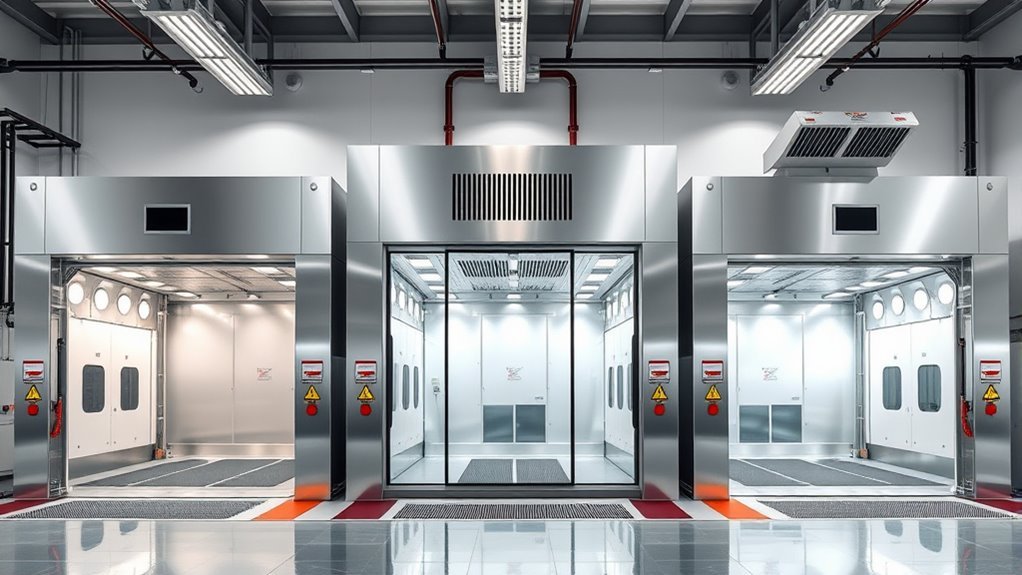
You’ll find several types of car spray booths available, each designed with unique airflow patterns and features that cater to different needs.
Cross-draft booths are a popular choice due to their cost-effective horizontal airflow. However, they may not provide the best overspray control.
On the other hand, downdraft booths are known for their vertical airflow, which greatly enhances paint quality and cleanliness.
If you’re looking for a balance between performance and budget, semi-downdraft booths might be the way to go.
For those who want even airflow, side-draft booths are available, although they come at a higher price point.
Key features to consider include insulated walls, proper lighting, and filtration systems that help manage air quality.
Exploring these elements is essential in helping you choose the ideal booth for achieving flawless finishes.
Key Takeaways
– Cross-draft booths use horizontal airflow and are cost-effective.
However, they are less efficient at controlling overspray.
– Downdraft booths pull air vertically downward.
This design offers superior cleanliness and results in high-quality paint finishes.
– Semi-downdraft booths combine diagonal airflow with rear exhaust.
They avoid the need for concrete pits while still enhancing performance.
– Side-draft booths provide even airflow from the ceiling to the sidewalls.
But keep in mind, they do require higher construction costs.
– Key features of these booths include insulated steel panels, multi-layer filtration, and hazardous-location lighting.
Additionally, they come equipped with advanced airflow control systems.
Overview of Common Car Spray Booth Types
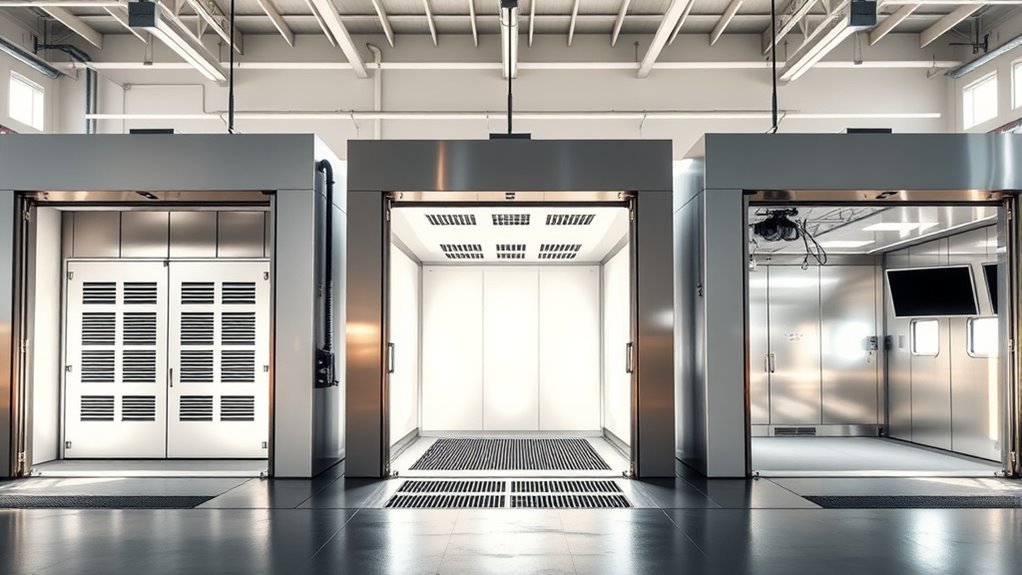
When choosing a car spray booth, you’ll find several common types, each designed to suit different needs and budgets.
Cross-draft paint booths offer a simple, cost-effective solution with horizontal airflow. However, they may struggle with overspray control.
Cross-draft paint booths provide affordable horizontal airflow but can face challenges managing overspray effectively.
Downdraft paint booths provide superior cleanliness by pulling air straight down. They often require concrete pits but deliver better finishes.
Semi-downdraft paint booths improve on cross-draft designs by combining diagonal airflow with rear exhaust. This avoids costly concrete work while enhancing performance.
Side-draft paint booths introduce air from the ceiling and exhaust through side walls. This setup offers more even airflow but usually comes with a higher construction cost.
These automotive paint booth options help you balance efficiency, budget, and quality depending on your specific project requirements.
Airflow Patterns and Their Impact on Paint Quality
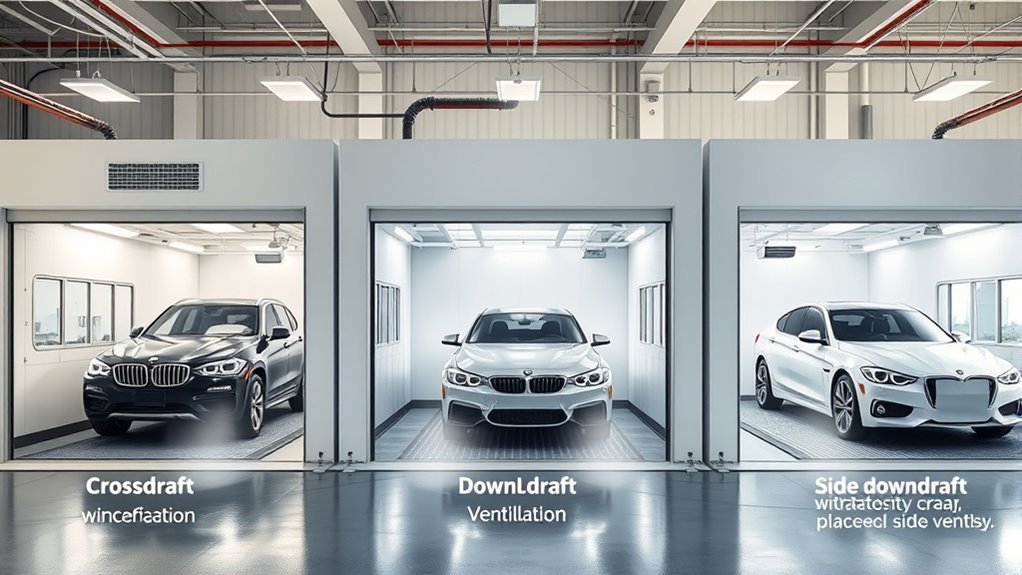
Because airflow patterns play an essential role in controlling overspray and contamination, you’ll want to choose a paint booth that guarantees clean, consistent air movement.
Downdraft booths excel by pulling air straight down through the floor, effectively removing overspray and contaminants before they settle on your work.
This airflow pattern greatly enhances paint quality, providing a flawless finish.
While cross-draft booths struggle with dust due to horizontal airflow, semi- and side-downdraft systems offer angled airflow that reduces dead zones and improves uniformity.
To get the best results, match your booth’s airflow pattern with your spray technique for peak paint transfer.
- Downdraft booths minimize contaminants by directing airflow vertically.
- Angled airflow in semi-downdraft booths enhances coverage.
- Proper airflow reduces overspray, ensuring superior paint quality.
Structural Elements and Lighting Considerations
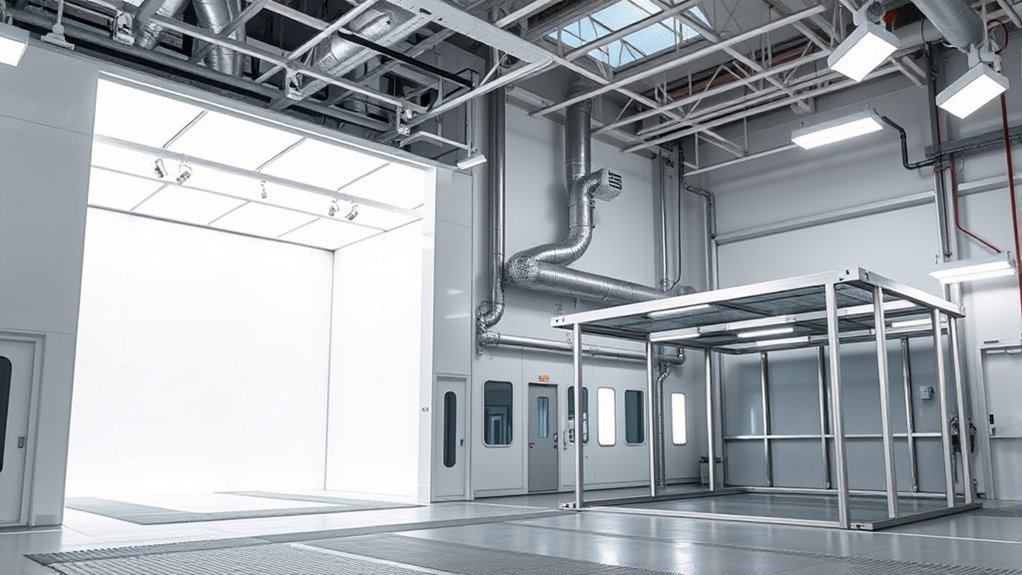
Although you might focus on airflow and filtration, the structural elements and lighting in a car spray booth are just as essential for achieving top-quality paint jobs.
The booth ceiling and walls use insulated steel panels with sealed seams to create a controlled environment that minimizes contamination.
Proper lighting is critical—fixtures must meet illumination requirements and be rated for hazardous locations to guarantee safety and shadow-free visibility.
Six-tube light fixtures and additional sidewall lighting provide the brightness you need for precise color matching.
Observation windows made of tempered safety glass let you monitor the painting process without compromising safety.
Plus, lighting fixtures are designed to be serviceable from outside the booth, so you can maintain ideal illumination without disrupting your workflow.
Filtration Systems and Air Quality Management
You’ll need to understand the different filter types used in spray booths to control airflow and capture contaminants effectively.
Proper maintenance and regular monitoring keep the filtration system working at its best. This ensures a clean environment for flawless paint jobs.
Let’s explore how these elements work together to manage air quality during the painting process.
Filter Types Overview
Three main paint booth types—crossdraft, downdraft, and side downdraft—each rely on specific filtration systems to maintain air quality and control contaminants.
Understanding the filter types overview helps you choose the right booth and filters for your needs.
Crossdraft booths mainly use high-efficiency intake filters to capture contaminants before air enters the painting area.
Downdraft paint booths require both intake and exhaust filters to manage airflow and capture overspray effectively.
Side downdraft booths combine these filters to enhance contaminant capture from multiple angles, improving overall air quality.
Key points to take into account include:
- Intake filters trap dust and particles entering the booth.
- Exhaust filters capture overspray and airborne contaminants.
- Filter design varies to meet environmental and safety standards.
Choosing the right filters guarantees clean air and better paint finishes.
Airflow and Contaminant Control
When managing airflow in paint booths, you need a system that effectively controls contaminants while maintaining consistent air quality.
Designs like downdraft and semi-downdraft booths optimize airflow by minimizing overspray and ensuring contaminants don’t settle on surfaces.
Intake filters play an essential role, especially in crossdraft booths, capturing dust and VOCs at the entry point.
Downdraft booths, on the other hand, require both intake and exhaust filters to maintain proper airflow and filtration balance.
The filtration system‘s performance directly impacts the quality of your paint finish by removing unwanted particles and harmful compounds.
To comply with ventilation standards, you must calculate the correct air velocity and supply adequate cubic feet per minute (CFM).
Proper airflow and filtration keep your booth clean, safe, and ready for flawless painting results.
Maintenance and Monitoring Methods
Although maintaining a spray booth’s filtration system demands regular attention, it’s crucial for preserving airflow and capturing contaminants effectively.
You should perform routine maintenance by checking intake ceiling diffusion blankets and exhaust arrestor pads to guarantee filters work efficiently.
Monitoring air quality involves using pressure gauges to assess filter condition, helping you stay compliant with ventilation standards.
Managing air quality also means calculating air velocity across the booth to confirm the supplied CFM meets spray-finishing requirements.
Focus on these key tasks:
- Regularly replace high-efficiency intake filters, especially in crossdraft booths.
- Measure differential pressure to detect filter clogging early.
- Maintain proper airflow in downdraft booths to reduce VOCs and guarantee a clean painting environment.
These steps will keep your spray booth safe and efficient.
Energy Efficiency and Performance Enhancements
You’ll notice that upgrading heaters and motors can boost your spray booth’s efficiency and speed up your workflow.
Energy-saving control systems help cut costs while keeping performance steady.
Plus, optimized airflow technologies guarantee your booth operates at peak effectiveness for flawless paint jobs.
Heater and Motor Upgrades
Upgrading the heaters and motors in your spray booth can greatly boost energy efficiency and overall performance.
By choosing higher voltage motors and enhanced heaters, you’ll cut operational costs while keeping temperature control precise.
Improved motor horsepower guarantees better airflow, speeding up drying times—perfect for busy paint booths.
Consider these key benefits when upgrading:
- Higher horsepower motors increase airflow, improving drying efficiency.
- Advanced heaters maintain consistent temperatures, reducing energy waste.
- Dual Variable Frequency Drives (VFDs) optimize motor speed, adapting airflow to painting stages.
Regular maintenance also plays an essential role in sustaining these gains.
With the right heater and motor upgrades, you’ll enjoy lower energy use and faster, more reliable paint booth operation.
Energy-Saving Control Systems
When you integrate energy-saving control systems like the ECO package into your spray booth, you cut energy use by optimizing airflow with dual variable frequency drives and a spray gun flow switch.
These systems help maintain ideal airflow only when needed, reducing waste.
Advanced control panels, such as LOGIC 3 and LOGIC 4, let you program flash and cure profiles, boosting operational efficiency while managing energy consumption.
Upgrading to LED lighting and monitoring filters regularly through control panels prevents airflow restrictions, keeping your paint booth running efficiently.
Ensuring your filters are clean and performing well is essential, as clogged filters increase energy demand.
Optimized Airflow Technologies
Although optimized airflow technologies might seem technical, they directly improve your spray booth’s efficiency and paint quality.
In Automotive Paint Booths, how air enters and circulates is essential for reducing drying times and minimizing contaminants.
Upgrading intake fan horsepower and using spray gun flow switches helps control airflow precisely, boosting performance while cutting energy use.
Key features include:
- AdvanceCure Blade Accelerated Airflow System speeds up drying considerably.
- Controlled Airflow Ceilings direct air to reduce dust and improve finish quality.
- Dual Variable Frequency Drives (VFDs) and eco-friendly packages enhance energy efficiency.
Selecting the Right Booth Based on Shop Requirements
How do you choose the right spray booth for your shop’s needs?
Start by evaluating different booth models, focusing on airflow types like downdraft.
This type offers superior cleanliness and overspray control, making it ideal for professional work.
Next, consider your shop’s size and layout.
Take into account your shop’s size and layout to ensure the booth fits seamlessly into your workflow.
You’ll want to make sure the booth fits your workflow and meets ventilation requirements.
Air filtration is essential—select a booth that effectively captures contaminants.
This will help maintain finish quality and ensure worker safety.
Don’t forget to check booth controls for ease of operation.
Also, think about future upgrades, like heat installation.
Selecting the right paint booth means balancing performance with space and budget.
So, plan ahead to avoid costly modifications.
With these factors in mind, you’ll find a spray booth that perfectly matches your shop’s demands.
Frequently Asked Questions
Are Inflatable Paint Booths Worth It?
Yes, inflatable paint booths are worth it if you need portability, quick setup, and affordability.
You’ll appreciate their built-in ventilation and durability, especially for mobile or small-scale projects.
These booths can save you time and money without sacrificing quality.
What Are the Different Types of Paint Booths?
Imagine painting inside a controlled wind tunnel.
You’ll find cross-draft, semi-downdraft, side-draft, downdraft, and conveyorized booths—each designed to guide airflow uniquely.
They all balance cost, cleanliness, and efficiency for your perfect finish.
What Is Waterborne Automotive Paint?
Waterborne automotive paint uses water as its main solvent, cutting harmful emissions.
You’ll need to adjust your spray technique for its thicker consistency.
But it offers excellent color quality and meets eco-friendly regulations.
What Is the Best Paint Spray Machine for Cars?
You’ll want an HVLP paint spray machine with digital controls, built-in filtration, and interchangeable nozzles for versatility.
Look for models with automatic cleaning systems to save time and guarantee consistent, high-quality finishes every time you paint.
This way, you can focus more on the painting process and less on cleanup.
Choosing the right features will ensure your projects come out looking professional every time!
Conclusion
Choosing the right car spray booth is like picking the perfect stage for a masterpiece—you want every detail to highlight your work flawlessly.
By understanding airflow patterns, structural elements, filtration, and energy efficiency, you’ll create an environment where your paint job can truly shine.
Tailor your booth to fit your shop’s needs, and you’ll not only improve quality but also boost productivity.
Remember, the right booth transforms your workspace into a canvas for excellence.
In conclusion, selecting the ideal car spray booth is essential for achieving outstanding results.
Focus on key features such as airflow, filtration, and energy efficiency to enhance your painting process.
With the right booth tailored to your shop’s specific requirements, you can elevate both the quality of your work and your overall productivity.
Investing in a suitable spray booth is a step towards creating an exceptional workspace for your art.