What Factors Determine Scrap Value for Automobiles?
When determining your car’s scrap value, several key factors come into play.
These factors include the vehicle’s weight, the type of metal it’s made from (like steel or aluminum), and the condition of important components such as the engine and catalytic converter.
Additionally, the make, model, and year of the car can significantly affect the demand for used parts.
Current scrap metal prices and local market conditions also play a crucial role in determining the value.
Don’t forget that transportation costs and environmental regulations can influence the final offer you receive.
If you want to dive deeper into how each factor impacts your potential earnings, keep exploring further!
Key Takeaways
- Vehicle weight and metal composition, especially steel and aluminum content, significantly impact scrap value due to recyclable material quantity.
- The make, model, year, and demand for used parts influence scrap value. Generally, newer and popular vehicles fetch higher prices.
- Current scrap metal market prices and regional demand for metals directly affect the payout for scrapped automobiles.
- Location and transportation costs to recycling centers also play a role in determining scrap value.
- Being closer to these centers can reduce expenses and increase offers.
- Lastly, compliance with environmental regulations and costs for hazardous waste disposal can lower the overall scrap value received.
Vehicle Weight and Material Composition
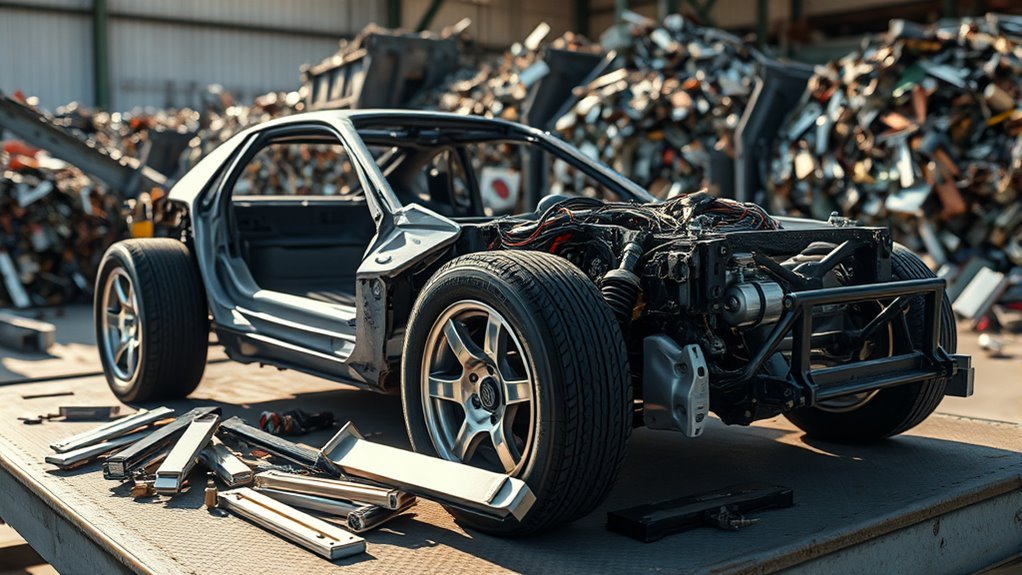
When you scrap a vehicle, its weight and material composition directly affect how much you’ll get paid.
The vehicle weight matters because heavier cars typically have more recyclable metal, which scrap yards value highly.
Material composition is just as important—vehicles made mostly of steel and aluminum usually fetch better scrap value since these metals are in high demand on the current market.
The metal content isn’t limited to the body; valuable metals in the engine and transmission also boost your payout.
Junkyards carefully assess both the vehicle weight and metal content against fluctuating scrap metal prices to offer you the best deal.
Make, Model, and Year of the Vehicle
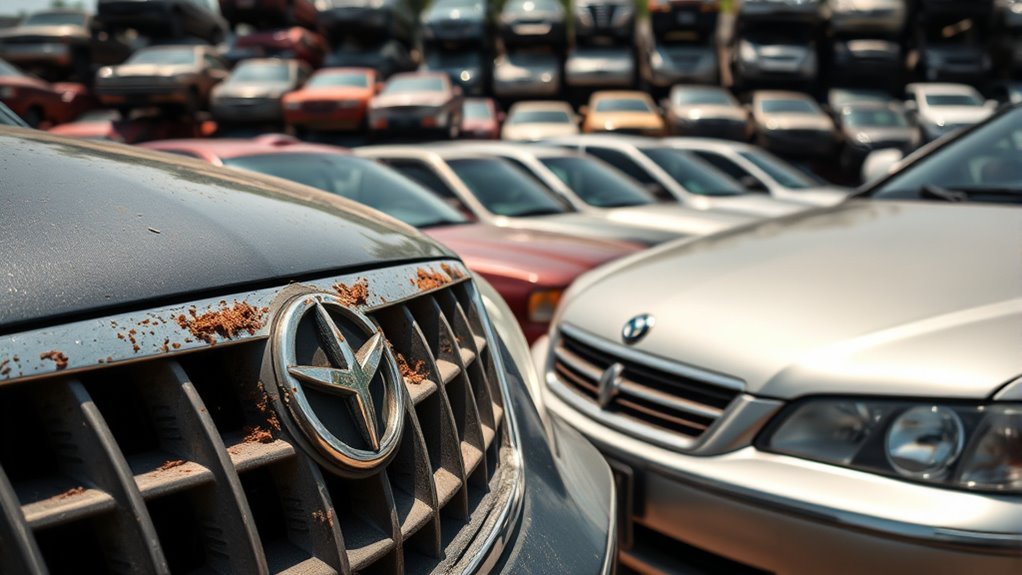
You’ll find that the age of your vehicle plays a big role in its scrap value, with newer models often fetching more due to their parts.
Popular makes like Toyota or Ford usually have higher demand, which can boost what you get.
And if you own a specialty or rare model, its scarcity might increase its worth even more.
Impact of Vehicle Age
Although the scrap value of a vehicle depends on various factors, you’ll find that the make, model, and year play an essential role in determining its worth.
Older vehicles often contain more metal, but their scrap value can be lower due to reduced demand for parts and outdated technology.
Newer models usually fetch higher prices because their parts are in greater demand and easier to resell or reuse.
When considering the vehicle’s age, keep these points in mind:
- Older vehicles may have more metal but fewer sought-after parts.
- Newer models typically have higher scrap value due to demand for their components.
- The make and model influence how age affects scrap value, given parts availability.
Understanding how vehicle age impacts scrap value helps you make better decisions when selling.
Popular Makes Demand
The make, model, and year of a vehicle play a notable role in determining its scrap value alongside its age.
Popular makes like Toyota and Ford often command higher scrap values because their parts are in steady demand in the aftermarket.
When you scrap a reliable vehicle, junkyards are more likely to pay premium prices since reusable parts fetch better resale value.
Late models usually offer more advanced technology and safety features, increasing demand for their components.
While older cars might have more metal, newer vehicles provide more valuable reusable parts, boosting scrap value.
Specialty Models Value
When you scrap specialty models, especially those from rare or luxury brands, you can expect considerably higher values due to the scarcity and demand for their parts.
Specialty models like Ferraris or classic muscle cars often contain valuable parts that attract collectors and restorers, boosting their scrap value.
The make, model, and year influence how much durable metal content the vehicle holds, which directly impacts the price you get.
Market trends show that luxury brands and iconic vehicles maintain high demand, making them more profitable to scrap.
Keep in mind:
- Newer specialty models have advanced materials increasing recyclability.
- Classic models hold parts sought after for restoration.
- Durable metal content adds weight and value during scrapping.
Understanding these factors helps you maximize the scrap value of your specialty vehicle.
Condition of Major Components
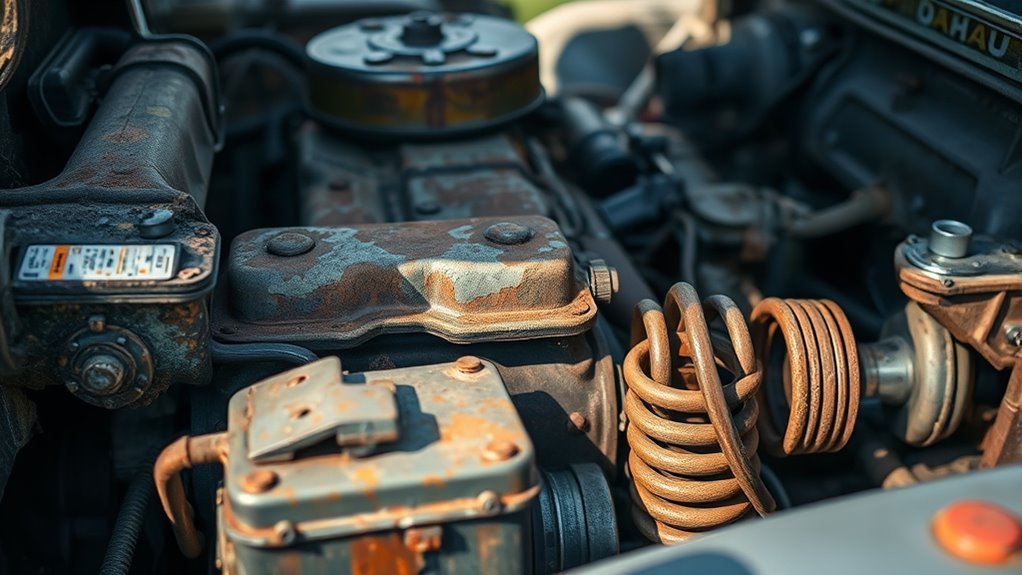
How much does the condition of major components like the engine, transmission, and catalytic converter impact your vehicle’s scrap value?
The condition of major components plays an essential role in determining the value of your scrap car.
Functional parts, especially an intact engine or transmission, can greatly boost the overall worth.
Catalytic converters add extra value due to precious metals inside them.
But damaged or missing major mechanical parts can lower the scrap car value because they reduce salvage potential.
| Component | Impact on Scrap Value |
|---|---|
| Engine | High – Resalable functional parts |
| Catalytic Converter | Very High – Contains precious metals |
| Transmission | Moderate – Valuable if operational |
Current Market Prices for Scrap Metal
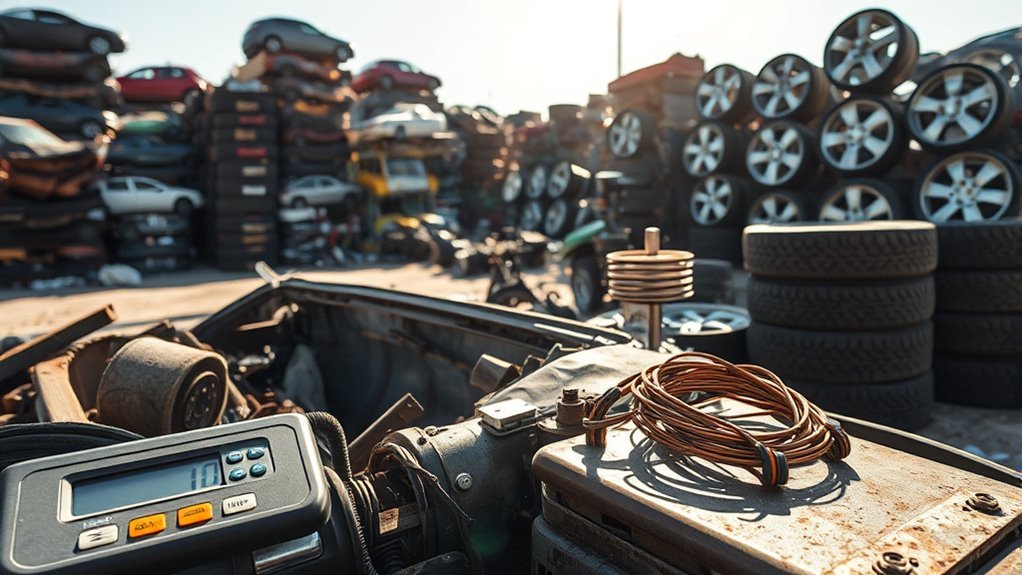
You’ll notice that scrap metal prices change daily due to global supply and demand, which directly affects what you can get for your vehicle.
Steel usually goes for around $200 to $300 per ton, while aluminum can reach $800 to $1,200 per ton, depending on the market.
Knowing these rates helps you understand why offers for your car may vary from one scrap yard to another.
Global Metal Price Fluctuations
Because global supply and demand constantly shift, scrap metal prices can fluctuate daily. This directly affects what you’ll get for your vehicle’s materials.
When selling a junk car, these market changes impact the Scrap Metal Prices offered by local yards, influencing your scrap value.
Understanding these fluctuations helps you time your sale for the best return.
Key factors include:
- Global demand for metals like copper, steel, and aluminum, which compose much of your car’s scrap metal.
- Seasonal market trends, especially from industries like construction, that drive metal prices up or down.
- Real-time competitive pricing at scrap yards, reflecting current global market conditions.
Stay informed, and you can maximize your return!
Steel and Aluminum Rates
While scrap metal prices fluctuate daily, knowing the current rates for steel and aluminum can help you gauge your vehicle’s scrap value accurately.
Steel scrap prices typically range from $200 to $300 per ton, influenced by global demand in construction and manufacturing.
Aluminum, vital in vehicles for its lightweight properties, usually trades between $0.70 and $1.00 per pound.
These market rates shift with fluctuations in supply and higher demand from recycling industries, especially automotive sectors.
Since steel and aluminum make up a large part of your vehicle’s weight, tracking these scrap prices helps you estimate its worth.
Keep in mind that local factors and international trade policies also affect rates.
Impact on Vehicle Offers
Since scrap metal prices shift daily with global supply and demand, the offers you receive for your vehicle can change just as quickly.
To estimate the value of your car accurately, scrap yards monitor the latest metal market rates, especially for steel, aluminum, and copper. These fluctuations directly impact the scrap value of vehicles, with steel often playing the biggest role due to its prevalence.
The demand for specific metals also influences offers—higher copper demand, for example, can boost your vehicle’s value.
Staying informed about these changes helps you get the best price. Key factors include:
- Daily fluctuation based on global supply and demand
- Metal composition of vehicles affecting value
- Demand for specific metals driving price changes
Demand for Used Parts and Components
When you look at the scrap value of automobiles, the demand for used parts and components plays an essential role in determining a vehicle’s worth.
Vehicles might fetch higher prices if they have specific parts like engines or catalytic converters that enjoy strong resale demand.
Popular makes and models, such as Toyota and Honda, typically yield better returns due to their reliability and broad demand.
Late-model cars with advanced features also attract higher prices.
Here’s a quick overview:
| Part Type | Vehicle Type | Impact on Scrap Value |
|---|---|---|
| Engines | Fleet, Taxi | High due to frequent replacements |
| Transmissions | Popular Makes/Models | Elevated scrap value |
| Catalytic Converters | Late-model Cars | High resale demand |
| Rare Parts | Enthusiast Vehicles | Commands premium prices |
Understanding this demand for used parts helps you maximize your vehicle’s scrap value.
Location and Environmental Compliance Factors
The demand for used parts certainly affects your vehicle’s scrap value, but where you sell your car also plays a big role.
Your location influences the local demand for metal and how competitive scrap yards are, directly impacting the price you’ll get.
Environmental compliance and local regulations can add costs for depollution and hazardous waste disposal, especially in stricter regions, lowering your scrap value.
Urban areas often offer better prices due to higher demand and proximity to recycling centers, which cuts transportation costs.
Consider these factors:
- Local regulations affecting vehicle dismantling and disposal
- Proximity to recycling centers reducing transportation costs
- Regional demand for metal influencing competitive pricing
Understanding these helps you maximize your vehicle’s scrap value.
Frequently Asked Questions
How Does Scrapping a Vehicle Work?
You contact a scrap dealer, arrange pickup, and they assess your vehicle.
They remove hazardous materials, dismantle valuable parts, then recycle the metal.
You get paid based on weight, metal prices, and parts demand.
Is 50,000 Miles on a 2 Year Old Car Bad?
Think of your car like a book—50,000 miles in two years means it’s read quickly.
You’ve driven more than average, so expect more wear,
but with good care, it’s not necessarily bad at all.
What Color Car Do Police Stop the Most?
You’ll find police stop red cars the most, likely because they stand out and are linked to speed.
Dark colors like black and gray also get noticed, while white cars tend to be stopped less often.
What Is the $3000 Rule for Buying Cars?
When shopping for a “budget-friendly treasure,” you’ll want to stick to the $3000 rule.
Buying cars priced at or below $3000 helps you manage costs wisely while still finding reliable rides that fit your needs.
Conclusion
When deciding your car’s scrap value, remember it’s like a puzzle where each piece counts.
The weight and materials, your vehicle’s make and year, and the state of key parts all play a role.
Plus, current metal prices and demand for used components can boost or lower that number.
Don’t forget location and environmental rules—they can tip the scales too.
Keep these factors in mind, and you’ll get the best bang for your buck when scrapping your ride.
To sum it up, the scrap value of your automobile hinges on various factors like weight, materials, and the condition of important components.
The make and year of the vehicle also matter, alongside fluctuating metal prices and local regulations.
By understanding these elements, you can maximize your car’s scrap value and ensure that you get a fair price when it’s time to let go of your vehicle.