
What Are Spin-On Oil Filters and How Do They Work?
Spin-on oil filters are essential components in automotive engines, designed to keep your engine oil clean and free from contaminants.
These self-contained units screw directly onto your engine, effectively trapping dirt, metal particles, and other impurities.
Inside the filter, you’ll find pleated filter media that does the heavy lifting by catching harmful debris.
Additionally, an anti-drain back valve prevents oil from draining when the engine is off, ensuring that your engine receives fast lubrication right at startup.
With their durable metal casing, spin-on oil filters can handle high pressure, providing reliable performance over time.
They’re also incredibly easy to replace during oil changes, making maintenance a breeze.
Overall, using spin-on oil filters greatly boosts engine cleanliness and efficiency.
To truly understand their full benefits and get some handy care tips, keep exploring!
Key Takeaways
– Spin-on oil filters are self-contained units that feature a metal canister along with a pleated filter element.
This design allows for easy replacement and effective contaminant trapping.
– They screw directly onto the engine’s oil filter mount using a threaded base, making installation a breeze.
No complicated tools are needed!
– As engine oil flows through the filter media, dirt and metal particles get trapped, which helps maintain clean oil circulation.
This is crucial for the engine’s performance and longevity.
– An anti-drain back valve plays an important role by preventing oil from draining out when the engine is off.
This ensures that your engine gets immediate lubrication right at startup.
– Their durable design is built to withstand high pressure, which is a big plus.
Plus, by combining the filter and housing in one unit, maintenance becomes much simpler.
Definition and Design of Spin-On Oil Filters
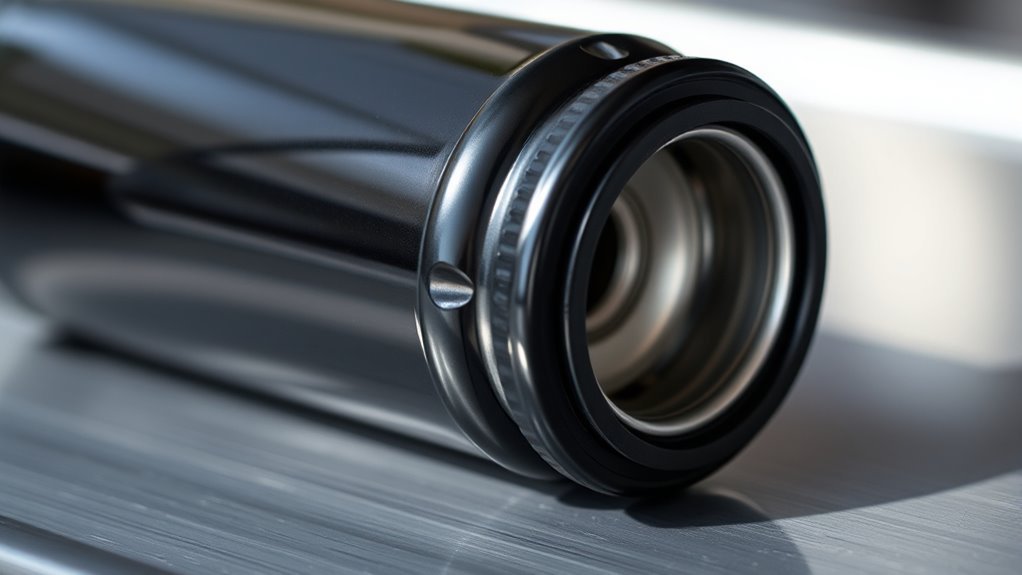
Spin-on oil filters are self-contained units designed for easy replacement in your vehicle.
These filters feature a sturdy metal canister housing a pleated filter element that traps contaminants while allowing oil to flow smoothly.
You screw the filter directly onto the engine’s oil filter mount thanks to its threaded base, making installation quick and hassle-free.
Inside, an anti-drain back valve plays an essential role by preventing oil from draining out when your engine shuts off.
An anti-drain back valve keeps oil in the filter, ensuring quicker lubrication at startup.
This means oil stays in the filter, providing faster lubrication on startup and reducing wear.
Invented in 1954 by WIX engineers, spin-on oil filters have become a reliable standard.
They combine simplicity with effective filtration to keep your engine running clean and protected.
Components of a Spin-On Oil Filter
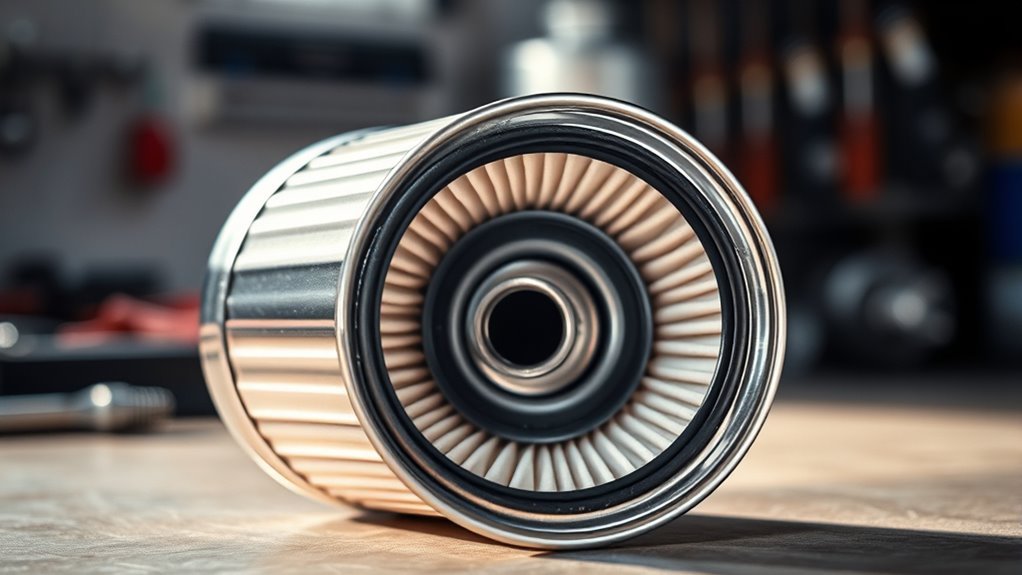
Understanding what makes up these filters helps you appreciate how they keep your engine oil clean and flowing smoothly.
A spin-on oil filter mainly consists of a metal canister housing the filter media, which traps dirt and metal particles to guarantee only clean oil circulates through your engine.
Inside, the anti-drain back valve plays an essential role by preventing oil from draining out when the engine is off. This ensures oil reaches engine parts quickly at startup.
The base of the filter features a threaded connection that screws onto your engine’s oil filter adapter, making installation and replacement straightforward.
Designed to withstand high pressure, these components work together to protect your engine by minimizing contaminants in the oil system.
How Spin-On Oil Filters Function
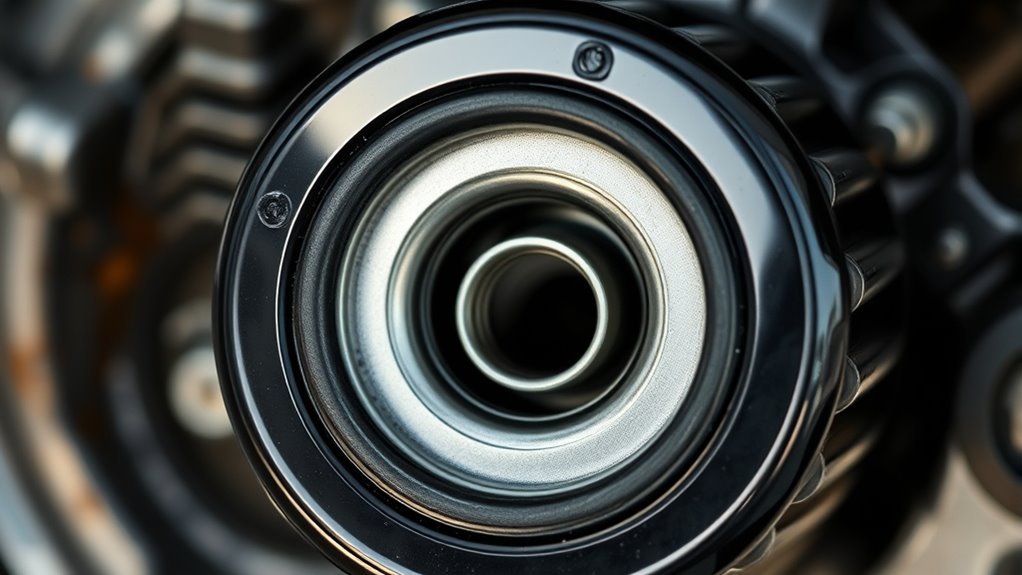
Although you might not see it, the oil filter plays a crucial role in keeping your engine running smoothly by trapping contaminants and ensuring clean oil flows continuously through the system.
Here’s how a spin-on filter functions to protect your engine:
- Engine oil enters the spin-on filter through a tapping plate, carrying dirt and metal particles.
- The filter media traps these impurities, allowing only clean oil to circulate back into the engine, maintaining ideal oil flow.
- An anti-drain back valve prevents oil from draining out when the engine is off, ensuring immediate lubrication at startup.
Benefits of Using Spin-On Oil Filters
The way a spin-on oil filter works directly influences how well it protects your engine.
Spin-on filters are self-contained units that you can easily replace during oil changes without needing extra tools.
Their built-in anti-drain back valve stops engine oil from draining back into the crankcase. This ensures your engine gets quicker lubrication when starting up.
With a durable metal casing, these filters handle high pressure and prevent leaks.
This keeps contaminants out of your engine oil, which is crucial for maintaining overall health.
Plus, their larger filtration surface traps more impurities, enhancing engine performance and longevity.
By simplifying maintenance and reducing installation errors, spin-on filters assist you in maintaining cleaner engine oil.
They guarantee consistent protection for your vehicle’s essential components.
Maintenance and Replacement Guidelines
Maintaining and replacing your spin-on oil filter regularly is key to keeping your engine running smoothly and efficiently.
Proper maintenance and timely replacement of oil filters help prevent contaminants from damaging your engine.
Follow these guidelines:
1. Replace your spin-on oil filter every 5,000 to 7,500 miles or with every oil change to guarantee ideal engine protection.
2. During replacement, lubricate the gasket and hand-tighten the filter until it contacts the mounting surface.
After that, use a torque wrench to tighten it to 18-20 foot-pounds.
3. After installation, check for leaks and inspect the filter element for metal particles or abnormalities that could indicate engine issues.
Staying on top of these steps will help ensure your engine stays in great shape!
Comparison With Other Types of Oil Filters
When you choose a spin-on oil filter, you get a self-contained unit that combines the filter element and housing, making replacements quick and tool-free.
Unlike cartridge filters, spin-on filters don’t require a reusable housing, which means less waste to handle.
Spin-on filters eliminate the need for a reusable housing, reducing waste and simplifying oil changes.
They handle full-flow oil pressure efficiently without restricting oil flow, ensuring your engine stays well-lubricated.
The built-in anti-drain back valve in spin-on filters keeps oil inside when the engine is off, reducing dry starts and wear.
Compared to magnetic and centrifugal filters, spin-on filters are simpler and more effective at trapping contaminants.
If you want a reliable, easy-to-change filter that maintains ideal oil pressure and engine protection, spin-on filters are a solid choice over other types.
Frequently Asked Questions
Are Spin-On Oil Filters Better?
Yes, spin-on oil filters are better for you if you want easy installation, reliable filtration, and improved engine protection.
They hold more contaminants and include features like anti-drain valves, boosting your engine’s performance and longevity.
What Must You Do Before Installing a Spin-On Filter?
Before installing a spin-on filter, you should lubricate the gasket with oil.
This helps ensure a proper seal.
Next, clean the mounting surface to remove any debris or old gasket material.
Once that’s done, hand-tighten the filter until it seals.
Finally, use a torque wrench to tighten it to the recommended specification.
This will help prevent leaks and ensure optimal performance.
What Oil Filters Should I Stay Away From?
You should avoid low-quality, generic, or off-brand oil filters without proper certifications.
Don’t use filters lacking anti-drain back valves or flimsy construction.
Also, stay away from those designed for outdated engines, as they risk engine damage and poor performance.
How Tight Should a Spin-On Oil Filter Be?
You should hand-tighten a spin-on oil filter until the gasket contacts the engine surface.
Then, tighten it to about 18-20 foot-pounds.
Don’t over-tighten, or you risk leaks and damage to the filter.
Conclusion
Now that you know how spin-on oil filters work, you might think choosing one is straightforward—but there’s more beneath the surface.
Their simple design hides a crucial role in keeping your engine clean and running smoothly.
But what happens if you ignore maintenance or pick the wrong type?
Understanding these filters isn’t just about mechanics; it’s about protecting your engine’s future.
So, choosing the right spin-on oil filter is essential for maintaining optimal performance.
Regular maintenance and proper selection can prevent costly repairs down the line.
If you’re ready to dive deeper and make the best choice, consider the specifications and requirements of your engine.
In conclusion, knowing how spin-on oil filters function is vital for any car owner.
By prioritizing the correct filter and maintenance practices, you safeguard your engine’s health and ensure its longevity.
Make informed decisions to keep your vehicle running smoothly for years to come!