Current Automobile Scrap Prices in 2026?
If you’re checking current automobile scrap prices in 2026, expect a slight dip.
Shredder-prepared autobodies are priced up to $200 per net ton, reflecting a 3.1% month-on-month decline.
Buyers are cautious, while sellers stay neutral, creating some market uncertainty.
Inventory levels are steady, so supply isn’t driving prices down.
The overall sentiment leans modestly bearish, signaling soft demand.
Keep exploring to understand what’s shaping these trends and what might come next.
Key Takeaways
- Automobile scrap prices are forecasted to decline by 3.1% month-on-month in April 2026.
- Shredder-prepared autobodies are priced up to $200 per net ton in the current market.
- Catalytic converters remain highly valued, fetching prices up to $500 each.
- Market sentiment is cautious, with buyers showing bearish sentiment at 40.7 and sellers neutral at 50.0.
- Inventory levels are balanced at 49.0, indicating stable supply without significant price pressure.
Overview of US Ferrous Scrap Market in April 2026

Although the US ferrous scrap market showed stability in March, April 2026 brought softened expectations.
The Trend Indicator dropped to 46.9—below the neutral 50 mark.
You’ll notice scrap metal prices are forecasted to decline by 3.1% month-on-month after a flat period with no changes.
Market sentiment feels cautious, reflected by a Consensus score of 47.0, the lowest ever.
This signals low agreement on where the market’s headed.
Inventory levels remain normal at 49.0, so there’s no notable supply imbalance driving prices.
Overall, you should expect stable yet slightly bearish conditions.
This means scrap metal prices might face modest downward pressure soon.
Staying alert to these shifts will help you navigate the evolving ferrous scrap landscape effectively.
Current Pricing Trends for Automobile Scrap
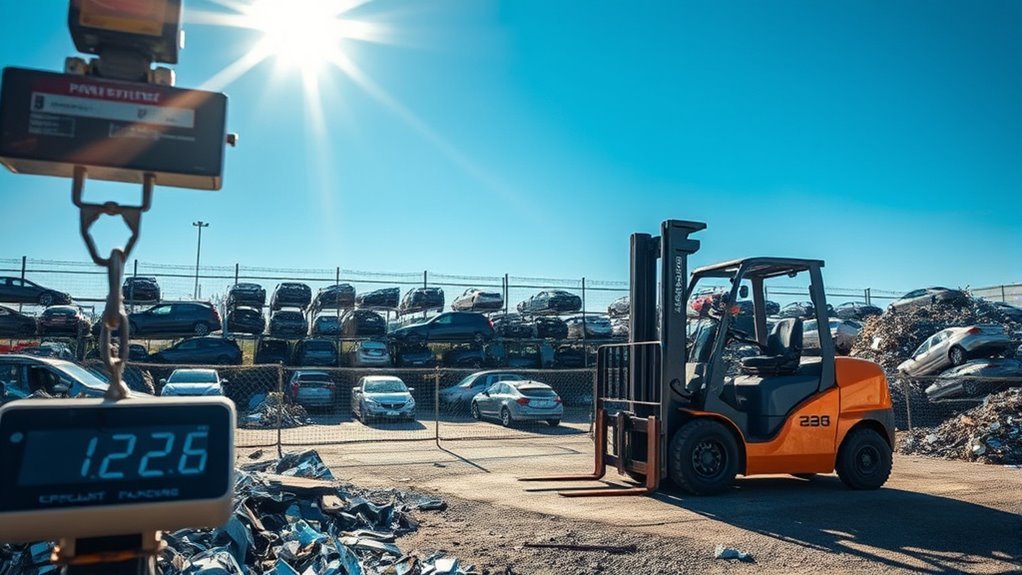
While the automobile scrap market remains stable, you should prepare for a 3.1% drop in prices this month, with shredder-prepared autobodies fetching up to $200 per net ton.
This decline reflects the cautious mood among market players who see uncertain pricing ahead.
Despite stable conditions, the overall consensus on future pricing is at an all-time low, signaling hesitation about growth.
However, some components like catalytic converters still command high prices—up to $500 each—depending on type and condition.
You’ll want to monitor these component values closely, as they can offset general declines in bulk scrap.
Staying informed about these pricing trends will help you make smarter decisions when selling or buying automobile scrap in this fluctuating market.
Market Sentiment and Participant Perspectives

You’ll notice the market consensus for April 2026 sits at 47.0, showing a clear lack of agreement on scrap price direction.
Buyers are feeling cautious with sentiment down to 40.7, while sellers and brokers hold steady at a neutral 50.0.
This mix suggests the market expects only modest changes, reflecting ongoing uncertainty in the automobile scrap sector.
Market Consensus Levels
When you look at the market consensus level for April 2026, it registers at 47.0, showing the lowest agreement among participants on the scrap price direction.
This low consensus signals significant uncertainty and cautious expectations. You’ll notice:
- Buy-side sentiment is weak at 40.7, reflecting consumer hesitancy on near-term pricing.
- Sellers and brokers hold a neutral stance at 50.0, indicating no clear bullish or bearish bias.
- Overall participant sentiment leans slightly bearish, suggesting modest downward pressure on scrap prices.
- The divergence between consumer caution and seller neutrality creates an unstable outlook.
Given these factors, you should expect a volatile market where clear price trends remain elusive.
Cautious behavior prevails among participants.
Buyer and Seller Outlook
Although the overall market shows a balanced state, buyer sentiment remains cautious with a score of 40.7. This indicates your hesitancy about near-term scrap prices.
You’re likely holding back on aggressive purchases, uncertain if prices might dip further.
Sellers and brokers, however, maintain a neutral stance at 50.0. This suggests they’re stable and not pushing prices aggressively either.
The market consensus hit an all-time low of 47.0, highlighting widespread uncertainty among participants about where prices will head next.
Inventory levels sit near normal at 49.0, so supply isn’t causing major disruptions.
Overall, the market leans slightly bearish, suggesting you should prepare for modest downward pressure on scrap prices.
But, significant volatility seems unlikely in the immediate future.
Inventory Levels and Supply Dynamics
Since inventory levels for automobile scrap stood at a balanced 49.0 in April 2026, you can expect stable supply conditions across the market.
This equilibrium means no major supply disruptions or surpluses are affecting availability.
Here’s what you should know:
- Market participants report no significant supply-side imbalances, supporting a steady flow of scrap materials.
- Most drivers labeled the situation as “All Unchanged,” confirming consistent inventory and supply dynamics.
- Despite this balance, buyers show a slight bearish sentiment, hinting at potential downward price pressure.
- Overall, supply and demand expectations remain stable, keeping the market predictable for now.
You can anticipate a smooth procurement process without sudden shocks.
This makes this a reliable period for managing your scrap inventory.
Factors Influencing Scrap Price Movements
You’ll notice that market demand plays a huge role in driving scrap prices up or down.
When supply chains are stable, it’s easier for prices to stay consistent.
But disruptions can cause sudden shifts.
Understanding these factors helps you anticipate price movements and make smarter recycling decisions.
Market Demand Impact
When you examine the current automobile scrap market, you’ll notice that demand plays a key role in price movements.
The cautious buy-side sentiment of 40.7 signals that buyers are holding back, which can push prices down.
The market consensus index at 47.0 shows disagreement on price direction, reflecting uncertainty.
Here’s what you need to focus on:
- Buyers’ hesitance creates downward pressure on scrap prices.
- A slight 3.1% expected decline month-on-month suggests weak demand.
- Balanced inventory levels (49.0) mean supply isn’t driving prices.
- Divergent consumer and seller sentiment adds to market unpredictability.
Understanding these factors helps you anticipate how demand influences scrap prices in 2026.
Supply Chain Stability
Demand fluctuations clearly impact scrap prices, but supply chain stability also plays a significant role in shaping market movements.
You’ll notice that the US ferrous scrap market shows stable inventory levels at 49.0, indicating no major supply disruptions.
However, the mild downside bias with an expected 3.1% price decline reflects cautious buyer sentiment.
Market participants disagree on direction, shown by a low consensus score of 47.0, highlighting uncertainty.
This balance suggests steady supply but modest pressure on prices.
| Factor | Value | Implication |
|---|---|---|
| Inventory Level | 49.0 | Normal stock levels |
| Price Change Expect | -3.1% | Mild downside pressure |
| Market Consensus | 47.0 | High uncertainty |
| Buyer Sentiment | Bearish | Cautious demand |
| Supply Outlook | Stable | Balanced market |
Outlook for Automobile Scrap Prices in the Coming Months
Although shredder prepared autobodies currently fetch up to $200 per net ton in the U.S., the outlook for automobile scrap prices points to a slight decline.
You should prepare for modest price drops as market indicators reveal cautious sentiment. Here’s what you need to know:
- Prices are forecasted to fall by approximately 3.1% month-on-month.
- Market participants show a record low consensus of 47.0, signaling uncertainty.
- Buyer sentiment is bearish, with a buy-side score of just 40.7.
- Despite this, the market is expected to remain generally stable, avoiding sharp fluctuations.
Understanding these trends helps you anticipate pricing shifts and make informed decisions in the coming months.
Frequently Asked Questions
How Much Is an Old Car Worth in Scrap Metal?
You can expect an old car’s scrap value to range between $200 and $500, depending on its weight, condition, and components like catalytic converters.
Prices fluctuate, so check current rates before selling it for scrap.
What Is Bare Bright Copper?
Bare bright copper’s brilliance brings big bucks!
You’re dealing with clean, clear copper wire, completely coating-free and contaminant-clear.
It’s prized in recycling, perfect for powering electrical parts, so keep it pure to cash in.
What Are the Current Scrap Metal Prices in New Jersey?
You can get up to $200 per net ton for shredder-prepared autobodies.
Clean copper scrap sells for $5.40 per pound.
Yellow brass is priced at $3.30, while insulated copper wire goes for $4.00.
Aluminum cans are about $0.50 per pound.
How Do I Calculate the Scrap Value of My Car?
You calculate your car’s scrap value by weighing it, checking current ferrous and non-ferrous metal prices, and adding extra value for parts like catalytic converters.
Multiply weight by price per pound or ton for a rough estimate.
It’s pretty straightforward once you have all the information!
Conclusion
As you navigate the evolving landscape of automobile scrap prices in 2026, it’s clear the market is embracing subtle shifts that hint at promising opportunities ahead.
While current figures may seem modest, they gently pave the way for steadier growth.
By staying informed and adaptable, you’re poised to turn these quiet moments into rewarding gains.
This ensures your position remains strong even as the industry gracefully adjusts to new rhythms.
In conclusion, understanding the current automobile scrap prices in 2026 is key to capitalizing on emerging opportunities.
Being aware of market trends and changes will help you make informed decisions.
By embracing these shifts, you can turn potential challenges into lucrative ventures, ensuring your success in the ever-evolving scrap market.