Diagnosing and Fixing Car Suspension Squeaking Issues
If you hear squeaks or creaks from your car’s suspension, it’s essential to take action.
These noises can indicate underlying issues that need attention.
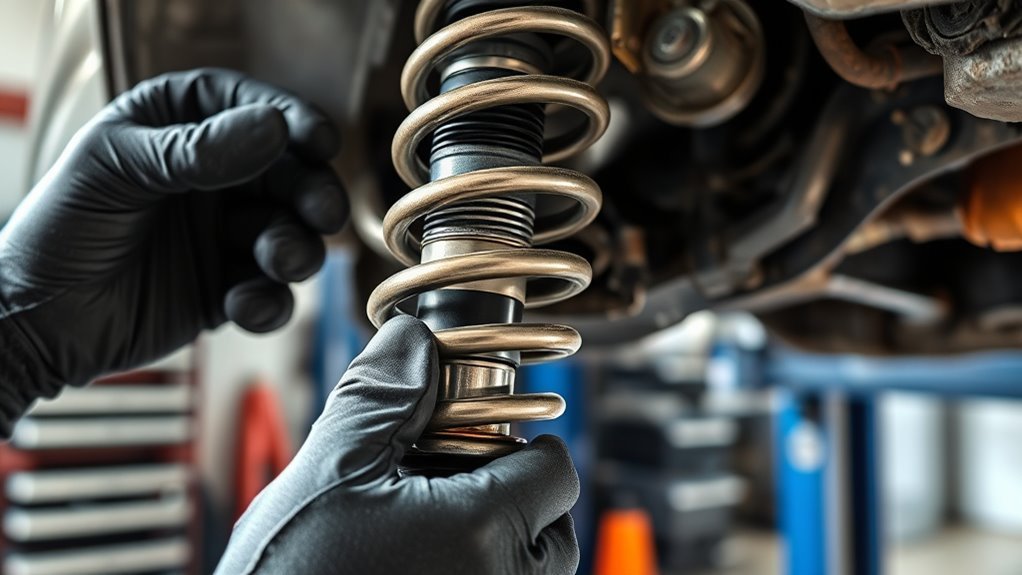
Start by visually inspecting key components like leaf springs and U-bolts for any signs of damage or looseness.
Next, perform a bounce test to help pinpoint the sources of the noise.
Using silicone-based lubricants on rubber bushings and lithium grease on metal contacts can significantly reduce friction and noise.
Also, keeping parts clean is crucial to ensure proper lubrication.
If you notice persistent or high-pitched noises, it may be time for repairs.
Keep following along to discover how to maintain a quiet and smooth ride.
Key Takeaways
– Inspect suspension components visually and perform a bounce test to localize squeaks or creaks.
This helps you pinpoint where the noise is coming from.
– Clean parts thoroughly before applying silicone lubricant on rubber or polyurethane bushings to reduce noise.
A clean surface ensures better adhesion of the lubricant.
– Apply lithium grease to metal-to-metal contacts for effective lubrication and wear prevention.
This will help keep everything moving smoothly.
– Check for loose U-bolts or grime buildup, which can amplify suspension noise and require tightening or cleaning.
A little attention here can go a long way in reducing those annoying sounds.
– Consult a professional mechanic if noises persist after lubrication and inspection to identify serious suspension issues.
It’s always best to get a second opinion if you’re unsure!
Identifying Common Suspension Noise Types
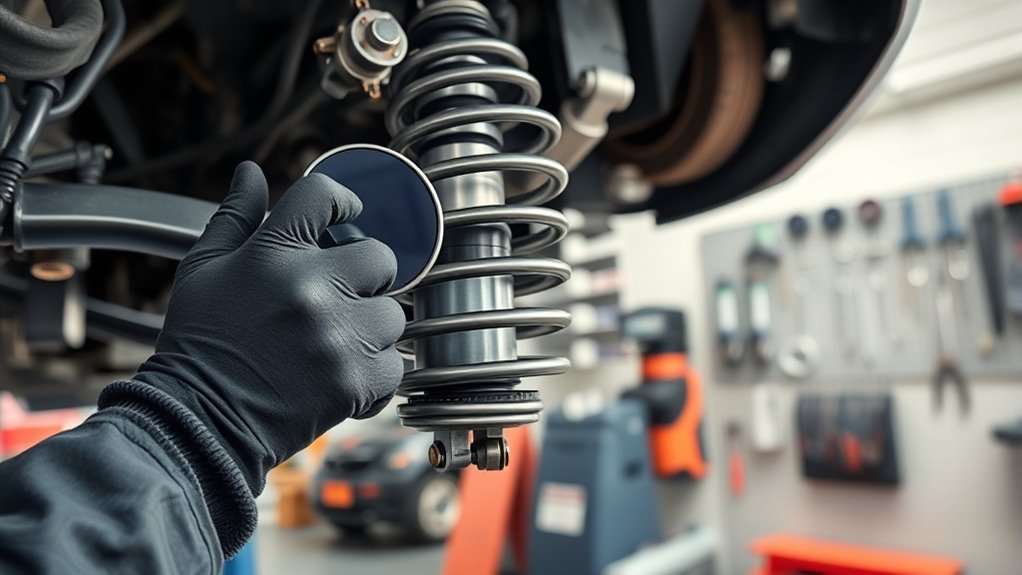
When you hear creaking or squeaking during bumps or turns, it often points to leaf spring noise, especially if dust and grime have built up.
To identify strange noises correctly, make sure you note when and where they occur.
Leaf springs typically cause those creaks, while high-pitched screeches often signal air leaks in air suspension systems.
Loose U-bolts can also amplify noise and pose safety risks, so watch for any rattling or clanking.
Visual inspections and bounce tests help pinpoint the source.
But don’t ignore persistent noises. Strange noises might indicate serious issues that need professional attention.
By recognizing these common noise types and conditions, you can better understand your suspension’s health.
This way, you can decide when to take action before problems worsen.
Performing Effective Suspension Noise Diagnosis
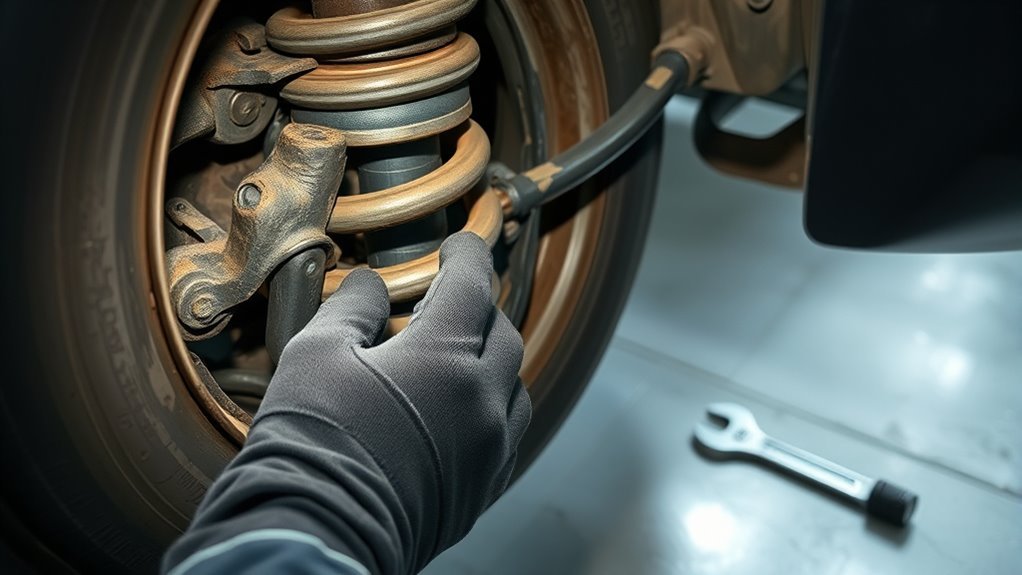
How can you accurately pinpoint the cause of your suspension noise?
Start with a thorough visual inspection of all suspension components, checking for visible damage, wear, or loose parts.
Next, perform the bounce test by rocking your vehicle up and down; this helps localize squeaks or creaks during movement.
Take your car for a test drive in a quiet, controlled area to observe how different conditions affect the noise.
Use a structured approach by inspecting for loose U-bolts or grime buildup, which can worsen sounds.
If the noise persists and you can’t identify the source, don’t hesitate to consult a professional mechanic.
Proper diagnosis prevents costly mistakes and guarantees your suspension issues get fixed correctly.
Selecting the Right Lubricants for Suspension Components
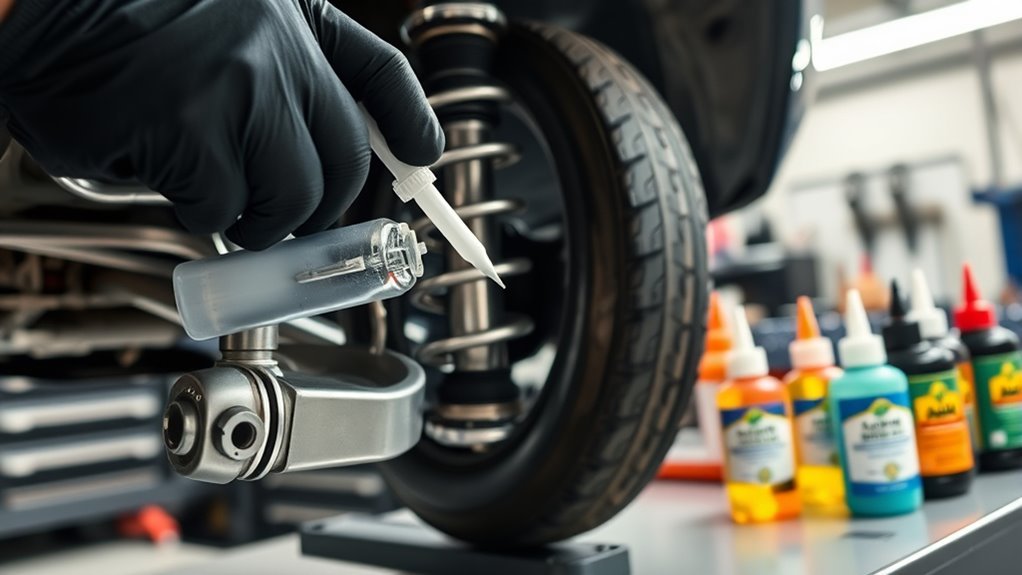
Why does choosing the right lubricant matter for your suspension components?
Using the proper lubricant reduces noise, prevents wear, and extends part lifespan.
Proper lubrication quiets your suspension, minimizes wear, and prolongs component life.
For rubber or polyurethane bushings, silicone-based lubricants work best—they cut down squeaks and protect these materials effectively.
When dealing with metal-to-metal contacts, lithium grease is your go-to choice since it handles high pressure and friction well.
If your suspension faces extreme pressure, molybdenum disulfide grease guarantees durability and reliable performance.
Always check your vehicle’s manufacturer guidelines before applying lubricants.
This helps you avoid over-lubrication, which can cause issues.
Optimal Lubrication Practices for Suspension Maintenance
Although selecting the right lubricant is crucial, applying it correctly makes all the difference in suspension maintenance.
Before you apply any lubricant, clean the suspension parts thoroughly to remove dirt and grime. This guarantees the lubricant sticks properly and works effectively.
Follow the manufacturer’s guidelines carefully to avoid over-lubrication, which can cause buildup and attract debris.
Keep these ideal practices in mind when lubricating your suspension:
- Use silicone-based lubricants on rubber and polyurethane bushings to prevent squeaks.
- Apply lithium grease on metal-to-metal contact points for wear protection.
- Choose molybdenum disulfide grease for components under extreme pressure for durability.
Regular lubrication checks help you catch issues early and maintain a quiet, smooth ride.
Recognizing When Suspension Repairs Are Necessary
When should you consider suspension repairs?
If you hear creaking or squeaking during bumps or turns, your leaf springs might need lubrication or could be damaged, requiring immediate attention.
High-pitched screeches from air suspension systems often signal air leaks that must be fixed to avoid bigger problems.
Loose U-bolts can increase noise and threaten your vehicle’s structural integrity, indicating it’s time for repairs.
Regularly check your suspension visually for damage and perform a bounce test to catch abnormal noises early.
If these noises persist despite proper lubrication and maintenance, you should address the issue promptly to prevent further damage and costly repairs.
Recognizing these signs early helps keep your suspension safe and reliable.
Seeking Professional Assistance for Persistent Suspension Issues
If your suspension continues to squeak despite your efforts, it’s time to seek professional help.
Persistent noises often signal worn parts or loose fittings that need expert attention.
A professional mechanic can diagnose these issues accurately, preventing further damage and costly repairs.
They use thorough inspections and tests to pinpoint the noise source faster than DIY methods.
Plus, they apply the right lubricants and follow manufacturer guidelines to keep your suspension running smoothly.
When you visit a mechanic, expect:
- Detailed visual inspections revealing hidden wear
- Bounce tests that expose suspension weaknesses
- Use of recommended lubricants ensuring long-term silence
Getting timely professional help protects your vehicle’s structure and saves you money in the long run.
Frequently Asked Questions
Is My Suspension Squeaking Bad?
Yes, your suspension squeaking is bad because it signals worn components or dirt buildup.
If you ignore it, you risk more damage and costly repairs.
You should inspect and lubricate parts to prevent further issues.
What Are the Suspension Components of a Car?
You’ll find springs, shock absorbers, control arms, and sway bars in your car’s suspension.
Each part supports weight, absorbs shocks, and stabilizes your ride for better handling and comfort while driving.
It’s fascinating how these components work together to enhance your driving experience!
Can WD-40 Help Squeaky Suspension?
WD-40 can act like a quick rain on a dusty road, easing squeaks temporarily.
But you’ll want silicone or specialized grease for lasting relief.
WD-40 won’t keep your suspension singing smoothly long-term.
How to Check Car Suspension?
You visually inspect suspension parts for damage.
Next, perform a bounce test by pushing down each corner of the vehicle.
Check for dirt or debris, and verify that bolts are tight.
If problems persist, it’s best to consult a mechanic.
Conclusion
You’d think a car’s suspension squeaking would be a secret code only mechanics understand, but it’s really just your vehicle’s way of asking for a little TLC.
Instead of letting that noise serenade you on every drive, take charge—diagnose, lubricate, and fix it yourself.
After all, who needs a squeaky soundtrack when you could enjoy a smooth, quiet ride?
Ironically, silence might just be the loudest sign your suspension’s happy.
So, if you hear those pesky squeaks, don’t ignore them.
Take the time to inspect your suspension components, apply some lubricant, and make necessary adjustments or replacements.
By doing this, you can ensure not only a quieter ride but also enhance your car’s overall performance and longevity.
In conclusion, addressing car suspension squeaking issues is essential for a smooth driving experience.
Being proactive can save you from more significant problems down the road.
So, grab your tools and give your suspension the care it deserves!