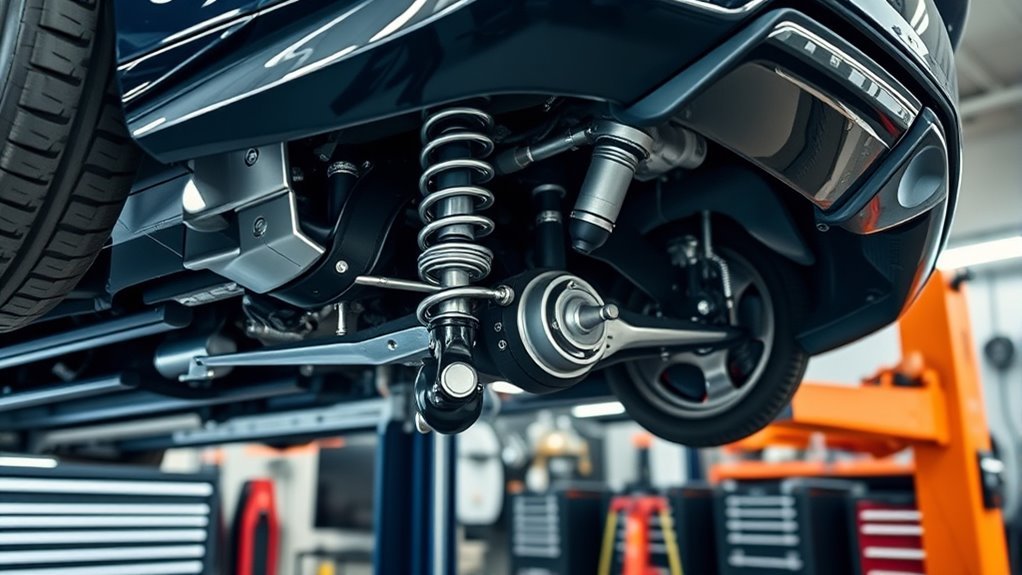
How Much Does Car Suspension Cost?
You can expect to pay between $450 and $1,200 to replace key suspension parts like shocks or struts.
The cost varies depending on your vehicle’s make, parts quality, and job difficulty.
Labor usually adds an additional $150 to $300, plus $60 to $100 for wheel alignment.
Luxury or specialty cars often cost more due to their complex components and labor requirements.
Knowing these factors helps you budget smarter.
Keep exploring to understand what influences these costs and your repair options.
Key Takeaways
- Suspension repair costs can really vary. Typically, you might spend anywhere from $450 to $1,200 for shock or strut replacement, which includes both parts and labor.
- Labor rates usually range between $50 and $120 per hour. This can significantly affect your overall repair expenses, depending on the complexity of the job and the type of vehicle you have.
- If you’re looking at replacing control arms, expect to pay around $200 to $500 each. Ball joint replacements can be a bit cheaper, ranging from $20 to $200.
- After making any suspension repairs, it’s a good idea to get a wheel alignment. This usually costs an extra $60 to $100.
- Keep in mind that if you have a luxury or high-performance vehicle, or if your car has an advanced suspension system, the repair costs can be higher. This is due to more expensive parts and the need for specialized labor.
Factors Influencing Suspension Repair Costs
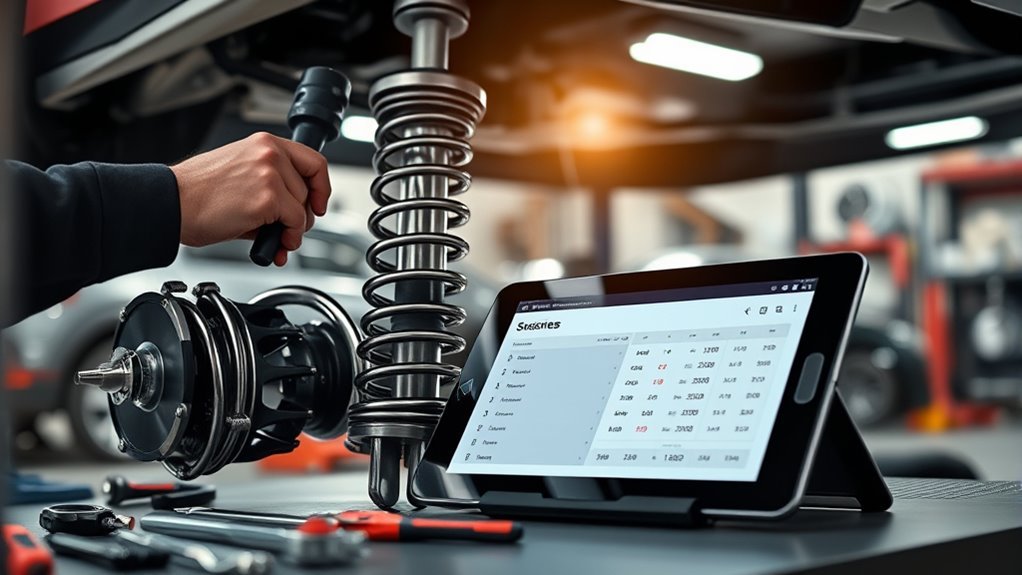
When you need suspension repairs, several factors will influence the total cost.
The type of suspension components your vehicle has plays a big role since some systems are more complex and costly to fix.
Your car’s make and model matter, too—specialized parts or labor can drive up repair costs.
The severity of suspension issues also affects pricing; minor wear and tear might only require simple fixes, while extensive damage demands costly replacements.
Choosing between OEM parts and aftermarket options impacts expenses, with OEM parts generally costing more but offering reliable quality.
Finally, labor rates vary among auto repair shops, typically ranging from $50 to $120 per hour depending on the shop’s expertise and location.
All these factors combine to determine what you’ll pay.
Typical Price Ranges for Common Suspension Repairs
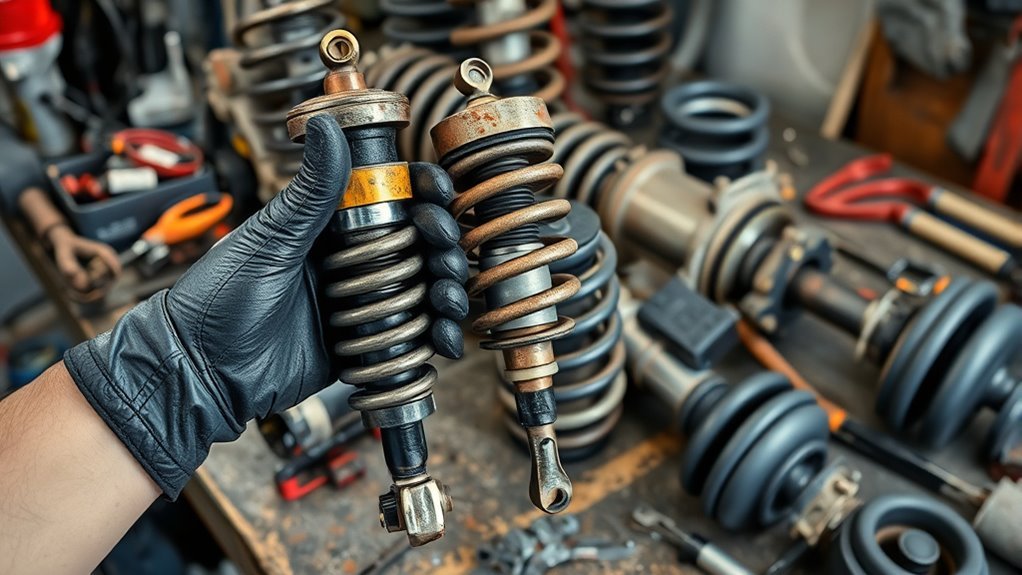
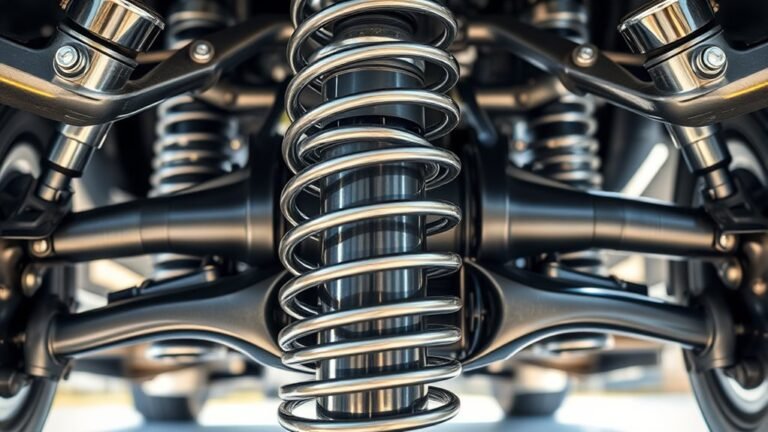
When you need to replace shocks or struts, expect to pay between $450 and $1,200, including labor.
Ball joints can cost anywhere from $20 to $200.
Control arms usually range from $200 to $500 each.
Knowing these price ranges helps you plan your repair budget more effectively.
Shock and Strut Prices
Although replacing shocks and struts can be costly, understanding the typical price ranges helps you budget effectively.
Shock absorbers and struts usually cost between $450 and $1,200 for parts and labor, but this depends on your vehicle and the quality of parts used.
Labor costs often add $150 to $300, and after suspension repairs, a wheel alignment costing $60 to $100 is recommended to maintain ride quality and safety.
Keep in mind, replacing shocks or struts in pairs is ideal to guarantee balanced handling.
Here’s what to expect:
- Parts cost: $200 to $1,500 depending on brand and quality
- Labor costs: $150 to $300 for installation
- Wheel alignment: $60 to $100 following replacement
Control Arm and Ball Joint Costs
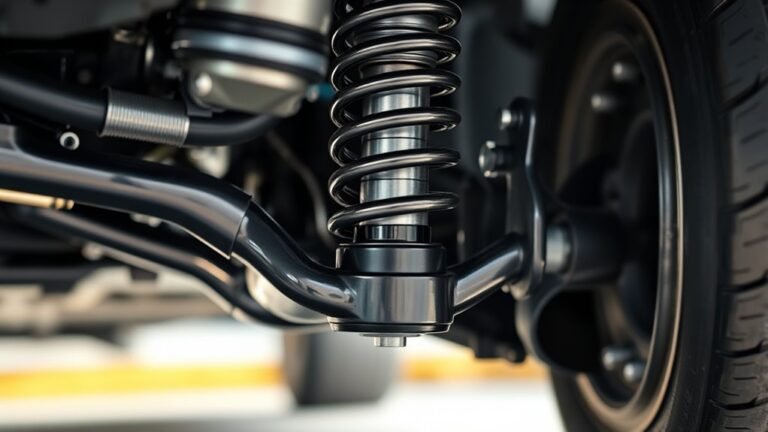
Beyond shocks and struts, your control arms and ball joints play an essential role in your vehicle’s suspension system, affecting both safety and ride quality.
If you notice uneven tire wear or handling issues, it might be time for suspension repair involving these key suspension components.
Replacing control arms typically costs between $200 and $800, depending on your vehicle and labor.
Ball joints range from $20 to $200 each, with labor adding $50 to $120 per hour.
Doing both repairs together can save you on labor since they require similar disassembly.
Addressing worn control arms and ball joints promptly prevents further damage and guarantees safe driving, much like replacing shocks does.
Keeping these parts in good shape is critical for your vehicle’s performance and your safety.
Parts and Labor Cost Breakdown
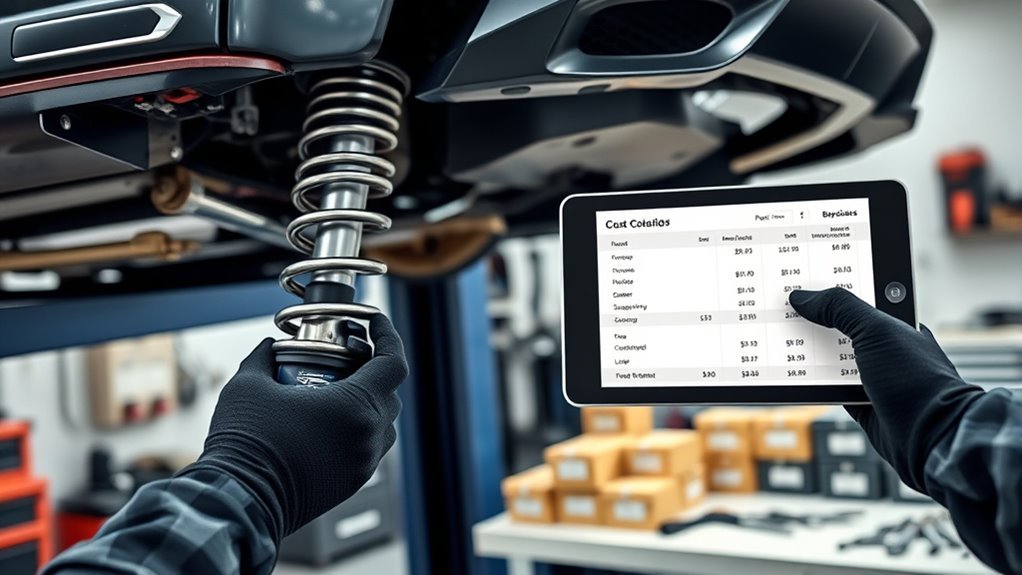
Replacing shocks or struts typically costs between $450 and $1,200. This includes labor fees that range from $150 to $300.
When you consider suspension repair, both parts and labor greatly impact the total cost. For example, parts for shocks and struts can vary widely, as do labor rates depending on complexity.
After repairs, you’ll likely need a wheel alignment, which adds about $60 to $100 to the cost. Here’s a quick breakdown:
- Shock or strut parts: $200 to $1,500
- Labor rates: $50 to $120 per hour
- Additional alignment: $60 to $100
Knowing these costs helps you budget accurately for suspension repair without surprises.
The Role of Vehicle Make and Model in Pricing
Since your vehicle’s make and model play a major role in suspension repair costs, it’s important to understand how they affect pricing.
Luxury vehicles and high-performance models usually have pricier suspension system components and require specialized labor, driving up labor costs.
Luxury and high-performance cars often incur higher suspension repair costs due to costly parts and specialized labor.
If your vehicle features advanced suspension systems like air ride or adaptive setups, expect higher repair costs due to their complexity.
On the other hand, common sedans and SUVs benefit from widely available aftermarket parts, which can lower suspension repair costs.
Labor costs also vary depending on the suspension system’s design and repair difficulty specific to your vehicle make and model.
Knowing these factors helps you anticipate expenses and make informed decisions when dealing with suspension repairs.
How Suspension Repairs Affect Vehicle Performance
When you address suspension repairs promptly, you improve your vehicle’s handling and safety.
Suspension problems often lead to unstable steering and uneven tire wear, especially on uneven road surfaces.
A timely suspension replacement can restore your car’s ride quality and control, making every drive smoother and safer.
Regular visual inspection helps catch issues before they worsen, preventing costly repairs.
This is particularly vital for performance vehicles, where suspension integrity directly affects driving dynamics.
Here’s what suspension repairs do for your vehicle:
- Enhance stability and responsiveness on uneven road conditions.
- Prevent abnormal noises and uncomfortable rides.
- Improve overall driving comfort and fuel efficiency.
Financing and Insurance Considerations for Suspension Work
Although suspension repairs can be costly, you don’t have to pay the full amount upfront.
Many auto shops offer payment plans, letting you spread out the cost of suspension work over time. You can also explore financing options like auto repair loans or use credit cards with 0% APR promotional offers to manage unexpected expenses.
Keep in mind, standard auto insurance typically won’t cover repairs for a worn suspension caused by normal use. However, it may cover damage from accidents or road hazards.
Before agreeing to financing, ask about warranties on parts and labor to protect yourself from defects or future issues.
Taking these steps helps you handle suspension repair costs smartly without straining your budget.
Frequently Asked Questions
Is It Worth Replacing Car Suspension?
Yes, it’s worth replacing your car suspension if you want improved ride quality, safety, and handling.
You’ll avoid costly future repairs, and upgrading parts can boost your vehicle’s performance and reliability over time.
Is It Expensive to Fix a Suspension on a Car?
Fixing your car’s suspension can be pricey, especially if you need major parts replaced.
However, minor repairs like shocks or ball joints cost less.
It all depends on the damage and parts you choose.
Can I Drive With a Bad Suspension?
Driving with a damaged suspension dangerously disrupts your control and comfort.
Don’t delay—delivering prompt repairs protects your safety and prevents pricey problems.
Plus, it helps preserve proper performance.
Trust technicians to tackle tricky suspension troubles today.
How Much Does Suspension on a Car Cost?
You can expect to pay between $450 and $1,200 to replace shocks or struts.
But a full suspension overhaul might cost up to $5,000, depending on your vehicle and the parts needed.
It’s important to consider that prices can vary based on your car’s make and model, as well as the specific repairs required.
Conclusion
When it comes to suspension repairs, costs can skyrocket faster than you’d expect—like a rollercoaster you didn’t buy a ticket for!
But don’t panic; knowing the parts, labor, and how your car’s make affects the bill puts you in the driver’s seat.
Remember, a smooth ride isn’t just luxury—it’s survival.
So, gear up, plan your budget, and keep that suspension in check before your wallet takes a nosedive!
In conclusion, understanding car suspension costs is crucial for every driver.
The expenses can vary based on the car model, required parts, and labor rates, but being informed helps you manage your budget effectively.
Prioritize your suspension repairs to ensure a smooth and safe ride.
Don’t wait until it’s too late—stay proactive and keep your vehicle’s suspension in top shape to avoid costly repairs down the road!