Fixing Squeaky Car Suspension: A Step-by-Step Guide
To fix a squeaky car suspension, you need to start by parking on a flat surface and safely lifting your vehicle.
Listen for noises during turns to help pinpoint worn bushings or joints.
Next, clean the rubber parts and apply silicone spray to them.
You should also use lithium grease on the metal joints to ensure smooth movement.
Make sure to inspect for any rust or damage, and replace parts if necessary.
Regular lubrication every 12,000 miles is key to preventing issues and keeping your ride smooth and safe.
Keep reading to discover how to address common problems and learn when it’s time to get expert help.
Key Takeaways
– Park the car on a flat surface.
Secure it with the parking brake and wheel chocks, then safely elevate it using a jack and stands.
– Inspect suspension components like ball joints, control arms, and rubber bushings for wear, dryness, rust, or damage causing squeaks.
Look for any signs that these parts might need attention.
– Apply silicone spray to rubber bushings and lithium grease to metal joints.
This will help reduce friction and eliminate those annoying squeaky noises.
– Bounce the vehicle with a helper to identify the exact source of noise.
Listen carefully during turns and suspension movement to pinpoint the issue.
– Replace severely worn or damaged suspension parts promptly.
Also, schedule regular lubrication every 12,000 miles for lasting suspension health.
Identifying the Source of Suspension Squeaks
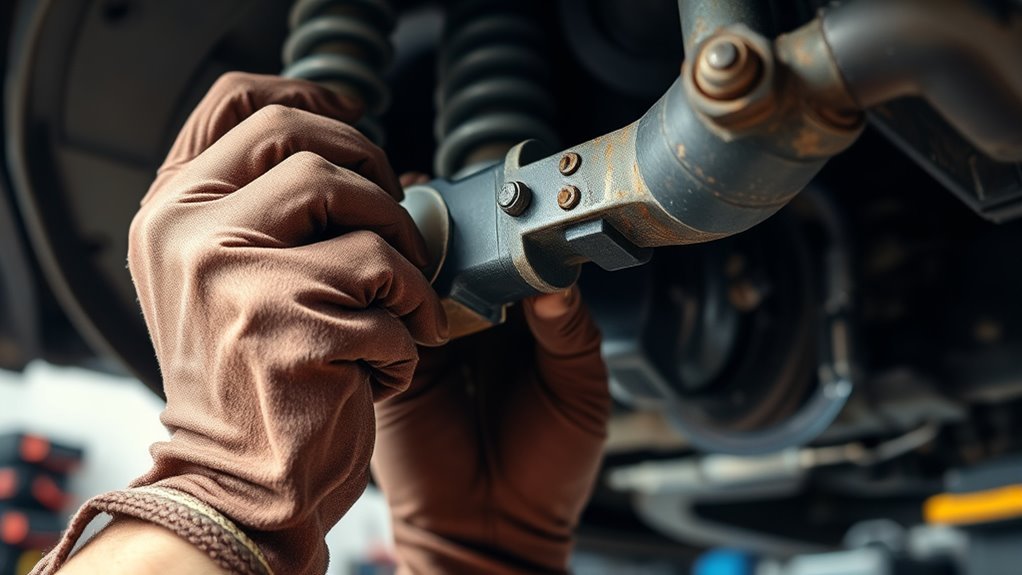
Where exactly is that squeak coming from?
To identify suspension squeaks, listen closely for creaking noises, especially during turns. These often point to ball joints or control arms.
Inspect the rubber bushings carefully—worn or dried bushings frequently cause these noises.
Worn or dried rubber bushings are often the culprit behind suspension squeaks.
Don’t forget to apply silicone lubricant to your suspension components and see if the sound changes or disappears. This simple step can help you pinpoint the issue.
Check for rust or friction on metal parts, as lack of lubrication or contact between components may also create squeaks.
If you’re unsure or the noise persists, have a professional mechanic inspect your vehicle.
Ignoring these sounds could lead to safety risks and more costly suspension damage down the road.
Preparing Your Vehicle for Inspection and Maintenance
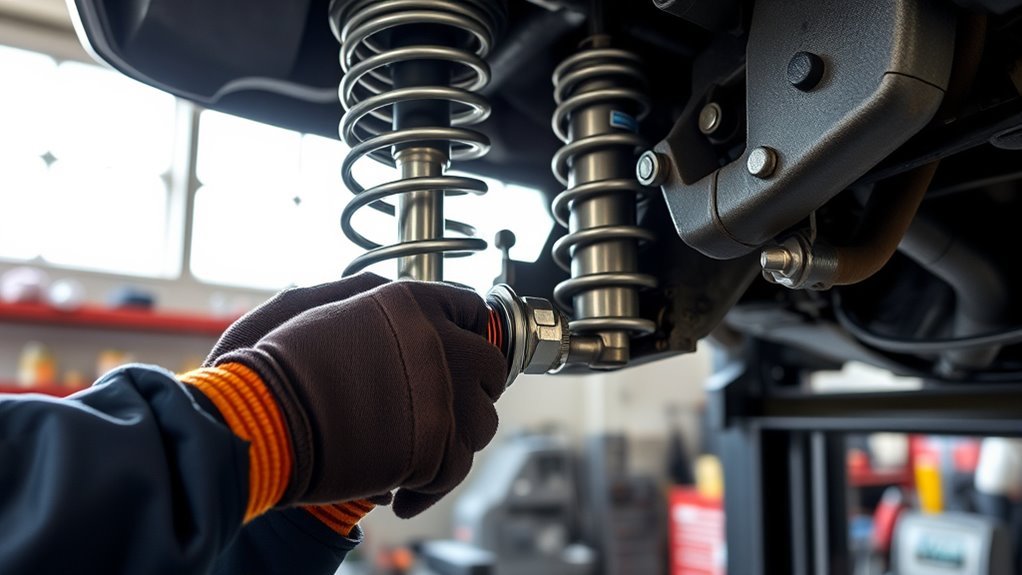
Before you start inspecting your suspension, make sure your vehicle is securely parked on a level surface with the parking brake engaged.
Gather the necessary tools and safety equipment, like ramps or stands, to safely elevate your car and access hard-to-reach parts.
Taking these steps will help you work efficiently and avoid accidents during maintenance.
Safety Precautions Checklist
Five essential safety steps will help you prepare your vehicle for suspension inspection and maintenance.
First, park on a flat, stable surface and engage the parking brake to keep your car from moving.
Next, use ramps or safety stands to lift the vehicle safely. This gives you easy access to the suspension system and shock absorbers without risking injury.
Don’t forget to block the wheels with chocks to secure the vehicle from rolling while you work underneath or around it.
Always wear safety goggles and gloves to protect yourself from debris and sharp edges.
Finally, have a helper assist you by bouncing the vehicle or checking for noises. This helps accurately diagnose issues in the suspension system.
Following these precautions keeps you safe and your repair effective.
Vehicle Positioning Setup
Start by parking your vehicle on a flat, stable surface and engaging the parking brake to keep it from moving during inspection and maintenance.
Place wheel chocks behind the rear wheels for added safety while working underneath the car.
Next, use ramps or safety stands to elevate the vehicle, giving you enough clearance to access the suspension components easily.
Before you begin inspecting, clean dirt and debris from the undercarriage to get a clear view of all parts affecting the vehicle’s handling.
Having a helper bounce the car while you listen for squeaks can help you pinpoint the source of noise.
Proper vehicle positioning setup guarantees a safer, more effective inspection and maintenance process for your suspension system.
Tools and Materials
Although preparing your vehicle for suspension inspection can seem straightforward, having the right tools and materials on hand makes the process much smoother and safer.
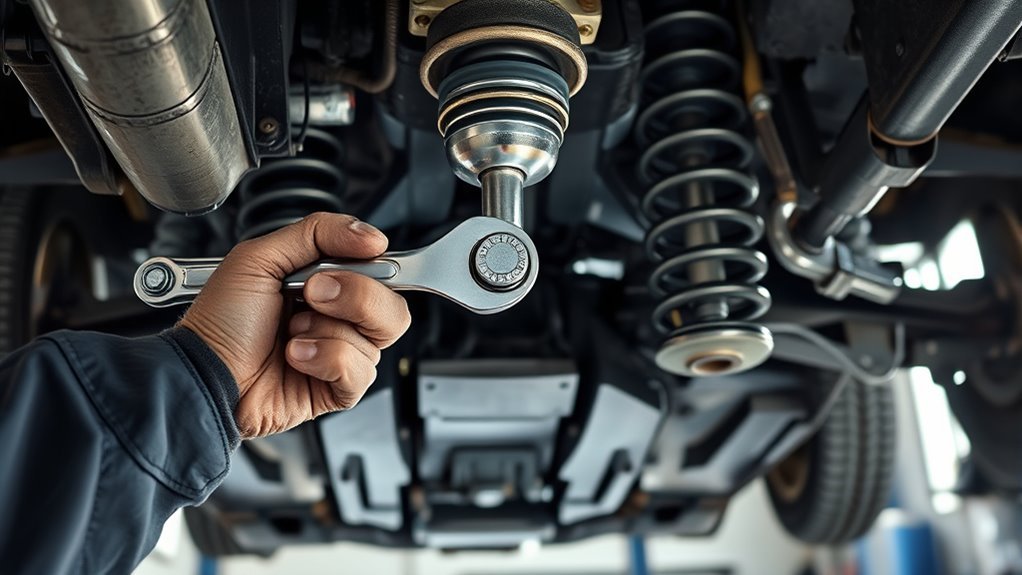
You’ll need essential tools and materials like a jack, jack stands, and a wrench set to lift and access suspension parts safely.
Lubricants like silicone spray or lithium grease will help reduce noise and wear on bushings.
And don’t forget safety gear and a flashlight to spot hard-to-see damage.
| Tool/Material | Purpose |
|---|---|
| Jack & Jack Stands | Lift and secure the vehicle |
| Wrench Set | Remove or tighten suspension parts |
| Silicone Spray/Lithium Grease | Lubricate bushings and moving parts |
| Gloves & Goggles | Protect yourself during inspection |
Lubrication Techniques for Suspension Components
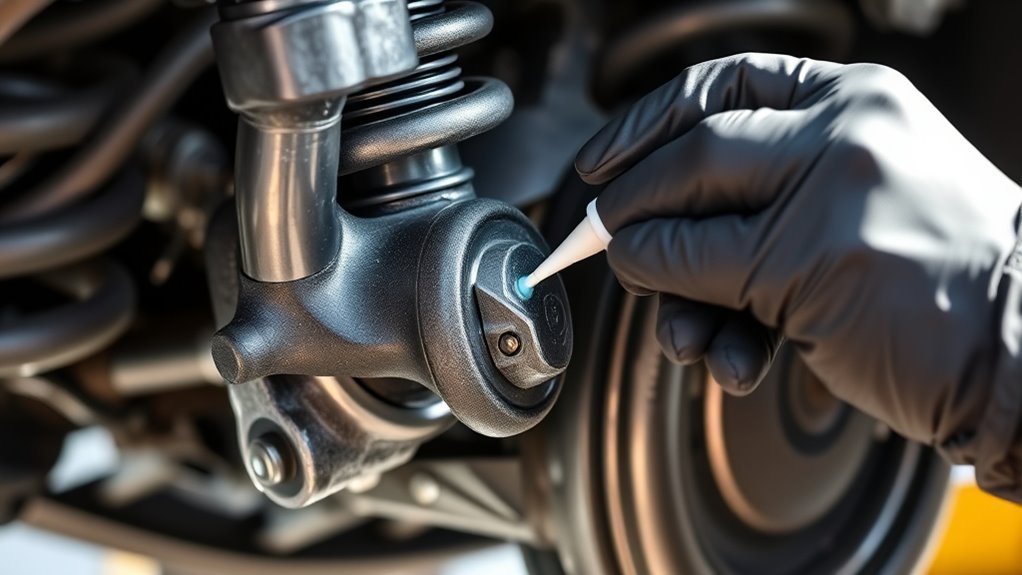
You’ll want to apply the right lubricant to each suspension part—silicone spray works best for rubber bushings, while lithium grease suits metal joints and springs.
Make certain to clean grease fittings before pumping in fresh grease to avoid dirt buildup and guarantee smooth flow.
Comparing these lubricant types helps you keep your suspension quiet and functioning properly.
Proper Grease Application
When applying grease to your car’s suspension, make certain to clean the fittings thoroughly beforehand to prevent dirt from contaminating the lubricant.
Use a grease gun to deliver fresh grease into each fitting until it oozes out, signaling proper grease application.
Pay special attention to ball joints, which often have multiple grease points requiring thorough lubrication.
Regularly inspect and clean these fittings to avoid clogging—if grease doesn’t flow, replace the fitting.
Remember, different suspension parts need specific lubricants, but for metal components like ball joints, lithium grease is ideal.
Schedule this maintenance every 12,000 miles or as your manufacturer suggests to keep squeaks at bay and extend suspension life.
Following these steps guarantees your suspension stays properly lubricated and quiet.
Lubricant Types Comparison
Because different suspension components have unique materials and functions, choosing the right lubricant is essential to keep everything running smoothly and quietly.
When working on your car’s suspension, silicone spray works best on rubber bushings—it lubricates without causing damage, effectively reducing squeaks.
For metal parts and springs, lithium grease provides durable lubrication and protects against rust and friction.
If your suspension has grease fittings, use a grease gun to apply fresh grease until it seeps out, ensuring thorough coverage.
Dry-film lubricants suit internal latch mechanisms since they don’t attract dirt or grime, keeping movement smooth without buildup.
Always clean dust boots before applying any lubricant to avoid contamination.
Knowing these lubricant types helps you maintain your car’s suspension efficiently and silently.
Addressing Common Suspension Issues and Repairs
Although a creaky suspension often signals worn-out bushings, shocks, or joints, you can prevent further damage by inspecting these components promptly.
Your vehicle’s suspension needs regular attention to avoid costly repairs and guarantee safety.
Lack of lubrication causes metal-on-metal contact, intensifying noise and wear.
Scheduling maintenance every 12,000 miles catches issues early, maintaining performance.
When addressing common suspension issues, keep in mind:
- Ignoring squeaks can lead to dangerous failures.
- Repair costs vary, but timely fixes save money.
- Professional diagnostics guarantee proper repairs.
Preventative Maintenance to Avoid Future Squeaks
Preventing suspension squeaks starts with regular care and attention to your vehicle’s components.
You should perform preventative maintenance by lubricating suspension parts with silicone-based products every 12,000 miles. This helps reduce friction and extend their lifespan.
Cleaning the undercarriage frequently is also important. It avoids dirt buildup, which accelerates wear patterns and causes noise.
Inspect rubber bushings for wear or dryness, and replace them promptly to prevent squeaks and damage.
Checking grease fittings regularly is crucial, too. It guarantees proper lubrication and avoids metal-on-metal contact.
Staying on top of these tasks helps you catch early signs of wear and keep your suspension running smoothly.
When to Seek Professional Suspension Service
When should you consider taking your car to a professional for suspension service?
If you hear persistent squeaking or creaking despite lubrication attempts, it’s a clear sign that worn components may need replacement.
Suspension problems can seriously affect your vehicle’s safety and handling, so don’t ignore them.
Also, if your ride feels less comfortable or the handling feels off, it’s time to get a professional inspection.
Regular evaluations every 12,000 miles, especially after driving on rough roads, can prevent costly repairs down the line.
Seek professional service to protect your car and peace of mind.
- You deserve a smooth, safe ride without worrying about hidden issues.
- Don’t let small noises escalate into expensive repairs.
- Trust experts to keep your suspension working flawlessly.
Frequently Asked Questions
How to Lube Squeaky Suspension?
You start by safely elevating your car.
Then clean the dust boots on the grease fittings.
Use silicone lubricant on rubber bushings and lithium grease on metal parts.
Pump grease until fresh appears, ensuring proper lubrication to stop squeaks.
Why Do My Front Tires Make a Screeching Sound?
About 70% of screeching front tires come from worn brake pads.
You should inspect and replace them promptly.
Also, check for debris, lubrication issues, or wheel misalignment to stop the noise and stay safe on the road.
Why Does My Car Creak Over Bumps?
Your car creaks over bumps because worn bushings, dry ball joints, or rusty coil springs cause metal parts to rub without lubrication.
You should inspect and lubricate these suspension components to stop the noise and improve safety.
Why Does My Car Make a Creaking Noise When I Turn at Low Speeds?
Think of your car as a dancer—when it creaks turning slowly, worn bushings or rusty joints might be throwing off its rhythm.
Don’t ignore it; you’ll want to check those parts before the performance worsens.
Conclusion
By following these steps, you can easily fix that annoying squeak in your car’s suspension.
For example, Sarah noticed a persistent creak every time she hit a bump. After lubricating her ball joints and tightening loose bolts, the noise disappeared completely.
Regular checks and lubrication not only save you money but also keep your ride smooth and safe.
Don’t wait for the squeak to worsen—take action now! If you’re unsure, consult a professional for assistance.
In conclusion, addressing squeaky car suspension issues is crucial for a comfortable driving experience.
By regularly checking and maintaining components like ball joints, you can avoid larger problems down the road.
Remember, a little preventive care can go a long way in ensuring your car remains in top condition.
So, don’t hesitate—take action today to keep your ride quiet and safe!