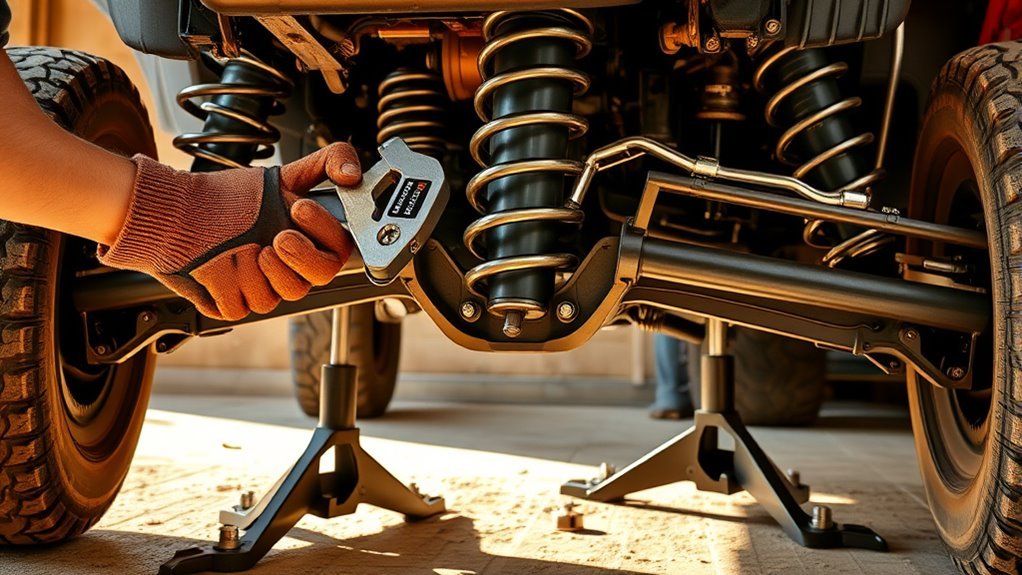
How to Lift Car Suspension: A Step-by-Step Guide
To lift your car’s suspension, you’ll want to start by parking on a flat, stable surface.
Gather your tools, including a jack, jack stands, and a suspension lift kit.
Choosing the right lift method is crucial. Whether you opt for a suspension upgrade or a body lift, make sure it aligns with your budget and needs.
Next, carefully remove the old components.
Once that’s done, securely install the new parts.
Don’t forget to perform safety checks and get a professional alignment afterward.
It’s essential to keep an eye on handling and wear after installation.
By following these basics, you’ll be better prepared to explore the process of lifting your car’s suspension in more detail.
Key Takeaways
– First, you’ll want to park on flat ground.
Gather your tools and take a moment to review your vehicle manual for the specific lift points before diving into the suspension lift process.
– Next, choose the lift method that suits your needs best.
Whether it’s a suspension upgrade, body lift, or a combination of both, consider your budget, vehicle compatibility, and performance goals when making your decision.
– Now, it’s time to gather your essential tools.
You’ll need a hydraulic jack, torque wrench, spring compressor, and don’t forget your safety gear to keep everything safe and accurate during installation.
– As you follow the installation steps, make sure to check all fasteners for tightness.
It’s also crucial to inspect for any damage or misalignment while you’re assembling everything.
– After the lift is done, be sure to get a professional alignment.
Regularly inspect your suspension components and keep an eye on handling for any necessary safety and performance adjustments.
Preparing Your Vehicle for Suspension Lift
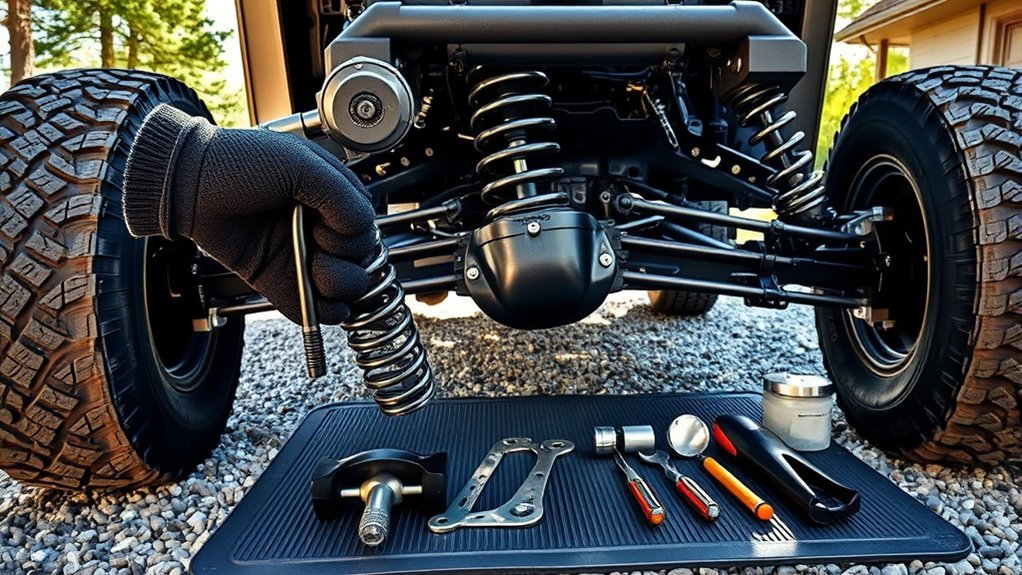
Before you begin lifting your vehicle’s suspension, make sure it’s parked on a stable, flat surface to prevent any movement during the process.
To safely lift a car, gather all necessary tools like a jack, jack stands, and any suspension lift kits specific to your model.
Ensure you have a jack, jack stands, and the right suspension lift kit before starting your car lift.
Inspect your car carefully for rust or damage, especially around suspension areas, to avoid complications.
Review your vehicle’s manual for recommended lift points and procedures; following these guidelines helps guarantee safety and proper handling.
After completing the lift, be prepared to check and adjust the wheel alignment.
Altering the suspension height can affect how your car drives and the wear on your tires.
Taking these steps guarantees you can safely lift a car with confidence.
Selecting the Right Suspension Lift Method
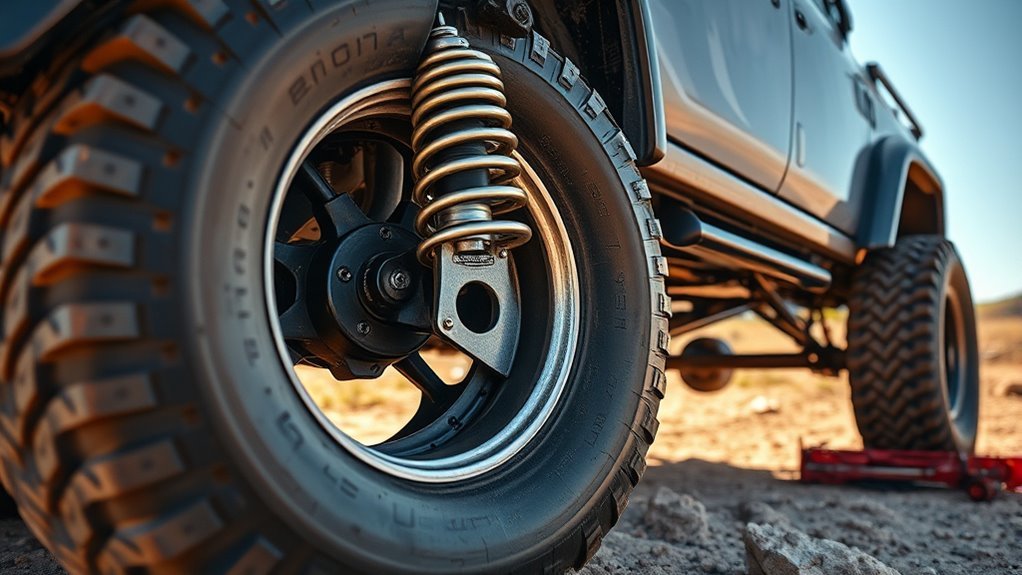
When choosing how to lift your car’s suspension, you’ll want to weigh the pros and cons of each method.
From upgrade kits to body lifts and spring spacers, there are various options available.
Consider your budget, the compatibility with your vehicle, and how each option affects performance and stability.
Making the right choice guarantees your car performs well and stays safe on the road.
Suspension Lift Options
Choosing the right suspension lift method depends on your vehicle type, budget, and how you plan to use it.
Suspension lifts involve replacing springs and shocks for better clearance and performance.
Body lifts raise the body with spacers, keeping the suspension stock but may affect stability.
Spring spacers and shackle lifts are budget-friendly options that extend your current springs.
Combined lifts mix methods for maximum height but need experience to manage ride quality.
Here’s a quick overview:
| Lift Type | Key Feature |
|---|---|
| Suspension Lifts | Replace springs & shocks |
| Body Lifts | Use spacers to raise body |
| Spring Spacers | Extend existing springs |
| Shackle Lifts | Adjust leaf spring angle |
| Combined Lifts | Mix methods for maximum height |
Pick the right suspension lifts based on your needs for the best results.
Pros and Cons
Although suspension lift methods vary widely, each comes with distinct advantages and drawbacks that you should weigh carefully.
A suspension upgrade kit offers the best overall performance, boosting ground clearance and durability.
But, it does come with a higher price tag.
Body lifts are more budget-friendly, but they may reduce stability and cause issues with transmission or steering components.
Spring spacers and shackle lifts are easy to install and cost-effective.
However, low-quality kits risk stressing your suspension system and causing failures.
Combined lifts can achieve greater height, but they often compromise ride quality and require expert installation.
To select the right suspension lift method, consider your vehicle’s weight distribution and intended use.
This balance will help you guarantee safety and peak performance.
Ultimately, it will guide you in making a smart suspension upgrade choice.
Cost and Compatibility
Since suspension lift options vary widely in cost, you’ll want to weigh your budget carefully before deciding.
Basic body lifts can start around $100, while full suspension upgrades may exceed $1,000 depending on your vehicle’s make and features.
To guarantee compatibility, research lift kits tailored specifically for your car’s model and year.
Using an incompatible kit can cause handling problems and safety risks.
Remember, some budget-friendly methods like spring spacers or shackle lifts might save you money upfront.
But they could reduce ride quality and durability in the long run.
Also, factor in additional costs such as alignment services after installation, which are essential for safe performance.
Tools and Equipment Needed for Suspension Lift
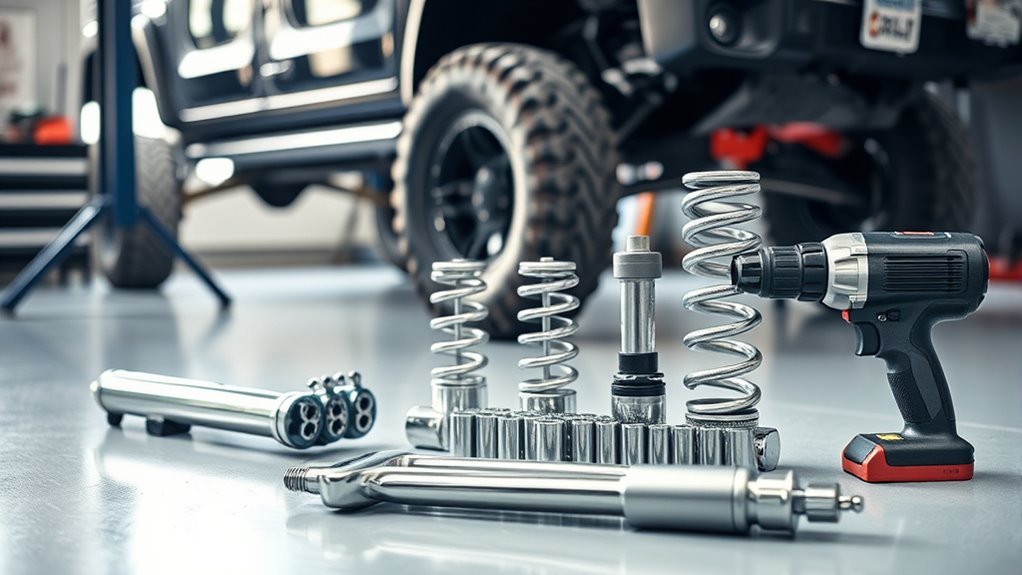
You’ll need the right tools and safety gear to lift your car’s suspension properly.
A hydraulic floor jack, jack stands, and a torque wrench are essential for the job, along with a spring compressor for handling coil springs safely.
Don’t forget gloves and goggles to protect yourself while working.
Essential Lift Tools
Before you begin lifting your car’s suspension, gather the essential lift tools to guarantee a safe and efficient installation.
You’ll need a hydraulic jack and jack stands rated for your vehicle’s weight to securely lift and support the car.
A torque wrench is vital to tighten all fasteners to manufacturer specs, ensuring safety and performance.
Keep a set of wrenches and sockets—both standard and metric—on hand for removing and installing suspension components.
Many suspension lift kits include auto parts like coil springs, shock absorbers, and installation hardware, which you’ll need to install properly.
Additionally, a spring compressor tool might be necessary to safely handle tightly wound coil springs.
Having these essential lift tools ready will streamline your suspension lift process.
Safety Gear Requirements
Gathering the right tools sets the stage, but protecting yourself during the suspension lift makes the job safer and smoother.
Before starting, gear up with gloves to shield your hands from sharp edges and debris, and wear safety glasses to protect your eyes.
Steel-toed boots are a must to guard your feet against heavy parts or tools dropping.
Since suspension work often involves heavy components, these precautions reduce injury risks considerably.
Alongside your floor jack, jack stands, and torque wrench, always consult your vehicle’s service manual to identify proper lifting points and torque specs.
If you’re replacing springs, use a spring compressor safely to handle compressed springs.
Prioritizing safety gear guarantees you can focus fully on the suspension lift without unnecessary hazards.
Removing Old Suspension Components
Start by securely lifting your vehicle and placing it on jack stands. This ensures safety while working on the suspension.
Next, remove the wheels to access the suspension assembly fully.
Disconnect the sway bar links and any brake lines or sensors attached to the suspension carefully. This helps to prevent any damage.
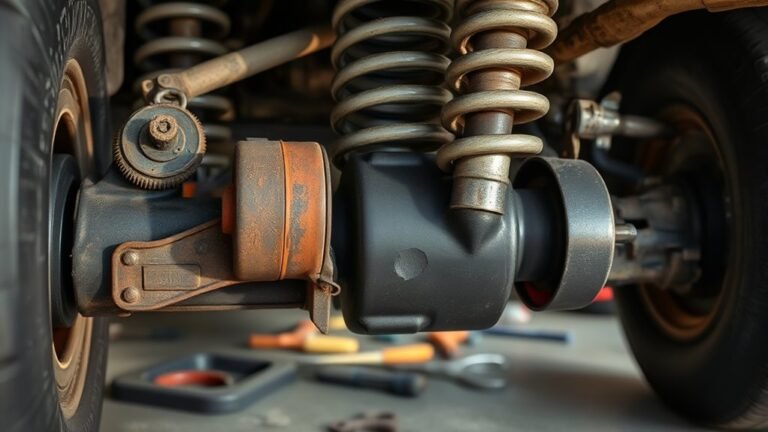
Using a socket set and wrenches, unbolt the old coil or leaf springs and shock absorbers methodically.
Take your time to avoid stripping bolts or harming components.
Once removed, inspect all mounting points and surrounding areas for signs of wear or damage.
This step guarantees your suspension upgrade will perform effectively and last longer.
Removing old suspension components properly sets a solid foundation for the next phase of your suspension lift project.
Installing New Suspension Components
Lift your vehicle securely on jack stands and make sure it’s stable before you begin installing the new suspension components.
Start by following the manufacturer’s instructions closely as you install shocks, springs, and control arms on your car or truck.
Begin by carefully installing shocks, springs, and control arms according to the manufacturer’s detailed instructions.
Align all parts correctly, and use a torque wrench to tighten bolts to the specified settings to guarantee peak performance.
If your setup includes coil springs, adjust the ride height by modifying preload or using adjustable components.
Keep in mind proper alignment and handling throughout the process.
Double-check that all components are firmly secured before lowering your vehicle.
This careful installation sets the foundation for a smooth ride and improved suspension function.
You’re now preparing your car or truck for the next steps in the lift process!
Safety Checks and Post-Installation Adjustments
Once you finish installing your suspension lift, you’ll want to thoroughly check that every component is tightly secured and free from damage or misalignment before hitting the road.
For your truck, it’s a good idea to get a professional alignment to adjust the suspension angles altered by the lift.
Regularly inspect shocks, struts, and springs for wear, and confirm that the ride height matches your lift kit specs.
Also, monitor your truck’s handling in different conditions to spot issues early.
| Checkpoint | What to Look For |
|---|---|
| Component Tightness | No loose bolts or parts |
| Ride Height | Matches lift kit specs |
| Suspension Wear | Cracks, leaks, or damage |
| Handling | Stability in turns & bumps |
Frequently Asked Questions
What Are the Different Ways to Lower a Car?
You can lower your car using lowering kits, air suspension, hydraulic systems, torsion bar adjustments, or custom solutions.
Each method offers different costs, flexibility, and performance benefits.
Is Suspension the Same as a Lift Kit?
No, suspension isn’t the same as a lift kit.
Suspension includes all parts connecting your car to its wheels, while a lift kit specifically modifies those parts to raise your vehicle’s height for better clearance and performance.
So, while they are related, they serve different purposes.
If you’re looking to enhance your vehicle’s off-road capability or simply want a more commanding view of the road, then a lift kit might be what you need.
On the other hand, the suspension system is crucial for overall handling and comfort.
How to Increase the Height of Suspension?
To increase your suspension height, you’ll want to swap out springs or add spacers—it’s like giving your car a taller pair of boots.
Just make sure everything fits right to keep your ride safe and smooth.
Where Are the Proper Jacking Points for a Car?
You’ll find proper jacking points on the car’s frame or subframe, usually marked by reinforced areas.
Avoid weak or rusted spots.
Always check your vehicle’s manual to guarantee you’re lifting safely and correctly.
Conclusion
Lifting your car’s suspension isn’t just about height—it’s about elevating your journey and embracing new horizons.
As you tighten each bolt and align each part, you’re not just modifying metal; you’re crafting freedom and adventure.
Remember, every lift is a step toward mastering control and confidence on the road.
Treat your vehicle like a trusted companion—carefully prepared, ready to rise above challenges and carry you toward limitless possibilities.
In conclusion, when you lift your car’s suspension, you’re not just enhancing its look; you’re enhancing your driving experience. With proper preparation and attention to detail, you can enjoy improved performance and greater control.
So, embrace the adventure that comes with lifting your suspension, and get ready to conquer the road ahead. Your vehicle is more than just a machine; it’s your ticket to new adventures and endless possibilities.