What Happens if You Drive a Car With Broken Suspension?
If you drive a car with broken suspension, you’ll face longer stopping distances and unpredictable handling, which significantly increase accident risks.
Your ride will feel bumpier and much less comfortable.
Additionally, uneven tire wear can force costly replacements, which is never fun.
Broken suspension also puts a strain on brakes and other components.
This leads to frequent repairs and could result in legal trouble if your vehicle fails safety inspections.
Understanding these dangers and consequences can really help you see why timely repairs are so important.
Ignoring suspension issues can create a snowball effect, making your driving experience not just uncomfortable, but also unsafe.
So, take care of those repairs and keep your vehicle in top shape!
Key Takeaways
- Driving with broken suspension increases stopping distance by up to 20%. This raises the risk of accidents and rear-end collisions.
- A damaged suspension causes unstable, unpredictable steering. This can lead to a loss of vehicle control and a higher rollover risk.
- Broken suspension results in excessive vehicle bouncing and vibration. This significantly reduces ride comfort and the passenger experience.
- Uneven tire wear from suspension issues leads to frequent tire replacements. This translates to higher maintenance costs.
- Vehicles with faulty suspension often fail safety inspections. This can result in fines, registration denial, and legal penalties.
Increased Stopping Distance and Safety Risks
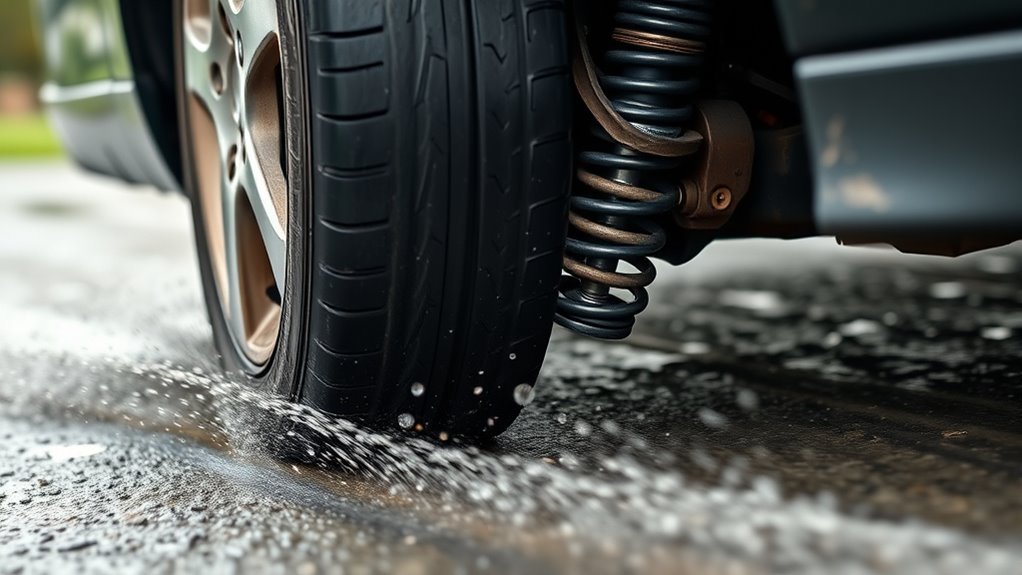
When your suspension is worn out, your car can’t absorb braking forces properly. This means it’ll take longer to stop—especially at highway speeds.
A worn suspension compromises your vehicle’s braking response, causing an increased stopping distance that can be up to 20% longer than normal.
This delay doesn’t just affect you; it raises important safety risks for everyone on the road.
With a compromised suspension, you’re more likely to face unpredictable vehicle behavior during sudden stops. This makes it harder to control your car.
A worn suspension leads to unpredictable handling during sudden stops, making vehicle control difficult and unsafe.
The longer stopping distance combined with erratic handling greatly increases the chances of rear-end collisions and other accidents.
Driving with a compromised suspension puts you and others in danger. So, addressing these issues promptly is essential to maintain safe braking performance.
Poor Handling and Vehicle Stability Issues

When your suspension is broken, you’ll notice steering becomes harder and slower to respond, making control tricky.
This delay can catch you off guard, especially during sharp turns or sudden movements.
Plus, your vehicle is more likely to roll over because it can’t stay stable on the road.
Steering Difficulty and Delays
Although it might seem manageable at first, driving a car with broken suspension can cause loose or delayed steering responses. This makes controlling your vehicle much harder.
Poor handling from suspension issues affects your ability to turn the steering wheel smoothly, especially when control arms are damaged. This leads to unsafe driving conditions, where even small maneuvers feel unpredictable.
Ignoring these symptoms can worsen the problem and increase accident risks.
| Issue | Effect on Driving |
|---|---|
| Loose steering wheel | Delayed response |
| Damaged control arms | Stiff or heavy steering |
| Poor handling | Unpredictable cornering |
| Suspension issues | Unsafe driving conditions |
A professional inspection is essential to fix these problems and restore proper control.
Increased Risk of Rollovers
Loose or delayed steering responses from broken suspension don’t just make handling unpredictable—they also raise your risk of rollovers.
Suspension failure compromises vehicle stability, especially when you take sharp turns or drive over uneven surfaces.
This compromised handling causes your car to sway or tilt excessively, increasing its center of gravity and resulting in an increased risk of rollovers.
Unpredictable steering inputs make it tough to maintain control, while the inability to absorb road shocks leads to loss of traction.
With less tire contact on the road, your chances of tipping over grow considerably.
The National Highway Traffic Safety Administration found that nearly 30% of rollover accidents involve suspension-related issues, underscoring how vital a healthy suspension system is for safe driving.
Accelerated Wear on Tires and Suspension Components
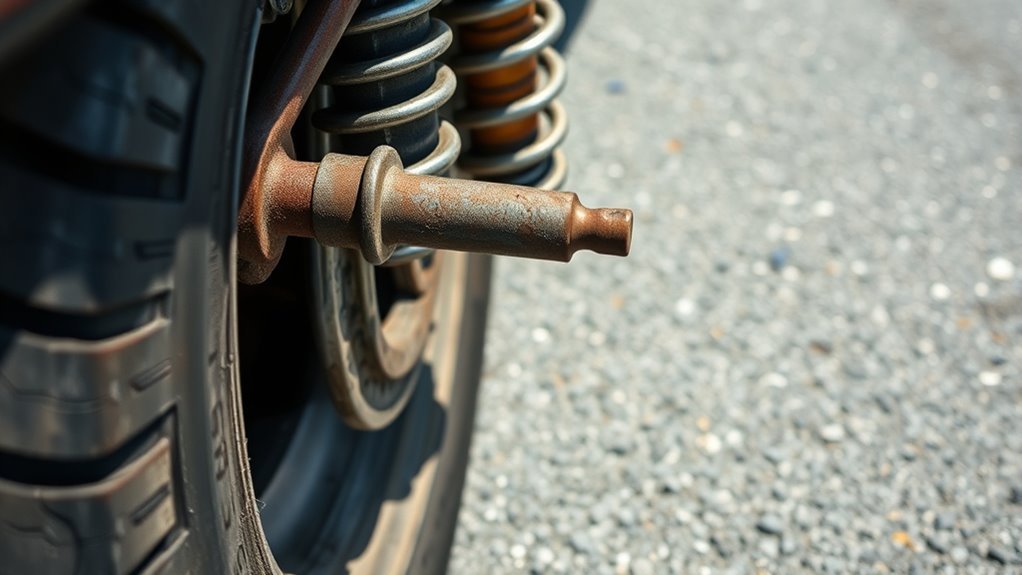
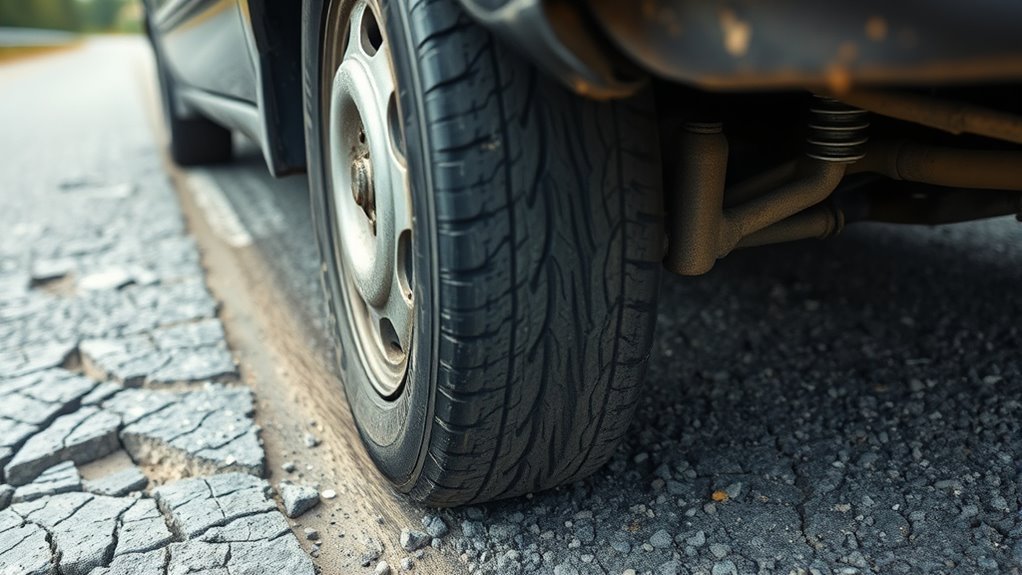
Driving with a broken suspension causes uneven tire wear, creating bald spots and feathered tread patterns that compromise your safety and tire lifespan.
This accelerated wear doesn’t just affect your tires; worn suspension components throw off your vehicle’s alignment.
As a result, this leads to excessive wear on both tires and suspension parts.
Without proper damping, your tires lose consistent contact with the road.
This worsens uneven tire wear and increases the risk of costly damage.
If you ignore these symptoms, you’ll face more frequent tire replacements and repairs.
Regular suspension inspection is essential—catching issues early lets you repair or replace damaged components before they escalate.
Taking care of your suspension prevents accelerated wear and saves you money in the long run.
Plus, it keeps your car safe to drive.
Compromised Ride Comfort and Passenger Experience
When your suspension is broken, you’ll feel every bump and vibration on the road much more intensely.
This not only reduces your comfort but also causes constant noise and disruptions inside the car.
Passengers will struggle to relax, turning even short trips into unpleasant experiences.
Increased Bumpiness and Vibration
One of the most noticeable effects of broken suspension components is the sharply increased bumpiness and vibration you’ll feel throughout the vehicle.
When your shocks and struts are worn out, they can’t absorb road impacts properly, which leads to:
- Increased bumpiness during driving, making every uneven surface jolt your body.
- Reduced ride comfort as the suspension system fails to smooth out vibrations.
- A heightened sense of instability, causing difficulty in maintaining control, especially on rough roads.
This constant bouncing and shaking not only makes driving uncomfortable but can also increase fatigue and anxiety.
Ultimately, the compromised suspension system diminishes your overall ride comfort, turning even short trips into unpleasant experiences.
Reduced Passenger Comfort Levels
The rough ride caused by broken suspension doesn’t just affect how the car handles—it directly impacts passenger comfort.
When you’re driving over bumps or rough roads, a worn-out suspension fails to absorb shocks properly, leading to excessive bouncing inside the car.
This constant jarring causes reduced passenger comfort levels, making every trip uncomfortable and fatiguing.
You and your passengers will feel an unstable experience as the vehicle sways and shifts unpredictably, especially during turns or sudden stops.
Instead of a smooth, controlled ride, the compromised suspension leaves you dealing with bumps and jolts that make it hard to relax or maintain balance.
Ultimately, the lack of proper suspension support diminishes the overall enjoyment and comfort of your drive.
Noise and Disruption Effects
Although you might focus on how a broken suspension affects handling, the noise and disruptions inside the car can be just as distracting.
When your suspension system is compromised, you’ll notice increased noise and reduced comfort that directly impact passengers.
The worn shocks fail to absorb bumps, leading to:
- Loud clunking or rattling noises disrupting your concentration
- A bumpy, uncomfortable ride causing discomfort and possible motion sickness
- Increased body motion that makes passengers feel uneasy and less secure
This constant disruption reduces overall ride comfort and makes every trip unpleasant.
The noise and instability don’t just annoy you; they negatively affect everyone inside, turning what should be a smooth drive into a stressful experience.
Addressing suspension problems promptly guarantees comfort and safety for all passengers.
Potential for Costly Repairs and Maintenance
If you keep driving with broken suspension parts, you’ll quickly face costly repairs as other components start wearing out prematurely.
Suspension damage causes extra strain on your tires, brakes, and steering system, accelerating wear and tear.
Uneven tire wear means you’ll replace tires more often, adding to expenses.
You might not immediately notice signs of suspension issues, but ignoring them leads to a chain reaction of problems.
For example, worn suspension parts increase brake system stress, causing frequent brake repairs.
Additionally, these issues can result in failed vehicle inspections, delaying your registration renewal and forcing you to pay for compliance repairs.
Addressing suspension problems early saves you from these costly repairs and keeps your vehicle running smoothly and safely.
Legal and Inspection Consequences
When you drive with broken suspension, you risk failing state inspections since suspension health is a vital factor evaluators check.
Suspension problems not only prevent your vehicle from passing these inspections but also affect your ability to complete vehicle registration renewal.
Suspension issues can block your vehicle from passing inspections and hinder registration renewal.
Operating an unsafe vehicle can lead to legal liabilities, especially if suspension issues contribute to an accident.
Here’s what you face:
- Failing state inspections, blocking your registration renewal
- Fines or penalties for driving an unsafe vehicle on public roads
- Financial risk if insurance won’t cover accidents tied to known suspension failures
Ignoring these consequences puts you at serious legal and financial risk.
It’s essential to address suspension problems promptly to stay safe and comply with the law.
Frequently Asked Questions
Is It Safe to Drive if Your Suspension Is Bad?
No, it isn’t safe to drive with bad suspension.
You’ll struggle with control and face longer stopping distances, which increases the risk of accidents.
Fix it promptly to protect yourself and your passengers.
Plus, addressing the issue can help you avoid costly repairs or legal troubles down the line.
How Much Does It Cost to Fix a Broken Suspension Spring?
You’ll typically pay between $300 and $800 to fix a broken suspension spring, including parts and labor.
Replacing springs in pairs and any extra damaged components can increase the cost.
But hey, don’t forget that aftermarket parts might save you some money!
How to Tell What Suspension Parts Are Bad?
You can tell bad suspension parts by feeling a bumpy ride.
Spotting uneven tire wear is another sign.
You might also hear clunks over bumps, which can indicate issues.
Noticing steering problems? That could be a red flag too.
Lastly, check for visible damage like leaking shocks or bent control arms.
These signs can help you identify if your suspension parts need attention!
Is It Expensive to Fix a Suspension on a Car?
Yes, fixing your car’s suspension can be pricey, often costing between $300 and $1,500 depending on parts and labor.
You can keep costs down by maintaining it regularly and addressing issues early before they worsen.
Conclusion
If you drive with broken suspension, you’re risking more than just a bumpy ride.
Did you know that faulty suspension can increase your stopping distance by up to 20%? That means longer braking times and a higher chance of accidents.
Plus, poor handling, uneven tire wear, and costly repairs will quickly add up.
For your safety and wallet, get your suspension fixed promptly—it’s not worth the risk or the extra expenses down the road.
Ignoring suspension issues can lead to serious safety hazards and financial burdens.
So, don’t wait! Addressing these problems early can save you from bigger headaches later on.
In summary, prioritize your vehicle’s suspension for safer driving and to avoid costly repairs. Your safety and your wallet will thank you!