How Long Do Wheel Bearings Last
Your wheel bearings are a crucial component of your vehicle, and they typically last between 75,000 and 150,000 miles.
The lifespan of wheel bearings can vary greatly based on your driving habits and how well you maintain your vehicle.
Quality bearings and proper care can make a significant difference in durability.
However, harsh driving conditions like water, mud, and potholes can lead to premature wear and tear.
If your wheel bearings are failing, you might notice unusual noises or vibrations while driving.
It’s essential to keep them in good shape for your safety and to ensure smooth rides.
Regular maintenance and being attentive to signs of wear can help you avoid more significant issues down the road.
Here’s what else you should know to keep your wheels turning confidently.
Key Takeaways
- Wheel bearings typically last between 75,000 and 150,000 miles under normal driving conditions.
- High-quality bearings and proper maintenance can extend their lifespan significantly.
- However, harsh environments like water, mud, and potholes can accelerate wheel bearing wear.
- Plus, driving habits such as avoiding abrupt turns and impacts help preserve bearing life.
- Regular inspections are essential to detect early signs of bearing wear and prevent failure.
Keep an eye on your bearings, and they’ll keep you rolling smoothly!
What Is a Wheel Bearing?
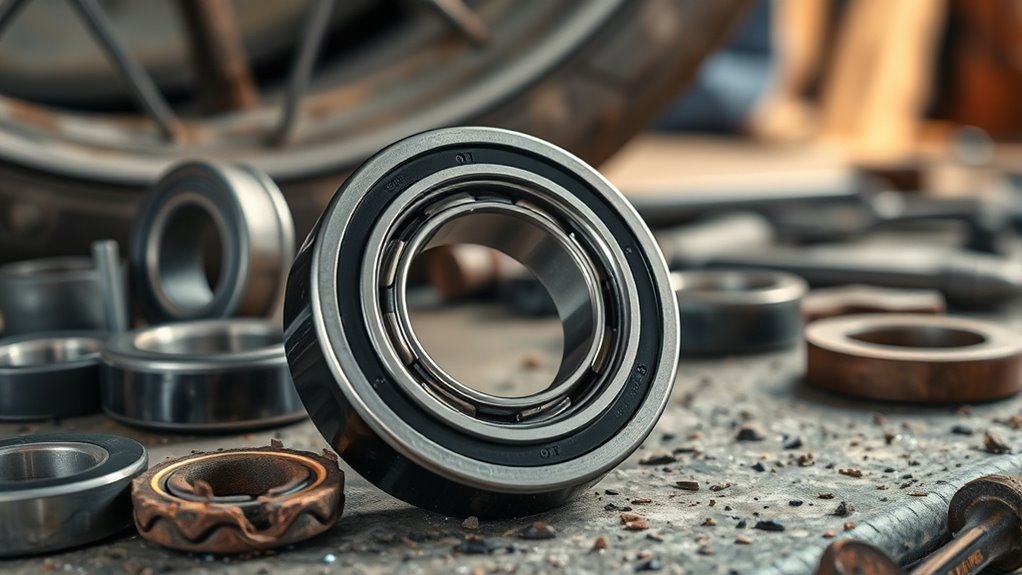
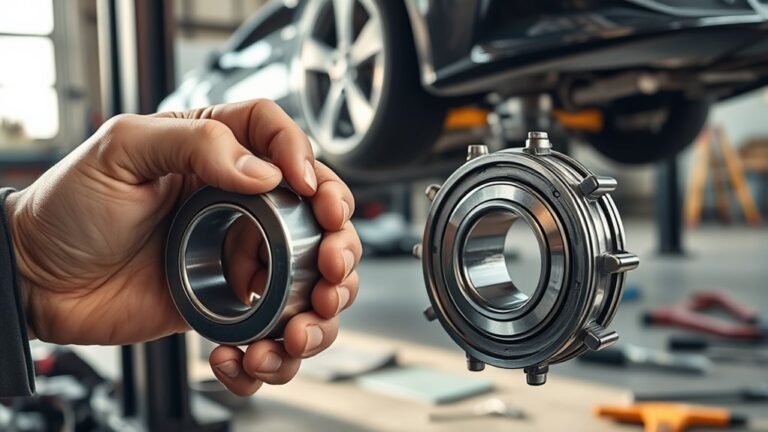
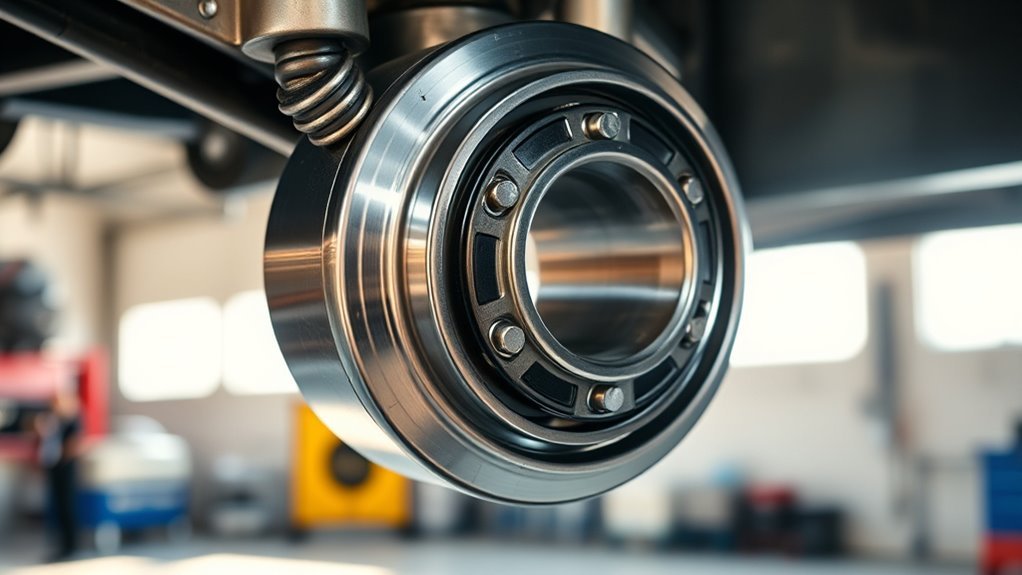
A wheel bearing is an essential part that helps your vehicle’s wheels spin smoothly by reducing friction.
It consists of steel balls held in a metal ring, called a race, which fits tightly inside the hub around the axle shaft. This design minimizes friction and enhances your vehicle’s performance.
Each wheel has its own bearing, sealed to protect against water and road dust, which supports the bearing’s longevity.
Every wheel’s sealed bearing safeguards against water and dust, ensuring long-lasting performance.
To keep your wheel bearings functioning well, regular inspections and maintenance are key.
These proactive steps help maintain peak performance and can greatly extend the lifespan of your wheel bearings.
Understanding what a wheel bearing is and how it works helps you appreciate the role it plays in your vehicle’s safe and efficient operation.
Typical Lifespan of Wheel Bearings
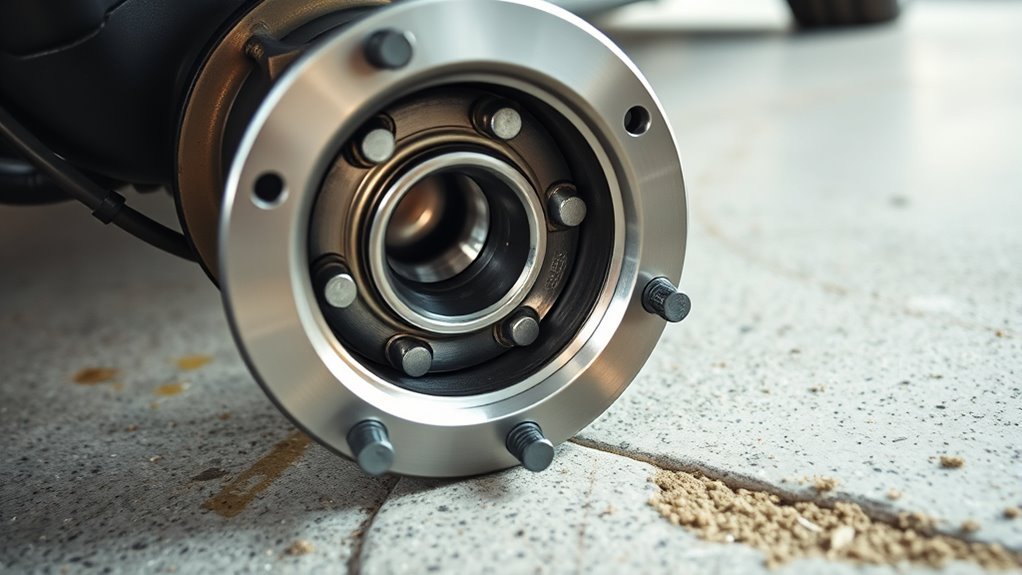
Wheel bearings typically last between 75,000 and 150,000 miles, but their lifespan depends on factors like quality, driving conditions, and maintenance.
You’ll find that wheel bearings usually last longer if you choose high-quality bearings and perform proper maintenance.
However, the typical lifespan of wheel bearings can be cut short by environmental conditions such as water, mud, and road debris.
Your driving habits also play a role; hitting potholes or making sharp turns often leads to premature wear.
To avoid unexpected failures, regular inspections and timely maintenance, including greasing, are essential.
Factors Influencing Wheel Bearing Longevity
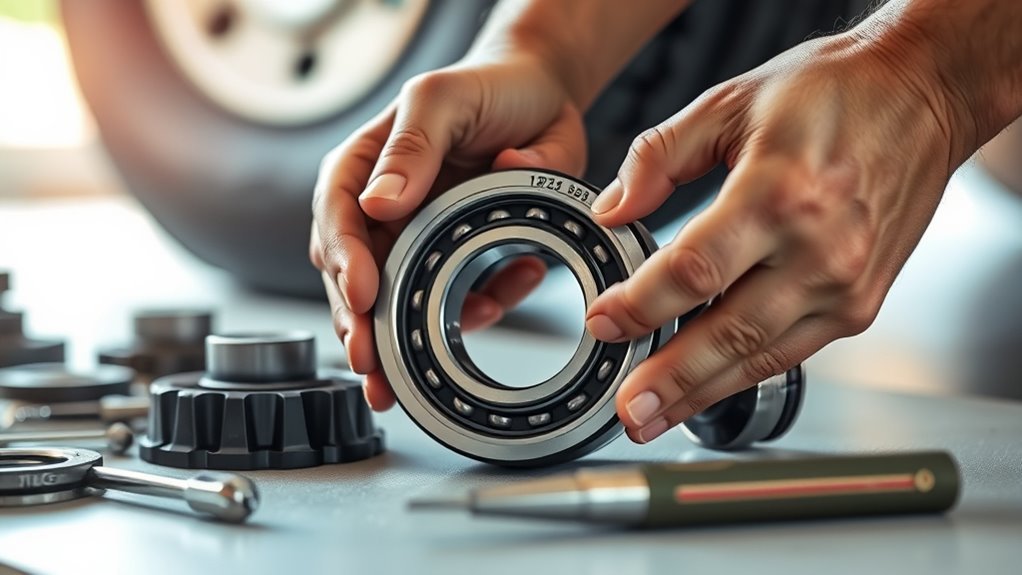
How long your bearings last depends on several key factors beyond just mileage.
While wheel bearings usually last between 75,000 and 150,000 miles, factors influencing their longevity include driving conditions, maintenance, and the quality of parts.
Wheel bearing life varies from 75,000 to 150,000 miles, influenced by conditions, care, and part quality.
Harsh environments like water, mud, and road salt can really speed up wear and tear by damaging seals and lubricants.
Using high-quality materials from reputable manufacturers helps guarantee durability.
Proper installation is also critical. Incorrect torque can lead to early bearing failure.
Your driving habits play a big role too. Avoiding abrupt turns and rough roads can significantly reduce stress on your bearings.
Regular maintenance, including timely inspections and lubrication, is key to extending their lifespan.
Paying attention to these factors helps ensure your wheel bearings perform reliably and last as long as possible.
Signs of Wheel Bearing Wear and Failure
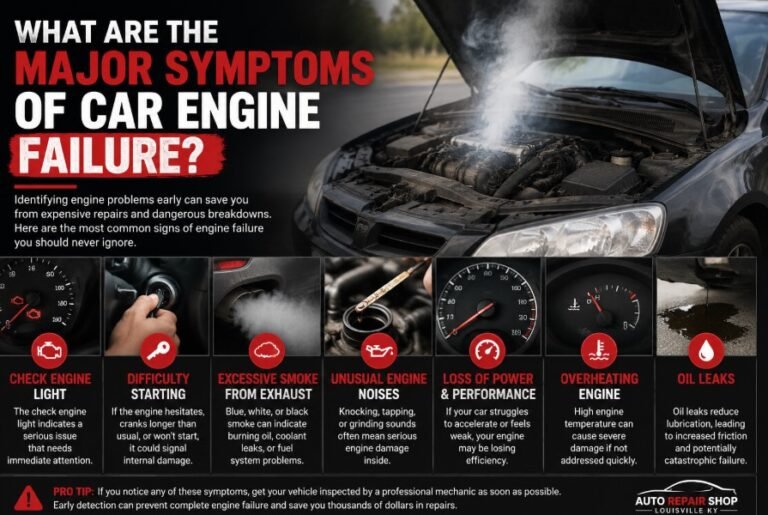
If you start hearing unusual noises like humming or grinding while driving, it could mean your bearings are wearing out.
Other symptoms of a failing wheel bearing include vibrations in the steering feels, the car pulling to one side, ABS lights illuminating, and uneven tire wear.
Recognizing these signs early helps you replace your wheel bearings before more serious damage occurs.
| Symptom | What You Notice | Why It Happens |
|---|---|---|
| Humming Noise | Constant sound during driving | Bearings wearing out |
| Vibrations | Steering wheel shakes | Inner bearing damage |
| Pulling to One Side | Vehicle drifts when braking | Uneven bearing wear affecting handling |
| ABS Lights | Dashboard ABS warning | Faulty bearings affect sensors |
| Uneven Tire Wear | Tires wear irregularly | Misaligned wheel contact |
Risks of Driving With a Faulty Wheel Bearing
When you ignore a faulty wheel bearing, you put yourself at serious risk on the road.
Ignoring a faulty wheel bearing dangerously compromises your safety on the road.
Bad wheel bearings can cause your vehicle’s wheel to seize or even detach, leading to loss of control.
The signs and symptoms, like strange noises and steering issues, aren’t just annoying—they’re warnings demanding immediate attention.
Ignoring these safety risks can interfere with your brakes, causing brake failure or longer stopping distances by affecting ABS sensors.
These problems distract you and increase accident chances.
Plus, delaying repairs can escalate replacement costs since damage may spread to hubs or CV joints.
Your vehicle depends on healthy wheel bearings for safe operation, so never overlook these critical warning signs to protect yourself and others.
Maintenance and Replacement Recommendations
Although wheel bearings can last between 75,000 to 150,000 miles, regular maintenance plays a key role in extending their lifespan.
It also guarantees your vehicle runs smoothly.
You should perform regular inspections to spot signs of wear like unusual noises, vibrations, or uneven tire wear.
Adding grease during maintenance helps keep bearings lubricated and functioning properly.
Follow replacement recommendations by replacing faulty wheel bearings promptly.
It’s ideal to do this in pairs to maintain balanced performance.
Your driving habits also impact how long wheel bearings last.
Avoiding potholes, sharp turns, and excessive loads can reduce stress on your bearings.
Always opt for professional installation to guarantee correct torque and avoid premature failure.
Early detection through routine checks prevents costly repairs and keeps your vehicle safe on the road.
Frequently Asked Questions
How Often Should I Replace Wheel Bearings?
You should replace wheel bearings when you hear noises, feel vibrations, or during regular inspections around 75,000 to 150,000 miles.
Always check them sooner if you drive in harsh conditions or notice performance issues.
Staying on top of your wheel bearings can help prevent more serious problems down the line!
What Are the Signs of a Bad Wheel Bearing?
You’ll notice humming, grinding, or squeaking noises that change with speed.
You might also feel vibrations in the steering wheel.
Additionally, pulling to one side, loose steering, and uneven tire wear are significant indicators.
Don’t forget about the ABS light activating—these are all signs your wheel bearing’s failing.
Can I Still Drive With a Bad Wheel Bearing?
You can’t drive with a bad wheel bearing without risking a disaster bigger than a Hollywood explosion.
It’s super dangerous—get it fixed immediately to avoid accidents, costly damage, and losing control of your vehicle.
Is Replacing Wheel Bearings a Big Job?
Yes, replacing wheel bearings can be a big job.
You’ll need specialized tools and knowledge, and it usually takes 2 to 4 hours.
Sometimes, you might have to replace bearings in pairs, which can increase both time and cost.
Conclusion
You don’t want to wait until your wheel bearings scream for help on the road.
Like the quiet heartbeat of your car’s wheels, they keep everything rolling smoothly—until they don’t.
By paying attention to signs and keeping up with maintenance, you’ll avoid costly damage and unsafe drives.
Remember, taking care of your wheel bearings isn’t just smart—it’s the key to keeping your journey steady and safe.
Don’t let a small part cause big trouble.
In conclusion, regular maintenance and vigilance are essential for your wheel bearings.
Keeping an ear out for unusual noises or vibrations can help you catch issues early.
Ultimately, safeguarding your wheel bearings means ensuring a safer, smoother ride.
So, don’t overlook this vital component of your vehicle’s performance!