7 Essential Tips for Suspension Care After Heavy Rain
After heavy rain, it’s essential to take good care of your suspension to ensure optimal performance. Water can cause various issues, so being proactive is key.
Start by inspecting your suspension for leaks and check all air line connections to guarantee nothing’s loose or damaged.
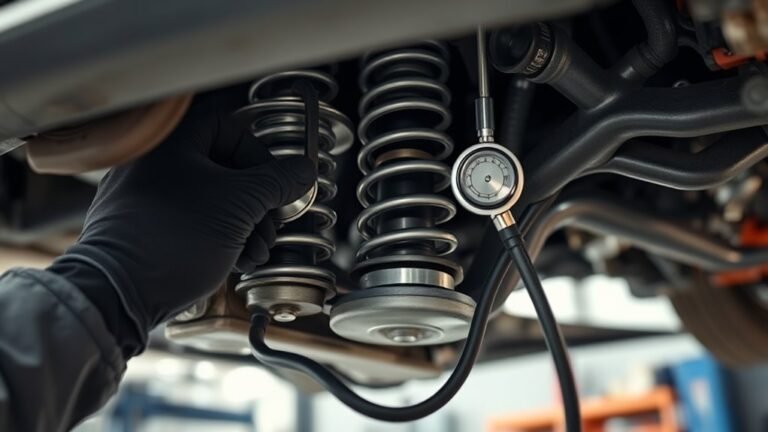
Next, measure and adjust air spring pressure to the recommended level.
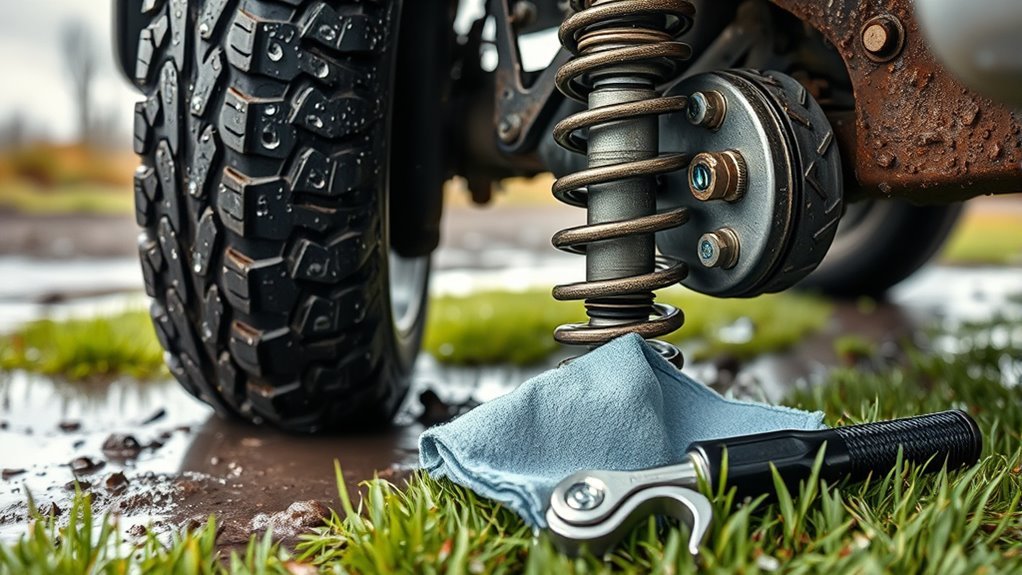
Don’t forget to clean mud and debris from components to avoid corrosion.
It’s also important to lubricate moving parts regularly.
Consider adjusting suspension settings for better traction or clearance, especially if you’ve encountered rough terrain.
Lastly, schedule a professional check for alignment and potential issues.
Remember, maintaining your suspension after heavy rain will help extend its lifespan and improve your ride quality.
Keep going to uncover more ways to protect your suspension!
Key Takeaways
- Inspect the suspension for leaks and apply a soap solution to detect any air leaks after heavy rain. This helps prevent compressor strain and system failure.
- It’s important to verify all air line connections. Ensure hoses are secure, free of kinks, and properly attached to maintain suspension integrity.
- Check and adjust the air spring pressure to the recommended levels, which is around 5 psi. This helps avoid rough rides and reduces component strain.
- Clean off mud, debris, and rust from suspension parts carefully. After that, lubricate moving components with water-resistant lubricants for added corrosion protection.
- Finally, schedule professional maintenance for alignment checks, leak detection, and suspension performance assessments after exposure to heavy rain.
Inspect the Suspension System for Leaks
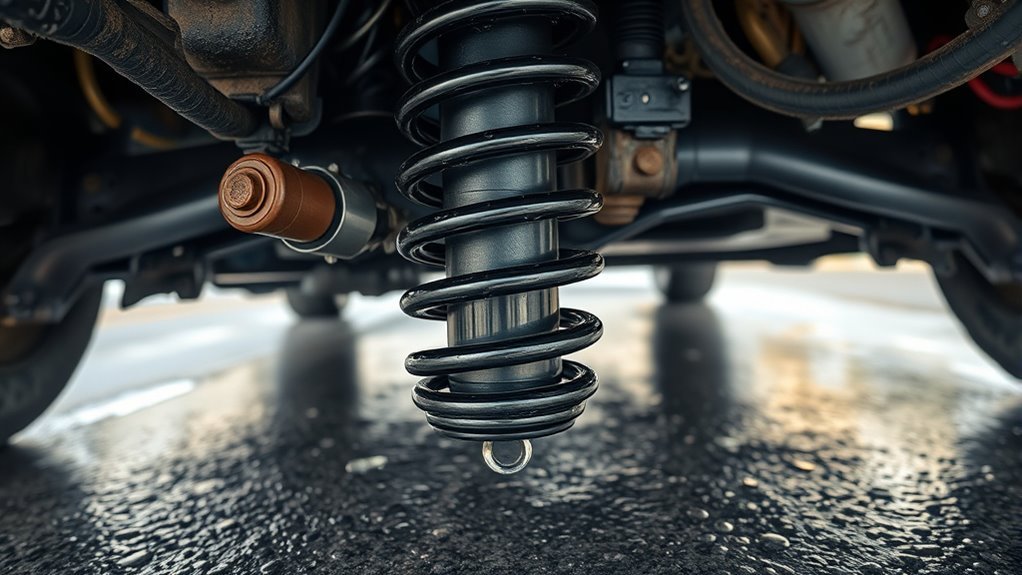
Although heavy rain can cause various issues, you should prioritize inspecting your suspension system for leaks.
Water can accelerate wear on components, especially in an air suspension setup.
You’ll want to carefully inspect air lines and air bags for any signs of leaks.
Even small leaks put extra strain on the compressor, risking system failure.
To check for leaks, apply a soap solution around connection points; bubbling means air is escaping and needs immediate attention.
Catching leaks early not only prevents further damage but also extends the lifespan of your air suspension.
If you find any leaks, don’t hesitate to seek professional repairs.
Keeping your suspension system leak-free guarantees peak performance and safety after heavy rain.
Verify Air Line Connections and Attachments
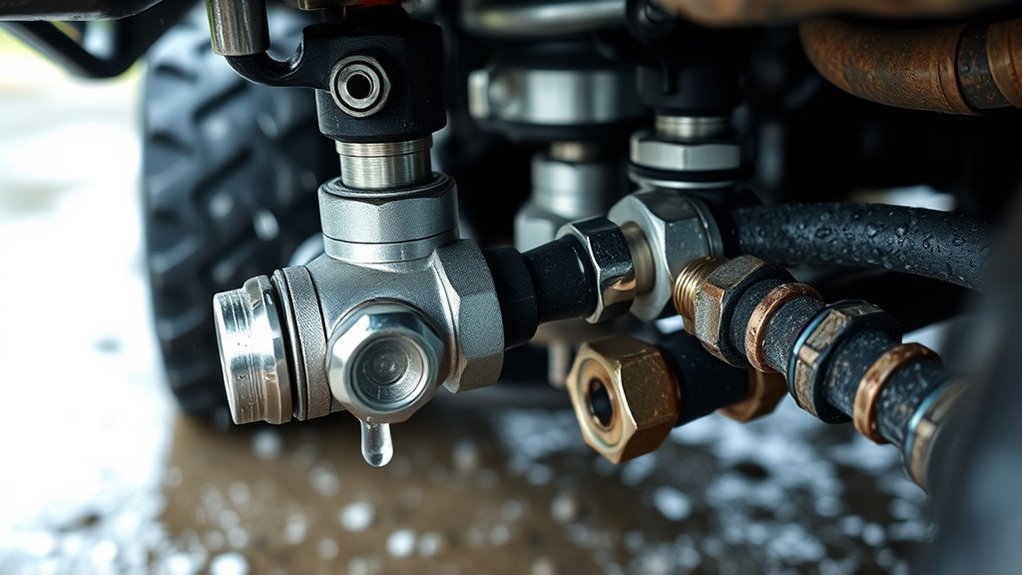
After checking for leaks in your suspension system, the next step is to verify that all air line connections and attachments are secure.
Heavy rain can worsen existing wear or damage, so it’s essential to inspect each connection carefully.
Make sure all air lines are firmly attached to both the air springs and compressor to prevent air loss.
Ensure air lines are securely connected to air springs and compressor to avoid air leaks and maintain performance.
Check that hoses aren’t pinched or kinked, which can restrict airflow and reduce suspension performance.
If you notice anything loose, use zip ties for a temporary fix, but schedule a professional repair for a lasting solution.
Always conduct these checks after heavy rain to catch potential problems early and keep your suspension system functioning smoothly.
Regular verification of air line connections helps maintain system integrity and prevents unexpected failures.
Check and Adjust Air Spring Pressure
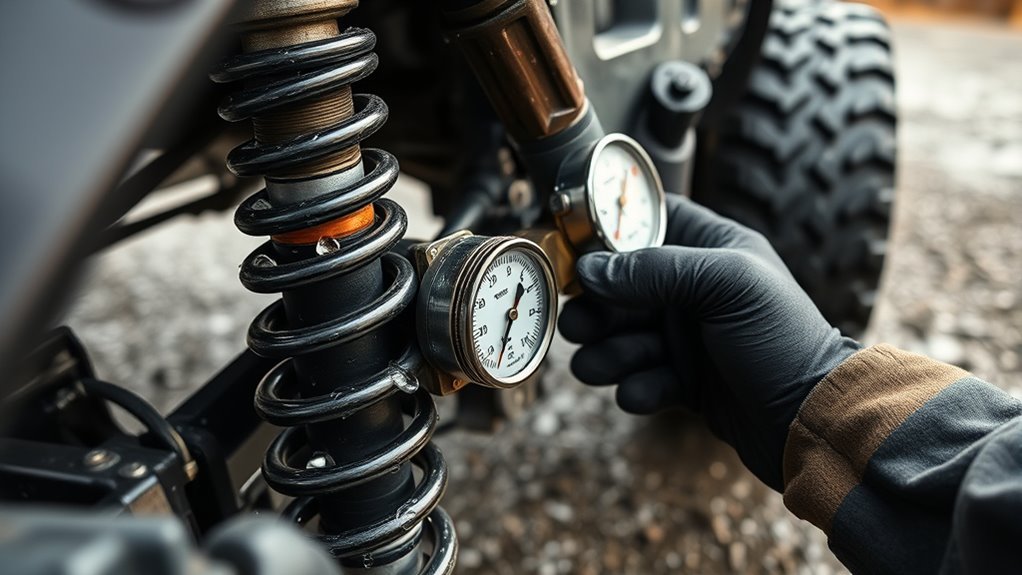
After heavy rain, you should check your air spring pressure to keep it near the recommended level, often around 5 psi.
Use your owner’s manual or ask an expert to confirm the right pressure for your vehicle.
Adjusting the pressure as needed will help maintain stability and protect your suspension system.
Optimal Air Pressure
Since waterlogged conditions can alter your vehicle’s load and dynamics, you should regularly check and adjust the air spring pressure to maintain ideal suspension performance.
Maintaining the appropriate air pressure in your air springs is essential, usually around 5 psi, but it varies depending on your vehicle specifications.
Always consult your owner’s manual to find the correct pressure settings. Proper air pressure prevents damage to the air springs and guarantees a smooth, safe ride.
Underinflated air springs lead to a rough ride and faster wear, while overinflation puts unnecessary strain on suspension components.
Using a pressure gauge to monitor and adjust the air spring pressure helps keep your suspension system efficient and durable, especially after heavy rain when load conditions can shift unexpectedly.
Pressure Adjustment Guidelines
When you notice changes in your vehicle’s handling or load, be sure to check and adjust the air spring pressure promptly. This helps keep your suspension functioning smoothly.
After heavy rain, moisture and debris can affect the system. So, it’s crucial to maintain air spring pressure around 5 psi—or follow your owner’s manual for exact numbers.
Regularly check the pressure and inflate or deflate the air springs as needed. This will help balance the vehicle and enhance handling.
Keeping the correct pressure not only improves performance but also prevents premature wear on suspension components.
If you detect irregular pressure or persistent issues, don’t hesitate to schedule a professional inspection. This ensures any underlying problems get addressed early, protecting your suspension system from costly damage.
Clean and Remove Debris From Suspension Components
After heavy rain, you should inspect your suspension for mud buildup.
Clear any air line blockages to keep everything running smoothly.
Don’t forget to remove rust and dirt that can cause damage over time.
Taking these steps helps maintain your suspension’s performance and extends its lifespan.
Inspect for Mud Buildup
Although heavy rain can make driving challenging, you should promptly inspect your suspension components for mud buildup to prevent performance issues.
Mud trapped on air springs, shock absorbers, and control arms can cause corrosion and reduce functionality.
Use a soft brush or cloth to clean them, avoiding high-pressure water on sensitive parts.
| Suspension Component | Mud Buildup Impact |
|---|---|
| Air Springs | Traps moisture, causes rust |
| Shock Absorbers | Impairs damping efficiency |
| Control Arms | Leads to premature wear |
| Bushings | Collects debris, reduces life |
| Springs | Can weaken due to corrosion |
Regular inspection and cleaning prevent corrosion and extend suspension life.
This keeps your vehicle handling smooth in wet conditions.
Clear Air Line Blockages
Since debris and moisture can easily clog your air lines during heavy rain, you should inspect and clear any blockages promptly to maintain proper air suspension performance.
Check the air lines for dirt, water, or debris accumulation that might restrict airflow.
Use a soft brush or compressed air to gently clean the lines and remove any obstructions.
Don’t forget to examine the connections to guarantee they’re secure and free from water damage or wear caused by debris.
Look out for early signs of corrosion or deterioration, as moisture can lead to leaks over time.
Incorporating this step into your routine maintenance after heavy rain helps prolong the life and efficiency of your air suspension system, keeping it functioning smoothly and reliably.
Remove Rust and Dirt
Inspect your suspension components carefully to remove rust and dirt that heavy rain may have caused to accumulate.
Moisture accelerates rust formation on metal parts, so use a soft brush and mild detergent to clean all debris thoroughly.
Focus on joints, bushings, and shock absorbers where mud and grime tend to gather.
Dirt buildup can hinder performance and cause premature wear, so it’s important to keep these areas clean.
After cleaning, apply a protective coating or rust inhibitor to shield the components from future moisture exposure.
This simple step helps prolong the lifespan of your suspension parts.
Finally, perform a detailed visual inspection to spot any damage or wear that might require professional attention.
This way, you can prevent minor issues from turning into costly repairs down the road.
Lubricate Moving Parts to Prevent Corrosion
When you regularly lubricate the moving parts of your suspension system, you create a protective barrier that prevents moisture and contaminants from causing corrosion.
To effectively prevent corrosion, use high-quality, water-resistant lubricants designed specifically for automotive suspension components.
Focus on these critical areas:
- Pivot points
- Bushings
- Joints
- Shock absorber mounts
- Suspension linkages
It’s a good idea to apply lubricant after heavy rain or washing. This keeps moisture from settling on metal surfaces.
This routine helps you extend the lifespan of your suspension by reducing rust and wear.
Always check your vehicle’s service manual for recommended products and intervals.
Assess Suspension Settings for Wet Conditions
Although heavy rain can challenge your vehicle’s handling, you can improve safety by adjusting your suspension settings for wet conditions.
Start by lowering your suspension height to enhance traction—this lowers your center of gravity and boosts control on slick roads.
Lowering your suspension height improves traction by reducing your center of gravity for better control on wet roads.
However, if you often drive through waterlogged areas, consider raising your rear suspension for better clearance to reduce hydroplaning risks.
Don’t forget to regularly check and adjust the air pressure in your air springs; proper air pressure helps maintain suspension performance and prevents water damage.
Always refer to your vehicle’s manual or consult a suspension expert to tailor these adjustments to your specific make and model.
Proper suspension settings guarantee safer, more stable driving after heavy rain.
Schedule Professional Maintenance and Alignment Checks
Since heavy rain often leads to potholes and uneven roads, you should schedule professional maintenance and alignment checks to keep your suspension in excellent shape.
Routine maintenance helps spot water damage early, while alignment checks guarantee your vehicle handles safely.
Professional evaluations can detect leaks in air springs and assess suspension settings to prevent costly repairs.
Here’s what to focus on when scheduling your suspension care:
- Inspect air lines and springs for leaks
- Perform alignment checks to correct handling issues
- Evaluate suspension components for water damage
- Adjust suspension settings based on road conditions
- Get expert recommendations tailored to your vehicle
Regular professional evaluations after heavy rain extend your suspension’s lifespan and maintain peak performance.
Frequently Asked Questions
What Should I Do to Prepare for Heavy Rain?
You should inspect and secure all air lines, maintain proper air pressure, and check suspension components for damage.
It’s also a good idea to schedule routine service.
Additionally, keep emergency tools in your vehicle to handle any suspension issues during heavy rain.
How Do I Make My Suspension Ride Smoother?
You can improve your suspension ride smoothness by regularly checking air pressure—over 70% of suspension issues stem from improper inflation.
Replacing worn shocks is essential.
Also, make sure to clean out any debris, and always use quality parts.
You’ll feel the difference instantly!
What Is the Mantra to Stop Rain?
You might say, “Rain, rain, go away,” a common mantra to stop rain.
While it’s a fun tradition, don’t expect it to work—weather depends on nature, not chants or mantras you recite.
Why Is the Rain Not Stopping?
You’re seeing nonstop rain because weather systems like stationary fronts trap moisture,
preventing it from clearing out.
It’s not about magic; it’s natural atmospheric patterns that keep the rain falling longer than usual.
Conclusion
Think of your suspension system as the roots of a mighty tree, anchoring you firmly even when storms rage.
After heavy rain, tending to it with care—inspecting leaks, cleaning debris, and adjusting pressure—is like nourishing those roots to keep you steady on every road.
By giving your suspension this attention, you guarantee a smooth, safe ride ahead, no matter the weather.
Don’t wait—let your vehicle stand strong, rain or shine.
—
In conclusion, proper suspension care after heavy rain is crucial to ensure your vehicle’s performance and safety.
Regularly checking for leaks, clearing out debris, and adjusting pressure can make all the difference.
By nurturing your suspension system, you not only enhance your driving experience but also prolong its life.
So remember, after those downpours, give your suspension the attention it deserves for a reliable and smooth ride ahead!