What Is a Toyota Tire Pressure Sensor and How Does It Function?
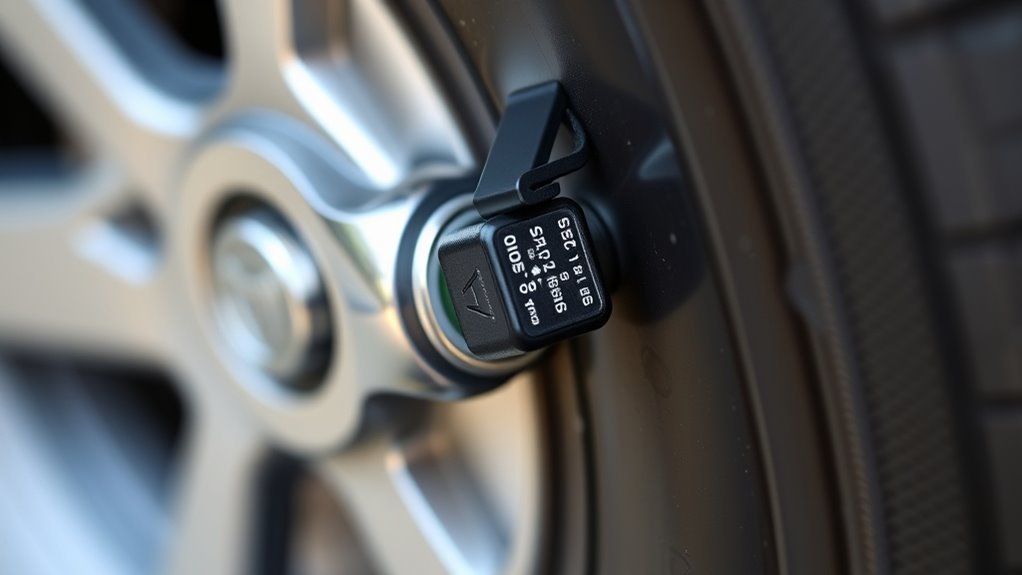
A Toyota tire pressure sensor is an essential component that ensures your driving safety by monitoring the air pressure in each tire.
It constantly checks if the pressure falls below the recommended levels, alerting you to potential issues. This helps you avoid unsafe driving conditions and enhances your overall driving experience.
The sensor sends real-time data to your vehicle’s computer via radio signals. When it detects low pressure, it triggers a warning light on your dashboard, prompting you to take action.
This tire pressure monitoring system not only boosts safety but also improves fuel efficiency and extends tire life.
Keep reading to discover how these sensors function, common issues you might encounter, and important maintenance tips to keep your vehicle in top shape.
Key Takeaways
- A Toyota tire pressure sensor monitors the air pressure inside each tire to ensure safe and efficient driving.
- It sends real-time pressure data to the vehicle’s onboard computer using low-frequency radio signals.
- When tire pressure drops below recommended levels, the sensor triggers a warning light on the dashboard.
- Toyota vehicles use either Direct TPMS, with sensors inside each tire, or Indirect TPMS, which estimates pressure via wheel speed.
- The sensor continuously functions while driving and requires recalibration after tire rotation or inflation for accurate readings.
Overview of Toyota Tire Pressure Sensors
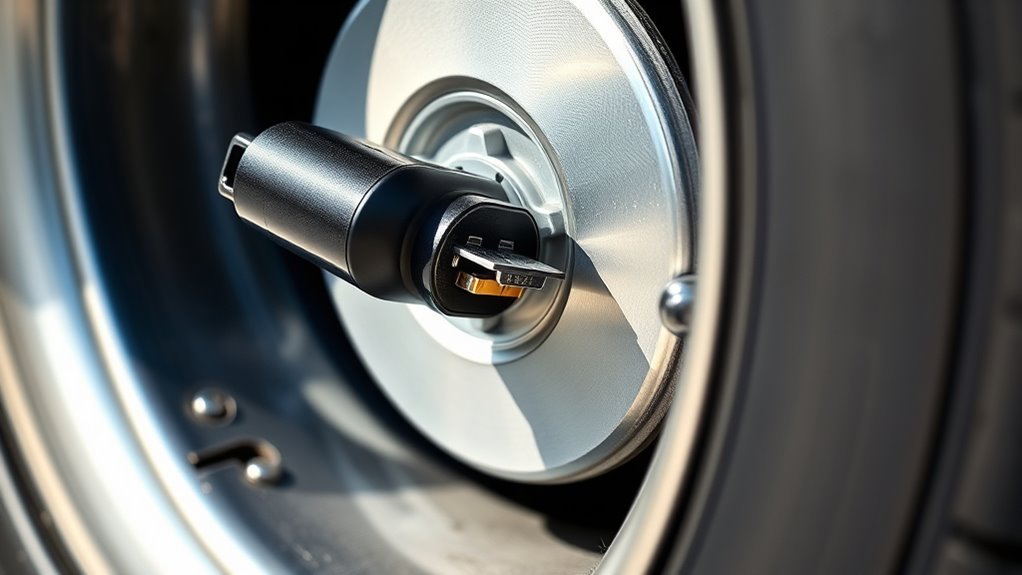
A Toyota Tire Pressure Sensor (TPS) plays an essential role in keeping your tires properly inflated by continuously monitoring the air pressure inside each tire.
These Tire Pressure Sensors work with the vehicle’s tire pressure monitoring system (TPMS) to alert you when pressure drops below 25% of the recommended level.
When underinflated tires are detected, the TPMS activates a warning light on your dashboard, helping you avoid safety risks.
By keeping an eye on the air pressure inside your tires, the Toyota Tire Pressure system not only maintains peak tire performance but also improves fuel efficiency.
Regularly checking your TPS guarantees you avoid poor handling and increased fuel consumption caused by faulty sensors or underinflated tires.
How Toyota Tire Pressure Sensors Work
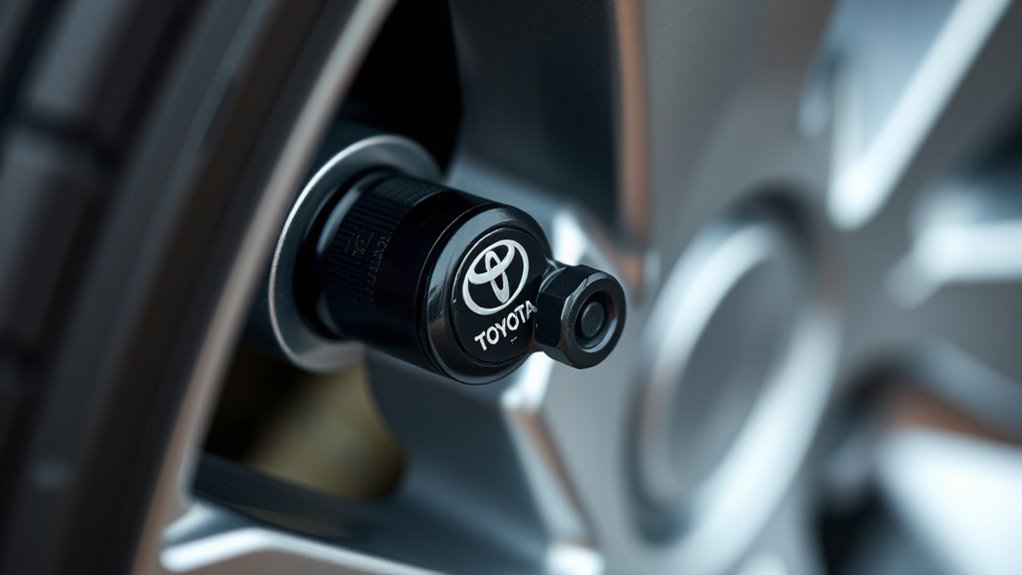
You rely on Toyota tire pressure sensors to keep you informed about your tires’ condition by sending precise pressure data to your vehicle’s control module.
Each sensor communicates using low-frequency radio signals, ensuring real-time monitoring of all four tires.
Understanding this communication process helps you grasp how the system alerts you when pressure drops.
Sensor Communication Process
When tire pressure drops below safe levels, Toyota tire pressure sensors immediately detect the change and wirelessly send real-time data to your vehicle’s control module using low-frequency radio signals.
These sensors continuously monitor each tire’s pressure, using unique identifiers to guarantee accurate pressure readings for every wheel.
The control module processes this data, activating the TPMS warning light if any tire falls below 25% of recommended pressure.
This real-time monitoring helps you maintain ideal tire health and safety by alerting you promptly.
| Feature | Function | Benefit |
|---|---|---|
| Tire Pressure Sensors | Measure air pressure | Accurate pressure readings |
| Unique Identifiers | Identify each tire | Individual tire monitoring |
| Low-frequency Signals | Transmit data wirelessly | Reliable communication |
| Control Module | Processes sensor data | Activates TPMS warnings |
| TPMS Warning Light | Alerts driver of low pressure | Enhances driving safety |
Pressure Data Transmission
Although tire pressure sensors sit inside each wheel, they constantly send real-time data using low-frequency radio signals to your vehicle’s control module.
These TPMS sensors measure the air pressure within the tire and wirelessly transmit pressure information to the vehicle’s onboard control module.
When tire pressure drops below 25% of the recommended level, the sensors activate the TPMS warning light on your dashboard, alerting you immediately.
This continuous data transmission helps maintain road safety by keeping you informed about tire conditions before problems worsen.
Remember, after tire rotation or replacement, recalibrating the sensors guarantees they keep providing accurate air pressure readings.
Types of Tire Pressure Monitoring Systems in Toyota Vehicles
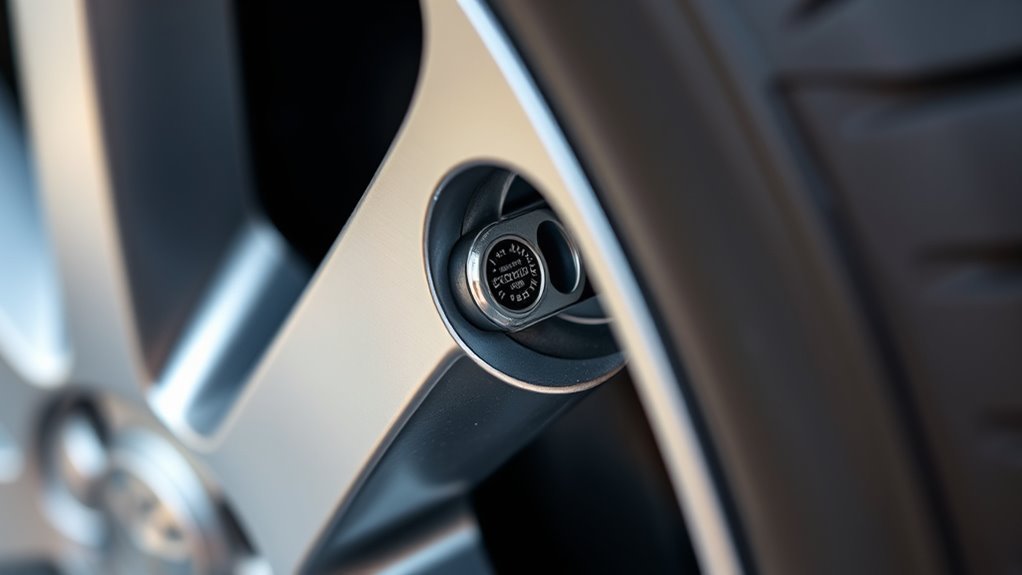
You’ll find two main types of tire pressure monitoring systems in Toyota vehicles: Direct TPMS sensors and Indirect TPMS systems.
Direct TPMS uses sensors inside each tire to give you real-time pressure readings.
On the other hand, Indirect TPMS estimates pressure by monitoring wheel speed differences.
It alerts you when it detects under-inflation.
Direct TPMS Sensors
Since direct TPMS sensors measure tire pressure inside each tire in real time, they give you accurate data right on your Toyota’s onboard computer.
These direct TPMS sensors are installed inside each tire, providing precise tire pressure and tire temperature readings.
Each sensor has a unique serial number, allowing your vehicle’s control unit to monitor individual tires effectively.
When the tire pressure drops below safe levels, the system triggers warning lights on your dashboard, alerting you to underinflation issues promptly.
These sensors transmit data wirelessly, helping you maintain ideal tire conditions for safety and performance.
Keep in mind, direct TPMS sensors have batteries that eventually need replacement, which requires removing the tire to access the sensor itself.
Indirect TPMS Systems
When your Toyota uses an indirect TPMS, it estimates tire pressure by monitoring wheel speed sensors from the anti-lock brake system instead of measuring pressure directly.
This system detects low tire pressure by comparing how fast each wheel spins—an under-inflated tire spins faster due to reduced air volume.
Indirect TPMS is cost-effective since it uses existing wheel speed sensors without extra hardware.
However, it doesn’t provide exact tire pressure readings or real-time updates like direct TPMS.
After inflating your tires or performing tire rotation, you’ll need to press the reset button to recalibrate the system.
While indirect TPMS offers basic monitoring and alerts you to low tire pressure, it’s less precise but still helps maintain your Toyota’s safety and performance.
Common Issues With Toyota Tire Pressure Sensors
Although Toyota tire pressure sensors are designed for reliability, they can still encounter several common issues that affect their performance.
Sometimes, the TPMS warning light won’t activate, leaving you unaware of low pressure that increases the risk of tire blowouts.
Faulty sensors often give inaccurate tire pressure readings, which can harm vehicle handling and fuel efficiency.
After tire rotations or replacements, you may need recalibration to maintain accurate monitoring, but this step is frequently overlooked.
Environmental factors like extreme temperatures and rough road conditions also impact sensor accuracy, causing inconsistent readings.
Additionally, sensor batteries have limited life spans; once drained, you’ll need to replace the tire pressure sensor to guarantee safety and proper function.
Staying vigilant helps you avoid costly problems.
When and How to Reset Your Toyota TPMS
Before you reset your Toyota TPMS, make sure all tires are properly inflated to the recommended pressure.
This step is essential for the system to accurately register the correct inflation pressure.
To reset, turn on the engine and find the reset button, usually located near the steering wheel or instrument panel.
Press and hold it until the TPMS indicator light blinks slowly three times, then release.
Keep the engine running for several minutes so the system can record the new tire pressures.
You’ll need to reset the TPMS after rotating tires or changing tire sizes to recalibrate the system.
If the indicator light stays on after the reset, it could signal a malfunction.
In that case, it’s best to get a professional inspection to ensure your tire pressure system is working correctly.
Maintaining and Replacing Toyota Tire Pressure Sensors
Since Toyota tire pressure sensors rely on batteries that typically last 5 to 10 years, you’ll need to maintain them regularly and replace the sensors once their batteries fail to keep your TPMS accurate and reliable.
Regular maintenance involves visually inspecting the sensors for damage and manually checking tire pressure to prevent underinflation issues.
When it’s time to replace a sensor, costs vary from $25 to $200 per unit, plus labor fees depending on your vehicle model.
After replacement or tire rotation, recalibration is essential to guarantee accurate readings and proper sensor function.
Staying on top of maintenance and timely replacement guarantees your tire pressure sensors provide precise data, helping you avoid unsafe driving conditions caused by underinflated tires.
Frequently Asked Questions
How Much Does It Cost to Replace a TPMS Sensor in a Toyota?
You’ll typically pay between $25 and $200 per Toyota TPMS sensor, plus $55 to $200 for installation.
Recalibration may add costs, so expect around $300 to $800 total for all four sensors replaced.
Can You Still Drive With a Bad Tire Sensor?
You can drive with a bad tire sensor, but you shouldn’t.
It hides low tire pressure risks, lowers fuel efficiency, and keeps the warning light on.
Fix it promptly to stay safe and avoid bigger problems.
How Long Do Toyota Tire Pressure Sensors Last?
Toyota tire pressure sensors usually last between 5 to 10 years.
It’s important to keep them well-maintained.
If the warning light stays on, you should replace them to ensure your safety and peak sensor performance.
How Much Does It Cost to Replace a Tire Pressure Sensor?
You’ll typically pay between $25 and $200 per tire pressure sensor for parts, plus $55 to $200 for installation.
Costs vary by model and sensor type, so budgeting for quality and labor guarantees safety and accuracy.
Conclusion
Think of your Toyota tire pressure sensor as the silent guardian of your journey, constantly watching over your tires like a beacon in the night.
By understanding how it works and keeping it well-maintained, you guarantee a safer, smoother ride every time you hit the road.
Don’t ignore those warning lights—they’re your sensor’s way of guiding you back to safety.
Stay attentive, reset when needed, and keep your tires—and your travels—secure.
In conclusion, your Toyota tire pressure sensor plays a crucial role in ensuring your safety on the road. By regularly checking and maintaining it, you can prevent potential tire issues and enjoy a smoother ride.
Remember, those warning lights are there for a reason, so heed their advice. Prioritize your tire health, and you’ll not only enhance your driving experience but also keep your journeys safe and enjoyable.