Different Oil Types for Cars
You’ll find several motor oil types to suit your car’s needs.
When it comes to choosing the right motor oil, understanding the options available can make a big difference in your vehicle’s performance.
Conventional oil is affordable and perfectly fine for typical driving, but it tends to be less durable over time.
On the other hand, synthetic oil offers better engine protection and lasts longer, making it ideal for extreme conditions.
If you’re looking for a balance, synthetic blends combine the strengths of both conventional and synthetic oils, perfect for moderate use.
For older engines, high mileage oil can help them run smoother and more efficiently.
Don’t forget to match the oil’s viscosity with your engine’s requirements to ensure optimal performance.
Keep going to discover which choice fits your vehicle best!
Key Takeaways
- Conventional oil is affordable and suitable for typical driving. However, changes are needed every 5,000 to 7,500 miles.
- Synthetic oil offers superior engine protection and lasts up to 15,000 miles. Plus, it performs well in extreme temperatures.
- Synthetic blends combine conventional and synthetic benefits. This improves wear resistance and fuel efficiency for everyday driving.
- High mileage oils protect engines over 75,000 miles by reducing leaks. They also help clean buildup to extend engine life.
- Oil viscosity ratings (e.g., 10W-30) indicate thickness at cold and operating temperatures. This is crucial for engine performance and efficiency.
Conventional Motor Oil

Although conventional motor oil comes from crude oil, it offers an affordable and reliable choice for many drivers.
Conventional motor oil, derived from crude oil, remains an affordable and dependable option for many drivers.
This oil provides adequate lubrication for engines under typical driving conditions. If your vehicle has lower mileage, conventional motor oil often meets its needs effectively.
You’ll find the oil change interval for conventional oil generally falls between 5,000 to 7,500 miles, depending on your manufacturer’s guidelines.
However, conventional oil has increased temperature sensitivity and less durability compared to other types, which can limit its performance in extreme conditions.
It’s usually not the best fit for high-performance vehicles or those with demanding requirements, where specialized oil types are recommended for better protection and longevity.
Synthetic Motor Oil
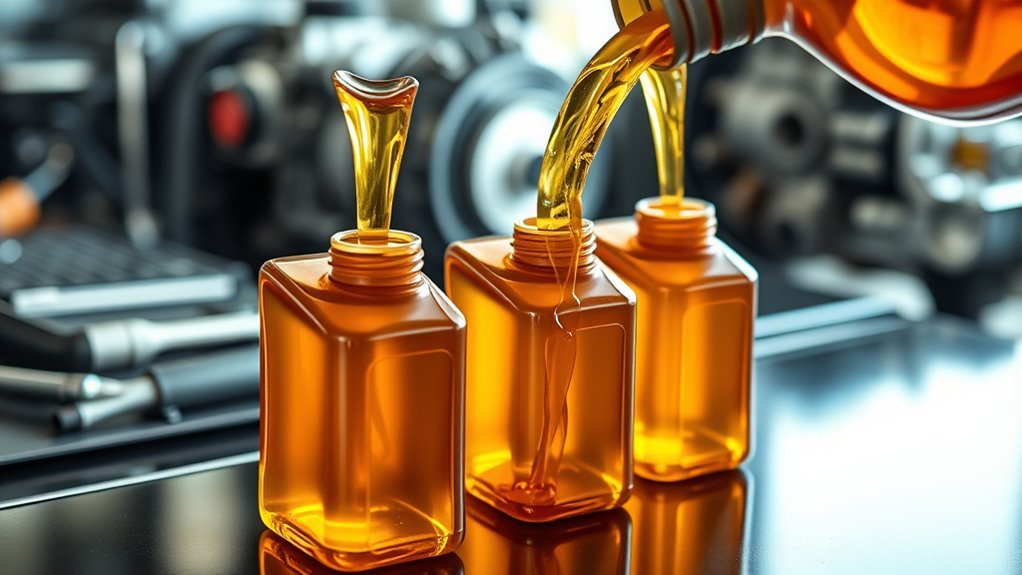
When you want superior engine protection and longer intervals between oil changes, synthetic motor oil delivers.
Unlike conventional oil, synthetic motor oil is chemically engineered to offer superior performance, excelling in temperature management and protecting your engine under extreme conditions.
Thanks to advanced additives, it keeps your engine cleaner by effectively removing sludge and impurities, promoting longer engine life.
You’ll enjoy oil change intervals ranging from 7,500 to 15,000 miles, reducing maintenance frequency and costs.
Synthetic motor oil performs well in both hot and cold climates, making it a versatile choice.
However, it’s generally pricier than conventional oil and may pose compatibility issues with some older engines, so it’s wise to check before switching.
Synthetic Blend Motor Oil
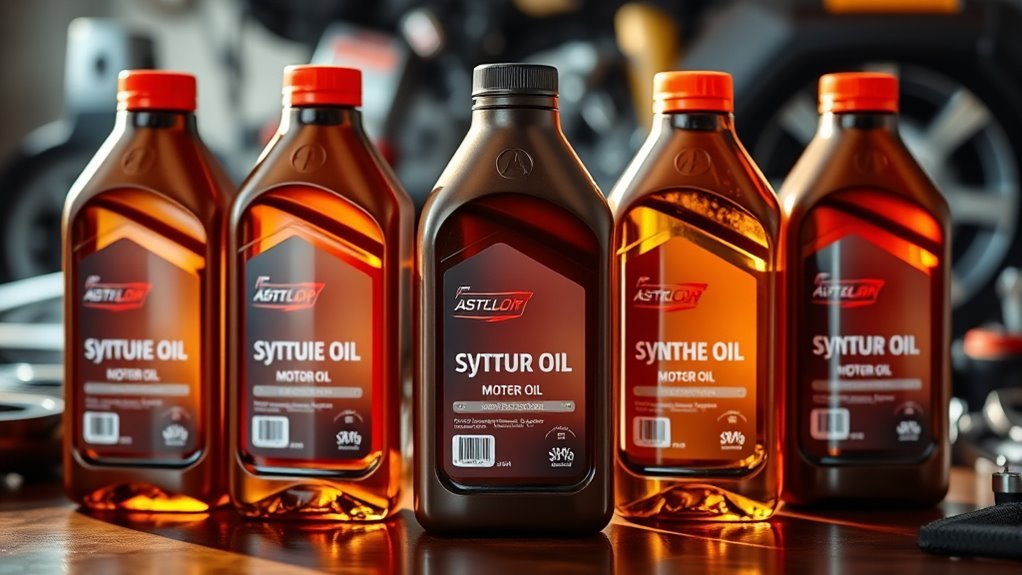
Synthetic blend motor oil combines the best of conventional and synthetic oils to offer you enhanced engine protection without the higher cost of full synthetic oil.
It provides better resistance to oxidation and reduces wear and tear on engine components through specialized additives.
Compared to conventional oil, synthetic blend motor oil delivers enhanced performance, especially under moderate driving conditions. This makes it ideal for everyday vehicles.
You’ll also notice a slight boost in fuel efficiency, helping you save at the pump.
While oil change intervals for synthetic blends typically range from 5,000 to 7,500 miles, similar to conventional oil, you get improved protection and longevity.
Choosing synthetic blend motor oil strikes a smart balance between cost and performance, ensuring your engine stays protected without stretching your budget.
High Mileage Motor Oil
If your car has over 75,000 miles, high mileage motor oil can help protect and maintain your engine.
It contains special additives that reduce leaks, clean buildup, and improve performance in older engines.
Using this oil helps keep worn parts running smoothly and extends your vehicle’s life.
Purpose of High Mileage
Many vehicles with over 75,000 miles benefit from high mileage motor oil, which is specially formulated to protect aging engines.
This oil contains unique additives that provide enhanced protection by reducing leaks and minimizing oil consumption, common issues in older vehicles.
The additives also help maintain your engine’s performance by conditioning seals, which often wear down over time.
Using high mileage oil regularly helps keep your engine running smoothly, extending its life despite the wear and tear aging engines face.
While it may cost more than conventional oils, its specialized formula targets the specific needs of high-mileage vehicles, ensuring better engine health.
Choosing high mileage oil means you’re actively supporting your engine’s longevity and overall performance as it ages.
Benefits for Older Engines
Because your engine faces increased wear as it ages, using high mileage motor oil can make a significant difference in maintaining its health.
This specially formulated oil contains additives designed to protect older engines from common issues.
Here’s how it benefits you:
- Seal conditioners help rejuvenate aging seals, reducing oil leaks.
- Enhanced lubrication minimizes wear and tear on engine parts.
- Detergents improve engine cleanliness by reducing sludge buildup.
- It supports better performance and emissions control in older exhaust systems.
Additives and Formulations
A high mileage motor oil blends specialized additives that tackle the unique challenges faced by engines with over 75,000 miles.
These additives include seal conditioners that restore and maintain the flexibility of aging engine seals, helping to prevent leaks and reduce oil consumption.
Enhanced anti-wear agents protect worn engine parts, ensuring longevity and reliable engine performance.
Detergents in high mileage motor oil work to clean engine components, minimizing sludge buildup that can hinder efficiency.
Additionally, these formulations improve emissions by supporting older exhaust systems, helping your vehicle meet environmental standards.
Understanding Oil Viscosity and Grades
Oil viscosity plays a key role in how well your engine performs under different temperatures.
Understanding oil viscosity and oil grades helps you select the right engine oil for your car.
The Society of Automotive Engineers (SAE) sets standard viscosity ratings, which appear as numbers like 10W-30 on oil containers.
Here’s what you need to know:
- The first number (e.g., 10W) indicates how thin the oil is in cold temperatures—thinner oils flow easier during cold starts.
- The second number (e.g., 30) shows the oil’s thickness at normal engine operating temperatures—thicker oils offer better protection in heat.
- Using the wrong viscosity can cause increased wear or reduced efficiency.
- Always consult your owner’s manual before an oil change to find the recommended oil viscosity and grade.
Choosing the right engine lubricant guarantees peak performance and longevity.
Factors to Consider When Choosing Motor Oil
When selecting motor oil, you should always start by checking your owner’s manual to find the recommended type and viscosity for your engine.
Your choice of oil type—whether conventional oil or synthetic oil—directly affects engine performance and protection.
Choosing between conventional and synthetic oil significantly impacts your engine’s performance and longevity.
Consider your driving conditions: frequent short trips or harsh climates may require specific oil grades to maintain ideal viscosity.
If your vehicle has over 75,000 miles, high-mileage oils can help address wear and leaks.
Climate is essential too; colder areas need oils with lower winter viscosity ratings for better start-up protection.
Finally, check the API ratings on the oil container—newer standards like API SP offer enhanced protection compared to older ones like API SN.
Following these factors guarantees you select the best motor oil for your engine’s needs.
Frequently Asked Questions
What Type of Oil Is Best for a Car?
You should choose the oil your car’s manual recommends.
If you want top performance and longer intervals, go for full synthetic.
For budget-friendly protection, synthetic blends work well.
High mileage oil suits older engines perfectly.
Which Is Better, 20W-40 or 20W-50?
Think of 20W-50 as a trusty knight’s armor—thicker and better for hot engines or older rides.
But unless your car’s designed for it, stick with 20W-40.
This choice helps you avoid extra wear and wasted fuel.
What Happens if I Put 5W-30 Instead of 5W-20?
If you use 5W-30 instead of 5W-20, your engine might face higher friction and reduced fuel efficiency.
This could also affect cold starts.
Plus, it may void your warranty if the manufacturer specifies 5W-20.
Which Oil Is Better, 5W-30 or 10W40?
Choosing between 5W-30 and 10W-40 is like picking the right shoes for a marathon—you want 5W-30 for newer engines and cold starts,
but 10W-40 suits older engines and hotter conditions better.
Conclusion
So, next time you’re staring at that dizzying wall of oil options, just remember: whether you pick conventional, synthetic, or some fancy blend,
your car won’t suddenly start singing lullabies or making gourmet coffee.
But hey, choosing the right oil does keep your engine happy and you less broke.
So, go ahead—be the hero your car deserves and pick wisely.
After all, it’s not rocket science, just liquid magic for your ride.
—
In conclusion, selecting the right oil type for your car is essential for maintaining engine performance and longevity.
Whether you opt for conventional, synthetic, or a blend, making an informed choice can save you money in the long run.
So, when faced with that overwhelming array of options, remember that the right oil keeps your engine running smoothly and efficiently.
Don’t hesitate to be proactive; your vehicle will thank you for it!