5 Essential Facts About Passenger Car Motor Oil
You should change your car’s oil regularly to protect your engine from wear. Following the manufacturer’s intervals is crucial for maintaining optimal performance.
Always check motor oil labels for the right viscosity and API standards to guarantee proper lubrication. This ensures that your engine runs smoothly and efficiently.
Don’t rely solely on oil color to judge its condition; contamination matters more. Remember, clean oil is essential for your engine’s health.
Oil additives play a significant role in keeping your engine clean and reducing friction. They help enhance the overall performance of your vehicle.
If you have an older car, be cautious with synthetic oils. They might cause leaks or other issues, so it’s best to do some research first.
Keep these facts in mind, and you can discover more tips to keep your engine running smoothly for years to come.
Key Takeaways
– Motor oil viscosity ratings, like 5W-30, indicate flow performance in cold starts and thickness at operating temperatures for optimal engine protection.
This means that a lower number before the “W” (for winter) means better performance in cold conditions.
– Synthetic oils extend oil change intervals to 15,000–30,000 km, but always follow the vehicle manufacturer’s recommendations.
It’s important to check your owner’s manual to ensure you’re using the right type of oil for your car.
– Oil additives improve engine cleanliness, reduce wear, and protect against corrosion, enhancing overall engine performance and longevity.
These additives can make a significant difference in how well your engine runs over time.
– Dark oil color is not a definitive indicator of oil quality; oil condition depends on contamination and additive effectiveness.
So, just because oil is dark doesn’t mean it’s bad; it’s all about what’s happening inside the engine.
– Older engines may require mineral oils instead of synthetic due to seal wear and compatibility issues to prevent leaks and damage.
Always consider the specific needs of your engine to keep it running smoothly.
Oil Change Intervals and Best Practices
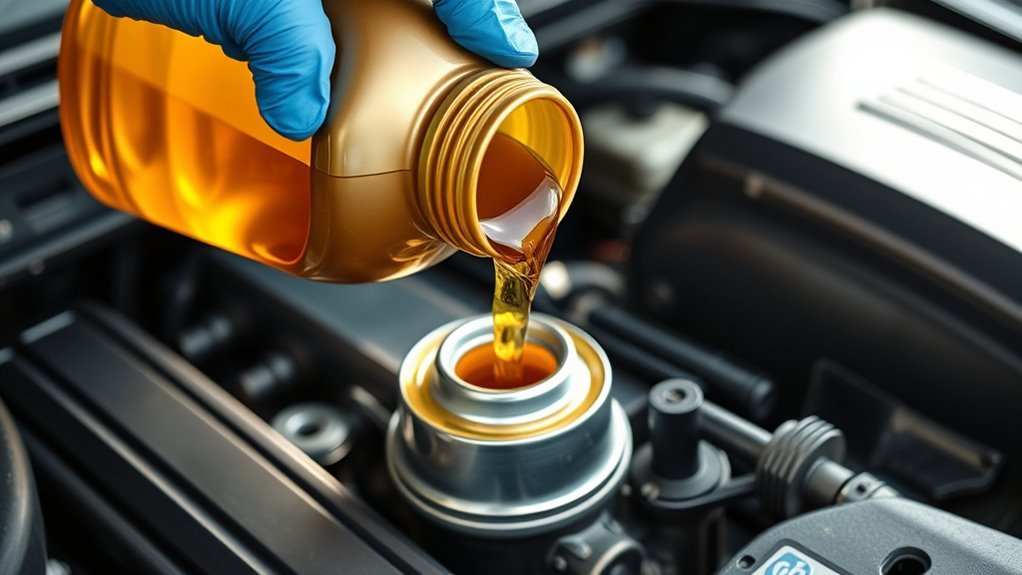
Knowing when to change your engine oil is key to keeping your vehicle running smoothly.
Oil change intervals have evolved; many manufacturers now suggest changing synthetic oil every 15,000 to 30,000 kilometers instead of the older 10,000-kilometer rule.
As a vehicle owner, you should follow the manufacturer’s guidelines closely to maintain engine health and optimize engine performance.
Regular oil changes prevent sludge buildup and reduce engine wear, especially when using quality motor oil with the correct oil viscosity.
Don’t rely solely on oil color to decide when to change it; instead, focus on monitoring oil levels and ensuring it isn’t saturated with contaminants.
Staying on top of these best practices helps protect your engine and keeps your vehicle running at its best.
Understanding Motor Oil Labels and Viscosity
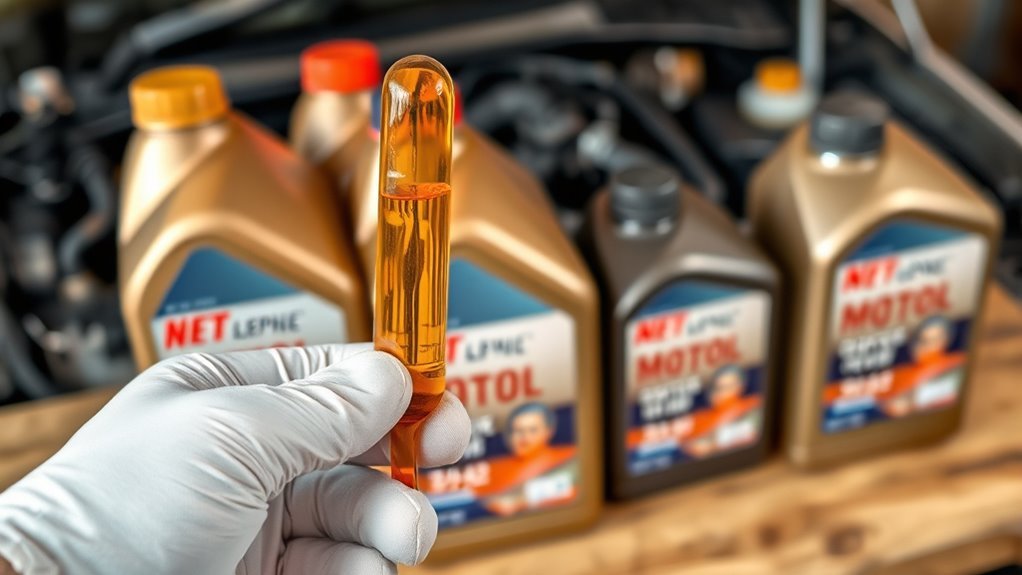
Although motor oil might seem straightforward, understanding its labels and viscosity ratings is crucial for choosing the right oil for your vehicle.
The numbers on multi-grade oils, like 5W-30, tell you about the oil’s viscosity at different temperatures.
The first number with a “W” indicates how the oil flows in cold weather, helping with engine start-up.
Meanwhile, the second number shows its thickness at operating temperature.
Thinner oils offer better cold-weather performance, whereas thicker oils maintain pressure and protect your engine under heat and load.
So, when you’re out shopping for oil, look for API service and ILSAC standards on the label.
These certifications guarantee the oil meets your engine’s requirements.
What Oil Color Reveals About Engine Health

Understanding motor oil labels and viscosity helps you pick the right oil, but what about the oil’s color?
While the oil’s color can offer clues about engine health, it’s not a foolproof gauge.
Dark engine oil doesn’t always mean it’s dirty; detergent additives keep contaminants suspended, preventing sludge buildup that can mislead you about the oil condition.
Instead of relying solely on color, you must consider how saturated the oil is with particles.
Oil filters play an important role in trapping contaminants. But regular monitoring and following manufacturer recommendations for oil change intervals are essential.
Even if the oil looks dark, the necessity for an oil change depends on contamination levels and overall oil condition, not just the engine oil’s color.
The Role and Benefits of Oil Additives
Because motor oil faces constant stress from heat, pressure, and contaminants, additives play an essential role in boosting its performance and protecting your engine.
Oil additives include detergency agents that keep your engine clean by suspending dirt and contaminants.
Detergency agents in oil additives help keep your engine clean by suspending dirt and contaminants.
Anti-wear additives form a protective layer on engine parts, reducing friction and wear, which extends engine life.
Viscosity index improvers maintain consistent oil flow across temperature changes, guaranteeing reliable lubrication during startup and operation.
Corrosion inhibitors guard engine components against rust caused by acids and moisture.
These additives not only enhance engine cleanliness and durability but also improve fuel economy by minimizing friction.
Choosing motor oil with the right blend of additives guarantees peak engine performance and longevity, helping you get the most out of your vehicle.
Using Synthetic Oil in Older Vehicles
When you consider switching to synthetic oil in an older vehicle, especially one over 20 years old or with high mileage, you need to be cautious.
Synthetic oils differ chemically from mineral oils, which older engines were designed for, affecting compatibility.
Here’s what you should keep in mind:
- Older vehicles with worn seals can experience increased oil consumption and leaks when using synthetic oils.
- High mileage engines (75,000+ miles) may not respond well to synthetic oil additives, risking engine performance.
- Consult your manufacturer’s manual for recommended oil selection, often favoring mineral oils with additives suited to wear and tear.
- Improper use of synthetic oils can accelerate wear and tear, causing costly repairs due to poor compatibility with engine design.
Choose wisely to preserve your engine’s longevity and performance.
Frequently Asked Questions
Does It Matter if I Use 10W30 Instead of 5W30?
Yes, it matters.
Using 10W30 instead of 5W30 can reduce cold start protection and increase engine wear in cold weather.
Always check your owner’s manual to confirm you use the recommended oil for peak performance.
What Happens if I Use 5W-40 Instead of 5W30?
If you use 5W-40 instead of 5W-30, your engine might get better high-temp protection.
But you could face reduced fuel efficiency and potential oil flow issues.
Always check your manual before switching to avoid problems.
How Often Should Engine Oil Be Changed?
You should change your engine oil based on your car manufacturer’s recommendations,
usually every 20,000 to 30,000 kilometers with modern synthetic oils.
Check your owner’s manual to keep your engine running smoothly and efficiently.
What Are the Three Best Engine Oils?
You’ll want to choose Mobil 1 Extended Performance for long-lasting protection.
Castrol EDGE is great for advanced performance under pressure.
If your car has high mileage, then Valvoline Advanced Full Synthetic is the way to go.
These oils keep engines running smoothly!
Conclusion
Choosing the right motor oil is like giving your car a tailored suit—it guarantees a perfect fit for smooth performance.
By understanding oil labels and changing oil at proper intervals, you’re protecting your engine’s health.
Also, recognizing what oil color tells you can provide vital information about your engine’s condition.
Don’t overlook additives or synthetic options, especially for older vehicles.
With these essentials, you’ll keep your ride running strong.
By using the right motor oil, you’ll avoid costly repairs and enjoy the road with confidence.
So, remember to stay informed, choose wisely, and keep your engine happy!
Taking care of your car’s motor oil is crucial for longevity and performance.