Why Does My Car Suspension Squeak?
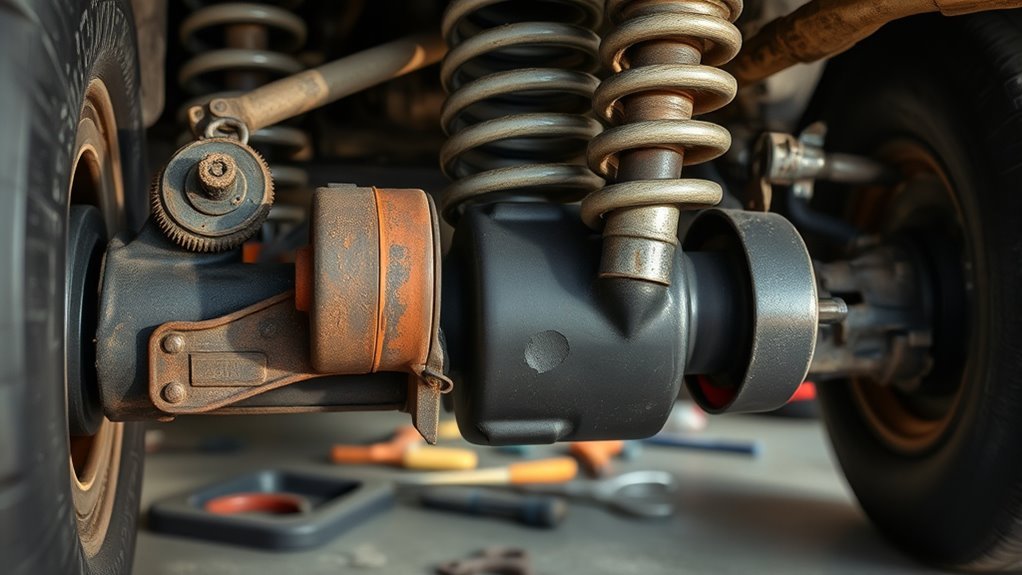
Your car suspension squeaks mainly because worn or dry parts like rubber bushings and ball joints create friction when they move.
Heat, dirt, and aging make these components less flexible, causing that noisy squeak over bumps or turns.
Ignoring it can lead to reduced ride comfort, handling issues, and costly repairs.
If you want to keep your suspension smooth and avoid bigger problems, it helps to understand what’s causing the noise and how to fix it.
Regular maintenance can be key to preventing squeaks and ensuring your car drives smoothly.
So, let’s dive deeper into those squeaks and how to tackle them effectively!
Key Takeaways
- Worn or dried-out rubber bushings commonly cause suspension squeaks. This happens due to loss of flexibility and increased friction.
- Lack of lubrication in ball joints and moving parts can result in grinding or squeaking noises during movement.
- Damaged or degraded shock absorbers reduce shock absorption. This leads to squeaks when driving over bumps or turns.
- Dirt, debris, and environmental factors like heat and UV exposure can accelerate wear. They also contribute to noise in suspension components.
- Ignoring suspension noises can lead to reduced handling and uneven tire wear. Plus, if not addressed promptly, it could result in costly repairs.
Common Causes of Suspension Squeaks
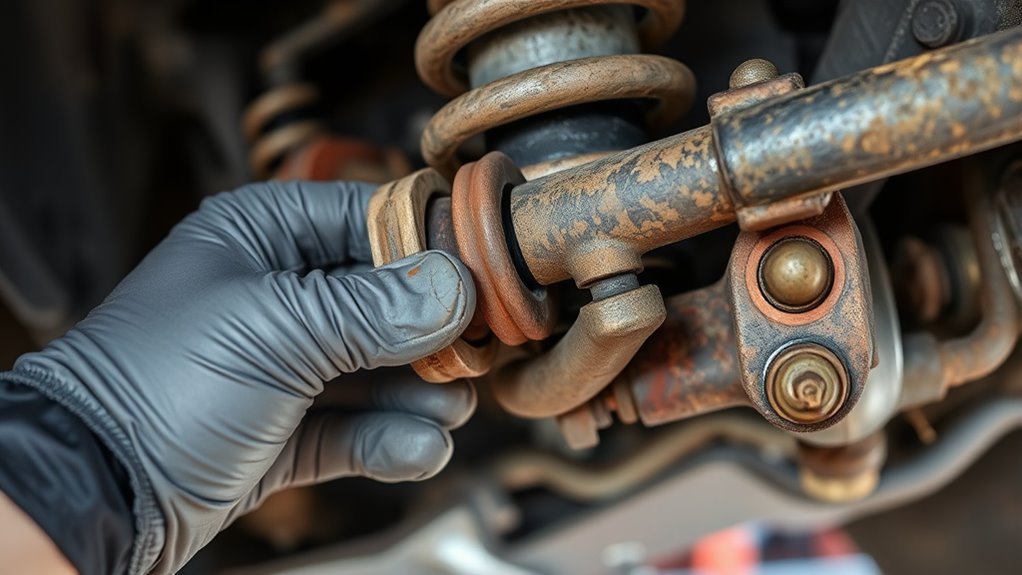
Several components in your car’s suspension can cause squeaks, with worn rubber bushings being one of the most common.
Over time, these bushings lose their flexibility and start producing noise when compressed during driving.
With time, bushings stiffen and squeak as they compress while driving.
Ball joints are another frequent culprit; if they lack proper lubrication, you’ll hear grinding or squeaking when your wheels move.
Other suspension components, like control arms and shock absorbers, can also contribute to noise if they suffer wear or damage.
Environmental factors such as dry climates and road debris speed up this wear, increasing squeak chances.
The Impact of Worn Suspension Components
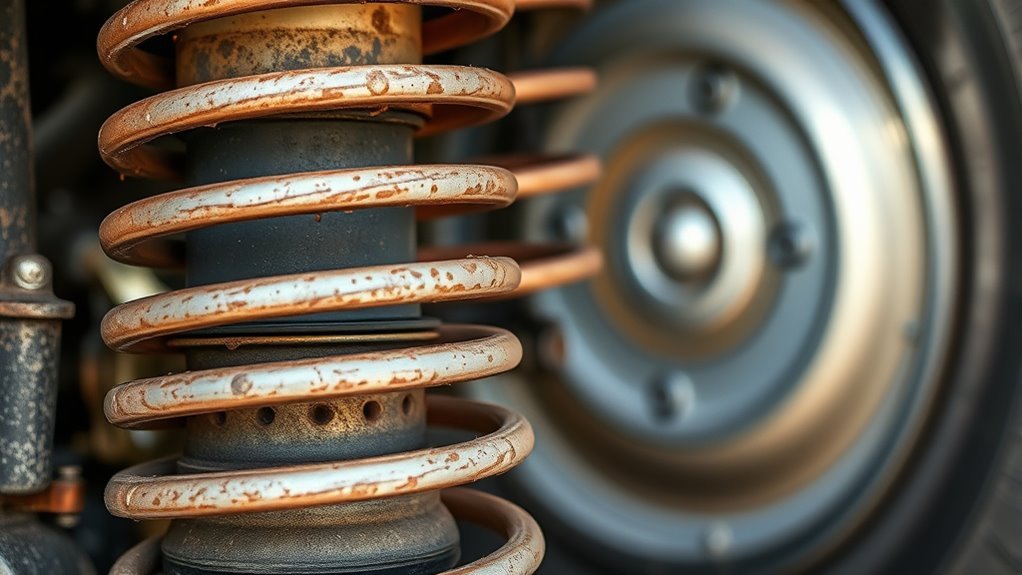
When bushings wear out, you’ll notice squeaks as they lose their cushioning effect. This makes your ride less comfortable.
Ball joints that degrade can affect your steering control. Meanwhile, deteriorating shock absorbers reduce your vehicle’s ability to absorb bumps.
Addressing these issues early helps you keep your suspension working smoothly and safely. It’s always better to tackle problems before they escalate!
Worn Bushings Effects
Worn rubber bushings in your car’s suspension can cause noticeable squeaks as they lose flexibility and fail to absorb road shocks effectively.
These bushings help prevent car squeaks by cushioning metal parts, but once they harden or crack, you’ll hear those annoying noises.
Ignoring worn bushings can lead to bigger problems. Here’s what you can expect:
- Reduced shock absorption causes squeaking during bumps and turns.
- Decreased vehicle handling and stability, making driving less comfortable.
- Accelerated tire wear due to loose suspension parts.
- Increased risk of costly repairs if issues aren’t addressed promptly.
Regularly checking and replacing worn rubber bushings keeps your suspension quiet and your ride smooth.
It’s a simple step that can save you a lot of hassle down the road!
Ball Joint Wear Impact
Just like bushings, ball joints play a key role in keeping your suspension smooth and quiet.
These moving parts allow your wheels to pivot, so when ball joints wear out, they can begin to squeak due to lack of lubrication.
You need to make sure you inspect them regularly because worn ball joints lead to excessive play, causing uneven tire wear and shaky steering.
If you ignore these noises, the deterioration can compromise your vehicle’s handling and safety.
Additionally, failing ball joints may cause vibrations in the steering wheel, making control harder.
Left unaddressed, worn ball joints can damage other suspension components, resulting in costly repairs and potential breakdowns.
Shock Absorber Deterioration
Although shock absorbers work hard to keep your ride smooth, they gradually lose their ability to dampen impacts effectively.
When they deteriorate, you might hear squeaking noises caused by worn rubber and plastic components.
Here’s what happens:
- Internal seals fail, letting fluid leak and reducing damping performance.
- Increased suspension travel causes metal parts to rub, creating squeaks.
- Lack of lubrication in joints makes metal components grind against each other.
- Worn rubber and plastic bushings harden or crack, amplifying noise and vibration.
Ignoring these signs can lead to worse suspension damage and costly repairs.
Keeping your shock absorbers in good shape guarantees better handling, stability, and a quieter ride.
Environmental Factors Affecting Suspension Noise
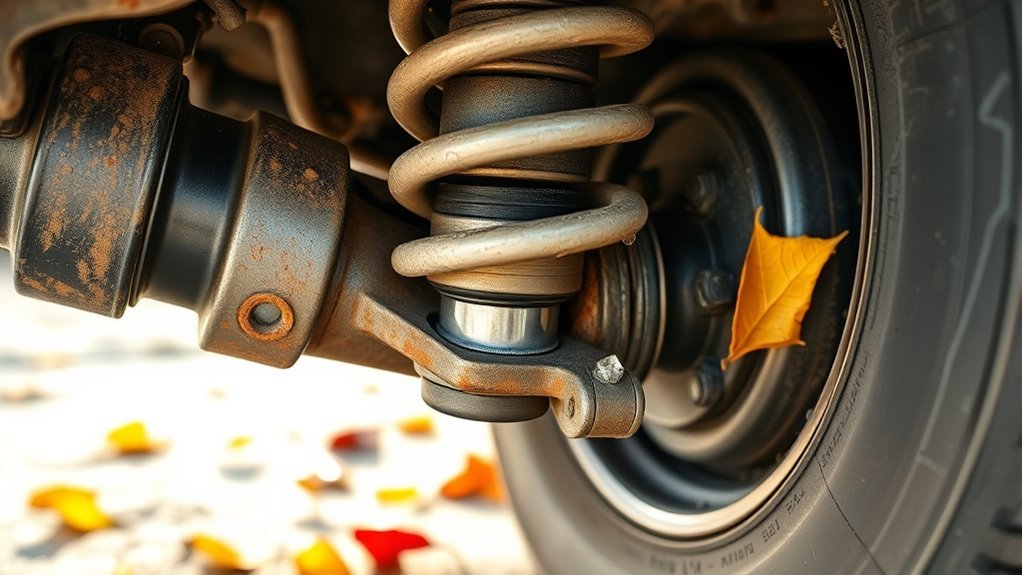
You’ll notice that heat and UV exposure can dry out and crack rubber parts, making your suspension squeak more.
Dirt and debris also get trapped in moving components, increasing friction and noise.
Keeping these environmental factors in check helps reduce those annoying sounds.
Heat and UV Damage
When your vehicle spends a lot of time in the sun, heat and UV rays gradually degrade the rubber parts in the suspension system.
This makes them brittle and less able to absorb shocks, leading to squeaks as these components lose flexibility.
To protect your suspension from heat and UV damage, consider these tips:
- Avoid parking in direct sunlight for extended periods to reduce UV exposure.
- Inspect rubber bushings and seals regularly for signs of cracking or hardening.
- Use protective sprays designed for rubber parts to maintain flexibility.
- Schedule routine maintenance to catch early signs of wear before noises develop.
Taking these steps can help ensure your suspension system remains in good shape!
Dirt and Debris Effects
Since dirt and debris often build up on suspension parts, they can cause increased friction that leads to those annoying squeaks we all dislike.
Dust and road debris clog rubber bushings and joints, reducing their flexibility and causing noise.
When you neglect cleaning the undercarriage, dirt accelerates wear on moving parts, making the squeaks worse over time.
To avoid this, keep your suspension components clean and inspect them regularly.
| Dirt Impact | Component Affected | Resulting Issue |
|---|---|---|
| Dust accumulation | Rubber bushings | Reduced flexibility |
| Road debris buildup | Suspension joints | Increased friction |
| Lack of cleaning | Moving parts | Accelerated wear/squeaks |
Regular cleaning maintains your suspension’s integrity and helps prevent dirt-related squeaks.
Signs That Indicate Serious Suspension Problems
Although a squeak in your car’s suspension might seem minor at first, certain signs can signal serious problems that need immediate attention.
You should watch for these key indicators:
- A louder or higher-pitched squeak, which could mean failing bushings or joints.
- Vibrations in the steering wheel, suggesting suspension parts aren’t working properly.
- The car pulling to one side, indicating uneven wear or damage affecting handling.
- Noticeable changes in ride quality, like excessive bouncing or instability over bumps, pointing to worn shock absorbers or struts.
Ignoring these signs, especially when combined with persistent squeaks, risks complete suspension failure and costly repairs.
If you notice any of these, it’s time to have your suspension inspected right away.
Steps to Diagnose and Fix Suspension Squeaks
Start by carefully inspecting your suspension system for worn rubber bushings, loose bolts, and leaking shock absorbers, as these are common sources of squeaks.
Next, check the ball joints and control arms to verify they’re properly lubricated, since dryness often causes squeaking and grinding noises.
Pay attention to any changes in the pitch or volume of the squeak; these can signal worsening issues needing immediate action.
If lubricating doesn’t stop the noise, replace worn components to improve ride quality and stability.
Finally, if you notice vibrations in the steering wheel or your vehicle pulls to one side, schedule a professional inspection, as these symptoms may indicate more serious suspension problems requiring expert repair.
Maintaining Suspension Health for a Smooth Ride
To keep your suspension system performing smoothly, you should regularly inspect key components like bushings, bolts, and shocks for signs of wear or damage.
Doing so helps you catch issues early and avoid costly repairs.
Here are four essential maintenance tips:
- Clean your vehicle’s undercarriage often to prevent dust and debris buildup that can worsen wear and noise.
- Lubricate suspension parts to reduce squeaks temporarily, but replace worn components for lasting performance.
- Verify your vehicle’s alignment is correct and tires are in good condition to support suspension health and a smooth ride.
- Address any suspension squeaks promptly to avoid accelerated tire wear and maintain safe handling.
Following these steps keeps your ride smooth and your suspension reliable.
Frequently Asked Questions
Is My Suspension Squeaking Bad?
Yes, your suspension squeaking is bad because it usually means worn parts need attention.
If you ignore it, you’ll risk bigger problems, costly repairs, and unsafe driving conditions.
Get it checked and fixed promptly.
What Noises Can Lower Control Arm Bushings Make?
Lower control arm bushings can make squeaking, creaking, or popping noises when you drive, especially over bumps.
These sounds happen because worn or dry bushings create friction as your suspension moves.
This is a clear sign that maintenance might be needed.
Can WD-40 Help Squeaky Suspension?
WD-40 can temporarily reduce your suspension squeaks, but it won’t fix worn parts.
It attracts dirt, which may worsen wear.
Use specialized lubricants and inspect your suspension regularly for lasting results and safety.
What Kind of Noise Are Bad Front Shocks Making?
You’d expect a smooth ride, but bad front shocks make a high-pitched squeak or creak, especially over bumps.
That annoying noise signals worn seals and poor damping.
Conclusion
Think of your car’s suspension like the hinges on an old gate—neglect them, and they start to squeak loudly, signaling trouble.
Just like oiling those hinges keeps the gate swinging smoothly, maintaining your suspension prevents annoying noises and costly repairs.
Remember, addressing squeaks early is like tuning a musical instrument; it guarantees every ride stays smooth and safe.
Don’t wait—listen closely and take action before that squeak turns into a bigger problem.
In conclusion, if your car’s suspension is squeaking, it’s a sign that maintenance is needed.
Ignoring it could lead to more serious issues, impacting your ride quality and safety.
Stay proactive and address those squeaks promptly to ensure smooth rides and prevent costly repairs down the road.