10 Best EV Charging Platforms V2G ISO 15118 Plug-and-Charge: Top Picks Side by Side
Many EV owners want charging tools that do more than fill a battery. They need a platform that works well today and can also support future features like smart charging and grid interaction.
It also looks at platforms that aim to reduce login steps and support safer, faster sessions. You will see who each platform suits, how it handles ease of use, and what it may offer for vehicle compatibility.
The goal is to help you compare real features without guesswork.
Best EV Charging Platforms for V2G and Plug-and-Charge
| Image | Product | Price |
|---|---|---|
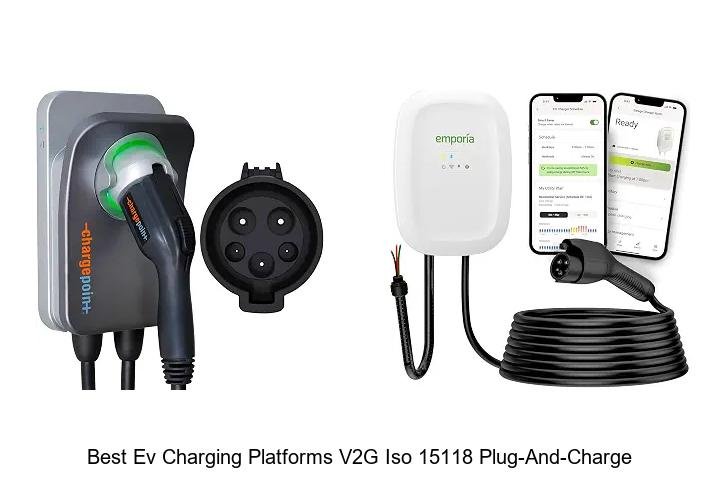
Pick 1  | ChargePoint Home Flex Level 2 EV Charger | Check Price On Amazon |
Pick 2  | EMPORIA Level 2 EV Charger J1772 | Check Price On Amazon |
Pick 3  | Ubiquiti Weatherproof EV Charging Adapter | Check Price On Amazon |
1. ChargePoint Home Flex Level 2 EV Charger
ChargePoint Home Flex brings smart home charging into one compact, reliable package. Its app control and adjustable power settings make daily charging feel organized and simple. This Level 2 charger is built for drivers who want faster home charging without complicated hardware.
It uses a J1772 connector for non-Tesla EVs and works with a 240-volt outlet. The 23-foot cable offers easy reach, while the UL listing and indoor or outdoor rating add confidence.
The charger can deliver up to 45 miles of range per hour, depending on the vehicle. That makes it a strong fit for commuters, households with one EV, and drivers who want flexible installation options. The ChargePoint network support also adds convenience for people who travel often and use public stations too.
Its smart features help you track charging, set reminders, and manage the charger through the mobile app.
Pros
- Fast Level 2 charging for home use
- Smart app control and charging reminders
- Indoor or outdoor installation flexibility
Cons
- Needs a Tesla adapter for Tesla vehicles
- Requires 240V outlet and proper circuit
- Single-port design serves one vehicle
Who Should Buy It?
Drivers who want a dependable home charger with app control should consider it. It suits non-Tesla EV owners, commuters, and households needing flexible indoor or outdoor installation. People who value charging data, reminders, and access to ChargePoint’s larger network will get the most from it.
It also works well for those wanting a tidy, wall-mounted Level 2 setup with adjustable power settings.
Key Specifications
| Specification | Details |
|---|---|
| Brand | ChargePoint |
| Connector Type | J1772 |
| Current Rating | 50 A |
| Input Voltage | 240 volts |
| Output Voltage | 240 volts |
| Wattage | 12 kW |
| Connectivity | WiFi |
| Mounting Type | Wall Mount |
| Cable Length | 23 feet |
| Certification | UL |
| Smart Features | App control, charging reminders, charging data, smart home device support |
The 240-volt input and output point to true Level 2 home charging. A 50-amp current rating supports faster charging than a standard outlet. The J1772 connector works with most non-Tesla electric vehicles. The 23-foot cable gives helpful reach for garages and driveways. WiFi connectivity and app control let owners monitor charging, set reminders, and review charging information. The wall-mount design keeps the unit positioned neatly indoors or outdoors.
In daily use, these specifications mean less waiting and more flexibility. A 12 kW output can add range much faster than a 120-volt plug. The UL certification supports safe home installation, while the indoor and outdoor rating widens placement options. Adjustable power settings help match different circuits, including 40A or 50A setups. Drivers who want smart scheduling, visible charging data, and a dependable fixed charger will benefit most from these features.
2. EMPORIA Level 2 EV Charger J1772
Smart home charging feels practical with Emporia’s J1772 Level 2 station. It combines fast 48 amp output, WiFi control, and a long 25-foot cable.
The charger is built for hardwired installation with a whip, which suits permanent home setups. It delivers up to 46 miles of range per hour through a hardwired connection. That makes it a strong fit for drivers who want quick overnight charging.
The unit is UL listed and ENERGY STAR certified, with listed compliance across several safety standards. Its white housing looks clean, and the included wall mount, holster, and hardware help with installation. The 2.4 GHz WiFi connection lets users view energy data and schedule charging from a mobile device.
J1772 compatibility covers many North American EVs, including popular models from Chevrolet, Ford, Hyundai, BMW, Audi, and others. It suits households wanting a dependable, feature-rich charger with strong everyday usability and solid value for the money.
Pros
- 48 amp output supports very fast home charging
- WiFi app control adds scheduling and energy tracking
- 25-foot cable gives flexible parking reach
Cons
- Hardwired setup may require professional installation
- J1772 connector needs an adapter for Teslas
- WiFi features depend on 2.4 GHz connectivity
Who Should Buy It?
Drivers who want fast, dependable home charging should consider this unit. It suits EV owners with a J1772 port, especially households needing a permanent wall-mounted setup. People who like charging schedules, energy tracking, and a long cable will appreciate it most.
It also fits commuters who want quick overnight replenishment without unnecessary complexity.
Key Specifications
| Specification | Details |
|---|---|
| Brand | EMPORIA |
| Connector Type | J1772 |
| Current Rating | 48 A |
| Input Voltage | 240 volts |
| Output Voltage | 240 volts |
| Wattage | Not provided |
| Connectivity | 2.4 GHz WiFi |
| Mounting Type | Hardwired with whip |
| Cable Length | 25 feet |
| Certification | UL listed, ENERGY STAR certified |
| Smart Features | Real-time energy data, charging schedules, mobile device control |
The 48 amp, 240 volt setup means this charger is built for serious home use. It can deliver much faster charging than a standard wall outlet. The 25-foot cable gives more freedom when parking, which helps in garages with awkward layouts. The J1772 connector works with many North American EVs. That makes daily charging easier for households with compatible vehicles and fixed parking spaces.
Hardwired installation with a whip points toward a more permanent setup. That works well for drivers who want a dedicated charging station at home. The UL listing and ENERGY STAR certification add confidence for safety and efficiency. WiFi support on 2.4 GHz lets users monitor charging and schedule sessions from a phone. Those features help people who track energy use and want charging to match home routines.
3. Ubiquiti Weatherproof EV Charging Adapter
Outdoor charging needs a unit that can handle weather and daily use. Ubiquiti’s weatherproof EV charging adapter brings that focus to a premium commercial setting. It offers an 11 kW Level 2 charging setup with adaptable access management for scaling.
That makes it a practical fit for shared parking, workplace fleets, and managed properties.
The unit is built for outdoor use and carries a waterproof design. It runs on AC power and requires UniFi OS version 4.0.6 or newer.
That software link supports UniFi Identity Enterprise for access control. The hardware centers on straightforward charging without extra complexity. Its weather-resistant construction suits exposed installations where protection matters.
For teams already using UniFi tools, setup and administration may feel more organized.
Performance should suit everyday Level 2 charging needs well. The 11 kW output supports steady charging for regular commercial use.
Access management helps operators control who can charge and where. That can reduce friction in locations with multiple users.
The adapter appears best suited to businesses that already manage devices through UniFi. It offers a focused feature set for controlled, outdoor charging environments rather than home use.
Pros
- Weatherproof design suits outdoor installation
- Access management supports scaling
- Works with UniFi Identity Enterprise
Cons
- Requires UniFi OS 4.0.6 or newer
- Depends on UniFi ecosystem tools
- Not aimed at simple home charging
Who Should Buy It?
Who should buy it: Commercial operators needing outdoor charging with managed access will benefit most. It suits workplaces, multifamily properties, and fleet locations already using UniFi systems. Teams that want controlled access and weather-resistant hardware should find it practical.
Buyers wanting a simple standalone charger may prefer a less connected option.
Key Specifications
| Specification | Details |
|---|---|
| Brand | Ubiquiti Networks |
| Connector Type | Not provided |
| Current Rating | 11 Kiloamps |
| Input Voltage | 11000 volts_of_alternating_current |
| Output Voltage | 11000 volts_of_alternating_current |
| Wattage | 11000 watts |
| Connectivity | UniFi OS 4.0.6 or newer; UniFi Identity Enterprise |
| Mounting Type | Not provided |
| Cable Length | Not provided |
| Certification | Not provided |
| Smart Features | Adaptable access management |
The 11 kW rating means the charger is built for Level 2 use. In daily life, that usually supports steady charging at commercial sites and shared parking areas. The AC current type matches standard electric vehicle charging setups. Waterproof construction helps the unit operate outdoors where rain and exposure are common. That combination makes it practical for properties that need dependable charging without placing equipment indoors.
The UniFi OS requirement links the charger to a managed software environment. For operators, that can mean easier access control across multiple locations or users. The adaptable access management feature is useful in workplaces and multi-user properties. The unit’s weather-resistant build supports outdoor mounting in exposed areas. Businesses already using UniFi tools will benefit most, since setup depends on that ecosystem. It suits organized installations more than casual, standalone use.
4. Level 2 EV Charger 48A J1772 Smart WiFi EVSE

A plug-in Level 2 charger with smart WiFi control makes home charging straightforward. Its J1772 connector and NEMA 14-50 plug suit many non-Tesla EVs well.
Hicrab designed this EVSE for drivers who want simple installation and strong everyday performance. The included NEMA 14-50 plug supports a plug-in setup when a dedicated 50A, 240V outlet already exists. It delivers up to 40A and 9.6kW, with charging speeds up to 38 miles per hour.
The 25-foot cable adds reach for garages and driveways, while the IP55 enclosure handles indoor or outdoor use. UL compliance, ETL listing, FCC specification, and built-in protections support safety.
Smart app control adds convenience for scheduling and monitoring. It suits non-Tesla drivers who want easy setup, reliable charging, and flexible placement.
Pros
- Plug-in installation suits existing NEMA 14-50 outlets
- Long 25-foot cable improves parking flexibility
- Smart WiFi control adds convenient app access
Cons
- Requires a dedicated NEMA 14-50 outlet
- Tesla drivers need a separate adapter
- No hardwired setup included in this model
Who Should Buy It?
Drivers with a ready NEMA 14-50 outlet should consider this charger. It fits non-Tesla EVs and PHEVs using J1772 charging. Homeowners wanting quick installation, smart app control, and a long cable will appreciate it most.
It suits garages and driveways where outlet access already exists, and where dependable daily charging matters more than advanced vehicle-to-grid features.
Key Specifications
| Specification | Details |
|---|---|
| Brand | Hicrab |
| Connector Type | J1772 |
| Current Rating | 48 A |
| Input Voltage | 240 volts |
| Output Voltage | 240 volts_of_alternating_current |
| Wattage | 9.6 kW |
| Connectivity | WiFi, Smart App |
| Mounting Type | Wall Mount |
| Cable Length | 25 ft |
| Certification | UL, ETL, FCC |
| Smart Features | App control, charging schedule, monitoring |
The 48A current rating and 240-volt input point to fast home charging. In practical use, that means less waiting between daily drives and more flexibility for busy schedules. The J1772 connector works with many non-Tesla EVs and PHEVs in North America. A 25-foot cable helps when the parking spot is far from the outlet. The wall-mount design keeps the unit positioned neatly in a garage or driveway wall.
WiFi and smart app control add scheduling and monitoring from a phone. That helps users charge during preferred hours and keep track of charging sessions. UL, ETL, and FCC specification support confidence in the unit’s electrical design. The IP55 weather-resistant enclosure and built-in protections help it handle regular indoor or outdoor use. Drivers with existing NEMA 14-50 outlets benefit most, since setup stays simple and direct.
5. Autel Level 2 EV Charger 50A J1772

Fast home charging feels simple with Autel’s 50A Level 2 wall charger. It combines high output, smart controls, and weather-ready hardware for daily EV use. Autel’s MaxiCharger AC Home delivers up to 12kW and can add up to 46 miles of range per hour.
The 25-foot cable gives generous reach, and it stays flexible in cold weather down to -40°C. That makes garage or driveway charging easier through changing seasons.
The charger uses a J1772 connector and supports adjustable current from 16A to 50A. It is hardwired for a cleaner installation, and the NEMA 4X rating supports indoor or outdoor placement. CSA certification adds extra confidence for households seeking rebate eligibility and safety compliance.
The free Autel Charge app lets users schedule charging, control sessions, and shift charging to off-peak times. It suits drivers who want quick overnight charging, simple app-based control, and dependable everyday performance.
Pros
- Up to 50A charging for fast home sessions
- 25-foot cable improves reach in garages
- App scheduling helps use off-peak electricity
Cons
- Hardwired setup may need an electrician
- J1772 only suits compatible AC ports
- Single port limits charging to one vehicle
Who Should Buy It?
Drivers who want fast Level 2 home charging should consider it. It fits households with a dedicated installation spot, indoor or outdoor. The app control suits owners who like scheduled charging and off-peak planning.
It also works well for EV drivers needing a long cable and strong daily charging speed.
Key Specifications
| Specification | Details |
|---|---|
| Brand | Autel |
| Connector Type | SAE J1772 |
| Current Rating | 50 A |
| Input Voltage | 120 volts alternating current |
| Output Voltage | 240 volts |
| Wattage | 12 kW |
| Connectivity | WiFi, Bluetooth |
| Mounting Type | Wall mount |
| Cable Length | 25 ft |
| Certification | CSA, NEMA 4X |
| Smart Features | Autel Charge app, scheduling, off-peak charging, automatic updates |
The 50A rating and 12kW output explain the charger’s quick home charging pace. That level can add up to 46 miles per hour under suitable conditions. The 240-volt output matches Level 2 charging, which many households use overnight. A 25-foot cable adds reach from a garage wall to a parked car. The J1772 connector works with many EVs that accept standard AC charging.
WiFi and Bluetooth support app control, so charging can be started or scheduled from a phone. The adjustable 16A to 50A range helps match different electrical setups. The hardwired wall-mount design suits fixed home installation, while CSA and NEMA 4X support indoor or outdoor use. The long cable and weather-ready build help drivers in colder climates and wider driveways. Owners wanting easy control and fast daily charging benefit most.
6. SIEMENS VersiCharge Commercial 48Amp EV Charger

Commercial charging gets a practical, compliance-focused package here. SIEMENS pairs remote control features with hardwired flexibility for demanding installations. The VersiCharge Commercial 48Amp EV Charger supports J1772 vehicles and includes a 20-foot cable for easier parking alignment.
Its 48-amp output and 240-volt input support up to 11 kW charging power. Ethernet and Wi-Fi connectivity add app-based monitoring and scheduling for day-to-day control.
NEMA 4 protection helps it handle outdoor conditions more confidently.
Build quality feels aimed at business sites, fleet areas, and shared charging spaces. The wall-mount design fits fixed installations, while the Nema 6-50 plug option or hardwiring gives installers more setup choices. UL and c UL listing adds a reassuring layer of certification for commercial deployment.
Performance should suit drivers who want steady Level 2 charging without complicated operation. The included cable length helps reduce strain during parking, and the smart connectivity supports organized charging routines. It suits workplaces, property managers, and facilities that need practical hardware with connected control.
Pros
- Commercial-focused design suits workplace and property installations.
- Wi-Fi and Ethernet support remote monitoring and scheduling.
- NEMA 4 rating suits harsher outdoor conditions.
Cons
- J1772 support may not suit every vehicle type.
- Wall-mount setup may require professional installation.
- Smart features depend on network availability.
Who Should Buy It?
Commercial sites, fleet managers, and property operators should buy it. It fits installations that need connected control, fixed mounting, and weather resistance. The 48-amp output suits drivers who want faster Level 2 charging at shared locations.
Facilities needing J1772 compatibility, scheduling, and remote monitoring will get the most value from its business-ready feature set.
Key Specifications
| Specification | Details |
|---|---|
| Brand | SIEMENS |
| Connector Type | J1772 |
| Current Rating | 48 A |
| Input Voltage | 240 volts |
| Output Voltage | 240 volts |
| Wattage | 11 KW |
| Connectivity | Ethernet, Wi Fi |
| Mounting Type | Wall Mount |
| Cable Length | 20-foot cable |
| Certification | CSA |
| Smart Features | Remote monitoring, scheduling via app |
The 48-amp rating and 240-volt input point to strong Level 2 charging output. That combination supports up to 11 kW, which suits regular daily charging needs at workplaces or shared parking areas. The J1772 connector matches many electric vehicles sold for North American charging use. The included 20-foot cable gives drivers extra reach, which helps when parking spaces vary. Ethernet and Wi-Fi also support connected operation for sites that want remote oversight.
Wall mounting makes the unit a fixed part of the installation, which works well for commercial spaces. Nema 6-50 plug support or hardwiring gives installers flexibility during setup. The NEMA 4 enclosure helps the charger handle weather exposure in outdoor locations. CSA and UL c UL listed safety markings add confidence for facilities with compliance requirements. Businesses benefit most, since scheduling and remote monitoring can help organize charging access across multiple users.
7. Level 2 EV Charger for Tesla

Home Tesla charging gets simpler with a hardwired Level 2 unit built for fast daily top-ups. It combines app control, connector temperature monitoring, and adjustable power for flexible use.
The IYILO Level 2 EV Charger delivers up to 48 amps and 11.5 kW through hardwired installation with a 60A breaker and licensed electrician. That setup can add up to 46 miles of range per hour. Current adjusts in 1A steps from 6A to 48A, which helps match charging to household needs.
The NACS connector includes an NTC temperature sensor and live app readings. When heat rises above 221°F, charging power drops or stops. The unit also supports scheduled charging, time-of-use rates, energy tracking, and multiple user accounts.
Wall-mounted design, included RFID cards, and utility program support make it practical for Tesla owners who want smart home charging.
Pros
- Fast 48A Level 2 charging for Tesla vehicles
- Connector temperature monitoring helps improve charging safety
- App supports scheduling, energy tracking, and multiple users
Cons
- Requires hardwired installation and licensed electrician
- Only suitable for NACS or Tesla-style connectors
- Advanced features depend on app setup and WiFi
Who Should Buy It?
Tesla owners who want a wall-mounted home charger with smart controls should consider it. It suits drivers who charge daily, want adjustable current, and like tracking energy use through an app. People with utility program participation may also appreciate the added support.
Buyers needing a hardwired, high-power NACS charger will find it especially relevant.
Key Specifications
| Specification | Details |
|---|---|
| Brand | IYILO |
| Connector Type | NACS(J3400) |
| Current Rating | 48 Amps |
| Input Voltage | 240 Volts |
| Output Voltage | 240 Volts |
| Wattage | 11.5 kW |
| Connectivity | WiFi |
| Mounting Type | Wall Mount |
| Certification | UL 2594, ETL, Energy Star, FCC |
| Smart Features | App control, scheduled charging, TOU rates, energy tracking, power sharing, dynamic load balancing, temperature monitoring |
The charger uses a NACS connector, which matches Tesla-style charging ports. It supports 240-volt input and output, with a 48-amp current rating. That combination delivers 11.5 kW of power for home charging. WiFi connectivity and wall mounting help keep the unit fixed and connected. The charger also includes RFID cards for access control. In everyday use, these specifications mean faster charging, easier management, and a setup that fits a dedicated garage or driveway location.
The listed certifications include UL 2594, ETL, Energy Star, and FCC. Those labels show the charger was tested for electrical safety, energy efficiency, and wireless compliance. Smart features like app control, scheduled charging, time-of-use rates, energy tracking, power sharing, dynamic load balancing, and temperature monitoring add more control. For daily Tesla owners, that can mean better scheduling around household usage and lower charging strain. The hardwired design also suits users who want a fixed home installation.
8. Level 2 EV Charger, 40A J1772 Wall Charger

Home charging becomes simpler with a plug-in unit that suits many North American EVs. The long cable and metal case make garage charging feel practical and durable.
Designed for simple wall charging, it uses a standard J1772 connector for broad vehicle compatibility. It works with many EVs and plug-in hybrids from brands like BMW, Ford, Chevrolet, Hyundai, Kia, Nissan, Rivian, and Volkswagen. Tesla drivers need a separate J1772 adapter.
The NEMA 14-50 plug allows quick setup on a compatible 50A circuit. Built-in GFCI protection adds safety, while ETL listing and UL-2594 compliance support confidence in the unit.
The 25-foot cable gives useful reach, and the IP65 rating supports indoor or outdoor placement. A metal enclosure and rubberized handle add durability and comfort.
At 9.6kW and 40A, it offers solid Level 2 charging for daily home use. Smart features are not included, so it suits drivers who want straightforward, dependable charging without app control.
Pros
- Long 25-foot cable improves parking flexibility
- Plug-in installation avoids hardwiring
- ETL listed with IP65 protection
Cons
- No smart app or network features
- Tesla needs a separate adapter
- Non-GFCI outlet is recommended for best use
Who Should Buy It?
Buyers who want straightforward home charging should consider this unit. It fits drivers with a compatible NEMA 14-50 outlet and a 50A circuit. It also suits households with multiple J1772-equipped EVs or plug-in hybrids.
The long cable, plug-in setup, and weather-resistant build make it practical for garages, driveways, and covered outdoor spots.
Key Specifications
| Specification | Details |
|---|---|
| Brand | Generic |
| Connector Type | J1772 |
| Current Rating | 40 Amps |
| Input Voltage | 240 Volts |
| Output Voltage | 240 Volts |
| Wattage | 9.6kW |
| Connectivity | Plug-in |
| Mounting Type | Wall Mount |
| Cable Length | 25 FT |
| Certification | ETL listed to UL-2594 standards, CSA-C22.2 No. 280 |
| Smart Features | None listed |
The 40-amp rating and 240-volt input explain its home charging role clearly. It delivers up to 9.6kW, which suits overnight charging for many EVs. The J1772 connector works with most North American electric vehicles and plug-in hybrids. A 25-foot cable gives extra reach when the outlet sits farther from the parking spot. The plug-in design also makes setup simpler than a hardwired unit.
Wall mounting keeps the charger fixed in one place, which helps garage organization. The ETL listing to UL-2594 and CSA-C22.2 No. 280 points to recognized safety testing. IP65 protection supports indoor or outdoor placement, while the metal case adds durability. Built-in GFCI protection adds another layer of safety during regular use. Drivers who want basic charging without app control will benefit most from this setup.
9. ELEGRP Level 2 EV Charger 40Amp

A portable Level 2 charger with strong everyday flexibility stands out here. Its 25-foot cable, adjustable current settings, and NEMA 14-50 plug make home charging easier. The ELEGRP Level 2 EV Charger 40Amp delivers up to 9.6 kW charging, reaching about 37 miles per hour.
Five current levels let you match outlet capacity, while the 1 to 12 hour delay timer supports off-peak charging. ETL certification and IP67 protection add confidence for indoor and outdoor use. The charger fits many EVs and PHEVs, including Tesla models with a separate adapter.
Build quality feels suited to regular travel, garage use, and driveway charging. At 13.2 pounds, it stays portable without feeling flimsy. U.S.-based support also helps buyers who want straightforward setup help.
For drivers wanting an affordable, portable charging solution, it offers broad compatibility and useful control.
Pros
- Portable design suits home, travel, and outdoor charging.
- Adjustable current levels match different electrical setups.
- Long 25-foot cable improves parking flexibility.
Cons
- Tesla needs a separate NACS adapter.
- No built-in smart app features listed.
- NEMA 14-50 outlet required for use.
Who Should Buy It?
Buyers who want a budget-friendly portable Level 2 charger should consider it. It suits drivers with a NEMA 14-50 outlet who want adjustable charging at home or on the road. The long cable helps in larger garages or driveway setups.
It also fits households with multiple compatible EVs or plug-in hybrids, including Tesla owners who already have a separate adapter.
Key Specifications
| Specification | Details |
|---|---|
| Brand | ELEGRP |
| Connector Type | J1772 |
| Current Rating | 40A |
| Input Voltage | 240V |
| Output Voltage | 240V |
| Wattage | 9.6 kW |
| Connectivity | Plug-in |
| Mounting Type | Portable |
| Cable Length | 25FT |
| Certification | ETL Certified |
| Smart Features | 1–12H timing delay, 5 current levels |
The J1772 connector works with many non-Tesla EVs and plug-in hybrids. A 240V input and output point to Level 2 charging at home. With 40 amps available, the charger can deliver up to 9.6 kW. That higher output shortens charging time compared with Level 1 units. The 25-foot cable also gives more placement freedom, which helps in garages or shared driveways. The plug-in design keeps setup simple for daily use.
The five current settings, from 16 to 40 amps, help match household power limits. The 1 to 12 hour timing delay supports charging during lower-demand hours. ETL certification adds a useful safety benchmark for regular use. IP67 protection and the wide temperature range support indoor or outdoor charging in varied weather. At 13.2 pounds, the portable build is easier to carry for travel. Drivers who want flexible charging without permanent installation will benefit most.
10. Level 1&2 EV Charger for J1772 EVs

Portable charging gets simpler with a compact unit built for J1772 electric vehicles. The long cable, adjustable current, and dual plug setup give it flexible home and travel use.
AIXINE’s Level 1 and Level 2 EV Charger supports 120V and 240V charging through a NEMA 5-15 adapter and NEMA 6-20 plug. The charger offers 8A, 10A, 12A, and 16A settings, plus a 2 to 8 hour delay timer for off-peak charging. That makes it useful for drivers who want a low-cost backup charger with basic control.
The 25-foot cable and portable bag help with storage and reach in garages or on trips. Safety features include overvoltage, overheating, and short-circuit shutdown.
ETL, FCC, and UL-listed design adds confidence, while the IP67 rating helps in rain, dust, snow, and harsh temperatures.
Pros
- Works with 120V and 240V outlets
- Adjustable current suits different charging needs
- Long 25-foot cable improves reach
Cons
- Not compatible with Tesla NACS ports
- Requires current adjustment with 5-15 adapter
- No advanced smart app controls listed
Who Should Buy It?
Drivers who need an inexpensive backup charger will find this appealing. It suits J1772 EV and PHEV owners who want portable Level 1 or Level 2 charging. The adjustable current, long cable, and delay timer help at home or during travel.
It fits people who value basic controls, weather resistance, and simple plug-and-charge use.
Key Specifications
| Specification | Details |
|---|---|
| Brand | AIXINE |
| Connector Type | J1772, NEMA 6-20 Plug, 120V NEMA 5-15 Adapter |
| Current Rating | 16 A |
| Input Voltage | 240 volts |
| Output Voltage | 240 volts |
| Wattage | 3.68 kW |
| Cable Length | 25 ft |
| Certification | ETL, FCC, UL |
| Smart Features | Adjustable current, delay timer, automatic shutdown |
The AIXINE charger works with J1772 vehicles using a 25-foot cable. That length helps when outlets sit far from the parking spot. The charger supports 240-volt input and output, plus a 16-amp rating for up to 3.68 kilowatts. It also includes a NEMA 6-20 plug and a 5-15 adapter. In daily use, that means it can serve as a portable backup for home charging or travel.
Its adjustable current settings give drivers more control over charging speed and outlet limits. The 2 to 8 hour delay timer helps shift charging to quieter hours. ETL, FCC, and UL markings point to tested electrical and safety standards. IP67 protection supports outdoor use in rain, dust, snow, and temperature swings. The automatic shutdown functions help protect against overheating, overvoltage, and short circuits. That suits owners who want simple charging with basic safety support.
Best EV Charging Platforms for V2G and ISO 15118 Plug-and-Charge: A Buyer’s Guide
V2g compatibility and use cases
Bidirectional charging support is a core feature in modern EV charging platforms because it determines whether energy can flow both to the vehicle and back to the building or grid, which is essential for V2G-ready setups and future energy management. Vehicle and charger compatibility matters just as much, since ISO 15118 plug-and-charge functions only work smoothly when the car, charger, and software stack can communicate without friction. A platform with broad support also fits different use cases more effectively, from home charging with simple automation to fleet operations that need centralized control and to workplace sites that must balance multiple users, load limits, and authentication needs.
A platform with broad support also fits different use cases more effectively, from home charging with simple automation to fleet operations that need centralized control and to workplace sites that must balance multiple users, load limits, and authentication needs.
- Bidirectional charging support: Enables energy export, grid interaction, and smarter power use.
- Vehicle and charger compatibility: Helps avoid integration issues and unlocks plug-and-charge convenience.
- Home, fleet, and workplace applications: Ensures the platform can adapt to different charging demands and operating environments.
Iso 15118 and plugandcharge support
Native ISO 15118 support is a key feature in advanced EV charging platforms because it enables secure communication between the vehicle and the charger, reducing setup steps and improving overall reliability. Plug-and-charge authentication adds even more convenience by allowing drivers to begin charging automatically without manual card scans, apps, or repeated logins, which is especially valuable for fleets and public charging networks. Just as important, future-ready protocol updates help ensure the system can adapt to new vehicle models, software revisions, and grid-interactive features such as V2G without requiring a full hardware replacement.
Just as important, future-ready protocol updates help ensure the system can adapt to new vehicle models, software revisions, and grid-interactive features such as V2G without requiring a full hardware replacement. A platform built with these capabilities is more likely to remain compatible, secure, and efficient as charging standards continue to evolve.
Platform features and energy management
Platform features and energy management play a major role in how well an EV charging setup performs over time, because advanced software can turn a simple charger into a flexible part of a home or business energy strategy. Smart scheduling and load balancing help prevent power spikes, reduce strain on the electrical system, and keep charging sessions aligned with vehicle use patterns.
Integration with solar panels and home energy systems is equally important, since it allows stored or self-generated power to be used more efficiently, improving overall sustainability and reducing reliance on the grid. A platform with strong upgrade potential also makes it easier to add more chargers, vehicles, or energy sources later without replacing the entire system.
Network reliability and charging performance
Network reliability and charging performance are critical in EV charging platforms because even a brief service interruption can delay sessions, frustrate drivers, and reduce charger utilization. A stable system with strong uptime helps ensure plug-and-charge authentication, payment flows, and vehicle-to-grid communication continue without disruption, while fast session handling keeps queues moving and supports efficient energy delivery. Remote monitoring and diagnostics add another layer of value by allowing operators to spot faults early, track charger status in real time, and resolve issues before they affect more users.
These capabilities work together to protect day-to-day performance and support long-term growth.
- Uptime and platform stability: Keeps chargers available, minimizes failed sessions, and supports consistent V2G and ISO 15118 operation.
- Charging speed and session management: Helps optimize energy transfer, reduce wait times, and maintain smooth plug-and-charge experiences.
- Remote monitoring and diagnostics: Enables quick fault detection, better maintenance planning, and fewer on-site service disruptions.
Security, privacy, and compliance
Vehicle-to-grid charging platforms that support ISO 15118 and plug-and-charge rely on constant data exchange, so strong safeguards are essential to protect both the driver and the energy network. Data encryption and user authentication help keep payment details, vehicle identities, and charging sessions secure from interception or misuse, especially in environments where remote commands and automated authorization are part of daily operation.
Regulatory and utility compliance matters just as much, because the platform must align with local energy rules, grid requirements, and utility programs to avoid service interruptions or legal issues. Access control and account protection are also critical, since clear permission settings, secure logins, and role-based permissions reduce the risk of unauthorized changes to charging schedules, billing, or vehicle settings.
- Data protection: Encrypts sensitive information and verifies authorized users before any charge session begins.
- Compliance readiness: Supports regional standards and utility rules for smoother grid participation.
- Account security: Limits access to trusted users and helps prevent tampering with charging controls.
Pricing, support, and vendor ecosystem
Subscription and transaction fees can change the real cost of an EV charging platform far beyond the sticker price, especially for V2G and ISO 15118 plug-and-charge setups that depend on reliable software services. A system with clear pricing helps avoid surprise charges tied to network usage, payment processing, roaming, or energy management features, and it also makes long-term budgeting easier for sites that plan to scale.
Installer and customer support quality is equally important because advanced charging hardware and software often need smooth setup, firmware updates, and quick troubleshooting. Strong support reduces downtime during commissioning and helps drivers, fleet managers, and site operators resolve authentication or charging-session issues faster.
App usability and third-party integrations matter because the platform should work well for everyday users while also fitting into existing building, fleet, or energy systems. A clear app experience improves session control and monitoring, and broad integration options make it easier to connect with payment systems, load management tools, renewable energy software, and other vendor services as the deployment grows.
- Subscription and transaction fees: Compare recurring costs, roaming charges, and any fees tied to advanced functions.
- Installer and customer support quality: Check response times, documentation, training, and after-sales assistance.
- App usability and third-party integrations: Confirm the interface is intuitive and the platform connects well with other tools.
Keep Your Charging Setup in Good Shape
EV charging platforms that support V2G, ISO 15118, and Plug-and-Charge often rely on software, network links, and connected hardware working together. Good care starts with simple checks. Keep the charger, cable, and connector clean and dry. Wipe away dust and road grime with a soft cloth. Do not use harsh cleaners or spray water directly into ports.
Check the charging cable often for cuts, cracks, kinks, or bent pins. Replace damaged parts right away. A worn cable can cause charging errors or poor contact. Also look at the wall unit or pedestal for loose covers, rust, or heat marks. If anything looks wrong, stop using it and call the installer or maker.
Software matters too. Many platforms use app updates, firmware updates, and certificate checks for secure Plug-and-Charge sessions. Install updates when they are offered. They can fix bugs, improve communication, and add support for new vehicle features. If the platform uses a mobile app or cloud portal, keep your login details safe and review alerts now and then.
Use the charger in the way the maker recommends. Avoid pulling on the cable to unplug it. Do not coil a hot cable tightly after use. Give it time to cool first. If the unit is outdoors, check that the mounting is firm and that the cover is closed after charging.
A simple care routine can help the system last longer:
- Clean the connector and cable regularly.
- Check for damage before each use.
- Keep software and firmware updated.
- Protect the unit from water and impact.
- Report error messages early.
With a little attention, these charging platforms can keep working well and stay ready for daily use.
FAQ’s
What Are The Best Ev Charging Platforms That Support V2G, Iso 1511And Plug-And-Charge?
Some of the best EV charging platforms that support V2G, ISO 15118, and Plug-and-Charge include **Hubject**, **Driivz**, **AMPECO**, and **ChargeLab**, depending on your region and hardware setup. These platforms are strong choices because they support smart charging standards and are building toward broader V2G-ready interoperability.
How Does Iso 151Enable Plug-And-Charge Functionality In Ev Charging Platforms?
ISO 15118 enables Plug-and-Charge by allowing the EV and charging station to automatically authenticate and exchange billing credentials over a secure digital communication link. This means drivers can simply plug in and start charging without using cards, apps, or manual authentication.
Which Ev Charging Platforms Currently Offer The Most Reliable Vcapabilities?
The most reliable EV charging platforms are generally considered to be **ChargePoint, Tesla Supercharger, Electrify America, and EVgo**, thanks to their broad network coverage, real-time station status, and strong app support. Reliability can still vary by location, so it’s worth checking recent user reviews and live availability before charging.
What Are The Key Benefits Of Using Plug-And-Charge With Iso 15118-Compatible Chargers?
Plug-and-Charge with ISO 15118-compatible chargers lets drivers start charging automatically without cards, apps, or manual authentication, making the process faster and more convenient. It also improves security and enables seamless billing through encrypted communication between the vehicle and charger.
How Do Vand Iso 151Support Smarter And More Efficient Ev Charging Networks?
Vand ISO 151 support smarter, more efficient EV charging networks by enabling secure communication between electric vehicles, chargers, and grid systems so charging can be optimized in real time. This helps balance demand, reduce energy waste, and improve reliability for both users and operators.
Final Verdict
For buyers who want the safest all-around choice, ChargePoint Home Flex Level 2 EV Charger is our Best Overall pick thanks to its broad appeal and flexible home charging setup. The EMPORIA Level 2 EV Charger J1772 is the Best Value option for shoppers who want strong everyday charging without paying for extra bells and whistles, while the Level 2 EV Charger 48A J1772 Smart WiFi EVSE fits buyers who want simple plug-and-play convenience with smart features.
For higher-end needs, the Ubiquiti Weatherproof EV Charging Adapter is the Best Premium choice, especially for commercial settings that call for a more durable, weather-ready setup. For readers comparing the best ev charging platforms v2g iso 15118 plug-and-charge, these picks cover the main use cases: cost-conscious home charging, premium commercial use, and easy everyday charging for drivers who want a straightforward setup.
Choose ChargePoint Home Flex for the best all-around home charger, EMPORIA for value, Ubiquiti for premium commercial use, and the 48A Smart WiFi EVSE for plug-and-play convenience.