10 Best Ev Charging Solutions for Parking Lots: Expert Picks
Parking lots often need a reliable way to serve EV drivers without creating delays or adding extra strain on daily operations. Property owners and managers need charging systems that fit their space, budget, and traffic flow. That is where the best ev charging solutions for parking lots become part of the conversation.
That is where the best ev charging solutions for parking lots become part of the conversation. These products are made for commercial sites, office buildings, retail centers, and multi-unit properties. They are also useful for teams that want easier setup, steady performance, and simple day-to-day use.
The right choice can support drivers while keeping the lot organized and efficient. This review will cover what to look for in a parking lot charging product, who it suits best, and how it performs in real use. It will also point out the main strengths and limits so you can judge whether it fits your site.
Best EV Charging Solutions for Parking Lots
| Image | Product | Price |
|---|---|---|
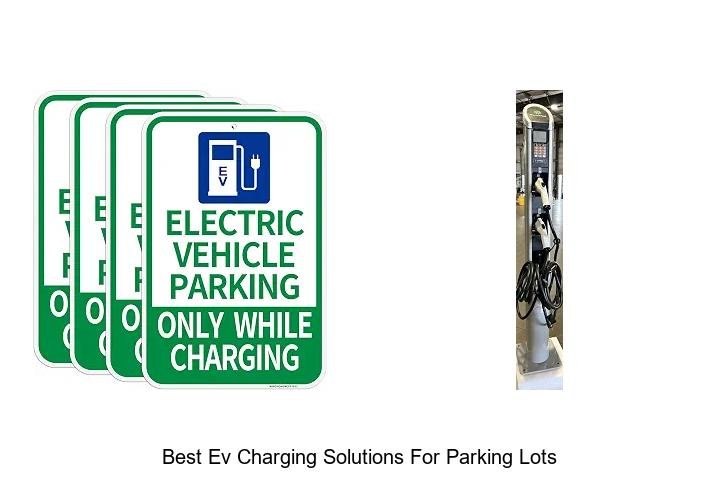
Pick 1  | Electric Vehicles Parking Only While Charging Sign 4 Pack | Check Price On Amazon |
Pick 2  | Dual Port EV Charger 240V 30A | Check Price On Amazon |
Pick 3  | MACH 2 Level 2 EV Charger | Check Price On Amazon |
1. Electric Vehicles Parking Only While Charging Sign 4 Pack
Clear parking rules start with visible signage, and this four-pack makes them easy to post. Each sign uses reflective aluminum and bold wording for charging spaces.
The 18 by 12 inch size gives businesses and industrial lots strong visibility from a distance. Heavy-duty aluminum construction helps the signs hold up outdoors without rusting or fading quickly.
A reflective overlay helps the message stand out when headlights or other light hits the surface.
The sign package includes four matching signs, which suits larger lots or multiple charging areas. Two pre-installed holes on each sign make mounting straightforward on U-channel posts, square or round galvanized posts, wooden posts, and wire mesh fences.
The weather-resistant build and UV coating support long outdoor use in changing conditions. For property managers, installers, or business owners, it offers a practical way to mark EV parking spaces clearly and consistently.
Pros
- Reflective surface improves visibility at night.
- Four signs cover multiple parking spots.
- Rust-free aluminum suits outdoor use.
Cons
- No mounting hardware is included.
- Size may feel large for small areas.
- Only indicates charging-only parking rules.
Who Should Buy It?
Property owners, facility managers, and businesses with charging spots should buy it. It fits parking lots, industrial sites, and other shared outdoor areas. The four-pack works well when several spaces need the same rule posted clearly.
Its reflective finish and weather-resistant aluminum suit locations that stay outside year-round.
Key Specifications
| Specification | Details |
|---|---|
| Brand | MINGHONG |
| Install Type | Pre-drilled holes for posts and fences |
| Weather Resistance | Weather resistant, rust free, UV coated |
The 18 by 12 inch size gives the sign strong presence in parking lots. Heavy-duty aluminum helps it stay rigid and resist rust outdoors. Reflective film on the surface makes the message visible when light hits it. Two pre-installed holes simplify mounting on common posts and fences. In daily use, that means drivers and visitors can spot the parking rule quickly, even in low light or changing weather conditions.
Its 120 mil aluminum thickness and Three-M reflective overlay support long outdoor service. The UV coating and fade-resistant printing help the graphics stay readable over time. That matters for businesses that need clear markings without frequent replacement. The four-pack also helps owners label several spaces at once. Installers benefit from the pre-drilled holes, while property managers gain consistent signs across lots, fences, and charger areas.
2. Dual Port EV Charger 240V 30A
Two charging ports make this unit appealing for parking lots with shared demand. Its Level 2 design also suits drivers who want faster recharging between stops. The Dual Port EV Charger is a plug-in station rated for 240 volts and 30 amps.
It can charge two electric vehicles at the same time. That makes it useful for basic multi-vehicle setups in workplaces, fleets, or private lots. The unit uses Tellus Power branding and carries the model UP160J.
It arrives as surplus equipment with no software included. It also comes with no warranty, so buyers should plan accordingly. The straightforward hardware focus may suit sites that already have a simple electrical setup.
Build quality details are limited, but the dual-port layout adds practical utility. Performance should meet the needs of moderate Level 2 charging, especially where two spaces need coverage. Ease of use is likely simple because it is a plug-in unit with no software layer.
That also keeps setup and operation less complicated. It fits best for buyers who want basic charging hardware and can handle the tradeoffs of surplus equipment.
Pros
- Charges two vehicles at once.
- Level 2 charging is faster than Level 1.
- Simple plug-in design without software.
Cons
- No software support is included.
- Sold as-is with no warranty.
- Limited details on weather resistance and certification.
Who Should Buy It?
Buyers who need a low-cost, basic charging option for parking lots should consider it. It suits sites that want dual-port charging without software management. It also fits facilities that can accept surplus hardware and handle installation themselves.
Small fleets, private lots, and simple shared parking setups may benefit most. Buyers needing support, certification details, or weather ratings may want another option.
Key Specifications
| Specification | Details |
|---|---|
| Brand | Tellus Power |
| Connector Type | Plug-in |
| Output Voltage | 240 volts |
| Current Rating | 30 A |
| Amperage | 30 A |
| Number of Ports | 2 |
| Install Type | Plug-in |
| Warranty | AS/IS, No Warranty, Out The Door Product |
Tellus Power is the brand listed for this dual-port charger. It uses a plug-in connector type, which points to straightforward connection at the site. The unit runs at 240 volts and 30 amps, with the same 30-amp rating repeated in the listing. Two ports allow two electric vehicles to charge from one station. The plug-in install style suggests a simpler setup than hardwired equipment. Buyers managing shared parking spaces may like that the unit is built for direct charging access.
The 240-volt, 30-amp setup places this charger in Level 2 territory. That means it can serve vehicles faster than standard household charging. Two ports help parking lots support more cars without adding another station right away. The plug-in format can also make placement easier for properties with existing electrical service. Since the listing gives no cable length, weather resistance, or certification details, buyers should match it to controlled locations. It suits practical users who want basic dual charging and simple operation.
3. MACH 2 Level 2 EV Charger
Parking lots need chargers that stay dependable under daily use. MACH 2 focuses on broad compatibility, hardwired power, and practical controls for shared spaces.
ApexCharger pairs a J1772 connector with a NACS adapter, so it works with many US EVs and Tesla vehicles. The 48 amp, 240 volt setup delivers up to 11.5 kW for Level 2 charging. Bluetooth, Wi-Fi, RFID cards, and a mobile app add flexible access control.
The 4.75-inch LED display helps users check status quickly. Its outdoor enclosure, IP protection, cable holder, and anti-theft fittings support harsh weather and public installation. The hardwired build, ETL, Energy Star, FCC, RoHS, and UL 2594:2022 Ed.3 certifications point to a serious commercial-ready unit.
It suits lots that want reliable charging with broad vehicle support and controlled access.
Pros
- Supports J1772 and NACS vehicles
- Hardwired design suits shared parking areas
- Wi-Fi, Bluetooth, and RFID access control
Cons
- Requires hardwired installation
- Single port limits charging capacity
- Cable length is not specified
Who Should Buy It?
Property managers, workplace operators, and fleet lots should consider it. It fits sites that need broad EV compatibility and controlled access. The hardwired design works well for fixed parking installations.
Teams that want app control, RFID cards, and weather protection will appreciate it. It suits locations where dependable charging matters more than portable convenience.
Key Specifications
| Specification | Details |
|---|---|
| Brand | ApexCharger |
| Connector Type | Dual: Type 1 SAE J-1772 & NACS Tesla |
| Output Voltage | 240 volts |
| Current Rating | 48 A |
| Amperage | 48 |
| Number of Ports | 1 |
| Install Type | Hardwired |
| Weather Resistance | IP rated for snow, water, and dust |
| Certification | ETL, Energy Star, FCC, RoHS, SAE J-1772, NACS, UL 2594:2022 Ed.3 |
| Warranty | 5 Year manufacturer warranty |
The 240-volt, 48 amp output gives this charger strong Level 2 performance. In daily parking lot use, that means steady charging for vehicles parked for longer stays. The dual connector setup adds flexibility for both J1772 and NACS vehicles. A single port keeps the unit focused on one car at a time. The hardwired format fits fixed installations better than portable units, especially where stable power delivery matters most.
Weather resistance matters a lot in outdoor parking spaces, and the IP rating helps here. Snow, water, and dust protection support year-round use in exposed locations. The ETL, Energy Star, FCC, RoHS, and UL 2594:2022 Ed.3 certifications add confidence for commercial settings. The 5-year manufacturer warranty and included anti-theft fittings make it better suited for managed lots. Sites with mixed EV brands and controlled access will benefit most.
4. ChargePoint HomeFlex EV Charger

Parking areas need charging that feels fast and dependable. ChargePoint HomeFlex brings Level 2 power with a NACS connector for Tesla drivers. Built for hardwired installation, it supports 240-volt input and delivers up to 37 miles per hour of charging, depending on the vehicle.
That makes it a practical fit for lots where drivers need efficient turnarounds. The unit is compact and black, with a simple wall-mounted look that suits organized parking layouts. Its 50-amp rating and NEMA specification point to a setup designed for serious daily use.
A 3-year warranty adds extra peace of mind for long-term planning.
The charger is made for Tesla vehicles and uses one port. That keeps operation straightforward for dedicated spaces. ChargePoint lists compatibility with a 20A or 80A circuit, which helps match the installation to site power plans.
The hardwired design suits permanent parking sign setups, where a fixed charging point feels cleaner and more secure. It is a strong choice for properties that want reliable Tesla charging without extra clutter.
For businesses, landlords, or home garages with parking management needs, it offers practical charging performance and a neat installation profile.
Pros
- Charges much faster than a 120V outlet
- NACS connector works with Tesla vehicles
- Hardwired setup suits permanent parking spaces
Cons
- Only supports Tesla vehicles
- Single port limits simultaneous charging
- Hardwired installation needs more setup
Who Should Buy It?
Buy it if your parking area serves Tesla drivers and needs fixed charging. It suits property owners, garage managers, and homeowners wanting a permanent Level 2 station. The hardwired format works well where tidy cable management matters.
Its faster charging speed also helps drivers who need shorter stop times between trips.
Key Specifications
| Specification | Details |
|---|---|
| Brand | ChargePoint |
| Connector Type | NACS (Tesla) |
| Output Voltage | 240 volts |
| Current Rating | 50 A |
| Amperage | 50 A |
| Number of Ports | 1 |
| Install Type | Hardwired |
| Certification | NEMA |
| Warranty | 3 Year Warranty |
The 240-volt output means the charger works like a Level 2 station. In daily use, that gives Tesla drivers a faster refill than a standard wall outlet. The 50-amp rating and matching amperage show it is built for higher-power charging. The NACS connector fits Tesla vehicles directly, so drivers do not need an adapter. A single port keeps the unit simple for one parking space, one vehicle, and one dedicated charging spot.
Hardwired installation usually suits fixed parking spaces and long-term setups. It can look tidier than plug-in units in shared lots or garages. The NEMA certification points to a charger built around recognized electrical standards. Its compact size also helps when wall space is limited near a parking sign or marked bay. These specs make the charger a strong fit for Tesla owners, site managers, and anyone planning a permanent charging location.
5. Level 1&2 EV Charger 6-20P/5-15 Adapter

Parking lots need chargers that stay flexible, and this unit brings that flexibility well. Its dual-voltage support, adjustable current, and long cable suit mixed-use parking areas. The AIXINE Level 1 and Level 2 portable charger works with J1772 EVs and plug-in hybrids.
It supports 8A, 10A, 12A, and 16A charging, with power up to 3.68KW at 240V. A built-in 2 to 8 hour delay timer helps shift charging to off-peak hours. That can fit lots where vehicles sit for long periods.
The charger includes a NEMA 6-20 plug and a 5-15 adapter. That makes it usable with both 240V and 120V outlets, though the current must stay at 12A or below on 120V. The 27-foot overall length gives extra reach between parked cars and nearby outlets.
ETL, FCC, and UL safety marks support its use in demanding settings. IP67 protection, temperature tolerance, and automatic shutdown features add practical durability. It suits fleets, shared parking spaces, and drivers needing portable charging across multiple sites.
Pros
- Works with both 120V and 240V outlets
- Long cable helps reach parked vehicles easily
- Adjustable current supports different charging needs
Cons
- Not compatible with Tesla NACS vehicles
- 120V use requires lower current settings
- Single-port charging suits only one vehicle
Who Should Buy It?
Managers and drivers with mixed parking needs should consider it. It fits shared lots, garages, and travel use where outlet types vary. The adjustable current and delay timer help people charge during quieter hours.
Drivers with J1772 vehicles and plug-in hybrids will get the most value from its portable design and long cable.
Key Specifications
| Specification | Details |
|---|---|
| Brand | AIXINE |
| Connector Type | J1772, NEMA 6-20 Plug&120V NEMA 5-15 Adapter |
| Output Voltage | 240 volts |
| Current Rating | 16 A |
| Amperage | 16 A |
| Number of Ports | 1 |
| Cable Length | 25 ft |
| Install Type | Portable |
| Weather Resistance | IP67 |
| Certification | ETL, FCC, UL |
| Warranty | 2 Year |
The charger uses a J1772 connector, which fits many non-Tesla EVs and plug-in hybrids. Its 240-volt output supports faster charging than standard household power. The 16-amp rating matters when planning outlet capacity and charging speed. A 25-foot cable gives extra reach in parking rows or garage spaces. Portable construction means it can move between locations without fixed installation. That helps drivers who charge at different sites during the week.
IP67 weather resistance means the unit handles dust and water exposure well. ETL, FCC, and UL listings add confidence for commercial parking use. The adjustable current levels, from 8A to 16A, help match outlet limits. The 5-15 adapter allows 120V charging when needed, while the 6-20 plug supports 240V use. The delay timer can shift charging to off-peak hours. That combination suits fleets, shared lots, and drivers who need flexible setup.
6. SmartSign Electric Vehicle Parking Sign

Clear parking guidance starts with a sign people can read quickly. SmartSign’s EV parking sign gives lots a simple, durable way to mark charging spaces.
It uses 63 mil reflective aluminum with 3M engineer-grade film for outdoor visibility. The blue, green, and white layout helps the message stand out in parking areas.
Rounded corners and pre-cleared mounting holes make installation straightforward on many common surfaces. The laminated face adds protection against weather, graffiti, UV rays, water, and abrasion.
That makes it a practical choice for garages, lots, and fence lines. Since it is made in the USA, it also suits buyers wanting familiar production standards. The sign is a strong fit for budget signage needs where basic durability matters most.
It works well for property managers, businesses, and shared parking spaces needing clear EV rules.
Pros
- Reflective face improves visibility in parking areas.
- Durable aluminum resists rust outdoors.
- Laminated surface helps resist weather and graffiti.
Cons
- Only one sign is included.
- No charging hardware is included.
- Fixed text limits flexibility.
Who Should Buy It?
Property owners, managers, and businesses needing clear EV parking signage should consider it. It suits lots that already have charging stations and need simple rules posted nearby. The reflective finish helps the message stand out in outdoor parking areas.
Buyers wanting a durable, low-maintenance sign for basic space marking will find it practical. It also fits fence, post, and wall mounting needs well.
Key Specifications
| Specification | Details |
|---|---|
| Brand | SmartSign |
| Install Type | Pole Mount |
| Weather Resistance | Rustproof, UV-resistant, water-resistant, abrasion-resistant |
| Certification | 3M authorized reflective film and inks |
The sign measures 18 by 12 inches, which suits compact parking posts and fence mounting. Its 63 mil aluminum body gives it a thick, solid feel for outdoor placement. The reflective engineer-grade film helps the message stay visible in low light. Pre-cleared holes and rounded corners make mounting simpler on poles, wood, or chain-link fences. For everyday parking control, those details mean quick placement and clear communication without complex hardware.
Lamination adds a protective layer that helps the printed graphics stay readable. It also makes cleaning easier if graffiti or dirt appears on the surface. The rustproof aluminum and weather-resistant finish support long outdoor use in exposed lots. Since the sign is pre-printed, setup is straightforward for facilities that need fixed EV parking instructions. It suits locations that want dependable signage without wiring, power, or moving parts.
7. ChargePoint Home Flex EV Charger

ChargePoint Home Flex brings familiar app-based control to a compact Level 2 charger. It suits parking lots that want dependable charging tied to the ChargePoint ecosystem.
The unit supports WiFi control through the ChargePoint mobile app. Users can manage reminders, find stations, and review charging data.
Built for indoor or outdoor installation, it uses a UL-certified design and a cold-resistant cable. The charger delivers up to 45 miles of range per hour. It uses a J1772 connector for non-Tesla vehicles and needs a 240V outlet.
The adjustable 32 to 40 amp output helps match different circuit setups. Its 23-foot cable adds useful reach for varied parking layouts.
For facilities already using ChargePoint tools, it offers a familiar and practical charging option.
Pros
- ChargePoint app gives smart control and charging data.
- Indoor or outdoor installation adds placement flexibility.
- 23-foot cable helps reach parked vehicles easily.
Cons
- Requires a 240V setup and electrician installation.
- J1772 plug needs Tesla adapter for Tesla vehicles.
- Only one charging port limits multi-vehicle use.
Who Should Buy It?
Parking lot operators using ChargePoint tools will get the most value here. It also suits workplaces, shared residential parking, and fleet spaces that need app control and reliable Level 2 charging. The adjustable current, long cable, and indoor or outdoor rating help match different stall layouts.
Buyers wanting one smart charger within the ChargePoint network will find it practical.
Key Specifications
| Specification | Details |
|---|---|
| Brand | ChargePoint |
| Connector Type | NEMA 14-50 Plug (J1772)-Non Tesla |
| Output Voltage | 240 volts |
| Current Rating | 50 A |
| Amperage | 50 A |
| Number of Ports | 1 |
| Cable Length | 23-foot cable |
| Install Type | Indoor / Outdoor, NEMA 14-50 Plug or Hardwired |
| Weather Resistance | Indoor/Outdoor rated |
| Certification | UL Listed, ENERGY STAR |
| Warranty | 3 year parts warranty |
The 240-volt output and 50-amp rating place this charger in Level 2 territory. That means faster charging than a standard wall outlet. The 23-foot cable gives drivers extra reach in larger parking spaces. Its J1772 connector works with most non-Tesla EVs. Tesla drivers can use an adapter. The single port supports one car at a time, which suits dedicated stalls, assigned parking, or smaller shared lots with scheduled charging use.
Indoor and outdoor installation support gives site owners placement flexibility. The charger can plug into a NEMA 14-50 receptacle or be hardwired. That helps match different electrical layouts in garages, surface lots, and covered parking areas. UL Listed and ENERGY STAR certification add confidence for safety and efficiency standards. The cold-resistant cable also helps in colder climates. Drivers who want app control, while operators want flexible installation, will benefit most from these specifications.
8. EMPORIA Level 2 EV Charger J1772

Fast charging matters when parking lots need reliable turnover. The EMPORIA Level 2 EV Charger focuses on hardwired speed, smart controls, and broad vehicle compatibility.
It delivers up to 48 amps at 240 volts, with a 25-foot cable that helps reach parked vehicles comfortably. The unit is preconfigured for hardwired installation with a whip, and professional installation is recommended. That setup suits fixed parking areas where dependable daily charging matters most.
The charger uses a J1772 connector, which works with many North American EVs. WiFi support adds real-time energy data and charging schedules through a mobile device. The charger is UL listed and ENERGY STAR certified, with standards coverage that includes NEC 625 and several UL requirements.
Build details include a wall mount, handle holster, and mounting hardware. A three-year warranty adds extra confidence for owners managing shared parking spaces, workplaces, or multi-vehicle sites.
Pros
- Hardwired 48 amp charging supports fast daily turnover.
- 25-foot cable adds useful reach in parking layouts.
- WiFi scheduling helps manage charging sessions remotely.
Cons
- Hardwired installation needs professional setup.
- J1772 connector needs an adapter for Tesla NACS vehicles.
- White finish may show dirt in outdoor lots.
Who Should Buy It?
Who should buy it: Property owners, workplaces, and shared parking operators needing fast fixed charging should consider it. It suits locations with planned electrical installation and regular EV traffic. Drivers with J1772-compatible vehicles get wide support, while managers gain WiFi scheduling and energy data.
Sites that want a wall-mounted, hardwired charger with long cable reach will find it especially practical.
Key Specifications
| Specification | Details |
|---|---|
| Brand | EMPORIA |
| Connector Type | J1772 |
| Output Voltage | 240 volts |
| Current Rating | 48 A |
| Amperage | 48 A |
| Number of Ports | 1 |
| Cable Length | 25 ft |
| Install Type | Hardwired with whip |
| Certification | UL listed, ENERGY STAR certified |
| Warranty | 3-year warranty |
A 240-volt, 48-amp charger gives parking lots strong Level 2 output. The 25-foot cable helps reach vehicles parked a little farther away. Since it uses a J1772 connector, it fits many common EVs in North America. The single port keeps the unit simple for one vehicle at a time. Hardwired installation with a whip suits permanent parking spaces where a fixed charging point makes sense.
The UL listed and ENERGY STAR certified design adds confidence for regular use. WiFi support lets managers check energy data and schedule charging sessions from a phone. That can help parking areas match charging hours to site routines or utility timing. The included wall mount, holster, and hardware support a cleaner installation. Owners who want steady, high-speed charging for one vehicle per station will benefit most from these specs.
9. Level 2 EV Charger NACS 48A

Tesla drivers get a straightforward charging setup with strong everyday convenience. The long cable, hardwired design, and phone controls make it practical for shared parking spaces. Built for Tesla and NACS vehicles, it can also serve J1772 cars with an adapter.
EVIQO’s Level 2 charger delivers up to 48A on a dedicated 60A, 240V circuit. That can support overnight charging for many EVs.
The 25-foot cable helps reach vehicles parked farther away, which suits larger lots and wider layouts. Its built-in Tesla-style plug includes a button for opening the charge port.
The charger uses a hardwired installation, so a licensed electrician handles setup. It also supports app control over 2.4 GHz WiFi, letting users start and stop charging, set current levels from 6 to 48A, and track energy use.
For parking lots, the IP66 and NEMA 4 housing brings useful protection against rain, snow, dust, and heat. The certified design and steel shielding add confidence for repeated outdoor use.
Its value comes from combining Tesla-friendly convenience with useful smart features. The glowing holster helps with visibility in darker areas, and the 3-year warranty adds peace of mind. It suits Tesla-heavy workplaces, apartment lots, or private properties where a hardwired charger can stay in place and serve parked vehicles reliably.
Pros
- Direct Tesla and NACS compatibility
- Long 25-foot cable reaches farther spaces
- App control with charging tracking
Cons
- Hardwired installation needs an electrician
- J1772 vehicles need a separate adapter
- Requires 2.4 GHz WiFi for app features
Who Should Buy It?
Property owners or managers serving many Tesla drivers should consider it first. It fits parking lots, apartment garages, and workplace spaces where a fixed charger makes sense. The long cable, weatherproof housing, and phone controls suit shared areas with regular daily charging needs.
It also works well for sites that want simple Tesla-focused access without extra adapters.
Key Specifications
| Specification | Details |
|---|---|
| Brand | EVIQO |
| Connector Type | NACS |
| Output Voltage | 240 volts |
| Current Rating | 48 A |
| Amperage | 48 A |
| Number of Ports | 1 |
| Cable Length | 25 ft |
| Install Type | Hardwired |
| Weather Resistance | IP66 / NEMA 4 |
| Certification | UL, ETL, FCC, Energy Star |
| Warranty | 3 years |
The 240-volt, 48-amp setup points to a fast Level 2 charging station for daily use. A single port keeps the unit simple, while the 25-foot cable gives drivers more reach in larger parking areas. The NACS connector fits Tesla vehicles directly, and the hardwired install means a licensed electrician connects it to a dedicated circuit. For shared lots, that combination supports steady charging without extra clutter around the parking space.
Weather protection matters when chargers sit outdoors or in open garages. The IP66 and NEMA 4 housing helps block rain, snow, dust, and heat during regular use. UL, ETL, FCC, and Energy Star certifications add confidence about safety and compliance. The 3-year warranty and strong build materials suit sites that want lasting equipment. The single-port design works best where one vehicle charges per space and reliability matters more than flexibility.
10. 48A EV Charger Station Level 2 J1772

A strong fit for budget-minded parking lot setups that still need serious charging power. It brings 48A output, smart app control, and RFID access in one compact unit.
Aries Nexus built this Level 2 charger for drivers who want faster daily charging without extra complexity. Its 11.5kW output supports overnight refills and regular commuting needs with 240V hardwired power. The J1772 connector works with many EVs and plug-in hybrids, while Tesla owners can use an adapter separately.
A 25-foot cable helps reach varied parking positions, which is useful in shared lots and tighter layouts. The IP66 enclosure adds dust and water protection for indoor or outdoor placement. WiFi app control lets users check charging status and set schedules, and RFID access helps limit unauthorized use.
Build quality looks practical and installation-ready, with a compact body and hardwired design. It suits property owners, fleet spaces, and cost-conscious sites that want dependable Level 2 charging.
Pros
- 48A output charges faster than basic Level 1 units
- WiFi app and RFID add user control
- 25-foot cable helps flexible parking layouts
Cons
- Requires hardwired installation
- Tesla needs a separate adapter
- Single port limits shared use
Who Should Buy It?
Property managers, apartment operators, and small business owners should buy it. It suits parking lots that need affordable Level 2 charging with smart controls. The 25-foot cable helps when spaces sit at awkward angles.
RFID access also helps limit use to approved drivers. Buyers wanting a simple, hardwired unit for regular daily charging will find it practical.
Key Specifications
| Specification | Details |
|---|---|
| Brand | Aries Nexus |
| Connector Type | J1772 |
| Output Voltage | 240 volts_of_alternating_current |
| Current Rating | 48 A |
| Amperage | 48 A |
| Number of Ports | 1 |
| Cable Length | 25ft |
| Install Type | Hardwired |
| Weather Resistance | IP66 waterproof and dustproof |
| Certification | FCC UL ETL Certified |
| Warranty | Warranty description provided by manufacturer |
The charger uses 240 volts and 48 amps to deliver Level 2 power. That means it can refill many EVs faster than a basic household charger. The hardwired setup suits fixed parking spaces and shared lots better than portable units. A single J1772 connector covers many electric vehicles and plug-in hybrids. The 25-foot cable gives extra reach, which helps when vehicles park at different angles or distances from the wall.
IP66 protection helps the unit handle dust and water exposure outdoors. That matters in parking lots where weather can vary through the day. WiFi app control supports remote monitoring and scheduled charging, which can help stagger usage across vehicles. RFID access adds a simple layer of control for shared sites. The single-port design keeps installation straightforward, while the certification listing may reassure buyers who want a verified electrical product for regular use.
Best EV Charging Solutions for Parking Lots: What to Look for Before You Buy
Charging needs and user volume
Charging infrastructure must match both current demand and future traffic patterns, because too few ports can create long wait times, frustrated drivers, and lost revenue, while too many unused units can inflate upfront costs and maintenance work. A parking lot serving a small number of spaces has very different requirements from one handling high turnover, and the expected daily charging sessions will determine how quickly vehicles need to rotate through each unit. It also matters whether the chargers will mainly serve employees, customers, or fleet vehicles, since each group tends to plug in at different times and for different lengths of stay.
It also matters whether the chargers will mainly serve employees, customers, or fleet vehicles, since each group tends to plug in at different times and for different lengths of stay. Evaluating these usage patterns helps ensure the setup supports steady operations without overcrowding the electrical system or leaving drivers without reliable access.
- Number of parking spaces to serve: determines how many charging points are needed to avoid bottlenecks.
- Expected daily charging sessions: influences throughput, turnaround time, and overall capacity planning.
- Employee, customer, or fleet usage patterns: shapes charger placement, power levels, and session management.
Power capacity and electrical requirements
Available site power and panel capacity determine how many chargers a parking lot can support without overloading the electrical system, and that makes this an essential factor from the start. A site with limited service size may handle several Level 2 units, while high-demand locations may need the added output of DC fast charging and the heavier electrical infrastructure that comes with it. It is also important to plan for load management, since smart controls can balance demand across multiple vehicles and reduce the need for immediate utility upgrades.
Thinking ahead about future electrical improvements helps avoid costly rework later, especially if traffic grows or additional charging stations are added over time.
- Site power and panel capacity: confirm the available electrical supply before installation begins.
- Level 2 vs. DC fast charging: match charging speed to vehicle dwell time and expected usage.
- Load management and upgrades: account for smart balancing now and larger electrical changes later.
Installation site and layout
EV charging infrastructure performs best in parking areas when the site layout is planned around where units will sit, how drivers will reach them, and how vehicles will move through the lot. Indoor and outdoor placement affects weather protection, ventilation needs, and long-term durability, while cable reach and stall accessibility determine whether each charger can serve a wide range of parking spaces without forcing drivers to park awkwardly or block nearby stalls.
It is also essential to account for ADA compliance and traffic flow, since accessible routes, proper curb clearances, and smooth lane movement help keep the installation safe, usable, and efficient for all drivers. A well-mapped site layout reduces future retrofits and makes it easier to add charging points as demand grows.
Charging speed and connector compatibility
A charging setup that cannot match the expected vehicle mix often becomes the biggest bottleneck in a parking lot, since drivers need enough power to recover range within the time they are parked. Charging rate needed per vehicle matters because commuters, retail visitors, and fleet users may all have different dwell times, and a slower unit can create queues or reduce turnover.
It is also important to verify support for J1772, NACS, and other connector types, since a lot serving only one plug standard may exclude a large share of EVs already on the road. A flexible system that works with mixed EV compatibility for current and future models helps protect the investment as vehicle preferences change and newer cars enter the market. In practice, the most reliable option is one that balances output level, connector variety, and room for later upgrades so the site can serve more drivers without major rework.
Software, payment, and access control
Networked charging systems are built for parking facilities that need more than basic power delivery, because they allow operators to manage sessions, set pricing, and adjust usage from a central platform, while nonnetworked units are simpler but far less flexible. User authentication and payment options also matter, since drivers may need app access, RFID cards, QR codes, or credit card support to start sessions smoothly and avoid delays at busy sites. Monitoring, reporting, and remote management add another layer of value by giving operators real-time visibility into charger status, energy use, faults, and revenue, which makes it easier to reduce downtime and respond quickly to issues.
- Networked chargers: Ideal for multi-space lots that need pricing control, usage tracking, and software updates.
- Nonnetworked chargers: Better suited to smaller, lower-traffic areas with limited management needs.
- Authentication and payment: Should support convenient, secure access methods for different driver types.
- Remote oversight: Helps operators optimize performance, manage maintenance, and scale the system with confidence.
Durability, maintenance, and total cost
Charging equipment installed in parking areas must handle rain, heat, dust, and physical tampering, so weather resistance and vandal protection directly affect how reliably it performs day after day. Warranty and service support matter just as much, because fast repairs, available spare parts, and responsive technical help reduce downtime and protect revenue.
It is also wise to evaluate upfront costs, incentives, and long-term operating expenses together, since a lower initial price can be offset by higher maintenance, energy, and replacement costs over time. A well-supported unit with solid protection features often delivers better value by reducing interruptions, extending equipment life, and keeping the site ready for drivers.
Choosing the Right EV Charger Size
The best EV charging setup for a parking lot depends on how many vehicles you want to serve and how fast they need to charge. A small lot for employees may only need a few Level 2 chargers. A busy retail or public lot may need more ports, and in some cases a mix of Level 2 and DC fast charging.
Start with the parking pattern. Long-stay parking, such as offices, apartments, and hotels, usually works well with Level 2 chargers. These units add range over several hours and are often a better fit for lower power needs. Short-stay locations, such as shopping centers or highway stops, may need faster charging so drivers can get back on the road sooner.
Think about power capacity too. The electrical service at the site may limit how many chargers can run at once. A smaller system with smart load sharing can be a practical choice when power is tight. Larger sites may need upgraded electrical panels, trenching, or added utility service.
It also helps to match the charger type to your users:
- Level 1: Rarely used for public parking lots because it is very slow.
- Level 2: Good for workplaces, hotels, apartments, and mixed-use lots.
- DC fast charging: Better for high-turnover locations and drivers who need a quick stop.
Smart features can make a big difference too. Networked chargers may support payment, usage tracking, access control, and scheduled charging. These tools can be useful for lots with many users or multiple pricing plans.
A good rule is to start with the expected demand, then choose a charger size that fits both today’s use and likely growth. That helps avoid buying equipment that is too small for busy times or too large for the site’s power supply.
FAQ’s
What Are The Best Ev Charging Solutions For Parking Lots Of Different Sizes?
For small parking lots, a few Level 2 chargers are usually the best fit because they’re affordable and meet typical dwell-time needs. For larger lots, a mix of Level 2 chargers and a few DC fast chargers works best to serve more drivers efficiently and handle higher turnover.
How Do Level 2 Chargers Compare With Dc Fast Chargers For Parking Lot Installations?
Level 2 chargers are cheaper to install and are usually a better fit for parking lots where vehicles stay parked for several hours, such as workplaces, retail centers, or apartment complexes. DC fast chargers cost more and require more electrical infrastructure, but they provide much quicker charging for high-turnover locations where drivers need a fast top-up.
What Factors Should Be Considered When Choosing Ev Charging Stations For A Parking Lot?
Consider the charging speed, number of charging ports, compatibility with different EV models, and the available electrical capacity of the parking lot. Also think about installation costs, future scalability, user access, and whether the stations need smart features like payment or load management.
How Can Parking Lot Owners Manage Ev Charging Demand And Energy Costs Effectively?
Parking lot owners can manage EV charging demand and energy costs by using smart charging systems that schedule or slow charging during peak times and prioritize vehicles based on need. They can also reduce costs by installing solar panels, using battery storage, and offering dynamic pricing to encourage off-peak charging.
What Incentives Or Rebates Are Available For Installing Ev Charging Solutions In Parking Lots?
Available incentives often include federal, state, and local tax credits, utility rebates, and grants that can help offset the cost of EV charging installation in parking lots. Some programs also offer demand-charge discounts or make-ready infrastructure support, depending on the location and utility provider.
Final Verdict
For parking lots that need a simple, visible solution, the Electric Vehicles Parking Only While Charging Sign 4 Pack is the best overall pick because it fits smart all-around use and helps keep stalls organized. If price matters most, the Dual Port EV Charger 240V 30A stands out as the best value choice for buyers focused on the lowest-cost charger.
For buyers who want more premium hardware, the MACH 2 Level 2 EV Charger is the best premium option thanks to its top-tier reliability. For sites where parking control and signage matter most, ChargePoint HomeFlex EV Charger is the best fit for parking enforcement needs. These are the best ev charging solutions for parking lots when different budgets and site goals call for different priorities.
Choose the sign pack for general lot management, the Dual Port charger for the lowest price, the MACH 2 for premium reliability, and ChargePoint HomeFlex when enforcement and parking signage matter most.