10 Best Ev Charging Infrastructure for Industrial Fleets: Top Picks
Industrial fleets need charging systems that can handle heavy use without slowing daily operations. Downtime, limited power capacity, and uneven charging access can quickly affect routes and costs. This review looks at the best ev charging infrastructure for industrial fleets and what makes it suitable for large-scale business use.
This review looks at the best ev charging infrastructure for industrial fleets and what makes it suitable for large-scale business use. It is meant for fleet managers, operations teams, and facility planners who need a practical setup for trucks, vans, or mixed vehicle groups. You will see how the right system can support steady charging, simpler management, and better use of available space.
The review also covers key features, setup concerns, and which products fit different fleet needs.
Top EV Charging Solutions for Industrial Fleets
| Image | Product | Price |
|---|---|---|
Pick 1  | EV Charging Infrastructure Design | Check Price On Amazon |
Pick 2  | EV Range Commercial EV Charging Station | Check Price On Amazon |
Pick 3  | REV+ Dual EV Charger Level 2 | Check Price On Amazon |
1. EV Charging Infrastructure Design
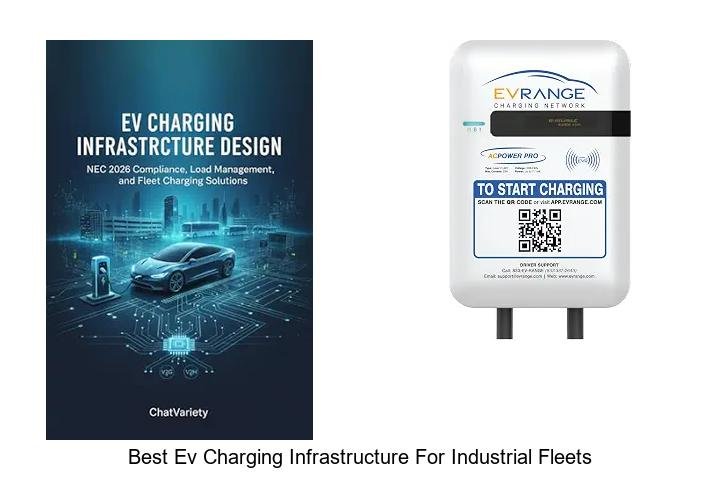
Industrial fleet charging needs clear rules, not guesswork. EV Charging Infrastructure Design focuses on NEC 2026 compliance and load management. It gives fleet teams a compact guide to charging site planning, electrical coordination, and practical infrastructure choices.
The 76-page format keeps the material focused and easy to reference. That makes it useful for managers, installers, and engineers handling commercial fleet deployments.
The book centers on fleet charging solutions within the Electric Vehicle & Battery Engineering Series. Its main value lies in helping readers plan charging infrastructure with code awareness. Because it is independently published, it reads like a specialized technical guide rather than a broad overview.
The print size is easy to carry and store on a job site or in an office binder. Build quality details are limited, but the physical format looks practical and portable.
It suits teams that need a compact reference for commercial fleet use.
Pros
- Focuses on NEC 2026 compliance and load management.
- Compact format suits office and field reference.
- Targets commercial fleet charging needs directly.
Cons
- Very short length limits broader technical coverage.
- No hardware specifications or ports are listed.
- Printed guide, not a hands-on charging device.
Who Should Buy It?
Commercial fleet managers, electrical planners, and site engineers should buy it. It suits teams designing charging infrastructure for depot-based vehicle operations. The book also fits consultants who need a focused reference on NEC 2026 compliance and load management.
Readers wanting a compact, technical guide for fleet charging planning will gain the most value.
Key Specifications
| Specification | Details |
|---|---|
| Brand | Independently published |
| Specification Met | NEC 2026 Compliance |
The listed specifications point to a printed technical guide, not charging hardware. Independent publication suggests a specialized title with focused subject matter. NEC 2026 compliance matters in real fleet projects because electrical planning must match current code expectations. The 76-page length signals a concise manual that is easy to carry and store. Its small dimensions and light weight make it practical for desks, job trailers, and training sessions.
Because no electrical output figures or connector details are listed, the product serves as planning support. That means buyers get guidance on infrastructure design, not installed charging performance. The compact format helps teams review load management ideas without handling a large binder. Fleet operators and electrical professionals benefit most, since they need code-aware planning tools. It suits early-stage project work, policy review, and coordination between engineering and operations staff.
2. EV Range Commercial EV Charging Station
Commercial fleets need charging that can handle daily use and simple access control. EV Range targets that need with smart software, flexible access, and revenue tools. The unit supports OCPP compliance, so it can fit wider charging networks and management systems.
It also works with RFID or app-based control for private fleet or public access. Built with a rugged polycarbonate NEMA 4 enclosure, it resists impact and harsh weather.
The charger uses a J1772 connector with a 25-foot cable and one port. It runs on 240 volts and 32 amps, which suits Level 2 charging needs.
Drivers can pay through the EV Range app, and operators receive monthly revenue deposits. Online sign-up and no upfront software costs on the Standard Plan add convenience.
It suits workplaces, rental sites, hotels, apartments, retail lots, and fleet depots.
Pros
- Supports RFID and app-based access control
- OCPP-compliant for network integration
- Rugged enclosure suits harsh environments
Cons
- Single-port design limits charging throughput
- Pedestal mount is not included
- Tesla drivers need an adapter
Who Should Buy It?
Buyers managing smaller fleets or mixed-use charging sites may like this charger. It fits workplaces, rentals, apartments, hotels, and commercial depots. Teams wanting access control, driver payments, and usage reporting can use it well.
It also suits operators who want network-ready charging without complicated setup. Organizations needing one dependable Level 2 unit for controlled access should consider it.
Key Specifications
| Specification | Details |
|---|---|
| Brand | EV Range |
| Output Voltage | 240 volts of alternating current |
| Input Voltage | 240 volts of alternating current |
| Current Rating | 32 A |
| Amperage | 32 A |
| Number of Ports | 1 |
| Connector Type | J1772 |
| Cable Length | 25 feet |
| Specification Met | Energy Star, UL |
| Indoor/Outdoor | Outdoor |
| Control Features | RFID, app control, custom pricing, idle fees, usage reports |
The charger runs on 240 volts and 32 amps. That combination supports Level 2 charging for daily fleet use. Its single J1772 port works with most plug-in hybrids and electric vehicles. A 25-foot cable gives drivers room to park without awkward positioning. The Energy Star and UL listings point to recognized product standards. The rugged polycarbonate NEMA 4 enclosure adds weather resistance for outdoor placement in harsh conditions.
These specifications matter most at busy commercial sites and fleet depots. The 32-amp output suits steady charging needs without complex power demands. RFID and app control help limit access to approved drivers only. Custom pricing, idle fees, and usage reports support monitored operations. The wall or pedestal mounting choice also helps site planning. Fleet managers who want control, durability, and network readiness benefit most from these features.
3. REV+ Dual EV Charger Level 2
Dual charging power makes this unit appealing for fleets with multiple EVs. Its 50 amp output and two ports help reduce waiting time at shared charging locations.
REV+ builds this charger for indoor or outdoor use, with hardwired or plug-in installation options. The 18-foot J1772 cable gives useful reach for vehicle placement. Smart app control adds scheduling, remote start, stop, and energy monitoring.
Built in the USA and UL certified, it suits operators who want steady charging for compatible EVs and plug-in hybrids. The 12 kW Level 2 output charges much faster than Level 1 charging.
That speed helps keep vehicles ready for daily routes and regular turnover. Compatibility covers many J1772 vehicles, plus Tesla with an adapter. It fits industrial settings that need shared access, flexible setup, and practical control from a phone.
Pros
- Two ports charge two vehicles at once
- 50 amp Level 2 output delivers fast charging
- Wi-Fi and Bluetooth app controls add convenience
Cons
- Uses J1772, so Tesla needs an adapter
- Best suited to Level 2 installation planning
- Cable length may limit parking layouts
Who Should Buy It?
Fleet managers and facility owners should buy this when shared charging matters. It suits sites with several J1772 vehicles or plug-in hybrids that need regular top-offs. The dual ports, app controls, and indoor or outdoor installation options make it practical for depots, service lots, and mixed-use parking areas.
Buyers who want higher output and simple scheduling will get the most value.
Key Specifications
| Specification | Details |
|---|---|
| Brand | REV+ |
| Output Voltage | 240 volts |
| Input Voltage | 240 volts |
| Current Rating | 50 A |
| Amperage | 50 A |
| Number of Ports | 2 |
| Connector Type | J1772 |
| Cable Length | 18 feet |
| Specification Met | UL |
| Indoor/Outdoor | Indoor or outdoor |
| Control Features | Wi-Fi, Bluetooth, smart app control, scheduling, remote start and stop, energy monitoring |
A 240-volt input and output means the charger works on Level 2 power. That setup supports faster charging than standard household outlets. The 50 amp rating points to stronger delivery for vehicles that can accept higher charging levels. Two ports let two compatible vehicles charge at the same time. The 18-foot J1772 cable gives extra reach for varied parking spots. UL certification adds a safety standard that matters for daily use in garages or outdoor areas.
These specifications suit shared charging locations with multiple vehicles. Wi-Fi and Bluetooth support app control for scheduling and remote operation. Energy monitoring helps track charging use across busy routines. Indoor or outdoor support gives flexibility for depots, parking structures, and service lots. The J1772 connector covers many EVs and plug-in hybrids, while Tesla drivers can use an adapter. Fleet teams that want higher output and easier coordination should find the setup practical.
4. The EV Charging Station Playbook

Permitting can make EV charging projects stall before installation begins. A focused guide like this helps owners plan with more confidence.
The EV Charging Station Playbook is a 125-page practical manual for small business owners. It covers planning, permitting, and installation steps for charging stations.
That makes it useful for industrial fleet teams handling early project stages. The compact format should be easy to carry and reference on site. Its English language text suits teams that want straightforward guidance.
The independently published format suggests a specialized, narrow focus. Readers get a handbook aimed at decision-making, paperwork, and setup flow. It should suit operations leads, facility managers, and project planners.
Those managing multiple vehicles may value the process-oriented structure. The book appears designed to reduce confusion around approvals and installation tasks.
It is a strong fit for buyers who need guidance, not hardware. For fleets expanding charging access, that practical angle can save time.
Pros
- Focuses on planning, permitting, and installation steps
- Compact 125-page format is easy to handle
- Useful for small business and fleet project planning
Cons
- No hardware specifications are listed
- Appears geared toward smaller business use
- Limited page count may limit technical depth
Who Should Buy It?
Buyers handling early EV charging projects should consider this guide. It suits facility managers, small business owners, and fleet planners who need help with permitting and installation steps. Teams that want a practical reference, rather than electrical hardware details, will benefit most.
It also fits organizations starting their first charging project.
Key Specifications
| Specification | Details |
|---|---|
| Brand | Independently published |
| Specification Met | Planning, permitting, and installation guidance |
The listed brand is Independently published, which usually points to a focused niche title. In everyday use, that can mean the content targets a very specific planning problem. For fleet teams, the key value is guidance that stays centered on approvals and setup. The print format suggests a portable reference that can sit on a desk or travel to meetings. Its 125-page length keeps the material compact and easier to review during project planning.
Because the available specifications describe a guide, not charging hardware, the main performance measure is clarity. That matters when teams need to coordinate permitting, vendor quotes, and installation timing. A shorter book can be easier to use during early site work and internal planning. The compact size and light weight also make it simple to store with project files. It will suit buyers who want a practical checklist-style resource for charging projects.
5. ChargePoint Home Flex EV Charger

Reliable charging matters when fleet vehicles need predictable turnaround times. ChargePoint Home Flex brings smart control, flexible installation, and trusted network support. It is a Level 2 charger with a J1772 connector and a NEMA 14-50 plug, making it practical for non-Tesla EVs.
The charger delivers up to 45 miles per hour, depending on the vehicle. It works with a 240V outlet and requires a 40A or 50A circuit.
The adjustable 32 to 40A output helps match different electrical setups. Its 23-foot cable adds reach for driveway or garage parking.
The unit is UL certified and ENERGY STAR listed, and it can be installed indoors or outdoors by an electrician. The ChargePoint mobile app adds smart charging controls, reminders, station finding, and charging data.
For industrial fleets with mixed charging needs, it suits sites that want dependable daily charging and simple app-based management. The cold-resistant cable and durable build help it handle regular use in varied conditions.
Pros
- Smart app control and charging data
- Indoor or outdoor installation flexibility
- Long 23-foot cable reach
Cons
- Requires an electrician for installation
- Needs an adapter for Tesla vehicles
- Single port limits charging to one vehicle
Who Should Buy It?
Fleet operators and site managers should buy it for controlled daily charging. It fits mixed-use locations that need one dependable Level 2 charger with app-based features. The J1772 connector suits many non-Tesla vehicles, while the adjustable amperage helps match existing 240V setups.
It works best for smaller fleet depots, service vehicles, or home-based business charging spaces.
Key Specifications
| Specification | Details |
|---|---|
| Brand | ChargePoint |
| Output Voltage | 240 volts |
| Input Voltage | 240 volts |
| Current Rating | 50 A |
| Amperage | 50 A |
| Number of Ports | 1 |
| Connector Type | NEMA 14-50 Plug (J1772)-Non Tesla |
| Cable Length | 23-foot cable |
| Specification Met | UL, ENERGY STAR |
| Indoor/Outdoor | Indoor / Outdoor |
| Control Features | WiFi App Control, Smart Charging, Adjustable 32-40A |
ChargePoint uses a 240-volt input and output, which matches common Level 2 charging setups. The 50-amp rating supports higher-power charging when the circuit allows it. The NEMA 14-50 plug and J1772 connector work for many non-Tesla vehicles. A 23-foot cable gives extra reach, which helps when parking positions vary. UL and ENERGY STAR listings indicate a charger built for standard electrical and energy expectations in everyday use.
These specifications point to flexible daily charging at home or at a small fleet site. The adjustable 32 to 40 amp output lets electricians match the charger to the available circuit. Indoor and outdoor rating adds placement freedom for garages, driveways, or utility areas. WiFi app control helps users monitor charging and manage reminders from a smartphone. That combination suits managers who want simple oversight, dependable charging, and a charger that fits changing parking layouts.
6. Autel MaxiCharger Level 2 EV Charger

Fleet charging gets smarter when energy use and access sit in one cloud platform. Autel MaxiCharger brings AI-assisted scheduling, remote control, and strong 80-amp output together.
It supports time-of-use charging, so operators can shift sessions around utility rates. Real-time energy data and alerts help managers watch station activity closely. The hardwired design supports dependable power delivery for indoor or outdoor installs.
A 100A circuit is recommended for full 80A output. The charger also includes remote locking and tamper-resistant screws for added security. Autel rates it for all EVs and PHEVs using J1772 in North America.
The enclosure is flame-retardant and built for long service. Dual-network Wi-Fi and Wi-SUN help keep the charger online.
Installation is designed to be quick for qualified electricians. It suits fleets that need one controlled charging point with smart cloud management.
Pros
- AI scheduling helps manage charging around utility rates.
- 80A output supports fast turnaround between vehicle uses.
- Remote locking and tamper-resistant screws improve security.
Cons
- Only one charging port limits multi-vehicle use.
- Hardwired installation needs professional electrician support.
- Full 80A output needs a 100A circuit.
Who Should Buy It?
Fleet managers should buy it when cloud control matters most. It fits sites needing one high-power charging point with remote access, energy monitoring, and scheduled charging. It also suits mixed North American EV and PHEV fleets using J1772 connectors.
Commercial operators wanting indoor or outdoor installation flexibility will also value it.
Key Specifications
| Specification | Details |
|---|---|
| Brand | Autel |
| Output Voltage | 240 volts AC |
| Input Voltage | 240 volts |
| Current Rating | 80 A |
| Amperage | 80 A |
| Number of Ports | 1 |
| Connector Type | SAE J1772 |
| Specification Met | CSA, UL |
| Indoor/Outdoor | Indoor/Outdoor Charging Stations |
| Control Features | AI-integrated smart app, schedule charging, remote start and stop, adjust current, real-time energy data, alerts, remote locking |
The charger runs on 240 volts and delivers up to 80 amps. That means it can send power quickly to compatible EVs and PHEVs. The single J1772 connector works with North American vehicles using that standard. The indoor and outdoor rating gives operators placement flexibility across depots, garages, or covered lots. CSA and UL listing also supports sites that require recognized safety standards for electrical equipment.
An 80-amp rating helps reduce idle time between routes or shifts. Real-time energy data and current adjustment support better charging control across a fleet. The AI app can schedule sessions around utility rates and show alerts during operation. Remote locking adds access control when vehicles are parked away from staff. Because it is hardwired, installation suits fixed fleet locations with planned electrical service and professional setup.
7. Autel Level 2 Home Smart EV Charger NACS

Tesla fleets and mixed-use charging setups benefit from a simple NACS wall charger. The Autel Maxicharger delivers 12kW charging and supports up to 50 amps. It uses a hardwired 240V setup and comes with a 25-foot cable for flexible parking layouts.
The NACS connector removes adapter handling for Tesla vehicles, which helps keep charging routines cleaner and faster. Its NEMA 4X-rated enclosure supports indoor or outdoor placement.
Dust, rain, splashing water, and hose-directed water are all addressed by the casing. The charger also supports Bluetooth, Wi-Fi, Ethernet, and OTA firmware updates through the Autel Charge app.
Scheduling, off-peak charging, and RFID access control add useful day-to-day control. Build quality looks suited to demanding sites that need dependable wall-mounted hardware.
Performance is strong for Level 2 charging, with up to 48 miles added per hour. The long cable and app controls make it practical for varied parking and shared charging use. It suits Tesla drivers, fleet depots, and facilities that want connected charging without extra adapters.
Pros
- NACS connector fits Tesla vehicles without an adapter.
- Supports app-based scheduling and charging control.
- NEMA 4X rating suits indoor or outdoor installation.
Cons
- Hardwired setup may require professional installation.
- Single-port design serves one vehicle at a time.
- Designed around Tesla compatibility, not universal plug use.
Who Should Buy It?
Buy it for Tesla-compatible charging at a depot, garage, or workplace. It suits operators who want connected control, long cable reach, and indoor or outdoor placement. The hardwired design works best for fixed charging locations with planned electrical work.
It also fits teams that want scheduling, RFID access, and remote management through an app.
Key Specifications
| Specification | Details |
|---|---|
| Brand | Autel |
| Output Voltage | 240 V |
| Input Voltage | 240 volts |
| Current Rating | 50 A |
| Amperage | 50 A |
| Number of Ports | 1 |
| Connector Type | NACS |
| Cable Length | 25 feet |
| Specification Met | CSA |
| Indoor/Outdoor | Indoor/Outdoor |
| Control Features | Autel Charge app, Bluetooth, Wi-Fi, Ethernet, RFID access control, OTA firmware updates |
The charger runs on 240 volts and delivers up to 50 amps. That combination supports fast Level 2 charging for parked vehicles. Its single NACS connector is made for Tesla models without adapters. The 25-foot cable adds reach when parking positions vary. CSA certification supports recognized safety compliance, while the app adds scheduling and charge management. Bluetooth, Wi-Fi, and Ethernet give several ways to connect the unit for control and updates.
A 50-amp, hardwired setup suits fixed charging points more than portable use. The indoor and outdoor rating helps placement in garages, lots, or sheltered yards. NEMA 4X protection covers dust, rain, splashing water, hose spray, and ice formation. RFID access control helps limit charging to approved users. The Ethernet option helps sites with stable network wiring. Fleet operators and property managers gain the most from that mix of control, durability, and Tesla-focused compatibility.
8. Leviton Smart Level 2 EV Charger EV48W

Wi-Fi control gives this Leviton charger a strong fit for managed fleet charging. It pairs 48A Level 2 output with hardwired installation for steady daily use.
The My Leviton app connects over Wi-Fi, letting operators manage charging and related home systems from one platform. That can simplify oversight in mixed-use sites and smaller industrial lots.
The unit delivers up to 11.6 kW and uses a J1772 connector with one port. Its NEMA Type 3R enclosure supports indoor and outdoor placement, while the charging cable is built for freezing and cracking resistance.
A pre-attached input cable and included mounting hardware can reduce install time. It also supports optional RFID access control, which helps limit charger access when needed.
The 18-foot cable adds flexibility around parking positions. Overall, it suits fleets that want app-based control, weather-ready hardware, and straightforward operation.
Pros
- Wi-Fi app control supports remote charger management
- 48A output suits faster Level 2 charging
- Indoor and outdoor rated enclosure expands placement options
Cons
- Hardwired setup needs a 60 Amp breaker
- Single port limits simultaneous vehicle charging
- RFID access control starts disabled
Who Should Buy It?
Fleet managers and site operators should buy this charger when Wi-Fi control matters most. It fits locations that want app-based oversight, controlled access, and indoor or outdoor installation. The 48A output works well for single-vehicle charging points, depot support spaces, and mixed-use sites.
It suits buyers who want a hardwired unit with weather-resistant construction and straightforward mounting.
Key Specifications
| Specification | Details |
|---|---|
| Brand | Leviton |
| Output Voltage | 208 volts_of_alternating_current |
| Input Voltage | 208 volts_of_alternating_current |
| Current Rating | 2 A |
| Amperage | 48 A |
| Number of Ports | 1 |
| Connector Type | J1772 |
| Cable Length | 18′ |
| Specification Met | UL |
| Indoor/Outdoor | Indoor/Outdoor |
| Control Features | Wi-Fi, My Leviton app, optional RFID access control |
The Leviton charger uses 208-volt input and output power, which matches many installed electrical systems. Its 48-amp rating supports Level 2 charging at up to 11.6 kW. In daily use, that means a single vehicle can recharge at a practical pace between routes or shifts. The J1772 connector works with standard compatible EVs. An 18-foot cable gives extra reach around parking spaces, which helps when vehicles do not park in the same spot every time.
UL certification and a hardwired design point to fixed installation and regulated use. The NEMA Type 3R enclosure supports indoor and outdoor mounting, while the cable is built to resist freezing and cracking. That helps the unit handle changing weather at exposed sites. Wi-Fi and the My Leviton app support remote control and monitoring, which suits teams managing charging access. Optional RFID access control adds another layer for sites that want restricted use.
9. LEDVANCE Phase EV Commercial Charger Gen 2

Industrial charging needs clear controls and steady power delivery. LEDVANCE Phase EV Commercial Charger Gen 2 adds both in one compact station. It supplies up to 48 amps and 11.5kW for Level 2 charging.
That output helps fleet vehicles return to service faster between shifts. The 4.3-inch color LCD touchscreen supports English, French, and Spanish.
Operators can check status, manage access, and read information quickly on site. A large LED indicator also shows charge status from farther away.
The charger includes a 25-foot J1772 cable for broad vehicle compatibility. It works with nearly every North American EV using that connector.
Installation options suit wall mounts or pedestal setups in commercial spaces. Single or dual charger configurations are available for larger charging areas. Its NEMA 4 and IP65 enclosure supports indoor or outdoor placement.
IK08 impact resistance adds another layer of protection in busy industrial locations. WiFi, Ethernet, and 4G LTE support future-ready connectivity.
ChargeLab software integration adds management tools through an optional subscription. ENERGY STAR certification and free-charge mode add practical flexibility for fleet operations.
Pros
- Color touchscreen simplifies charger status checks.
- Long 25-foot cable adds parking flexibility.
- Indoor and outdoor ratings suit industrial sites.
Cons
- ChargeLab tools require an optional subscription.
- Only one connector standard is included.
- Single-port use may limit shared access.
Who Should Buy It?
Buy it for commercial fleets that want visible controls and flexible installation. It suits depots, multi-unit lots, and managed sites using J1772 vehicles. Teams that value touchscreen interaction, remote connectivity, and outdoor-rated hardware will appreciate it most.
It also fits operators needing Level 2 charging with wall or pedestal placement options.
Key Specifications
| Specification | Details |
|---|---|
| Brand | LEDVANCE |
| Output Voltage | 240 volts of alternating current |
| Input Voltage | 240 volts |
| Current Rating | 48 A |
| Amperage | 48 A |
| Number of Ports | 2 |
| Connector Type | SAE J1772 |
| Cable Length | 25 ft |
| Specification Met | Energy Star |
| Indoor/Outdoor | Indoor/Outdoor |
| Control Features | LCD Touch Screen, WiFi, Ethernet, 4G LTE, RFID Access Cards |
A 240-volt input and output gives this charger the power base for Level 2 use. The 48 amp rating supports 11.5kW charging, which suits fleet vehicles that need regular daily top-offs. The 25-foot cable helps reach vehicles parked in wider bays or angled spaces. Two ports are listed, which suggests planning for shared charging needs. The SAE J1772 connector keeps compatibility broad across many North American electric vehicles.
The indoor and outdoor rating matters for depots with mixed placement needs. NEMA 4, IP65, and IK08 protection support use in exposed or busy areas. The touchscreen, WiFi, Ethernet, 4G LTE, and RFID cards support access control and monitoring. ENERGY STAR certification points to efficient operation during long commercial schedules. These features fit managers who want visible controls, flexible network options, and charging hardware suited to daily fleet turnover.
10. REV+ Dual EV Charger Level 2

Dual-port charging gives fleets a simple way to power two EVs at once. The REV+ Dual EV Charger Level 2 is built for shared use, with smart controls and flexible installation.
It delivers 50 amps and 11.5kW at 240VAC, so compatible vehicles can charge much faster than Level 1 setups. The dual independent ports make it a strong fit for depots, garages, and mixed EV households that need steady turnaround. It supports J1772 vehicles and Tesla models with an adapter.
The 18-foot cable adds reach, while Wi-Fi and Bluetooth let users schedule charging, start or stop sessions, and track energy use from a phone. It can be hardwired or plugged in, indoors or outdoors.
Made in the USA and UL certified, it feels well suited to long-term daily use.
Pros
- Two independent ports charge two vehicles at once
- Wi-Fi, Bluetooth, and app-based scheduling add control
- Indoor or outdoor installation offers setup flexibility
Cons
- J1772 standard requires an adapter for Tesla vehicles
- Not a DC fast charger for rapid fleet turnaround
- 18-foot cable may feel short for larger bays
Who Should Buy It?
Fleet operators, property managers, or multi-EV households can benefit from its dual-port design. It fits sites that need to charge two compatible vehicles from one unit. Teams that value scheduling, remote control, and energy monitoring will get the most use from its smart features.
It also suits indoor or outdoor locations where installation flexibility matters.
Key Specifications
| Specification | Details |
|---|---|
| Brand | REV+ |
| Output Voltage | 240 volts of alternating current |
| Input Voltage | 240 volts of alternating current |
| Current Rating | 50 A |
| Amperage | 50 A |
| Number of Ports | 2 |
| Connector Type | J1772 |
| Cable Length | 18 ft |
| Specification Met | UL |
| Indoor/Outdoor | Indoor/Outdoor use |
| Control Features | Wi-Fi, Bluetooth, smart app control, schedules, remote start and stop, energy monitoring |
The 240-volt input and output support Level 2 charging at home or at work. A 50-amp current rating and 11.5kW power output mean faster charging than standard Level 1 units. Two ports let one charger serve two vehicles, which is useful where space is limited. The J1772 connector works with many electric cars and plug-in hybrids. An 18-foot cable gives enough reach for common parking layouts, while UL certification signals compliance with a recognized safety standard.
Wi-Fi and Bluetooth add phone-based control, which helps managers time charging around daily schedules. Remote start and stop functions make it easier to handle vehicles parked outside normal hours. Energy monitoring can help track usage across shared charging spots. The unit can be hardwired or plugged in, and indoor or outdoor use gives more placement options. Those features fit depots, garages, and properties that need practical charging without extra equipment at every parking space.
Best EV Charging Infrastructure for Industrial Fleets: A Smart Buyer’s Guide
Fleet power demand and site assessment
Industrial fleet charging systems must be able to handle both today’s vehicle count and the larger fleet that may arrive over the next few years. A clear view of current and projected EV numbers helps prevent underbuilt infrastructure that quickly becomes outdated, while also avoiding unnecessary overspending on capacity that will sit unused for too long.
- Current and projected fleet size: Planning for future vehicle additions ensures the site can support growth without major rework.
- Daily charging loads and peak demand: Understanding how much energy each vehicle needs, and when charging demand is highest, helps prevent power bottlenecks and downtime.
- Available utility capacity and site constraints: Verifying electrical service limits, parking layout, trenching options, and transformer space makes it easier to design a system that fits the property and avoids costly surprises.
Careful site assessment also reduces the risk of long installation delays, since some facilities may need electrical upgrades, load management tools, or phased deployment to operate efficiently. A charging setup built around real power demand and physical site limits is far more reliable for industrial operations and better prepared to scale as fleet requirements increase.
Charging speed and hardware selection
Charging speed and hardware selection directly affect how efficiently an industrial fleet can stay on the road, because the wrong setup can create long downtime, compatibility problems, and costly retrofits later. A Level 2 unit can be a practical fit for vehicles that return to base overnight, while DC fast charging is better suited to high-utilization operations that need rapid turnarounds during the day. It is also essential to verify connector types and vehicle compatibility in advance, since mixed fleets may rely on different plugs, power levels, or charging standards.
Just as important, the equipment should be built for harsh industrial conditions, with durability ratings that account for dust, moisture, vibration, temperature swings, and frequent use. A well-matched system supports reliable operation now and leaves room for future fleet growth without forcing a major overhaul.
Installation and infrastructure requirements
Electrical capacity is often the first constraint in large fleet charging projects. A site may need panel upgrades, transformer additions, and load management systems to support multiple chargers without disrupting daily operations, so it is important to verify that the equipment can scale with future vehicle counts. Trenching, cabling, and the overall physical layout also affect cost, installation time, and long-term serviceability, since poor planning can create bottlenecks or force expensive rework later. Indoor vs. outdoor placement matters as well, because weather exposure, ventilation, security, and access for maintenance all influence durability and uptime.
Indoor vs. outdoor placement matters as well, because weather exposure, ventilation, security, and access for maintenance all influence durability and uptime. A well-planned infrastructure should fit the current depot design while leaving room for reliable growth as fleet demands increase.
Software, monitoring, and load management
Smart charging platforms can lower operating costs and prevent power bottlenecks by automatically timing vehicle charging around utility rates, route demands, and site capacity. For industrial fleets, this matters because a well-designed system should do more than deliver electricity; it should help manage demand, improve uptime, and give managers the data needed to make faster decisions. Built-in energy monitoring and reporting tools make it easier to track usage by vehicle, depot, or shift, which supports cost control and maintenance planning. Integration with fleet management systems is equally important, since it allows charging activity to align with vehicle availability, dispatch schedules, and telematics data without extra manual work.
Integration with fleet management systems is equally important, since it allows charging activity to align with vehicle availability, dispatch schedules, and telematics data without extra manual work.
- Automated smart charging and schedule optimization to reduce peak demand charges.
- Detailed energy monitoring and reporting for better budgeting and performance tracking.
- Seamless integration with fleet management software to streamline daily operations.
These capabilities help a fleet platform remain efficient as operations grow, while also making it easier to add new vehicles, chargers, or sites without disrupting existing workflows.
Costs, incentives, and roi
Network-ready charging systems reduce downtime and help fleet managers scale operations with fewer disruptions. Before a site is built out, it is essential to verify that the charging equipment can communicate with fleet software, energy management tools, and utility systems, since that support affects load balancing, reporting, and future site upgrades. A setup with flexible ports, modular power cabinets, and open communication standards can adapt as vehicle counts grow, avoiding expensive replacements later.
- Equipment, installation, and maintenance costs: Compare charger hardware prices, electrical work, software fees, and ongoing service needs, since a lower upfront price can become costly if the system requires frequent repairs or major retrofits.
- Utility rebates and tax incentives: Review local programs that reduce capital expenses, because incentives can significantly improve project economics and shorten the time needed to recover the initial outlay.
- Total cost of ownership and payback period: Look beyond the sticker price and estimate electricity use, demand charges, maintenance, and uptime over several years, so the full financial impact and likely payback timeline are clear.
Scalability, support, and compliance
Industrial fleet charging systems that are built for growth can save significant time and cost later, because adding more vehicles, ports, or power modules is far easier on a platform designed to scale from the start. Readiness for future fleet growth matters since depot operations often change as routes expand, vehicle classes shift, or delivery volumes increase, and a system with flexible electrical capacity and modular hardware helps avoid expensive redesigns.
Warranty, service, and vendor support are equally important, because dependable coverage, fast replacement parts, and responsive technical help reduce downtime and protect daily operations. Safety standards, codes, and permit requirements must also be reviewed carefully, as industrial sites need equipment that meets local electrical rules, fire safety expectations, and inspection requirements to prevent delays and compliance issues. In practice, a charging setup that can grow, stay supported, and pass regulatory checks is far more valuable than one that only meets today’s needs.
Helpful Add-ons for Fleet Charging
For industrial fleets, the charger is only part of the setup. The right add-ons can make daily charging easier, safer, and more reliable. They can also help your team avoid delays when several vehicles need power at once.
One useful upgrade is cable management gear. Wall hooks, cable reels, and holsters keep cords off the floor and reduce wear. That helps prevent trips in busy yards and parking areas. Protective bollards are another smart choice. They shield charging posts from bumps caused by trucks, vans, or forklifts.
Software and access tools can matter just as much as hardware. A charging management platform can track use, set charging schedules, and show energy data. RFID cards or app-based access can also help control who uses each charger. This is helpful for fleets with different shifts or mixed vehicle groups.
Other add-ons may improve uptime. Weather covers can protect plugs in outdoor locations. Surge protection helps guard against power spikes. Spare connectors and adapter kits can also reduce downtime if a part wears out or a vehicle needs a different plug style.
- Cable hooks or reels: reduce clutter and wear
- Bollards: protect chargers from vehicle impact
- Charging software: track use and set schedules
- Access control: limit charging to approved drivers
- Weather and surge protection: support outdoor use and power safety
- Spare parts and adapters: help keep operations moving
When comparing industrial fleet charging systems, ask which accessories are included and which cost extra. A lower sticker price may not be the better deal if you still need to buy several add-ons later.
FAQ’s
What Factors Should Industrial Fleets Consider When Choosing The Best Ev Charging Infrastructure?
Industrial fleets should consider charging speed, power availability, vehicle duty cycles, site layout, and whether the infrastructure can scale with future fleet growth. They should also evaluate total cost, software compatibility, maintenance needs, and support for reliable smart charging and energy management.
How Do Fleet Size And Vehicle Duty Cycles Affect Ev Charging Infrastructure Requirements?
Larger fleets need more charging ports, higher power capacity, and better load management because more vehicles must charge at the same time. Vehicle duty cycles also matter because vehicles with longer routes or shorter turnaround times need faster, more frequent charging, while lighter-duty vehicles can often use slower overnight charging.
What Are The Differences Between Depot Charging, Public Charging, And Workplace Charging For Industrial Fleets?
Depot charging happens at a fleet’s central facility, usually overnight or between shifts, and is managed for high-volume, predictable vehicle use. Public charging is accessed at third-party stations on the road when needed, while workplace charging is installed at employee or satellite locations for vehicles parked during work hours.
How Can Industrial Fleets Reduce Installation And Operating Costs For Ev Charging Infrastructure?
Industrial fleets can reduce installation and operating costs by using existing electrical capacity efficiently, installing scalable smart chargers, and prioritizing managed charging to avoid expensive utility upgrades. They can also lower ongoing costs through load balancing, off-peak charging, and predictive maintenance that reduces downtime and repair expenses.
What Technologies Help Optimize Charging Schedules And Energy Management For Fleet Operations?
Fleet operations use telematics, smart charging software, and energy management systems to optimize charging schedules and track vehicle demand. These technologies can automate charging during off-peak hours, balance power loads, and help reduce energy costs.
Final Verdict
For buyers seeking the best ev charging infrastructure for industrial fleets, EV Charging Infrastructure Design stands out as the Best Overall pick for commercial fleet use. It fits teams that need a practical, fleet-ready setup for larger operations, especially when planning around depot charging, load management, and future growth.
EV Range Commercial EV Charging Station is the Best Value choice for lower-cost smart charging, making it a strong fit for budget-conscious fleets that still want intelligent controls. Autel MaxiCharger Level 2 EV Charger is the Best Premium pick for buyers prioritizing AI cloud charging and advanced management features. REV+ Dual EV Charger Level 2 is the Best for Dual-port Charging, a smart match for depots that need to charge two vehicles from one unit and maximize space.
Choose EV Charging Infrastructure Design for the broadest commercial fleet fit, or pick the value, premium, or dual-port option based on your budget and depot charging needs.