Why Is the 9007 Headlight Bulb a Popular Choice for Vehicles?
You’ll find the 9007 headlight bulb popular because it combines dual-beam functionality into one unit.
Delivering bright, reliable light with 1,000 to 1,400 lumens for both low and high beams, it’s a top choice for many drivers.
It fits many older Ford, Dodge, and Nissan models, offering easier installation and longer life than similar bulbs.
Plus, it’s a great upgrade over standard halogens for safer night driving.
Keep going to discover more about what makes the 9007 stand out.
Key Takeaways
- The 9007 bulb offers dual-beam functionality, combining low and high beams in one unit for convenience and efficiency.
- It delivers superior brightness, ranging from 1,000 to 1,400 lumens, enhancing nighttime visibility and safety.
- Its compatibility with many older Ford, Dodge, and Nissan models makes it a versatile choice for various vehicles.
- The PX29t base design ensures secure fitting and easy replacement in factory headlight housings designed for 9007 bulbs.
- Longer lifespan of up to 500 hours reduces frequent replacements compared to similar bulb types, providing better value.
Features and Design of the 9007 Headlight Bulb
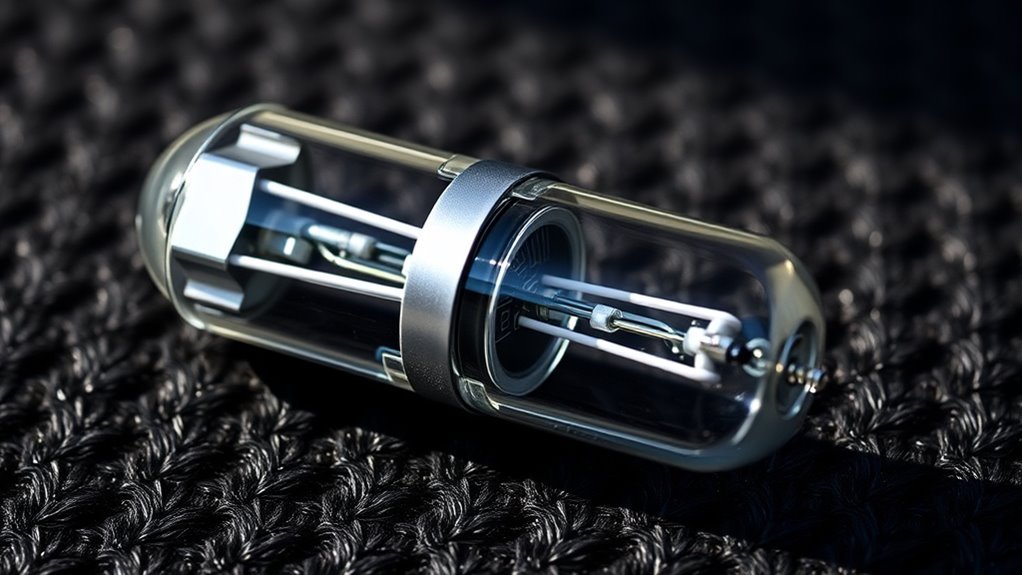
The 9007 headlight bulb, also known as HB5, combines dual-beam functionality with a PX29t base.
This means you get both low and high beams in one unit, allowing for seamless switching between them.
This feature enhances your driving safety without needing multiple bulbs.
Its design supports a brightness range between 1,000 and 1,400 lumens, depending on the manufacturer, ensuring clear visibility.
You’ll find the 9007 headlight bulb compatible with various vehicle models.
It’s particularly suited for older Ford, Dodge, and Nissan cars, but always double-check your owner’s manual for fitment.
The bulb’s lifespan typically ranges from 200 to 500 hours, influenced by heat and usage.
Expect 200 to 500 hours of use, with lifespan depending on heat exposure and driving habits.
Design variations can also affect overall performance.
This balance of features makes it a reliable choice for many drivers.
Brightness and Performance Specifications
Although it might seem straightforward, choosing a headlight bulb like the 9007 involves understanding its brightness and performance specs to guarantee your driving safety.
The 9007 bulb delivers between 1,000 and 1,400 lumens, making it effective for both low beam and high beam applications.
Its dual-beam design simplifies automotive lighting by combining these functions in one bulb, reducing replacement hassle.
With power ratings of 55 watts for low beam and 65 watts for high beam, the 9007 offers superior brightness compared to many single-beam bulbs.
Keep in mind, the lifespan typically ranges from 200 to 500 hours, influenced by heat and usage.
Compatibility With Various Vehicle Models
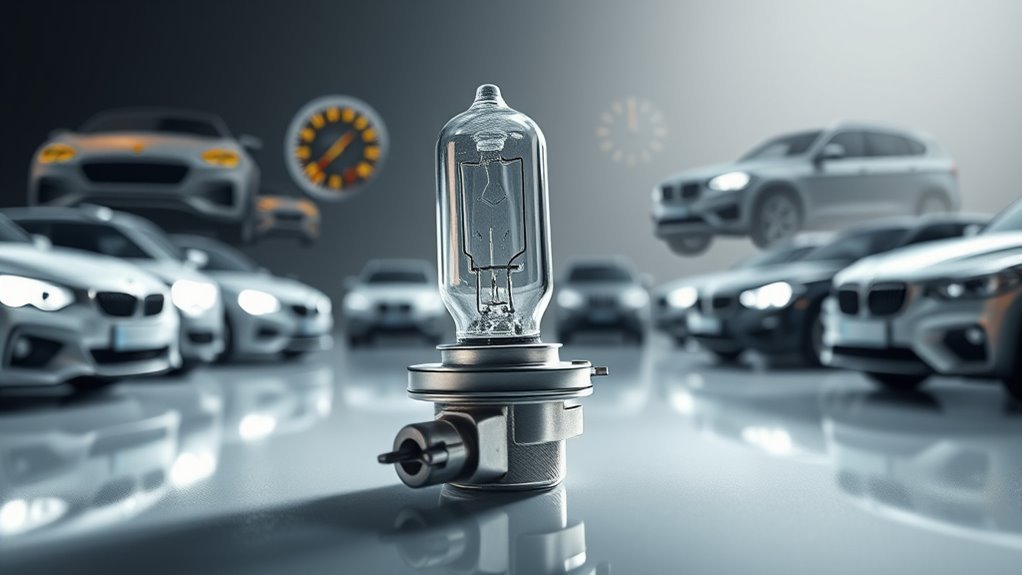
Since many older vehicles from brands like Ford, Dodge, and Nissan rely on the 9007 headlight bulb, you’ll find it fits a wide range of models.
This bulb handles both low and high beam functions, making it versatile for your vehicle’s lighting needs.
To guarantee vehicle compatibility, consider these factors:
- Check your vehicle’s model year and trim, as these affect bulb fitment.
- Verify your factory headlight housing matches the 9007 bulb design.
- Use a reliable bulb finder or consult your owner’s manual for exact fit.
Popular models like the Ford F-Series, Dodge Durango, and Nissan Xterra often use the 9007 headlight bulb.
Differences Between 9007 and Similar Bulb Types
When choosing between the 9007 and 9004 bulbs, you’ll notice both are dual-beam but differ in brightness and power ratings.
Unlike single-beam bulbs like the H11, the 9007 offers both low and high beams in one unit, giving you more versatility.
Understanding these differences helps you pick the right bulb for your vehicle’s needs.
9007 Vs 9004
Choosing between the 9007 and 9004 headlight bulbs means understanding key differences in power, brightness, base design, and lifespan.
The 9007 bulb offers stronger performance for both low and high beams, making it a solid choice for enhanced visibility.
Here’s how they compare:
1. Power and Brightness: The 9007 runs at 55W (low beams) and 65W (high beams), producing 1000 and 1600 lumens respectively.
The 9004 uses less power—45W and 55W—with lower brightness output.
2. Base Compatibility: The 9007 uses a PX29t base, while the 9004 has a P29t base, so they’re not interchangeable.
3. Lifespan: Expect about 800 hours from a 9007 bulb versus around 600 hours for a 9004.
Understanding these factors helps you pick the right headlight bulb for your vehicle’s needs.
Dual-Beam Vs Single-Beam
Although single-beam bulbs like the H11 and 9005 serve only one lighting function, the 9007 offers dual-beam capability.
It combines low and high beams in a single unit for greater convenience and versatility.
When you choose the 9007 headlight bulb, you get a dual-beam bulb that integrates both beam functions. This is different from single-beam bulbs that require separate units for low beam and high beam.
The 9007 delivers between 1,000 and 1,400 lumens, depending on the beam. This ensures bright halogen headlights for various driving conditions.
Keep in mind, the 9007 bulb type isn’t interchangeable with single-beam bulbs like the H11 or 9005.
This is due to differences in bases and filament setups.
Installation Process and Upgrade Options
Installing 9007 LED bulbs involves a few key steps to guarantee peak performance and safety.
First, disconnect the factory plug and remove the retaining ring.
Next, insert the 9007 LED bulbs with the correct orientation to optimize visibility and reduce excessive glare.
Finally, check the headlight alignment against a wall to verify proper aim, which is vital for safety.
When considering upgrade options, choose bulbs that are brighter than standard halogen ones.
For example, SEALIGHT’s S7S model offers 33,000 lumens per set, while the budget-friendly S1 provides 1.5 times the brightness.
Always replace bulbs in pairs to maintain balanced light output, regardless of your car model.
Proper installation and alignment enhance visibility without creating glare for oncoming drivers.
Popular Brands and Recommended 9007 Bulb Choices
After understanding how proper installation and alignment improve your 9007 bulbs’ performance, it’s important to contemplate which brands and models will best meet your needs.
Popular choices include Philips Xtreme for superior brightness and Osram Night Breaker for enhanced visibility.
If you want a balance of brightness and value, consider Sylvania Silver Star or Narva Rangepower+50.
For budget-friendly upgrades, SEALIGHT S1 offers 1.5 times the brightness of stock halogen bulbs without breaking the bank.
| Brand | Model | Key Feature |
|---|---|---|
| Philips | Xtreme Power | Highest brightness |
| Sylvania | Silver Star Ultra | Balanced brightness & value |
| Osram | Night Breaker | Focused beam, night visibility |
| Narva | Rangepower+50 | +50% brightness over halogen |
| SEALIGHT | S1 | Affordable, 1.5x brightness |
Frequently Asked Questions
What Vehicles Use a 9007 Headlight?
You’ll find 9007 headlight bulbs in vehicles like the Ford F-Series, Ford Explorer, and Dodge Durango.
They are also used in various Mazda models, Mercury cars, and the Nissan Xterra.
Always check your owner’s manual to confirm if your specific model uses this bulb.
Is a 9007 Bulb the Same as H11?
You might think 9007 and H11 are twins, but they’re not.
They don’t fit the same sockets, and 9007 handles both beams while H11 sticks to low beam only.
What Is the Lifespan of a 9007 Headlight Bulb?
You can expect a 9007 headlight bulb to last between 200 to 500 hours, depending on quality and use.
High-performance or LED versions can last much longer,
while some brands may wear out in under a year.
Which 9007 Headlight Bulb Is the Best?
You’ll want the Philips Xtreme Power 9007 bulb—it delivers up to 1,800 lumens at 13.2v.
This means you get superior brightness and focus for safer nighttime driving.
It’s definitely a step up from most other halogen options on the market.
Conclusion
You’ll appreciate that the 9007 headlight bulb offers around 55% more brightness than standard halogen bulbs, making nighttime driving much safer.
Its versatile design fits many vehicle models, so upgrading is usually hassle-free.
With improved visibility and easy installation, it’s no wonder millions of drivers prefer the 9007.
If you’re looking for a reliable and brighter headlight choice, the 9007 bulb is definitely worth considering for your next upgrade.
In conclusion, the 9007 headlight bulb stands out for its superior brightness and compatibility with numerous vehicles.
This makes it an excellent choice for those seeking enhanced safety and visibility on the road.
With easy installation and widespread popularity among drivers, upgrading to the 9007 could be the best decision for your vehicle’s lighting needs.