Top 5 Master Mechanic Tools Every Pro Should Have
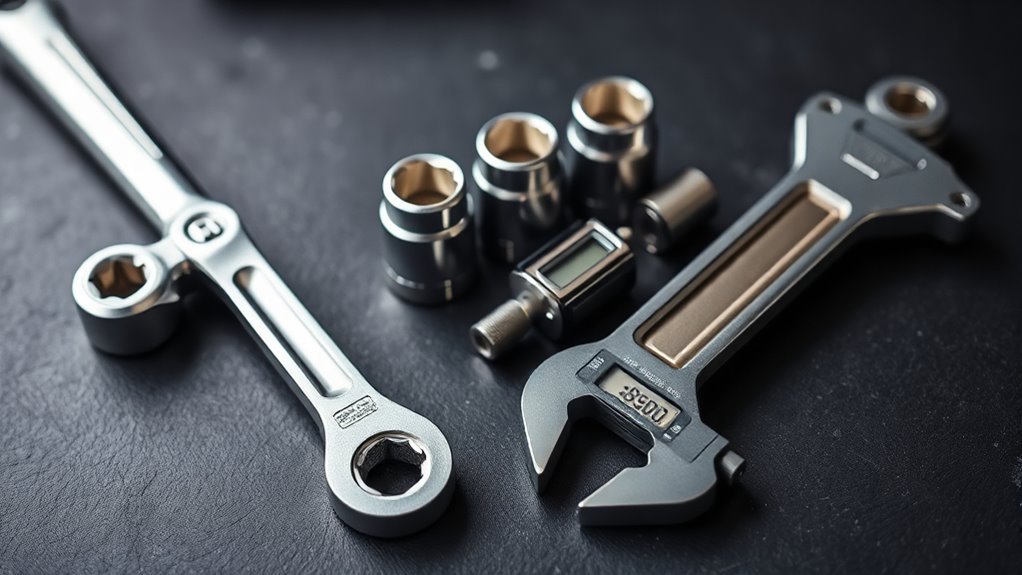
You need essential combination wrenches to handle fasteners without damage, and torque wrenches to tighten bolts precisely every time.
An advanced OBD2 scanner quickly pinpoints engine issues, saving you diagnostic time.
Impact wrenches bring power and speed for loosening stubborn bolts, while digital multimeters guarantee accurate electrical testing.
These five tools are a must-have for any pro mechanic, as they will significantly boost your efficiency and accuracy on every job.
Keep exploring to discover how each can transform your mechanic skills!
Key Takeaways
– Combination wrenches with both open and closed ends provide versatility and prevent fastener damage in various mechanical tasks.
They’re essential for tackling a wide range of fasteners, making them a must-have for every pro mechanic.
– Torque wrenches ensure bolts are tightened to exact specifications, preventing over-tightening and improving repair accuracy.
Having the right torque means fewer mistakes and a more reliable repair job overall.
– Advanced OBD2 scanners quickly diagnose engine issues and reset service lights, essential for modern vehicle maintenance.
These tools save time and help keep your customers happy by getting their vehicles back on the road faster.
– Impact wrenches deliver high torque for loosening stubborn bolts efficiently, reducing manual effort and shop downtime.
They’re a huge time-saver, especially when dealing with rusted or stuck fasteners.
– Digital multimeters accurately diagnose electrical problems by measuring voltage and component health, preventing misdiagnosis.
With a reliable multimeter, you can pinpoint issues swiftly and ensure that repairs are done right the first time.
Essential Combination Wrenches for Every Job
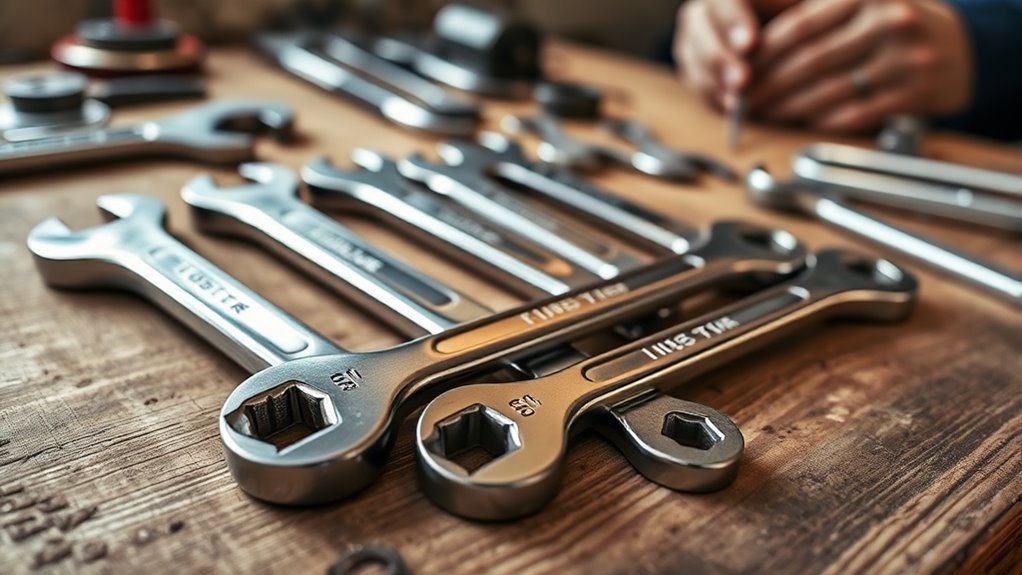
Combination wrenches are a must-have in any mechanic’s toolkit because they offer both an open end for quick adjustments and a closed end for applying more torque.
When choosing between SAE and Metric, you should match the wrench to your vehicle’s fasteners—metric sizes have dominated since the late 1970s.
To cover most jobs, consider the UltraPro Wrench Set Metric Polished, which includes common sizes from 8 mm to 19 mm.
The UltraPro Wrench Set Metric Polished covers essential sizes from 8 mm to 19 mm for versatile repairs.
Using quality combination wrenches like these prevents damage to fasteners and improves your efficiency.
Investing in a complete set boosts your mechanic’s capability considerably, letting you handle a wide range of automotive repairs with confidence and precision.
Don’t settle for inferior tools that risk stripping bolts or slowing your work.
The Importance of Torque Wrenches in Accurate Repairs
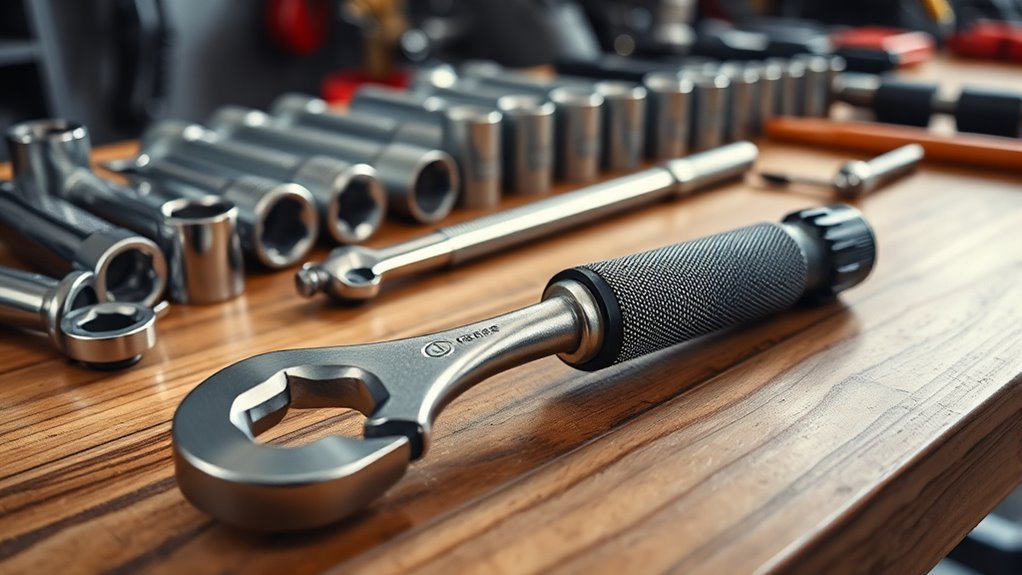
While having the right wrenches helps you fit bolts properly, guaranteeing those bolts are tightened to the exact specifications is where torque wrenches come in.
Using a torque wrench prevents over-tightening and damage, which is vital in high-torque applications.
Proper use guarantees accuracy, extending component life and safety.
Don’t forget regular calibration to maintain precision over time.
This tool boosts your efficiency by minimizing rework caused by loose or overtightened fasteners.
| Feature | Benefit |
|---|---|
| Torque Wrench Types | Beam, click, digital options |
| Proper Use | Prevents stripped threads |
| Accuracy | Guarantees manufacturer specs met |
| High-Torque Applications | Handles demanding torque needs |
| Regular Calibration | Maintains tool reliability |
Advanced OBD2 Scanners for Efficient Diagnostics
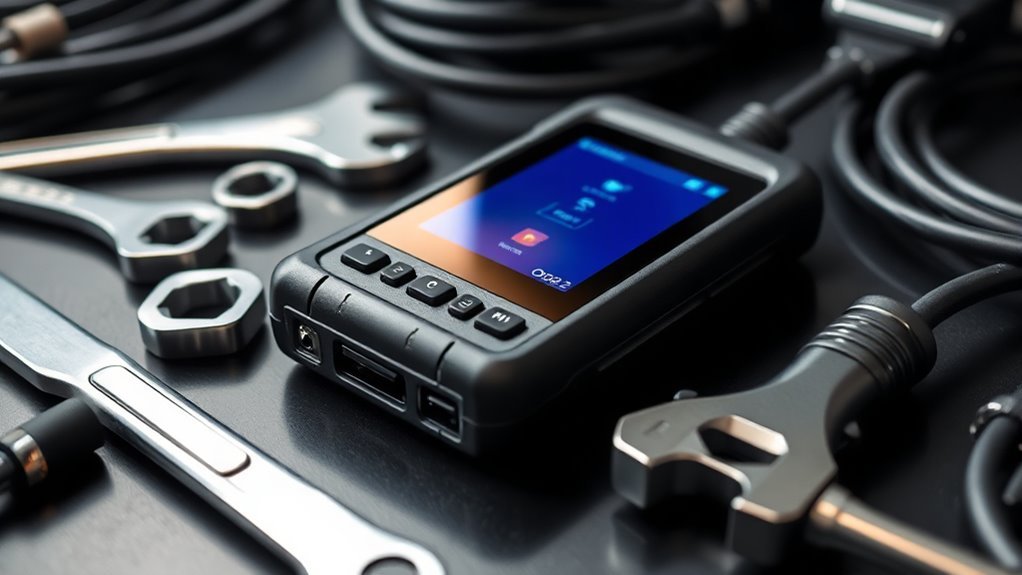
When your Check Engine light comes on, an advanced OBD2 scanner lets you quickly identify the problem by providing trouble codes and live data for real-time analysis.
An advanced OBD2 scanner reveals trouble codes and live data instantly when the Check Engine light activates.
These mechanic tools become your best friend, cutting diagnostic time dramatically. Many models connect wirelessly to smartphones or laptops, enhancing usability and allowing deeper insights through thorough vehicle analysis.
Beyond reading codes, they reset service lights, run emission tests, and access manufacturer-specific information vital for modern cars.
Investing in high-quality advanced OBD2 scanners not only speeds up diagnostics but also boosts repair accuracy and efficiency.
As vehicles grow more complex, having these scanners in your toolkit guarantees you stay ahead.
This makes them indispensable for any professional mechanic seeking precise, fast solutions.
Impact Wrenches: Power and Speed in Wheel Service
Advanced diagnostic tools like OBD2 scanners help you pinpoint issues quickly.
But once you’ve identified the problem, you’ll need the right equipment to get the job done fast.
Impact wrenches deliver the power and speed required for efficient wheel service, cutting down manual labor and boosting your productivity.
Cordless electric models add portability, making them perfect for both professional shops and DIY projects.
Here’s why impact wrenches are must-haves:
- They provide high torque to loosen stubborn bolts quickly.
- They reduce repetitive strain injuries by minimizing manual effort.
- They feature adjustable torque settings to protect fasteners.
- They enhance overall shop efficiency and reduce downtime.
Choosing the right tools like quality impact wrenches guarantees you work smarter, not harder.
Digital Multimeters for Comprehensive Electrical Testing
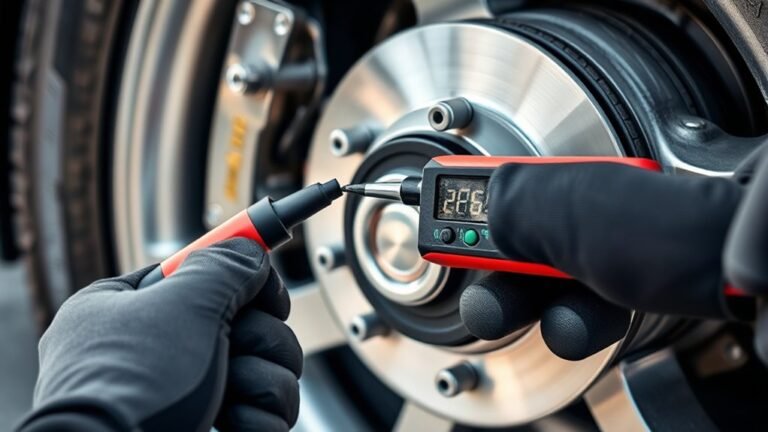
If you want to diagnose electrical issues accurately, a digital multimeter is an indispensable tool in your arsenal.
Digital multimeters allow you to perform accurate checks on battery voltage, alternator health, and other crucial electrical components.
With the ability to measure voltage, current, and resistance, these tools provide thorough data essential for effective troubleshooting.
Many models feature auto-ranging, which simplifies measurements by automatically selecting the correct range. This saves you time and reduces errors.
Advanced digital multimeters even offer data logging and connectivity to smartphones or laptops, enhancing your diagnostic capabilities.
By mastering their use, you’ll prevent misdiagnoses and guarantee precise repairs.
This makes digital multimeters a must-have for every pro mechanic tackling vehicle electrical issues.
Frequently Asked Questions
What Are the Main Tools a Mechanic Needs?
You need combination wrenches, an extensive socket set, torque wrenches, and an OBD2 scanner.
Cordless impact wrenches also help you quickly remove wheels and stubborn bolts.
This makes your job efficient and effective every time.
Can a Mechanic Make $100,000 a Year?
Can you make $100,000 a year as a mechanic?
Absolutely—but it takes more than just basic skills.
You’ll need experience, certifications, and to specialize in high-demand areas.
Stay sharp, and the paycheck can reflect your expertise.
What Are the Three C’s in Mechanics?
The three C’s in mechanics are Capacity, Capability, and Condition.
You’ll assess if your tools handle the load, suit different repairs, and stay in good shape.
This ensures your work is efficient, safe, and reliable every time.
What Are the 10 Tools and Lists?
Imagine your toolbox as a painter’s palette—wrenches, socket sets, torque wrenches, and impact wrenches are your vibrant colors for every mechanical masterpiece.
Digital multimeters, OBD2 scanners, pliers, and screwdrivers add even more depth to your creations.
Don’t forget the hammer and ratchets, which complete your artistic ensemble!
Conclusion
So, unless you enjoy turning bolts with your bare hands or guessing if that engine light means “fix me” or “have a nice day,” you’d better grab these top tools.
Combination wrenches, torque wrenches, OBD2 scanners, impact wrenches, and digital multimeters aren’t just fancy toys—they’re your ticket out of amateur hour.
Trust me, your future self (and your poor, suffering car) will thank you when you’re not sweating over a rusty bolt or a mysterious beep.
In conclusion, having the right tools like combination wrenches and torque wrenches can really elevate your mechanic game.
Investing in OBD2 scanners, impact wrenches, and digital multimeters will save you time and frustration.
So gear up, and make sure your toolbox is stocked with these essentials to tackle any automotive challenge that comes your way!