What Happens When You Override Your Headlight at Night?
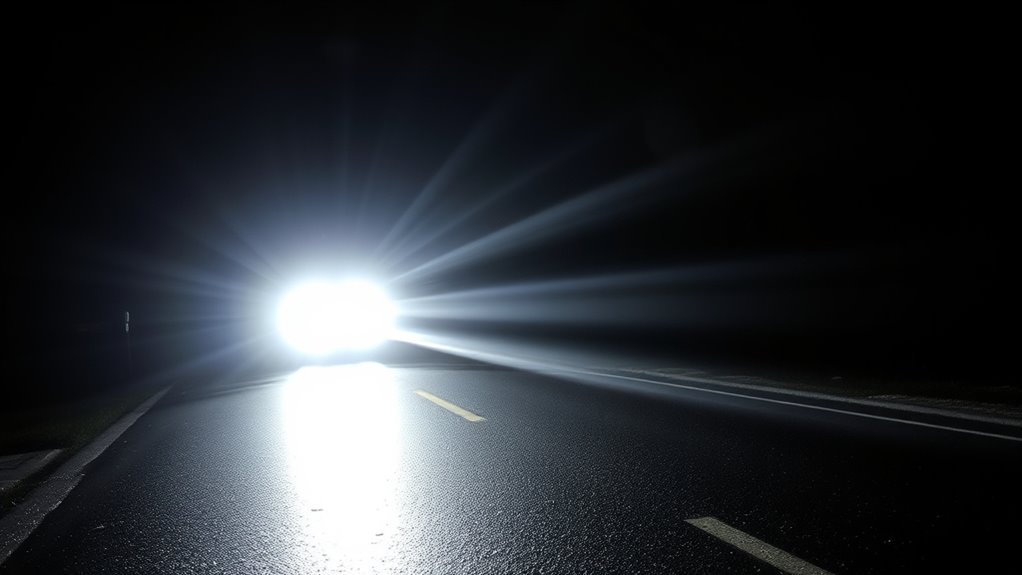
When you override your headlights at night, you’re driving faster than your lights can illuminate the road ahead.
This makes it impossible to stop safely if something suddenly appears.
As a result, your total stopping distance exceeds your visible sight distance, which increases the risk of collisions.
And let’s not forget, poorly aimed or dim headlights, along with adverse weather, can worsen this danger even further.
By adjusting your speed and maintaining your headlights, you can significantly improve safety.
Keep reading to understand how to avoid this risky habit and protect yourself on the road.
Key Takeaways
- Overriding headlights means your stopping distance exceeds the illuminated area, which reduces your ability to stop safely at night.
- Driving too fast at night increases the risk of not seeing hazards in time due to limited headlight reach.
- Poorly aimed or dim headlights worsen visibility. This makes it harder to detect obstacles before you need to stop.
- Overriding headlights significantly raises the risk of nighttime accidents. This is often due to delayed reactions to hazards.
- Adjusting your speed to match headlight illumination is crucial. Also, maintaining your headlights properly can greatly improve nighttime driving safety.
Understanding Overriding Headlights
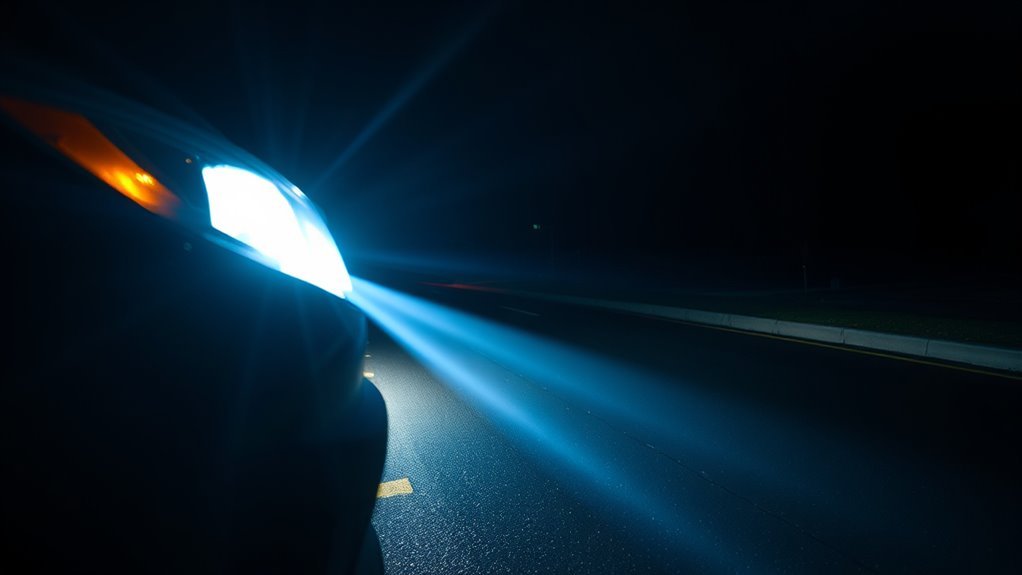
Although you might rely on your headlights to see the road ahead at night, overriding them happens when your stopping distance is longer than the area your headlights illuminate.
Overriding headlights occur when your total stopping distance—including perception time, reaction time, and braking distance—exceeds the sight distance provided by your headlights.
When driving at night, reduced visibility and factors like glare can make this problem worse.
For example, at 60 mph, your total stopping distance might reach about 352 feet, often longer than your headlights’ reach.
This means you can’t stop safely within the illuminated area, which increases the risk of accidents.
Taking a safety course can help you understand how to adjust your speed so your stopping distance stays within your headlights’ sight distance, improving your safety during nighttime driving.
The Role of Stopping Distance and Sight Distance
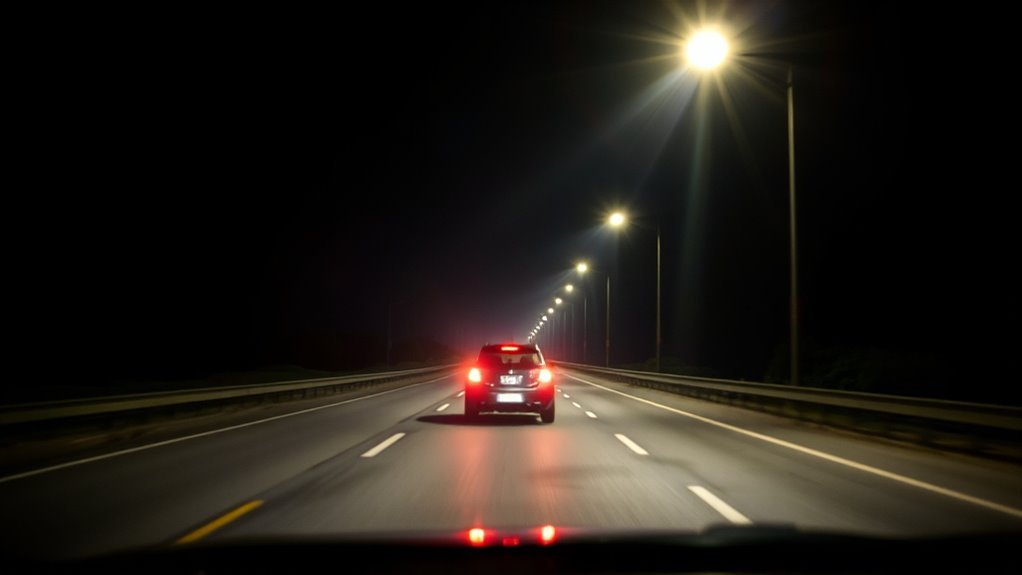
Understanding how stopping distance and sight distance interact is key to preventing overriding your headlights at night.
When you drive, your total stopping distance includes reaction time and braking distance. At higher speeds, this distance grows—at 60 mph, it can reach about 352 feet.
However, your headlight’s sight distance is often much shorter, especially during night driving. If your stopping distance exceeds your sight distance, you risk overdriving your headlights, meaning you won’t see obstacles in time to stop safely.
To reduce this risk, you need properly aligned and well-maintained headlights that maximize sight distance. By matching your speed to the illuminated area ahead, you guarantee your stopping distance stays within what you can clearly see, keeping you safer on the road.
Common Causes of Overriding Headlights
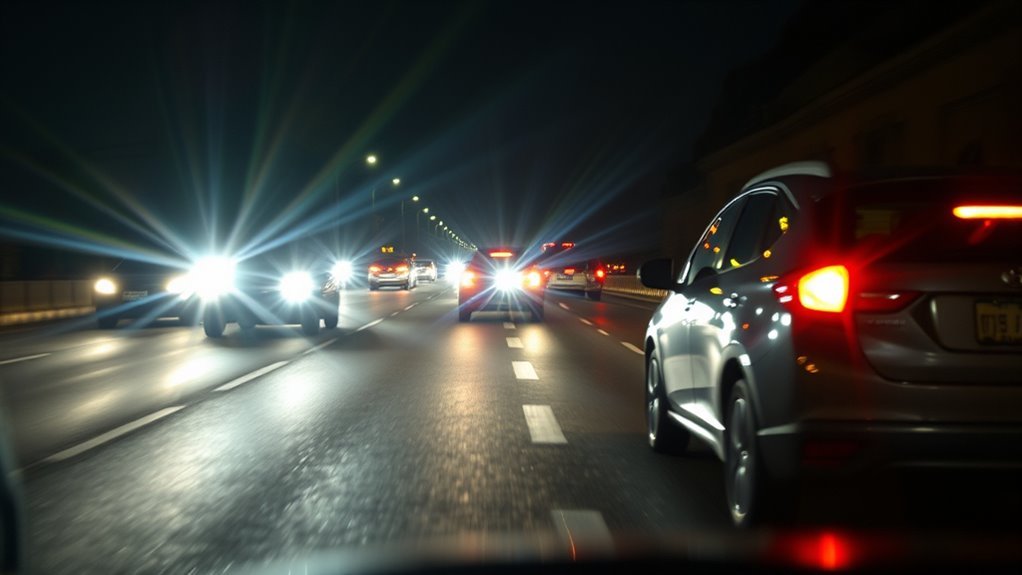
When you drive faster than your headlights can illuminate, you risk overriding them and missing obstacles in time to react.
One common cause is driving too fast at night, especially in poorly lit areas where the distance you’re able to see is limited. If your speed at night causes the total stopping distance to exceed the sight distance provided by your headlights, you won’t have enough time to react.
Driving too fast at night can exceed your headlights’ reach, reducing reaction time and increasing danger.
Environmental conditions like fog, rain, or snow worsen visibility, further reducing the effective distance.
Additionally, poorly aimed or malfunctioning headlights cut down the light spread, increasing the chance of overriding.
Understanding these factors helps you adjust your speed and maintain safe stopping distances to avoid dangerous situations on the road.
Risks and Consequences of Overriding Headlights
When you override your headlights, your stopping distance can easily exceed what you can see, especially at higher speeds.
Nighttime factors like glare and reduced visibility make it even harder to spot hazards in time.
That’s why adjusting your speed to match your headlight range is essential for staying safe.
Visibility Vs Stopping Distance
Although headlights illuminate the road ahead, you can still override their reach if your stopping distance exceeds the visible area.
When your stopping distance exceeds sight, you lose the ability to see far enough ahead to react and stop in time.
Even using high beams won’t help if you’re driving at excessive speed or if road conditions reduce visibility.
Overriding your headlights becomes dangerous because you won’t spot obstacles until it’s too late to brake safely.
To avoid this, adjust your speed to match your ability to see clearly.
Remember, darkness, glare from oncoming traffic, and misaligned headlights can further shrink your visible range, increasing the risk of overriding your headlights.
Always guarantee your stopping distance stays within your sight distance to stay safe.
Nighttime Accident Factors
Overriding your headlights can considerably raise the risk of nighttime accidents because you won’t see hazards in time to react safely.
When your total stopping distance exceeds your sight, especially under high beams, you risk failing to stop within the area illuminated by your headlights.
This situation is dangerous when driving behind another vehicle, as you might not have enough time to stop if they brake suddenly.
Nighttime accidents often occur because drivers don’t adjust their speed to guarantee their stopping distance stays within their sight.
Glare from oncoming lights further reduces visibility, making it harder to judge distances and obstacles.
To avoid riding too fast or too close, always keep your stopping distance aligned with your sight to minimize risks during night driving.
Speed Adjustment Importance
If you drive faster than your headlights can illuminate, you won’t have enough time to react to obstacles on the road.
Overriding your headlight at night occurs when your total stopping distance exceeds the distance you can see.
Speed adjustment is vital to guarantee you’re able to stop within the illuminated area. This gives you sufficient time to avoid hazards and oncoming traffic.
Driving too fast for visibility drastically reduces your reaction window, increasing accident risk.
| Speed (mph) | Total Stopping Distance (ft) |
|---|---|
| 30 | 130 |
| 45 | 235 |
| 60 | 352 |
Adjust your speed according to headlight range to maintain safe stopping distances and prevent nighttime collisions.
Practical Tips to Avoid Overriding Your Headlights
When you drive at night, keeping your speed low enough to stop within the area illuminated by your headlights is essential.
To avoid overriding, reduce your speed so your stopping distance fits within your headlights’ range.
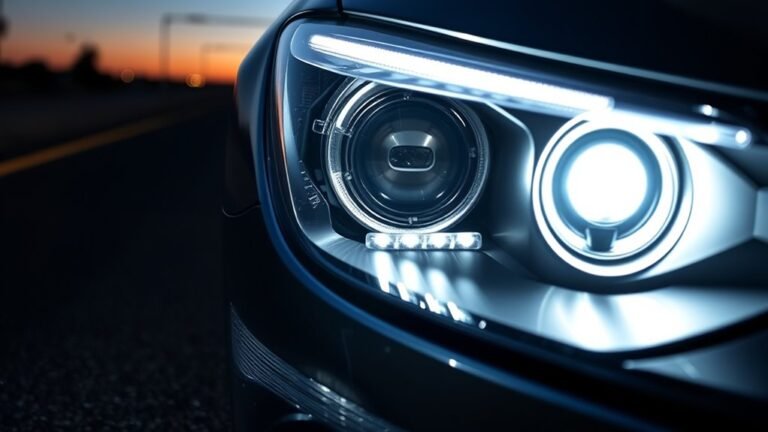
Regularly inspect and clean your headlights to see clearly and guarantee they’re properly aimed.
Consider upgrading to brighter or LED headlights for better illumination, boosting your reaction time.
Use high beams when no one’s approaching to maximize visibility, but switch to low beams near other vehicles.
Understand your motorcycle’s stopping distances at different speeds and adjust accordingly based on visibility conditions.
By following these practical tips, you’ll improve safety and avoid overriding your headlights.
This way, you can always stop safely within the lighted path ahead.
Legal and Safety Resources for Nighttime Riders
Because nighttime riding presents unique risks, knowing your legal responsibilities and available safety resources is essential.
New Mexico law requires you to use headlights from sunset to sunrise to enhance safety and guarantee you see the road ahead clearly.
Properly functioning headlights must illuminate at least 500 feet on high beam, giving you enough time to stop your vehicle safely if needed.
When visibility is low, always drive slowly to reduce the risk of accidents.
If you’re involved in a nighttime crash, legal support is available to help you navigate the aftermath.
Resources like Parnall Law offer free consultations to protect your rights and promote safety for all riders on the road.
Frequently Asked Questions
What Can Happen if You Override Your Headlights?
If you override your headlights, you won’t see obstacles in time, increasing your risk of collisions.
You’ll struggle to react quickly, especially at higher speeds, putting yourself and others in serious danger on poorly lit roads.
What Is Overriding Your Headlight at Night?
Overriding your headlights at night means you’re basically racing the darkness, driving faster than your headlights can show.
You’re betting your reaction time, which isn’t a gamble you want to take when safety’s on the line.
What Happens if You Forgot to Turn off Your Headlights?
If you forget to turn off your headlights, you risk draining your car battery, leaving you stranded.
Modern cars alert you, but older models don’t.
It’s best to regularly check your lights to avoid this problem.
Can You Drive Without a Headlight at Night?
You shouldn’t drive without a headlight at night; it’s illegal and dangerous.
You’ll struggle to see hazards, and other drivers might not spot you.
This increases your risk of accidents and fines.
Always use your headlights.
Conclusion
When you override your headlights at night, it’s like trying to read a book in dim light—everything becomes unclear and risky.
You might think you’re seeing far ahead, but your stopping distance doesn’t match what your eyes perceive.
To stay safe, trust your headlights’ limits and avoid speeding or distractions.
Remember, riding responsibly at night protects you and others on the road.
Keeping every journey as clear and safe as a well-lit path is essential for everyone’s safety.
So, don’t take chances with your visibility.
Always use your headlights as intended, and be aware of your surroundings.
This way, you ensure a safer ride for yourself and those around you.
In conclusion, understanding the importance of using your headlights correctly at night is vital.
It not only enhances your visibility but also significantly reduces the risk of accidents.
Let’s prioritize safety and keep our nighttime journeys secure and well-lit for everyone on the road.