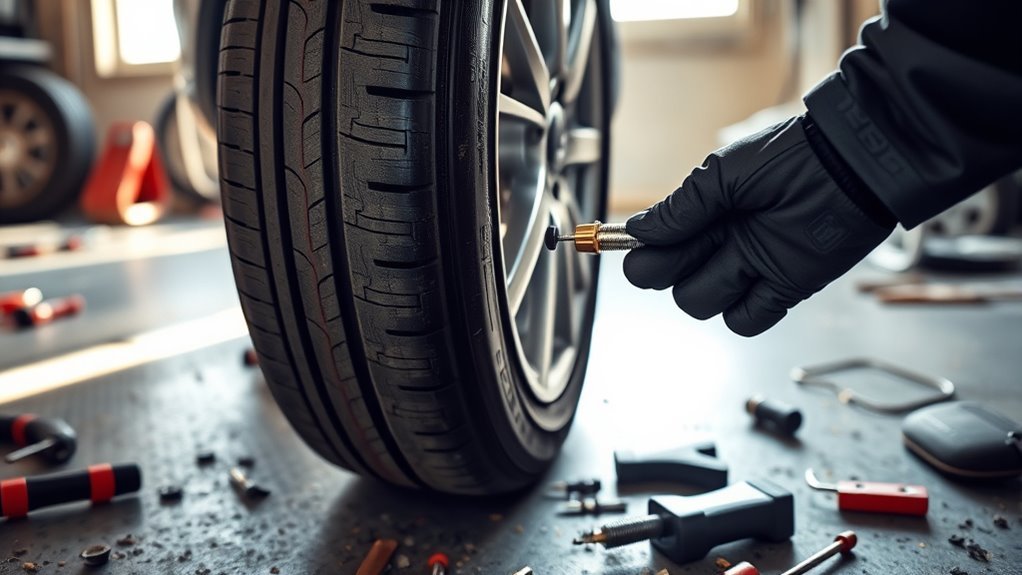
Can You Patch a Run Flat Tire?
Can you patch a run flat tire? This is a common question among drivers who face tire issues.
While it is possible to patch some run flat tires, most manufacturers recommend replacing them instead.
Run flat tires are designed with reinforced sidewalls that can sustain performance even after losing air. However, this feature can also lead to hidden damage after a loss of air, making repairs risky and potentially unsafe.
If you have a small puncture in the tread area, it might be repairable, but it’s crucial to have it inspected by a professional.
On the other hand, any damage to the sidewall always means you will need a replacement.
To keep your drive safe and ensure your tire’s performance remains intact, it’s important to understand when patching is suitable and when you should opt for a replacement.
Key Takeaways
- Run flat tires generally should not be patched due to structural damage risks after air loss.
- Manufacturers like Pirelli and Yokohama forbid repairs, recommending full tire replacement instead.
- Repairs are only considered for small tread punctures under 6 mm with no internal damage.
- Patching run flats can compromise safety, handling, and increase the risk of blowouts.
- Replacing run flat tires is safer and more reliable than patching for long-term performance.
How Do Run Flat Tires Work?
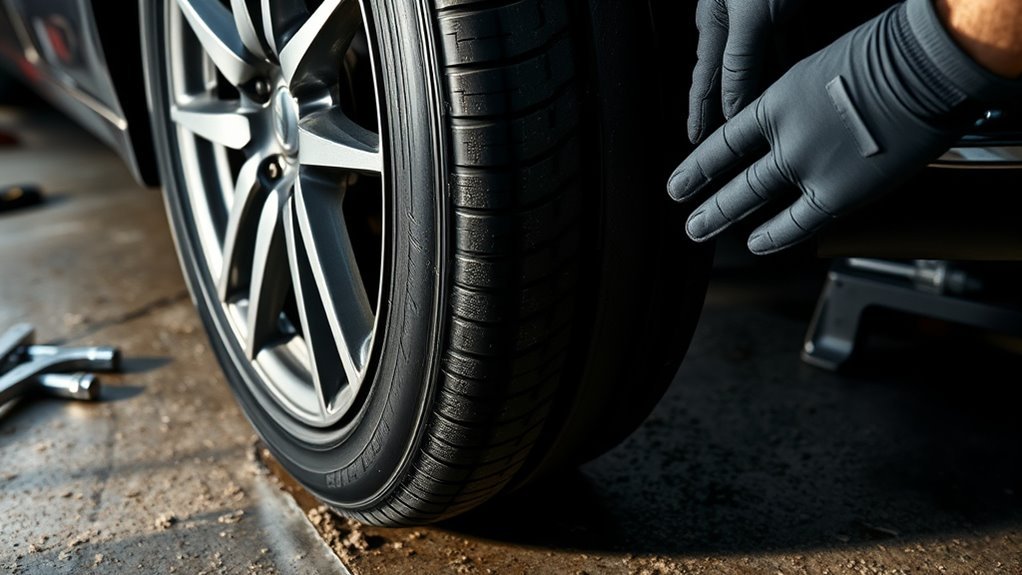
Although losing air in a regular tire usually means you’re stranded, run-flat tires let you keep driving safely for about 50 miles at speeds up to 50 mph.
You can thank their unique internal structure for this. Run flat tires have reinforced sidewalls that maintain the tire’s shape and support your vehicle even after air escapes.
This signifies you won’t face immediate collapse and can reach a safe spot or tire repair shop without hassle.
Because of their specialized design, these tires are common in premium vehicles like BMW and Mercedes.
Keep in mind, though, that their construction makes mounting and tire repair more complex.
Why Patching Run Flat Tires Isn’t Recommended
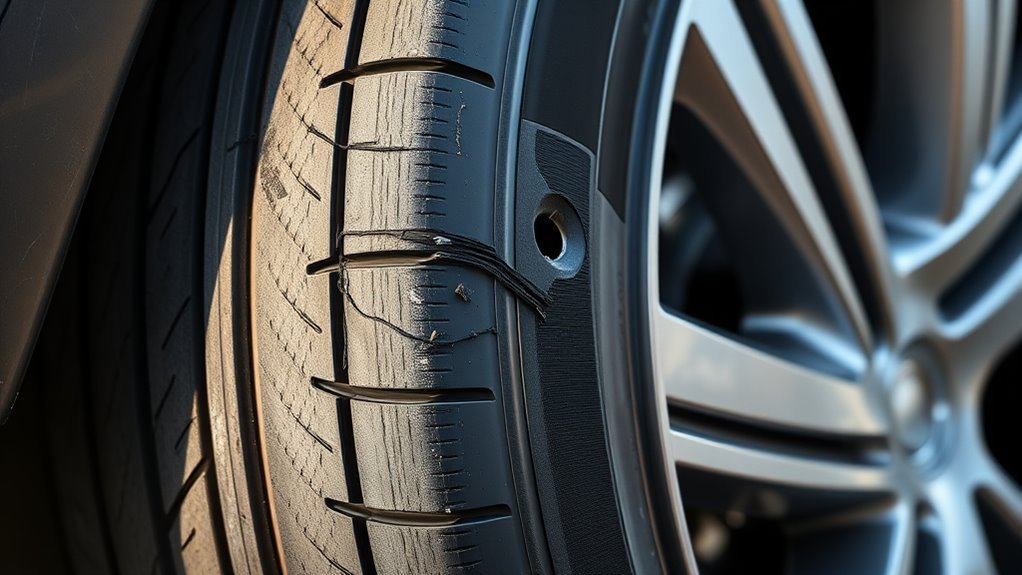
You shouldn’t patch a run-flat tire because unseen structural damage can compromise your safety.
Manufacturers like Pirelli and Yokohama strictly forbid repairs after any air loss to prevent risks.
Following their guidelines and replacing the tire is the safest choice you can make.
Structural Damage Risks
Since driving on a run-flat tire without air can cause unseen internal damage, patching it isn’t recommended.
When you drive on a deflated run-flat tire, the internal structural components weaken or deform, even if you don’t see visible signs. Tire manufacturers strictly warn that this hidden damage compromises the tire’s structural integrity, making repairs unsafe.
Even skilled inspections can’t reliably detect internal flaws after such stress. Because of this, patching a run-flat tire risks a blowout or failure.
You should trust the guidelines from tire manufacturers who advise replacing tires rather than patching them after air loss.
Prioritizing your safety means recognizing that the internal structural damage often renders a run-flat tire irreparable, so replacement is the safer choice.
Manufacturer Repair Policies
When manufacturers set their repair policies, they prioritize your safety.
They often advise against patching run-flat tires after punctures or air loss.
Many warn that unseen structural damage inside the tire can make repairs unsafe.
This can limit the repairable area or even disallow repairs altogether.
Here’s a snapshot of how different brands handle this:
| Manufacturer | Repair Policy | Reason |
|---|---|---|
| Pirelli | No repairs allowed | Safety concerns |
| Continental | Discourages repairs | Possible hidden damage |
| Bridgestone | Limited repairs permitted | Strict guidelines |
| Hankook | Repairs similar to standard tires | More flexible |
| USTMA Recommendation | Consult manufacturer first | Warranty and safety risks |
Following manufacturer policies helps you avoid risks tied to structural damage.
It also guarantees your run-flat tire performs safely.
When Is a Repair Possible?
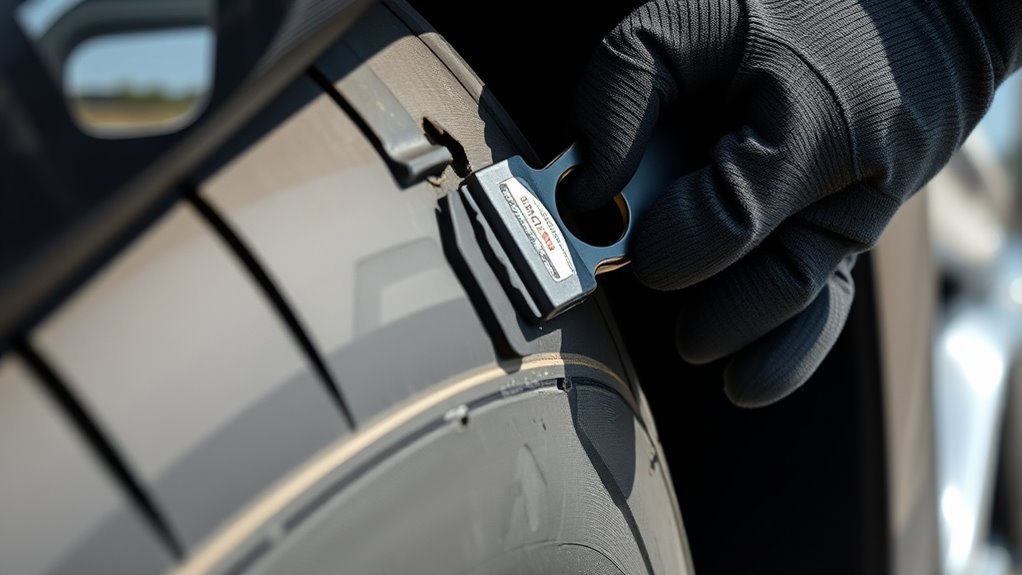
You can consider repairing a run-flat tire only if the damage is within the tread area and not larger than 6 mm.
Before you decide, a qualified technician must inspect the tire to guarantee the internal structure is still intact.
Without this check, attempting a repair could be unsafe.
Damage Location Criteria
Only small punctures located within the central three-quarters of a run-flat tire’s tread area can be safely repaired.
Damage outside this zone, especially on the sidewall or shoulder, requires tire replacement.
You should never attempt to repair run-flat tires with signs of internal damage, as this compromises safety.
Keep in mind:
- Punctures larger than 6 mm are not repairable.
- Sidewall or shoulder damage always means replacement.
- Tires driven while flat likely have internal damage.
- A qualified technician must assess the tire before repair.
Internal Structure Integrity
Small punctures within the central tread area might seem straightforward to fix, but confirming the tire’s internal structure remains intact is essential before any repair.
If you’ve driven on a run-flat tire while it was flat, internal damage could have occurred even if it’s not visible externally.
Repairs are generally only possible when the damage is limited to small punctures (6 mm or less) in the central three-quarters of the tire, and the internal components remain undamaged.
Keep in mind, tire manufacturers usually advise against repairing run-flat tires because unseen internal damage can compromise safety.
Technician Inspection Requirement
Before deciding on a repair, a qualified technician must carefully inspect the run-flat tire to verify the internal structure hasn’t been compromised and that the damage is limited to the central tread area.
This technician inspection requirement is essential because not every tire damage qualifies for repair.
You’ll find that a tire can be repaired only if:
- The tire hasn’t been driven on while flat to avoid internal damage.
- The puncture is 6 mm or less in diameter.
- The damage lies within the central three-quarters of the tread.
- Manufacturer guidelines support the repair.
Keep in mind, many manufacturers recommend against repairing run-flat tires due to safety risks.
Following this inspection requirement guarantees you don’t compromise tire performance or your safety.
Manufacturer Policies on Run Flat Repairs
Although some manufacturers allow repairs under certain conditions, many advise against patching run-flat tires due to safety concerns and hidden internal damage.
Manufacturer policies vary widely. Pirelli strictly prohibits repairs on run-flat tires, emphasizing safety risks.
Yokohama also bans repairs after any puncture or significant air loss.
Continental warns that internal damage may not be visible, making run-flat tires often non-repairable.
On the other hand, Bridgestone permits repairs under specific guidelines, showing some flexibility.
Hankook takes a similar stance to standard tires, allowing repairs more freely.
When it comes to run-flat tires, you need to check each manufacturer’s policy carefully to determine if your tire is repairable or if replacement is the safer choice.
What to Do If You Suspect Tire Damage
If you suspect your run-flat tire is damaged, pull over safely as soon as possible.
Avoid driving further to prevent worsening the problem. Tires with damage can quickly become unsafe, so it’s crucial to act promptly.
Here’s what you should do:
- Inspect the tire for visible damage such as punctures, bulges, or sidewall cuts.
- Check the tread depth to verify it meets safety standards.
- Contact a tire professional to get a thorough inspection and accurate assessment.
- Follow the manufacturer’s guidelines on whether the tire can be repaired or needs replacement.
Never guess about your tire’s condition.
Always prioritize safety by consulting a professional before deciding on tire repairs or replacement.
Prioritizing safety and consulting an expert helps prevent accidents and costly repairs down the road.
What If the Tire Damage Is Too Severe?
When you find that the damage to your run-flat tire is too severe to fix, it’s important to accept that repair isn’t an option.
If the damage is too extensive—like punctures larger than 6 mm or sidewall deformities such as bulges or bubbles—you must replace the tire immediately.
Run flats are designed to support limited driving after a loss of pressure, but once the structural integrity is compromised, repairing them becomes unsafe.
Manufacturers like Pirelli and Yokohama strictly forbid patching run flats driven on while flat, as internal damage can cause dangerous blowouts.
Driving on a severely damaged tire puts you and your vehicle at risk, so opting for a replacement guarantees your safety and maintains proper performance on the road.
Frequently Asked Questions
Can You Patch a Run-Flat Tire With a Nail in It?
You generally shouldn’t patch a run-flat tire with a nail because driving flat often causes hidden damage.
If it’s a minor puncture and you haven’t driven on it, a professional might safely repair it.
But replacement is safer.
Is It Better to Plug or Patch a Run-Flat Tire?
Like choosing a band-aid or stitch, plugging a run-flat tire offers a quick fix.
But patching provides durability.
Still, with run-flats, it’s safer to replace rather than risk unreliable repairs.
Can You Patch a BMW Run-Flat Tire?
You usually shouldn’t patch a BMW run-flat tire because internal damage might be hidden.
If you do consider it, check BMW’s or the tire manufacturer’s guidelines first to guarantee safety and proper repair protocols.
Why Can’t You Patch a Run-Flat Tire?
You can’t patch a run-flat tire because its internal structure may be damaged after a puncture.
This makes repairs unsafe.
Manufacturers prohibit patching to prevent blowouts and guarantee your safety, especially after driving on a flat tire.
Conclusion
Patching a run flat tire is like trying to mend a cracked mirror—it might hold for a moment, but the risk lingers beneath the surface.
While small, careful repairs can sometimes work, most manufacturers advise against it. They prioritize your safety over a quick fix.
When in doubt, trust your instincts and the pros. After all, your tires carry you through life’s twists and turns.
Don’t let a patchy solution slow you down.
In conclusion, while it might be tempting to patch a run flat tire, it’s safer to consult a professional. Safety should always come first, especially when it comes to your tires.
Remember, your tires are crucial for a smooth ride and ensuring your safety on the road. So, opt for a reliable solution instead of risking it with a temporary patch.