Best Oils for German Cars?
You want to ensure your German car runs flawlessly, and that starts with choosing the right engine oil.
Look for fully synthetic oils that meet stringent manufacturer approvals like MB 229.5, VW 504.00, or VW 507.00.
These oils are designed to protect your car’s complex engine by flowing quickly at cold starts and significantly reducing wear.
Additionally, they play a vital role in keeping emission systems clean with low SAPS technology.
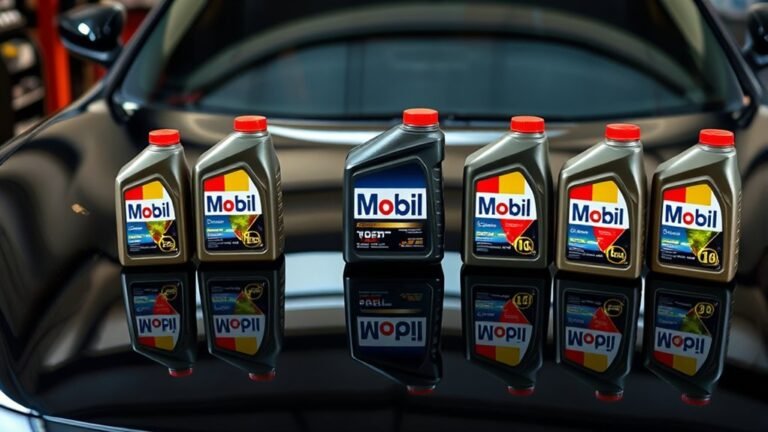
Brands like Mobil 1™, FUCHS, and LIQUI MOLY are trusted options that offer premium quality oils.
Using the correct viscosity and approved oils is essential for ensuring your engine runs smoothly and lasts longer.
So, let’s explore why these specific details matter for the longevity and performance of your German vehicle!
Key Takeaways
- Use fully synthetic oils that meet German specs like MB 229.5, VW 504.00, and VW 507.00 for optimal performance and warranty compliance.
- Choose oils with low SAPS technology to protect diesel particulate filters and ensure emission system compatibility.
- Make sure to select the correct viscosity grade (e.g., 0W-30, 5W-40) based on manufacturer recommendations. This ensures proper lubrication and cold start protection.
- Top brands like Mobil 1™, FUCHS TITAN GT-1, and LIQUI MOLY MFC offer high-quality oils designed specifically for German engines.
- Lastly, ensure that the oils meet ACEA specifications, especially ACEA C3, to maintain engine cleanliness, efficiency, and compliance with emissions.
Key Specifications for German Car Engine Oils

When maintaining your German car, you need to choose engine oils that meet strict manufacturer specifications like Mercedes-Benz’s MB 229.5 or Volkswagen’s VW 504.00.
These premium motor oils are specially formulated to protect your engine and guarantee peak performance.
German manufacturers often require oils with low SAPS content to safeguard diesel engines’ particulate filters and meet tough emission standards.
You’ll find that viscosity grades such as 0W-30, 5W-30, and 5W-40 are commonly recommended, balancing fuel efficiency and engine protection in various conditions.
Additionally, oils meeting ACEA C3 standards provide excellent compatibility with modern German engines.
Benefits of Fully Synthetic Oils for German Vehicles

You’ll notice fully synthetic oils offer enhanced engine protection by reducing wear and keeping parts cleaner.
They flow quickly during cold starts, ensuring immediate lubrication when your engine needs it most.
Plus, they’re designed to be compatible with modern emission systems, helping your German car run cleaner and more efficiently.
Enhanced Engine Protection
Because German engines often operate under demanding conditions, fully synthetic oils deliver the enhanced protection you need to keep them running smoothly.
When you choose fully synthetic oil for your German passenger cars, you benefit from:
- Superior lubrication that reduces friction and engine wear.
- Advanced additive technologies protecting emission systems and diesel particulate filters.
- Enhanced thermal stability to withstand high temperatures in turbocharged engines.
- Compliance with strict manufacturer specifications from brands like Mercedes-Benz and Volkswagen.
- Extended engine life through consistent performance under extreme conditions.
Improved Cold Start
How does fully synthetic oil improve cold starts for your German car?
Fully synthetic oils offer improved cold starting by flowing quickly at low temperatures, ensuring immediate lubrication.
This reduces engine wear during startup and makes ignition easier, especially in cold climates where German vehicles often operate.
| Feature | Benefit for German Cars |
|---|---|
| Fast oil circulation | Immediate engine protection |
| Advanced cold temperature tech | Easier engine ignition |
| Reduced wear at startup | Longer engine life |
| Lower oil consumption | Cost savings |
| Compatible with gasoline & diesel | Superior performance in all engines |
Brands like Mobil 1 and FUCHS tailor fully synthetic oils to enhance cold start performance.
This helps your high-performance German car run smoothly from the first turn of the key.
Emission System Compatibility
When you choose fully synthetic oils like Mobil 1™ ESP or FUCHS TITAN GT-1, you’re taking a big step to protect your German car’s emission system. These oils prevent harmful deposits that can compromise performance and longevity.
They’re specially formulated with low-SAPS technology, which is crucial for maintaining emission system compatibility.
These oils help by:
- Reducing sulphated ash, phosphorus, and sulfur buildup
- Preserving particulate filters and catalytic converters
- Enhancing exhaust after-treatment efficiency
- Supporting compliance with strict European emission standards
- Minimizing oil consumption and improving cold starts
Fully synthetic oils guarantee that your vehicle’s emission controls stay clean and effective.
This not only boosts fuel efficiency but also lowers your environmental impact.
Top Engine Oil Brands for German Cars
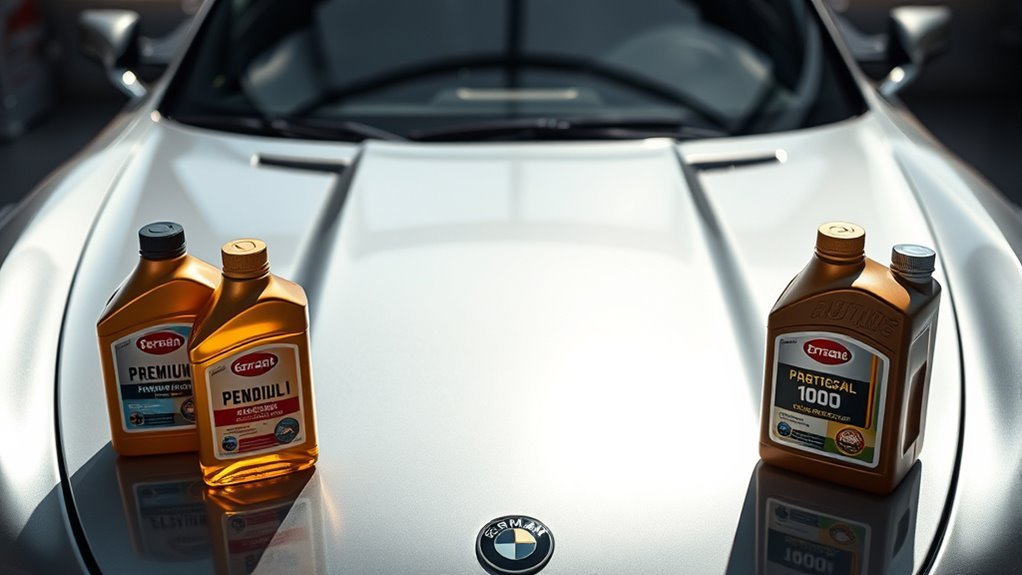
If you want to keep your German car running smoothly, choosing the right engine oil brand is essential.
Top brands like Mobil 1™, FUCHS, and LIQUI MOLY offer oils specifically formulated for high performance and diesel engines common in German vehicles.
Mobil 1™ features the FS European Car Formula and ESP oils, meeting stringent standards for both gasoline and diesel engines.
FUCHS’ TITAN GT-1 line uses advanced technology to support modern high-performance engines from BMW, VW, and Mercedes-Benz.
LIQUI MOLY delivers fully synthetic oils with MFC technology that enhances efficiency and protection.
All these brands comply with strict European specs, ensuring compatibility with your car’s engine and emission system.
Understanding Viscosity and Its Importance
Viscosity plays an essential role in keeping your German car’s engine well-lubricated and protected across different temperatures.
It refers to the oil’s thickness and resistance to flow, ensuring engine components work smoothly whether it’s cold or hot outside.
The Society of Automotive Engineers (SAE) sets viscosity grades like 0W-20 or 5W-40, reflecting oil performance in various conditions.
Choosing the right viscosity affects fuel efficiency, engine wear, and overall performance.
Over time, viscosity can degrade, so adhering to proper service intervals is imperative.
Remember:
- Lower viscosity oils improve cold starts and fuel economy.
- Higher viscosity oils protect better under heat.
- Manufacturer specs guide the correct viscosity choice.
- Viscosity changes with thermal breakdown and contamination.
- Regular oil changes maintain ideal viscosity and engine health.
Low SAPS Oils and Emission System Protection
You’ll want to choose low SAPS oils to protect your German car’s emission system and keep it running clean.
These oils reduce deposits and wear, helping your particulate filters and catalytic converters last longer.
Using products like Mobil 1™ ESP or FUCHS TITAN GT-1 guarantees you meet strict manufacturer standards while improving fuel economy.
Low SAPS Oil Benefits
Because modern German cars rely heavily on advanced emission control systems, choosing Low SAPS oils is essential to protect components like diesel particulate filters and catalytic converters.
These oils are tailored for modern passenger vehicles, reducing harmful deposits and ensuring compliance with strict European emissions standards.
By using low saps formulations, you maintain engine cleanliness and boost efficiency.
Key benefits include:
- Reduced ash, phosphorus, and sulfur buildup
- Enhanced longevity of emission control parts
- Improved fuel economy through cleaner operation
- Superior cold-start protection
- Ideal performance in high-temperature environments
Selecting Low SAPS oils helps extend the life of sensitive emission systems and keeps your German car running at peak efficiency while minimizing environmental impact.
Protecting Emission Systems
When you choose Low SAPS oils for your German car, you actively protect critical emission systems like particulate filters and catalytic converters from harmful deposit buildup.
These oils are formulated to minimize sulfated ash, phosphorus, and sulfur, which can clog exhaust after-treatment components.
By using Low SAPS motor oils such as Mobil 1™ ESP or FUCHS TITAN GT-1, you reduce particulate deposits and guarantee your emission systems operate efficiently.
This protection extends the life of your car’s emission controls, maintains compliance with strict environmental standards, and lowers the risk of engine damage.
Plus, Low SAPS oils help reduce exhaust emissions and oil consumption, keeping your motor cleaner and your car running smoothly.
Choosing the right oil means safeguarding both performance and the environment.
Choosing the Right Oil Based on Vehicle Manufacturer Approvals
Although many oils claim to suit German cars, you must pick one that meets specific manufacturer approvals like Volkswagen’s VW 504.00 and 507.00 or Mercedes-Benz’s MB 229.5 and 229.51.
Choosing synthetic motor oils that align with these approvals guarantees your engine runs smoothly and your warranty stays intact.
Using approved synthetic oils ensures optimal engine performance and protects your vehicle’s warranty.
When selecting oil, consider these factors:
- Confirm compliance with manufacturer approvals to protect engine integrity.
- Opt for synthetic motor oils designed for high-performance European vehicles.
- Use oils with low SAPS technology to safeguard emission systems.
- Select oils meeting ACEA specifications, like ACEA C3 for diesel engines.
- Match the oil’s viscosity grade (e.g., 0W-30, 5W-40) with your car’s requirements.
Following these guidelines keeps your German car performing at its best.
Frequently Asked Questions
What Makes European Car Oil Different?
European car oil’s different because it meets strict manufacturer specs and uses advanced additives.
It protects emission systems and performs well in various temperatures.
You’ll get better fuel efficiency, engine protection, and reduced wear with these high-quality oils.
Which German Brand Is the Best?
You’ll find FUCHS stands out as the best German brand for oils, thanks to its premium formulations tailored for high-performance engines.
Especially with modern tech like turbochargers and exhaust systems, FUCHS ensures ideal protection and performance.
What Is the Highest Quality Oil?
You’ll want fully synthetic oils meeting or exceeding ACEA C3 or A3/B4 specs for the highest quality.
Brands like Mobil 1 FS European, FUCHS TITAN GT-1, and LIQUI MOLY with MFC tech offer excellent engine protection and performance.
These oils are designed to provide superior lubrication and help extend the life of your engine.
Is LIQUI MOLY a German Brand?
They say, “You get what you pay for.”
Yes, Liqui Moly is a German brand founded in 1957.
It’s known for high-quality lubricants and engine oils that boost your car’s performance and longevity with advanced technology.
Conclusion
Choosing the right oil for your German car is like picking the perfect fuel for a racehorse—it keeps everything running smoothly and powerfully.
Remember, a study showed fully synthetic oils can extend engine life by up to 30%, proving their worth.
By focusing on viscosity, low SAPS formulas, and manufacturer approvals, you’re not just maintaining your car—you’re giving it the premium care it deserves.
This ensures that your vehicle performs at its best every mile.
In conclusion, selecting the best oil for your German car is crucial for its longevity and performance.
Opt for fully synthetic oils with the right viscosity and low SAPS content, and always check for manufacturer approvals.
By doing so, you’re not only enhancing engine life but also ensuring that your car runs powerfully and efficiently on the road.
So, give your German car the best oil it deserves!